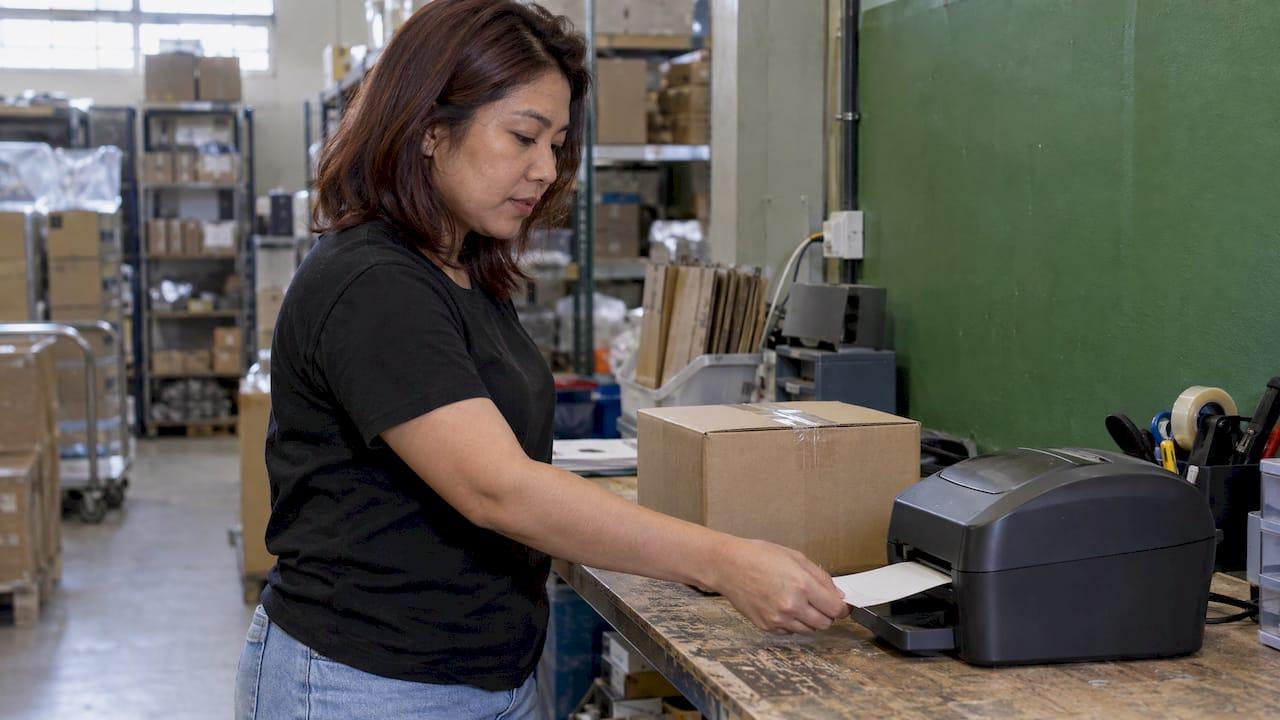
A prepaid international return label is a shipping label that you, the sender or seller, buy in advance so the person returning the parcel pays nothing at the counter. You book and pay for the return shipment first, then give the buyer the label to attach. The cost is settled before the parcel moves, and the customs paperwork has to be right before it leaves the buyer's country. If you sell from Singapore, you can book the shipment online, have the label and documents generated for you and share them with the buyer through Simply Parcel.
This guide explains the whole process in plain steps: what the label is, who pays, what customs needs, how the buyer uses it and what to do when something goes wrong.
TL;DR
- A prepaid international return label is a return shipment you pay for up front, so the buyer ships the item back at no cost to them.
- On international sales, the return shipping cost is the seller's responsibility on Amazon, even when the buyer is at fault, so plan for it in your pricing.
- A return crosses a border again, so it needs a correct address, a clear description, a value and customs documents, not only a barcode.
- If the buyer has no printer, a QR code or a print shop solves it. Hand-writing the address does not.
- Book the return as soon as the request arrives. Marketplace deadlines can be as short as two days.
Table of Contents
- What a prepaid international return label is
- Who pays for an international return label
- Marketplace deadlines you should know
- How to create and send a prepaid international return label
- How the buyer uses the label
- Choosing the right speed for returns
- What happens if a return cannot be delivered
- Keeping return costs under control
- Our perspective
- Book your shipment with Simply Parcel
- FAQ
- Sources
What a prepaid international return label is
A return label is a shipping label that already has the carrier, service and postage attached. The buyer does not choose a service or pay. They attach the label, hand over the parcel and the carrier scans it.
Three parts make up the label:
- Return address. The buyer's address is the origin, and your address (or your warehouse or return agent) is the destination.
- Barcode. It carries routing data and the tracking number. This is why a label must never be copied by hand.
- Service level. It decides how fast the parcel moves and what it costs.
The word "international" is what makes this harder than a domestic return. The parcel crosses a border, so the carrier and customs both need to know what is inside, what it is worth and why it is coming back. A domestic label does not carry that information. A customs declaration is the form that lists the contents and value of a cross-border parcel, and it is the part most often missing from return labels.
Who pays for an international return label
If you sell the item, you usually pay. On Amazon's international sales, the seller is responsible for return shipping cost on international returns, even when the customer is at fault. The same guidance recommends that prepaid return labels include tracking, and it tells sellers to upload the label and set the return label cost to 0.00 so the customer is not charged.
Other marketplaces and your own web store set their own rules, and you decide whether to offer free returns, deduct the label from the refund or ask the buyer to pay. Whichever policy you choose, write it on your returns page before the sale. Buyers abroad compare return terms before they order, and a clear free-return promise often decides the purchase.

What changes the cost
The price of a return label depends on the same factors as any international shipment:
- Weight and size. Carriers charge by actual or volumetric weight, whichever is higher. A box that is too large for its contents costs more.
- Distance and destination. The same parcel costs different amounts from different countries.
- Speed. A faster service costs more than a slower one.
- Extras. Optional protection coverage adds a small amount but protects the refund if the parcel is lost.
For a low-value item, the return label can cost more than the item. In that case, many sellers offer a refund without a return and let the buyer keep or discard the product. Work out the break-even point for each product before you promise free returns.
Marketplace deadlines you should know
If you sell on a large marketplace, the clock starts when the buyer requests the return. Under Amazon's international returns policy, eligible international sellers must offer a returnless refund, a domestic return option or a prepaid international return label within two calendar days of the request, shortened from five. If you do not respond, Amazon may refund the customer and charge your seller account.
The practical lesson applies to every channel: do not leave a return request waiting. Have your carrier account, your return address and your label process ready before the first request arrives. Check the marketplace's own seller help pages for the current rules, because they change.

How to create and send a prepaid international return label
The steps are the same whichever carrier you use. Each one has a point where it commonly goes wrong.
1. Confirm the return and decide the outcome
Check the request against your policy. Decide whether you want the item back, a refund without return or a replacement. Do this first, because a label bought for a parcel that never ships is money lost.
Where it goes wrong: Sellers buy the label before they confirm the return is valid, then the buyer never ships.
2. Get the buyer's exact address and parcel details
Ask for the pickup or drop-off address, the number of parcels and the approximate weight and size. The carrier prices the label on these, and a wrong weight can lead to an adjustment charge later. Ask for a phone number too, because carriers often need one for international pickups.
Where it goes wrong: An incomplete address. Address corrections are expensive, and our guide on avoiding address correction fees shows how to catch the common errors before booking.
3. Get a quote and choose the speed
Compare service levels for the return route. A return is rarely urgent, so the economy option is often the sensible choice. Use a faster service when the item is high value, perishable or needed to resolve a dispute quickly.
With Simply Parcel you can compare rates across our courier partners for the route and choose between priority, connect-plus and economy. Get a quote here by entering the origin, destination and parcel details.
Where it goes wrong: Choosing by price alone. A cheap service with long transit times can leave a buyer waiting weeks for a refund they see as dependent on the return.
4. Prepare the customs information
The label needs a description of the goods, their value, the reason for return and the country of origin. Describe the item in plain words ("men's cotton shirt, returned") instead of vague terms like "goods" or "samples". Customs officers read the declaration, and a vague one slows the parcel.
Many countries have a relief that lets goods that were exported and return unchanged enter without paying duty again, usually when you can prove the original export. The rules differ by country and the proof required differs too, so check the customs authority of the country where the parcel will arrive. If the original sale refunded any duty or tax when it left, that amount may have to be repaid when the goods come back, so keep the export records with the return file.
For how customs documents fit together, see our guide on creating a shipping label online to clear customs. When you book with us, the shipping label and customs documentation are generated automatically from the details you enter, which removes the step most people get wrong by hand.
Where it goes wrong: Missing or mismatched values. If the declared value differs from the invoice, the parcel can be held for inspection.
5. Generate the label and send it to the buyer
Once you book and pay, you receive the label and the tracking number. Send both to the buyer by email, and include a short instruction sheet. The next section covers what to tell them.
Where it goes wrong: Sending the label without the commercial invoice or customs form, when the route needs one.
6. Track the return and issue the refund
Follow the tracking number until the parcel is delivered, then inspect the item and refund according to your policy. Tell the buyer the refund trigger in advance (for example, "within five days of delivery to our return address"). Real-time tracking helps here because you can answer "where is my return?" without contacting the carrier.
How the buyer uses the label
Your instructions decide whether the return goes smoothly. Keep them short and numbered:
- Pack the item securely in its original packaging or a sturdy box.
- Print the label on plain paper at 100% scale, or use the QR code if one is provided.
- Remove or cover any old shipping labels and barcodes.
- Attach the label flat on the largest side of the parcel, with no folds across the barcode.
- Add the customs form or invoice in a pouch if the instructions say so.
- Drop the parcel at the named carrier location or book the pickup.
- Keep the drop-off receipt until the refund arrives.
Our guides on how to attach a shipping label so it scans and on label size cover the details that cause scan failures, such as creased barcodes and labels scaled too small.
When the buyer cannot print
This is the most common support message on returns. Give the buyer these options:
- Use a QR code. Many carriers accept a code scanned at the drop-off point, so no printer is needed. Our guide on QR code shipping labels explains how label-less shipping works.
- Print elsewhere. A library, a copy shop or an office-supply store can print a PDF for a small fee.
- Never write the address by hand. The barcode carries the routing data, so a handwritten address cannot replace it and the parcel may not be accepted.
If you are the sender in Singapore and need to print yourself, see how to print a shipping label in Singapore.
Choosing the right speed for returns
| Situation | Suggested speed | Why |
|---|---|---|
| Low-value clothing or accessories | Economy | Cost matters most and the buyer expects a slower return |
| Electronics or high-value items | Priority or connect-plus | Faster transit shortens the time the item is at risk |
| Defective item with a dispute open | Priority | A quick return resolves the case sooner |
| Bulk or repeated returns from one buyer | Economy, compared per route | Rate differences add up across many parcels |
The three speeds we offer, priority, connect-plus and economy, let you match each return to its value and urgency rather than using one service for everything.
What happens if a return cannot be delivered
A parcel can fail on the way back for several reasons: the address is wrong, the recipient is unavailable, customs holds the parcel for missing documents, or the goods are restricted in the destination country. In these cases the carrier usually tries to contact the sender or recipient, holds the parcel for a set period, then either returns it or disposes of it, depending on the carrier's terms and the shipment's instructions.
To reduce the chance of this:
- Check that the return address is staffed and can accept parcels during business hours.
- Put a phone number and email on the shipment so the carrier can reach someone.
- Ship only goods that are legal to import into the destination country. Restricted items, such as certain medicines, batteries and liquids, need special handling. Read the guidance before you promise a return for them.
- Add protection coverage for valuable items, so a lost or damaged return does not become a total loss.
If a parcel is stuck, use the tracking number first. It shows whether the delay is with customs, the carrier or the final delivery. Then contact the carrier or your booking platform with the tracking number ready.
Keeping return costs under control
Returns are a cost of selling abroad, and you can manage them. Most of the savings come from small habits:
- Reduce returns before they start. Accurate sizing charts, clear photos and honest descriptions prevent many requests.
- Use returnless refunds for cheap items. If the label costs more than the product, a refund without return is cheaper.
- Set a return window. A defined period, such as 30 days, limits open-ended risk.
- Use a single return address. A consolidated address, ideally with someone to receive and inspect parcels, keeps the process orderly.
- Automate labels. If you handle many orders, automating shipping labels saves time and cuts data-entry mistakes.
- Know the label requirements. Our shipping label requirements list covers the fields a carrier expects.
For a visual reference, see examples of shipping labels and the overview of international parcel labeling.
Our perspective
Most return problems we see described by sellers start before the parcel ships: an address that is not complete, a description that is too vague, a label that does not scan. That is why we built our platform around getting the booking right the first time.
When you book with us, the shipping label and the customs documentation are generated automatically, pickup from the sender's doorstep is free, and you can follow the parcel with real-time tracking. You compare rates across our courier partners and pick priority, connect-plus or economy, and there is no monthly volume commitment.
For a return, this means you pay once, for the service that suits the item, and everyone involved can see where the parcel is. We think that is what a prepaid label should give both sides: a buyer who ships back without worry and a seller who knows the cost before it is spent.
SP
Book your shipment with Simply Parcel
If you ship from Singapore and want one place to compare couriers, book a pickup, generate the label and documents and track the parcel, start with a quote. Priority, connect-plus and economy options are available, and optional protection coverage can be added to valuable parcels.

See the options on our shipping services page or get an instant quote for your route.
FAQ
Do I need a shipping label for returns?
Yes. The carrier needs a label with the barcode and address to route and track the parcel, and an international return also needs customs information. Without a label, the parcel cannot be scanned or tracked, and the buyer cannot prove it was sent.
What happens if an international package is returned to the sender?
The parcel travels back to the original sender, and the carrier may charge for the return journey depending on the service terms. Check the tracking page for the reason, which is often an address problem or a customs hold. Once it arrives, you can correct the issue and reship or refund the buyer.
How do I get a prepaid package label?
The seller creates it by booking a shipment and paying for it in advance, then sends the label to the buyer. On our platform, you enter the parcel and route details, choose a speed, pay online and receive the label and documents. Some buyers can also request a label from the seller's customer service.
What do I do if I can't print a return label?
Ask the seller whether a QR code is available, or print the PDF at a library or office-supply store. Do not copy the address by hand, because the barcode carries the routing data the carrier needs.
Who pays for an international return?
That depends on the seller's policy. On Amazon's international sales, the seller bears the return shipping cost even when the customer is at fault. On other channels, the seller sets the rule and should state it clearly before the sale.
Sources
- Customer returns for international sales (Amazon seller guidance)
- Amazon international returns policy explained