
Shipping a parcel from Singapore to another country sounds straightforward until you realize that rules, costs, and restrictions differ dramatically by destination. Many individuals and small businesses here assume international postage works the same way everywhere, then get blindsided by unexpected duties, rejected parcels, or missing documentation. This guide cuts through that confusion by explaining exactly how international postage works from Singapore, what fees to expect, how postal and courier services compare, and what steps to take before your next shipment leaves the country.
Table of Contents
- What is international postage and how does it work from Singapore?
- Costs, surcharges, and taxes: What Singapore senders need to know
- International postage options: Postal service vs courier
- Practical checklist for sending parcels abroad
- Why most Singapore senders overlook the nuances—and how to avoid expensive mistakes
- Ready to ship globally? Get instant quotes and reliable service from Singapore
- Frequently asked questions
Key Takeaways
| Point | Details |
|---|---|
| Postage is destination-driven | International postage involves varied rules, fees, and duties depending on the receiving country. |
| Costs reflect more than shipping | Total costs include surcharges, destination taxes, and possible tariffs—not just base postage. |
| Courier services offer tracking | For reliability, use courier solutions with free pickup and app-based tracking. |
| Prepare with a checklist | Following a practical checklist reduces risk of costly mistakes and rejected parcels. |
| Nuances impact businesses | Commercial shipments face stricter scrutiny; understanding destination rules is essential. |
What is international postage and how does it work from Singapore?
International postage is the process of sending mail, packages, or parcels from Singapore to recipients in other countries, using either the national postal service or a private courier. It sounds simple. But behind that definition sits a layered system of rules, fees, and checks that varies by destination.
When you send something abroad, postage covers more than just the shipping fee. It includes potential surcharges based on size and weight, handling fees, and any customs processing required by the destination country. As a complete guide for Singapore senders explains, understanding these layers before you book a shipment saves time and prevents costly surprises.
One key distinction every Singapore sender should know is the difference between personal and commercial shipments.
- Personal items: Gifts, personal effects, and non-commercial goods typically face fewer checks at the destination. They move faster and cost less to clear.
- Commercial goods: Items sold or transferred for business value trigger stricter customs scrutiny. You will need proper invoices, product descriptions, and declared values.
A critical point on taxes: outbound international postage from Singapore is GST-free, but destination duties depend entirely on the receiving country's rules. Personal items generally pass through if they are non-prohibited, but commercial value triggers scrutiny at many customs checkpoints.
"Personal items are generally accepted if non-prohibited, but commercial value triggers scrutiny."
Familiarizing yourself with the shipping terminology guide will help you decode labels, customs forms, and service descriptions that appear during the booking process.
Pro Tip: Before you pack anything, check the destination country's list of prohibited and restricted items. Certain goods, including some food products, electronic devices, and medications, are banned or require special permits in specific countries.
Costs, surcharges, and taxes: What Singapore senders need to know
Understanding the process is only part of the story. Next, let's break down the costs and regulations you need to factor in when sending parcels abroad.
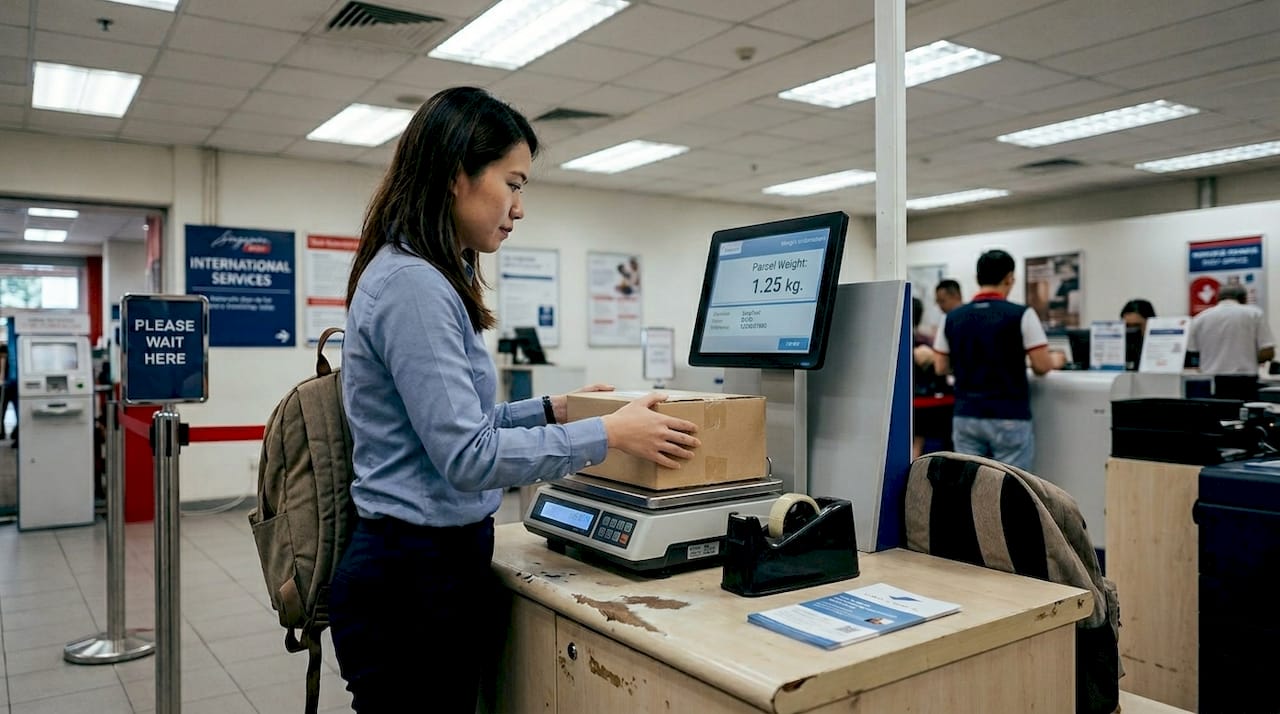
Postage rates are calculated based on three main factors: the weight of the parcel, its dimensions, and the destination country. Heavier and bulkier items naturally cost more to ship. But beyond the base rate, a range of surcharges and taxes can significantly increase your total cost.
Here are the most common extra charges you should plan for:
- Overweight surcharges: Parcels exceeding 70kg or measuring over 120cm in any single dimension may incur additional fees or be refused entirely.
- Remote area surcharges: Deliveries to rural or hard-to-reach areas in certain countries attract extra fees.
- Fuel surcharges: Most courier services apply variable fuel surcharges that fluctuate with global fuel prices.
- Customs duties: The destination country's customs authority may charge import duties based on the declared value of the goods.
- Destination GST or VAT: Many countries apply local consumption taxes on imported goods. For example, Singapore's GST is 9% on the landed CIF (Cost, Insurance, and Freight) value for goods imported into Singapore.
- US tariffs: For shipments going to the United States, a 10% tariff applies on low-value goods, meaning even small packages are affected.
The table below gives a quick comparison of typical fee triggers and sample tax rates across popular shipping destinations:
| Destination | Duty threshold | Sample import duty | Local tax (GST/VAT) | US tariff note |
|---|---|---|---|---|
| United States | USD 800 (de minimis) | Varies by HS code | No federal VAT | 10% on low-value goods |
| Australia | AUD 1,000 | 5% average | 10% GST | N/A |
| United Kingdom | GBP 135 | Varies by product | 20% VAT | N/A |
| Japan | JPY 10,000 | 0–30% by category | 10% consumption tax | N/A |
| Singapore (imports) | SGD 400 | Varies | 9% GST on CIF | N/A |
Understanding these numbers helps you price your shipments accurately, especially if you run a small business and need to factor these costs into your pricing. You can also find affordable shipping options that help keep costs low even when destination taxes are unavoidable. For businesses managing regular exports, reviewing shipping rates for SMEs will give you a better sense of what competitive pricing looks like.
One thing many senders overlook: the declared value on your customs form directly affects how much the recipient pays in destination taxes. Under-declaring value is illegal and can result in fines or parcel seizure. Always declare accurately.
International postage options: Postal service vs courier
With the costs and regulations clear, let's move on to choosing the best method for your needs: postal service or courier.
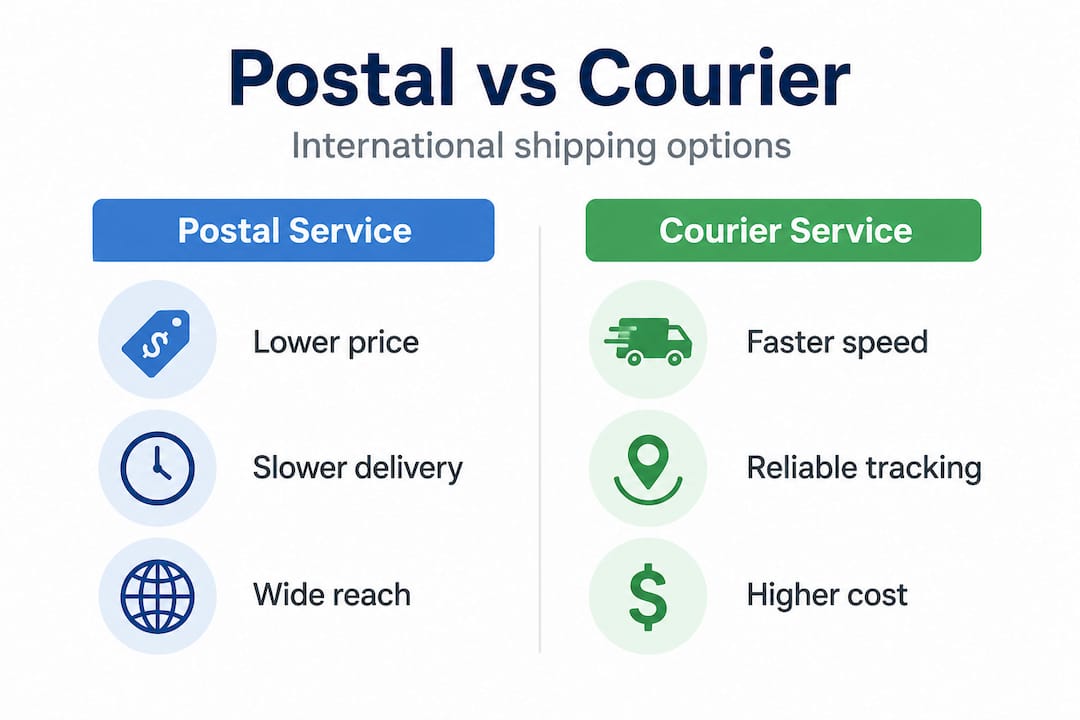
Both options can send your parcel internationally. But they differ significantly in speed, reliability, tracking capability, and suitability for different types of shipments.
Postal service is run by a national postal authority and offers wider reach at lower price points. It works well for personal parcels, small gifts, or non-urgent items. However, tracking capabilities are limited, and transit times can stretch from 2 to 6 weeks depending on the destination.
Courier service refers to private delivery companies such as DHL, FedEx, UPS, and similar providers. These services offer faster delivery, real-time tracking, and free pickup from your location. They are better suited for urgent shipments, high-value items, and commercial goods that require documented chain of custody.
Here is a side-by-side comparison to help you decide:
| Feature | Postal service | Courier service |
|---|---|---|
| Delivery speed | 2 to 6 weeks typical | 2 to 7 business days typical |
| Real-time tracking | Limited or none | Full tracking via app or portal |
| Free pickup | Generally not available | Available Monday to Friday |
| Commercial shipments | Limited suitability | Fully supported |
| Cost | Lower base rate | Higher, but includes more features |
| PO Box delivery | Supported | Mostly not supported |
| Redelivery attempts | Varies | Typically 2 attempts before return |
To help you visualize the step-by-step process for both options, here is a numbered breakdown:
Using a postal service:
- Visit a post office or use the postal provider's online platform to book your shipment.
- Declare the contents and value on the customs form (CN22 or CN23 depending on parcel size).
- Pay the postage fee at the counter or online.
- Drop off the parcel or wait for scheduled collection if available.
- Use the tracking number (if provided) to monitor progress online.
Using a courier service:
- Compare courier rates on a shipping aggregator platform and select your preferred service tier.
- Enter parcel details, destination, and declared value to generate shipping documentation automatically.
- Book free parcel pickup for your chosen date, available Monday to Friday.
- Attach the printed shipping label and customs invoice to your parcel.
- Monitor your shipment using real-time tracking and digital tools via the courier's app or website.
- Recipient receives the parcel, with up to 2 redelivery attempts if they are unavailable.
For most small businesses and anyone shipping higher-value goods, the courier route is the more reliable choice. Check out the best courier services available from Singapore to find the right fit for your shipment size and destination.
Pro Tip: Use courier services when delivery reliability matters most, especially for commercial orders where delayed or lost parcels affect your customer relationships and cash flow.
Practical checklist for sending parcels abroad
Now you know your options. Let's make sure your next international shipment is smooth with a practical checklist.
A well-prepared parcel moves faster and faces fewer problems at customs. The checklist below covers every stage, from packing to tracking.
Before you pack:
- Confirm the item is not prohibited or restricted in the destination country.
- Check whether the item requires a special export or import permit.
- Verify the recipient's address is complete and accurate (no PO Boxes for most couriers).
- Look up the destination country's import duty thresholds to know what your recipient may be charged.
Packaging your parcel:
- Use sturdy, clean boxes that can withstand handling during transit.
- Wrap fragile items in bubble wrap or foam padding with at least 5cm of cushioning on all sides.
- Seal all edges securely with packing tape, not just the opening flap.
- Make sure the weight and dimensions are within the limits for your chosen service.
Paperwork and documentation:
- Complete a customs declaration form with an accurate description of contents and declared value.
- For commercial shipments, attach a commercial invoice that includes item descriptions, quantities, unit values, and HS codes (Harmonized System codes used for customs classification).
- Keep a copy of all documentation for your records.
Choosing and booking your service:
- Compare rates and transit times across postal and courier services before committing.
- Select the service tier that fits your urgency and budget: priority, standard, or economy.
- Book instant shipping quotes online to lock in your rate and generate labels automatically.
- Schedule a free pickup and tracking arrangement to save time, with courier pickup available Monday to Friday. Note that courier services typically allow 2 redelivery attempts before returning a parcel if the recipient is unavailable, so it helps to notify your recipient in advance.
Common mistakes to avoid:
- Forgetting to check the prohibited items list for your destination.
- Under-declaring or misclassifying goods on customs forms.
- Using packaging that is too weak for international transit.
- Missing required documentation for commercial shipments.
- Failing to notify the recipient about expected delivery dates.
Pro Tip: Schedule a free parcel pickup when booking your courier service. It saves you the trip to a drop-off point and makes the process faster, especially if you ship regularly.
Why most Singapore senders overlook the nuances—and how to avoid expensive mistakes
After following the checklist, consider these deeper insights to truly master international postage from Singapore.
Here is something worth saying directly: most people treat international shipping as a transactional process. You pack the box, pay the fee, and assume it arrives. That mindset works for domestic mail. It does not work for international postage, and Singapore senders in particular are vulnerable to this trap.
Singapore's outbound shipping setup is actually quite favorable. No GST applies to outbound international postage from Singapore, and personal items generally clear customs smoothly if they are non-prohibited. That ease on the sending side creates a false sense of security. The real complexity sits at the destination, where duties, taxes, and regulations vary enormously.
We have seen many small businesses learn this the hard way. A seller ships products to customers in the UK, priced to cover Singapore postage costs, but fails to account for 20% UK VAT at the destination. The customer gets hit with an unexpected customs bill, refuses the delivery, and the parcel comes back. The seller loses both the sale and the shipping cost.
The uncomfortable truth is that the rules change regularly. The US tariff shifts we saw in 2025 affected even small, low-value shipments in ways many sellers did not anticipate. Staying current with destination regulations is not a one-time task. It is an ongoing responsibility.
What actually works is building a pre-shipment research habit. Before sending anything to a new destination, check that country's import rules, duty thresholds, and any category-specific restrictions. For commercial goods, document everything. Product descriptions, HS codes, declared values, and invoices are not bureaucratic formalities. They are your protection against delays and seizures. The best shipping tips consistently point to preparation as the single biggest factor in smooth international deliveries.
For personal parcels, the most common mistake is assuming that because the item is legal in Singapore, it is legal everywhere. Food products, electronics with certain wireless frequencies, certain medications, and even some packaging materials are restricted or banned in specific countries. One quick check before packing saves significant trouble after.
Pro Tip: Treat destination research as part of your packing process, not an afterthought. Check regulations for both Singapore and the destination every time you ship to a new country, even if you have shipped similar items before.
Ready to ship globally? Get instant quotes and reliable service from Singapore
Ready to put these tips into action? Here's how Simply Parcel can help you ship internationally with confidence.
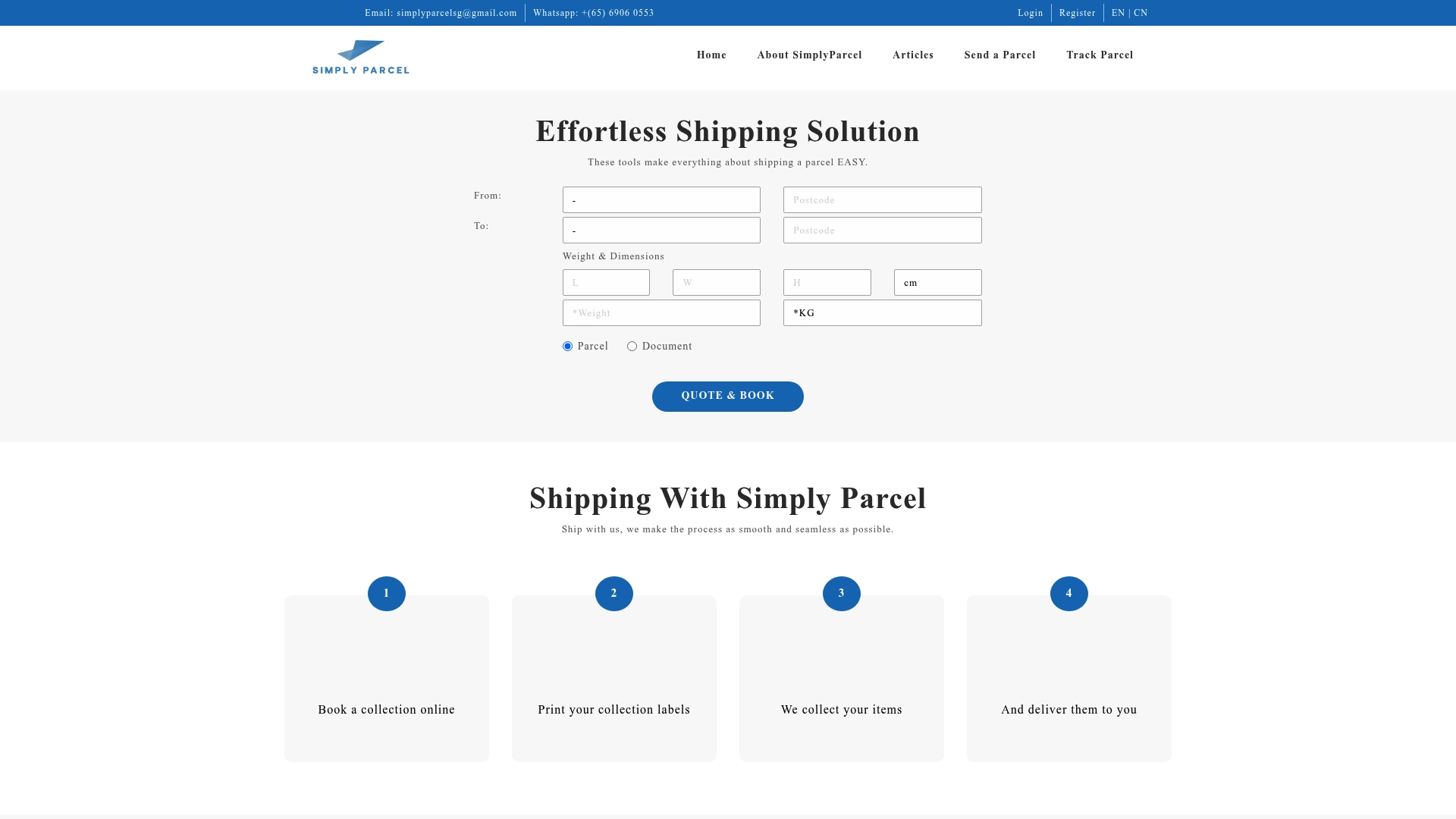
Simply Parcel is Singapore's trusted shipping aggregator, designed to take the complexity out of international postage. You can get a shipment quote from Simply Parcel in seconds, comparing rates across major courier partners to find the best price for your destination and parcel size. The platform generates shipping labels and customs documentation automatically, so there is no manual paperwork involved. Free pickup is available Monday to Friday, and real-time tracking keeps you and your recipient informed at every stage. Whether you are sending a single personal parcel or managing regular commercial exports, Simply Parcel international shipping gives you the tools to ship smarter. Get instant quotes and book your next shipment today.
Frequently asked questions
Is there GST on international postage from Singapore?
No, outbound international postage from Singapore is GST-free, but destination duties and taxes may still apply depending on the receiving country's import regulations.
What happens if my parcel exceeds size or weight limits?
Parcels over 70kg or 120cm in any single dimension may attract surcharges or be refused by postal and courier services, so always verify limits before booking.
Can I ship commercial goods using standard international postage?
Not always. Commercial shipments trigger greater scrutiny and often require detailed documentation, correct HS codes, and commercial invoices, especially for destinations like the United States.
Does Singapore offer free parcel pickup for international shipping?
Yes, free pickup is available Monday to Friday for international shipments when you book through a courier service, saving you the trip to a drop-off location.
How can I track my international parcel from Singapore?
You can track via app or online portals provided by your postal or courier service, with real-time updates available throughout the shipment journey.
Recommended
- What is international shipping? Complete guide for Singapore senders
- Simply Parcel Blog SG | Shipping Tips, Updates and Sharing...
- Simply Parcel Blog SG | Shipping Tips, Updates and Sharing...
- International shipping terminology: A clear guide for Singapore
- Ship Boxes from USA to Singapore, Cost, Delivery Time & Customs Guide (2026) - ExpediShip