
Shipping cost is the total of your carrier rate, packaging materials, labor, and applicable surcharges for a given parcel. Knowing how to calculate shipping costs accurately keeps your budget on track and protects your profit margins. Whether you are sending a personal gift abroad or fulfilling hundreds of orders a week, the same core formula applies. Tools like the UPS calculator, FedEx rate finder, and Stamps.com give you real-time estimates, but you need to understand what drives each number before you trust any quote.
What components are included in calculating shipping costs?
The real shipping cost per order equals your carrier rate plus packaging materials, labor, insurance, and surcharges. Businesses that only look at the carrier label fee consistently underestimate their true cost. That gap silently erodes profit margins over time.
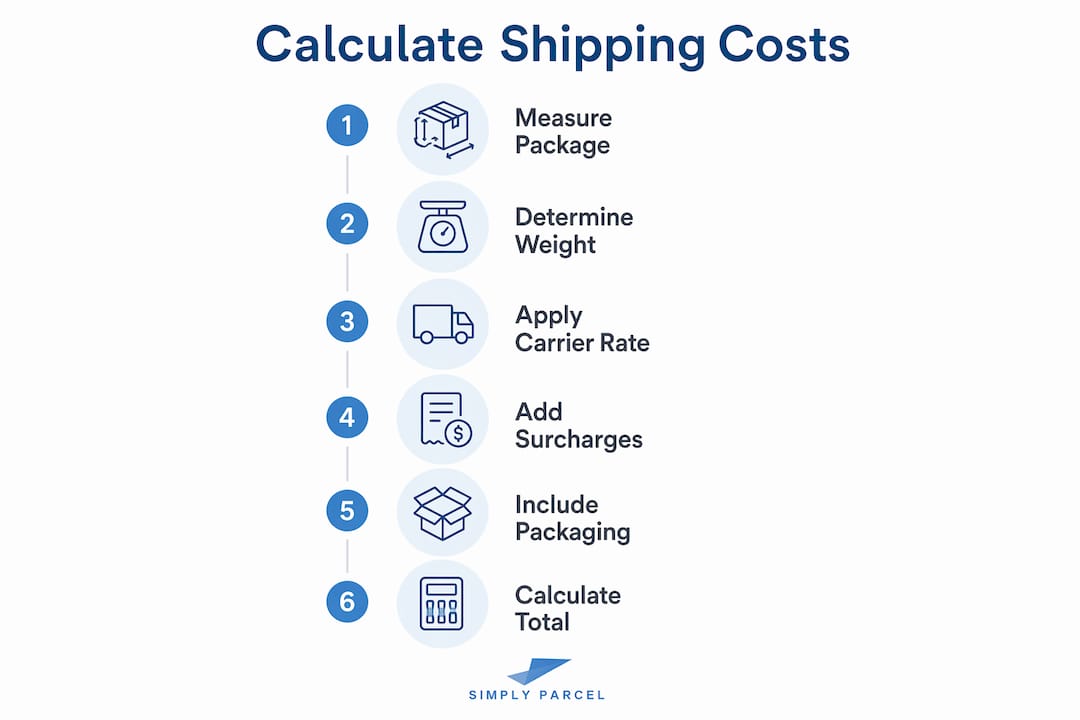
The all-in shipping cost for a domestic parcel typically runs $5.00 to $24.50. Here is how that breaks down across the main components:
| Cost component | Typical range | Notes |
|---|---|---|
| Carrier rate | $3.50–$12.00 | Varies by weight, zone, and service speed |
| Packaging materials | $0.50–$2.50 | Boxes, tape, void fill, labels |
| Labor | $1.00–$3.00 | Packing time, handling, drop-off |
| Surcharges | $0–$5.00 | Fuel, residential delivery, oversized fees |
| Insurance | Varies | Optional but recommended for high-value items |
Surcharges like fuel and residential delivery fees can exceed the base shipping rate on their own. That means a $6 carrier quote can become a $12 charge by the time all fees are applied. Always factor every line item before setting a shipping price or budget.
Pro Tip: Request an itemized rate breakdown from your carrier before committing to a service. Many carriers display surcharges only in their detailed rate sheets, not in the headline quote.
How do dimensional weight and package measurements impact shipping cost calculations?
Dimensional weight, also called DIM weight, is the shipping industry's standard method for pricing large but light packages. Carriers charge based on whichever is greater: the actual weight or the DIM weight. This single rule catches more shippers off guard than any other part of the pricing formula.
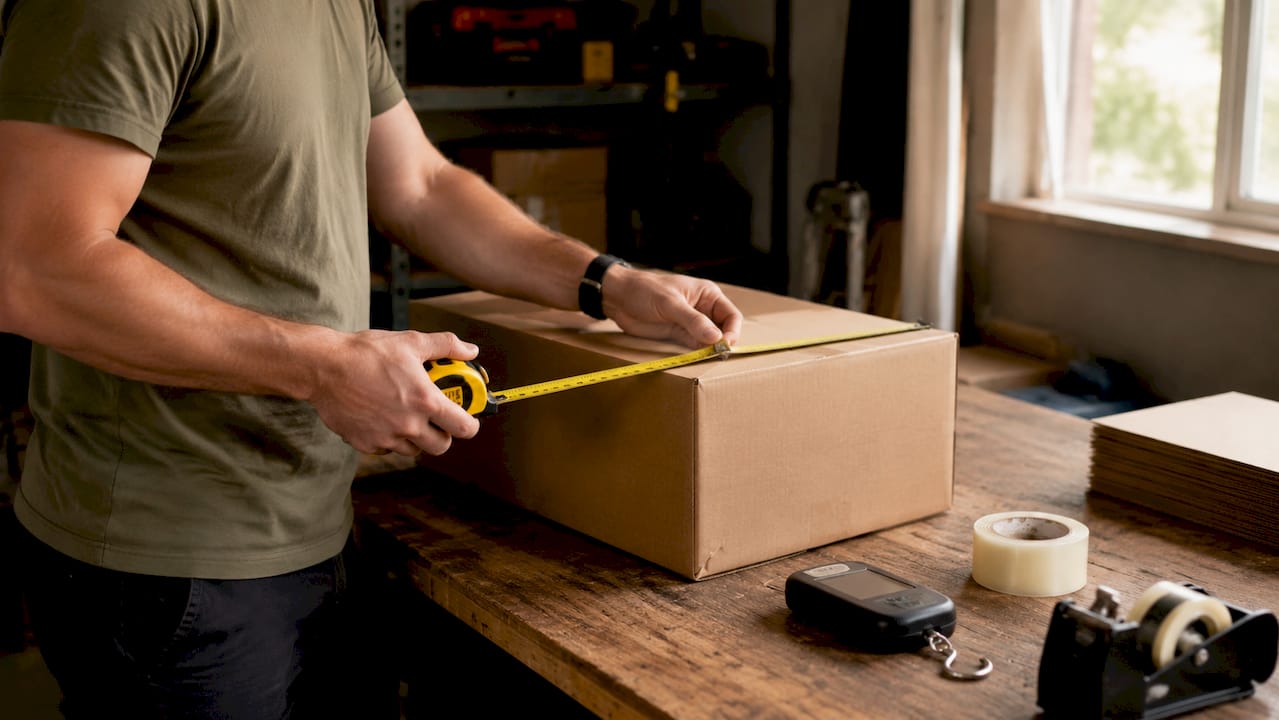
How to calculate DIM weight
The DIM weight formula divides the package volume by a carrier-specific divisor. UPS and FedEx use a divisor of 139. USPS uses 166. A package measuring 18 x 14 x 12 inches has a volume of 3,024 cubic inches. Divide by 139 and you get a DIM weight of roughly 22 lbs. If the actual parcel weighs only 8 lbs, you pay for 22 lbs.
Follow these steps to measure your package correctly and find your chargeable weight:
- Measure length at the longest point of the package, rounding up to the nearest whole inch.
- Measure width at the widest point, again rounding up.
- Measure height at the tallest point, rounding up.
- Multiply length x width x height to get the volume in cubic inches.
- Divide the volume by your carrier's divisor (139 for UPS/FedEx, 166 for USPS).
- Compare the DIM weight to the actual scale weight. The higher number is your chargeable weight.
Accurate measurement and right-sized packaging are the most direct ways to control DIM weight charges. Using a box that is two inches too large on each side can push you into a higher weight bracket and cost you several extra dollars per shipment. Check your parcel packaging choices before you print a single label.
Pro Tip: Switch to poly mailers for soft goods whenever possible. Mailers have almost no dimensional volume, so you pay only for actual weight.
How do shipping zones, service levels, and destination affect shipping costs?
Shipping zones are distance-based pricing tiers that carriers assign based on how far a parcel travels from its origin point. Zone 1 covers the shortest distances, and Zone 8 covers the longest domestic routes. The farther your parcel travels, the higher the zone number and the higher the base rate.
The zone impact on cost is not linear. A 5 lb UPS Ground package costs approximately $12 at Zone 2 but jumps to $22 at Zone 8. That is an 83% increase for the same package weight, driven entirely by geography. Understanding how shipping zones work before you quote a customer can prevent significant losses.
Service level is the second major pricing lever. Your key options are:
- Ground shipping: The most affordable option, with transit times of 1–5 business days domestically. Best for non-urgent, heavier shipments.
- Express shipping: Faster transit, typically 2–3 business days, at a noticeably higher rate. Suited for time-sensitive orders.
- Overnight or priority shipping: The fastest and most expensive option. Justified only when delivery speed is critical to the recipient.
- Economy or consolidation services: Slower than standard ground but cheaper, often used for low-priority international parcels. Simplyparcel offers an economy tier specifically for budget-conscious international senders.
The role of shipping speed on total cost is significant. Upgrading from ground to overnight on a single 5 lb package can triple the carrier charge. For businesses shipping in volume, that difference compounds quickly across hundreds of orders per month.
Residential delivery adds another layer of cost. UPS and FedEx charge approximately $5.40–$6.90 per package for residential delivery. USPS does not charge this fee, which makes it the better choice for consumer deliveries to home addresses in some scenarios.
What tools and calculators can help you estimate and compare shipping costs?
A shipping cost calculator takes your package details and destination and returns a real-time rate from one or more carriers. Using a calculator eliminates guesswork and gives you a defensible number before you commit to a price or a carrier.
| Tool | Best for | Key feature |
|---|---|---|
| UPS Rate Calculator | UPS-specific quotes | Zone and service level breakdown |
| FedEx Rate Finder | FedEx-specific quotes | Surcharge transparency |
| Stamps.com calculator | Multi-carrier comparison | Discounted commercial rates |
| Simplyparcel quote tool | International shipments from Singapore | Instant multi-carrier comparison |
| ForwarderOne calculator | Freight and Amazon sellers | Multi-carrier freight estimates |
Multi-carrier shipping calculators can unlock up to 87% discounted commercial rates compared to retail postage prices. That discount is available to high-volume shippers who access real-time carrier rates through aggregator platforms. For small businesses, this is one of the fastest ways to reduce per-shipment cost without changing anything about your packaging or process.
To use any calculator effectively, you need four inputs ready: actual weight, package dimensions (length, width, height), origin ZIP code or postal code, and destination ZIP code or postal code. Enter those details, select your service level, and the tool returns a base rate plus an itemized list of applicable surcharges. Always review the surcharge section, not just the headline rate.
For businesses processing regular shipments, multi-carrier shipping software goes further than a one-off calculator. It integrates with your store or order management system, pulls live rates at checkout, and lets you compare carriers side by side for every order. That real-time connection means checkout rates reflect actual carrier costs rather than outdated estimates, which protects your margins on every transaction.
What common mistakes cause inaccurate shipping cost estimates?
Most sellers misjudge surcharges or fail to update package dimensions, which leads to inaccurate checkout rates and direct margin loss. The mistake is not always ignorance. It is often a process gap: someone measured the package once six months ago and the data was never updated when the box size changed.
The most common errors to avoid:
- Ignoring surcharges entirely. Fuel surcharges, residential delivery fees, and peak season premiums are not optional line items. They apply automatically and can add $5–$10 per package.
- Using outdated package data. If you change your box size or product weight, update your shipping profiles immediately. Stale data produces wrong rates.
- Skipping insurance on high-value items. Carrier liability limits are low. For parcels worth more than $100, adding declared value coverage is a straightforward cost to include in your shipping price.
- Forgetting labor and packaging in your cost model. Packaging costs alone can represent 10–40% of product price. Treating them as invisible costs is a reliable way to undercharge customers.
- Choosing the wrong carrier for residential deliveries. USPS often beats UPS and FedEx on last-mile residential cost because it does not apply residential surcharges.
Pro Tip: Review your shipping cost inputs every quarter. Carrier rates change, your product mix changes, and box sizes evolve. A quarterly audit catches discrepancies before they compound into significant losses.
For practical strategies on cutting costs further, the guide on reducing shipping costs for small businesses covers negotiation tactics and carrier selection in detail.
Key takeaways
Accurate shipping cost calculation requires combining carrier rates, DIM weight, shipping zones, service levels, and all applicable surcharges into a single total before setting any price or budget.
| Point | Details |
|---|---|
| Use the full cost formula | Add carrier rate, packaging, labor, insurance, and surcharges to get the real per-shipment cost. |
| Calculate DIM weight every time | Divide package volume by 139 (UPS/FedEx) or 166 (USPS) and charge based on the higher weight. |
| Know your shipping zone | A single zone jump can increase cost by 80% or more on the same package weight. |
| Use a multi-carrier calculator | Tools like Stamps.com and Simplyparcel unlock discounted rates and side-by-side carrier comparisons. |
| Audit your data quarterly | Outdated weight and dimension data causes rate errors that erode margins silently over time. |
What I have learned from watching shipping costs eat into margins
Shipping cost calculation looks straightforward on paper. In practice, the hidden costs are the ones that do the most damage. I have seen businesses price their shipping based on the carrier label alone, then wonder why their margins shrink every quarter. The culprit is almost always the same: surcharges and packaging costs that were never counted.
The most underrated tool in this process is not a calculator. It is discipline around measurement. Carriers do not estimate your package dimensions. They measure them at the facility, and if your declared dimensions are wrong, you get a correction charge after the fact. Getting your measurements right before you ship is not a minor detail. It is the foundation of every accurate rate you will ever generate.
Multi-carrier comparison tools changed how I think about shipping strategy. The ability to see UPS, FedEx, USPS, and regional carriers side by side for the same shipment makes it obvious that no single carrier wins every route. The best rate depends on the zone, the weight, and the service level for that specific parcel. Locking into one carrier out of habit leaves money on the table consistently.
Packaging is also a margin lever that most shippers underuse. Right-sizing your boxes is not just about aesthetics. It directly reduces your DIM weight charge and your void fill cost at the same time. The international freight cost factors that apply to cross-border shipments make this even more critical, since volumetric pricing is standard across most international carriers.
Review your shipping cost inputs regularly. Carrier rates change in january and july most years. Your product mix evolves. Your box sizes shift. A quarterly review of your weight profiles, box dimensions, and surcharge exposure takes an hour and consistently pays for itself.
— Simply
Get instant shipping quotes with Simplyparcel
Simplyparcel gives you a fast, transparent way to compare international courier rates and book shipments directly from Singapore. Instead of checking each carrier separately, you get side-by-side quotes from multiple courier partners in one place, with no hidden fees and free pickup included. Whether you are sending a single parcel or managing regular business shipments, Simplyparcel's platform shows you the full cost upfront so you can choose the right service for your budget and timeline. Get your instant shipment quote now and see how much you can save on your next international delivery.
FAQ
What is the formula for calculating shipping costs?
The total shipping cost equals your carrier rate plus packaging materials, labor, insurance, and all applicable surcharges. Ignoring any of these components produces an underestimate that erodes your margins.
How does dimensional weight affect what I pay?
Carriers charge based on whichever is greater: actual weight or DIM weight. DIM weight is calculated by dividing the package volume (length x width x height) by 139 for UPS and FedEx, or 166 for USPS.
What are shipping zones and why do they matter?
Shipping zones are distance-based pricing tiers assigned by carriers. A 5 lb package can cost $12 at Zone 2 and $22 at Zone 8, so knowing your zone before you quote a shipping price is critical.
Can I get discounted shipping rates as a small business?
Yes. Multi-carrier platforms like Stamps.com and Simplyparcel provide access to commercial rates that can be significantly lower than retail postage prices. High-volume accounts receive the largest discounts.
How often should I update my shipping cost data?
Update your package weights, dimensions, and carrier rate profiles at least once per quarter. Carrier rates typically change in january and july, and any change to your product or packaging requires an immediate update to avoid rate errors.