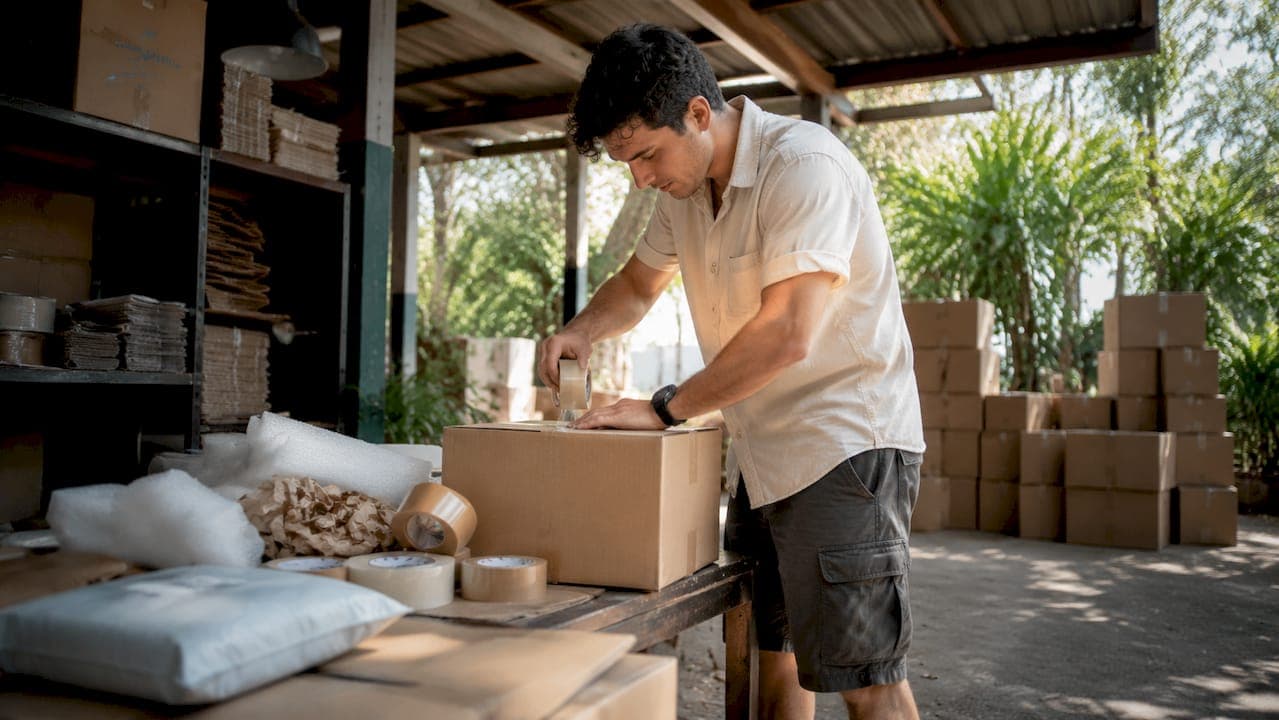
Parcel packaging best practices are the proven methods for protecting shipments, controlling costs, and meeting carrier requirements from the moment you seal a box to the moment it arrives. Carriers like FedEx, UPS, and USPS set specific standards for sealing, labeling, and box integrity. Skipping any step raises your risk of damage, delays, and extra fees. This guide covers every critical element: choosing the right box, cushioning materials, the H-tape sealing method, accurate labeling, and sustainable packaging methods that save money without sacrificing protection.
1. parcel packaging best practices: choose the right box first
The box is the foundation of every shipment. A weak or wrong-sized box fails before the parcel even reaches the sorting facility.

Use new or like-new corrugated cardboard boxes for all commercial shipments. Reused boxes lose structural strength at the fold lines, especially after exposure to moisture or pressure. For heavy items above 20 kg, double-walled corrugated cardboard is the correct choice. It resists crushing under stacking pressure that single-wall boxes cannot handle.
Right-sizing matters more than most shippers realize. Leave roughly 2 inches of space on all sides between your item and the box walls. That space is for cushioning, not air. A box that is too large allows contents to shift during transit, which causes internal damage even when the outer box looks fine.
- Poly mailers work for soft, non-fragile items like clothing or fabric goods
- Padded envelopes suit documents, small electronics, or flat items under 500 grams
- Corrugated boxes are the standard for anything rigid, heavy, or breakable
- Rigid mailers protect flat items like photos, certificates, or printed materials
Pro Tip: Stock at least four to six different box sizes. Matching the box to the item is one of the fastest ways to cut dimensional weight fees without changing anything else about your process.
2. what are the best sealing techniques for parcels?
Tape is not cosmetic. Tape seams are the structural failure lines of any carton, and reinforcing them correctly is what keeps a box intact through sorting machines, conveyor belts, and stacking.
The H-tape method is the minimum standard for any carton in commercial transit. Here is how to apply it correctly:
- Run one strip of tape along the full center seam of the top and bottom flaps.
- Run one strip across each end of the seam, extending 50–75 mm onto the carton faces on both sides.
- The three strips form an "H" shape when viewed from above.
- For parcels over 20 kg, add edge reinforcement strips along the side seams.
- Press each strip firmly from the center outward to remove air pockets.
The H-tape method is the minimum sealing standard for any carton in commercial transit. Applying it correctly prevents seam-end peeling, corner lifting, and mid-transit opening — the three most common box failures on courier networks.
Tape type matters as much as technique. Use pressure-sensitive plastic tape at least 2 inches wide. FedEx, UPS, and USPS all require this standard. Polypropylene tape performs better in cold or humid conditions. Acrylic tape holds more reliably across temperature changes during long international routes.
The most common sealing mistakes are single-strip taping down the center seam only, applying tape over dust or debris, and failing to press the tape flat. Each of these causes seam failures under stress that would not have happened with a proper H-tape application.
3. how to select the right cushioning materials
Cushioning keeps your item from moving inside the box and absorbs impact during drops and stacking. The right material depends on the item's weight, fragility, and shape.
Bubble wrap is the most versatile cushioning option for irregular or fragile items. Pack bubble wrap with the bubbles facing outward so the flat surface contacts the item directly. This distributes pressure evenly across the surface instead of concentrating it on individual bubble points.
Kraft paper works well for filling void space around non-fragile items. It is lightweight, recyclable, and easy to shape around irregular products. Packing peanuts fill large voids efficiently but tend to shift during transit, so they work best in combination with a layer of bubble wrap directly around the item. Foam inserts are the top choice for electronics, instruments, or anything with a precise fit requirement.
Avoid using newspaper as primary cushioning. The ink transfers to products, and the paper compresses too easily under weight to provide real protection.
4. how to package fragile and special items safely
Under-packing fragile items and using weak boxes are the top causes of parcel damage in courier delivery. The fix is a layered approach that treats every fragile item as if it will be dropped.
- Wrap each fragile item individually before placing it in the box
- Use bubble wrap with bubbles facing outward for even pressure distribution
- Place a 2-inch layer of cushioning on the bottom of the box before adding the item
- Fill all remaining void space so nothing shifts during transit
- Keep fragile items away from box walls by at least 2 inches on every side
- Mark the outside of the box clearly with "Fragile" stickers on multiple faces
For highly sensitive items like medical instruments, cameras, or collectibles, use double-boxing with cushioning between the boxes. Place the item in a snug inner box, then place that box inside a larger outer box with padding filling the gap. This separates the item from any direct outer impact.
Pro Tip: For electronics, use anti-static bubble wrap instead of standard bubble wrap. Standard wrap can generate static discharge that damages circuit boards, even through packaging.
Specialized foam inserts cut to the shape of your product offer the highest level of protection for repeat shipments of the same item. Companies shipping fragile goods at volume use custom foam inserts to eliminate movement entirely. For guidance on FBA packaging requirements, commercial shippers can reference industry standards that apply to a wide range of product categories.
5. how to label and prepare parcels for smooth delivery
A damaged or misread label causes the same problem as a missing one: your parcel goes to the wrong place or sits in a sorting facility until someone resolves it manually. Labels must be flat, well adhered, and placed on the largest surface of the box. Old labels on reused boxes cause automated sorting errors and delivery delays.
Follow these steps for every parcel you ship:
- Place the shipping label on the largest flat face of the box, free of seams and edges
- Remove or fully cover all old labels, barcodes, and tracking numbers from reused boxes
- Include the recipient's full name, address, and phone number on the label
- Write or print the sender's return address clearly in the top left corner
- Place a duplicate address card inside the box in case the outer label is damaged
- Cover the label with clear tape to protect against moisture and smudging during transit
Avoid handwriting labels for international shipments. Printed labels scan more reliably through automated systems and reduce the chance of a misread address. If you use a shipping platform, print the label directly from the system to get a clean, carrier-compliant format every time.
6. what sustainable packaging methods save you money?
Sustainable packaging and cost-efficient packaging are the same thing in most cases. Right-sizing packaging reduces dimensional weight fees significantly. Dimensional weight pricing means carriers charge based on the volume of your package, not just its actual weight. A large, lightly packed box costs more to ship than a compact, well-packed one of the same weight.
Recycling and right-sizing packaging can reduce packaging waste by 40%. That reduction also lowers your material costs and your carrier fees at the same time. Stocking 6–8 box sizes improves cost efficiency compared to defaulting to one or two standard sizes for everything.
| Practice | Environmental Benefit | Cost Benefit |
|---|---|---|
| Right-sized corrugated boxes | Reduces cardboard waste | Lowers dimensional weight fees |
| Recycled content boxes | Reduces raw material demand | Often lower purchase cost |
| Kraft paper void fill | Fully recyclable, biodegradable | Cheaper than foam peanuts |
| Eliminating excess plastic wrap | Reduces plastic waste | Cuts material spend |
| Reusing inner packaging | Extends material life cycle | Reduces supply costs |
Use 100% recyclable corrugated cardboard as your default box material. Avoid polystyrene foam peanuts when kraft paper or recycled paper fill can do the same job. For small businesses looking to cut costs further, reducing shipping expenses through smarter packaging choices is one of the most direct levers available.
Key takeaways
Effective parcel packaging requires the right box, proper cushioning, H-tape sealing, accurate labeling, and right-sized packaging to protect shipments and control costs.
| Point | Details |
|---|---|
| Choose the right box | Use new corrugated cardboard and match box size to item with 2 inches of cushioning space. |
| Apply the H-tape method | Use three strips forming an "H" on every seam; add edge strips for parcels over 20 kg. |
| Cushion fragile items properly | Wrap individually, face bubble wrap outward, and double-box highly sensitive goods. |
| Label accurately and protect it | Place labels flat on the largest surface, remove old labels, and cover with clear tape. |
| Right-size for cost and sustainability | Match box to item volume to reduce dimensional weight fees and packaging waste. |
What i've learned from watching thousands of parcels ship
Most packaging failures I see come down to two things: boxes that are too big and tape that is applied too quickly. Shippers grab whatever box is nearby, toss in some bubble wrap, and run a single strip of tape down the center seam. That single strip is not a seal. It is a suggestion.
The H-tape method feels like extra effort until you see what happens to a single-strip box on a long-haul international route. Sorting machines apply real force. Stacking adds real weight. A box sealed with one strip down the center will open under those conditions. A box sealed with the H-tape pattern will not.
The other thing I would push back on is the idea that sustainable packaging is a premium option. Right-sizing your boxes is free. Switching from foam peanuts to kraft paper costs less per shipment. These changes reduce your material spend and your carrier fees at the same time. Sustainability and cost efficiency point in the same direction here.
For small businesses especially, building a simple packaging kit with four to six box sizes, bubble wrap, kraft paper, and 2-inch polypropylene tape covers 90% of shipment scenarios. You do not need a warehouse full of specialty materials. You need the right basics applied consistently. More shipping tips for small businesses can help you build that system without overcomplicating it.
— Simply
Ship smarter with Simplyparcel
Once your parcel is packed and labeled correctly, the next step is booking a reliable courier at a competitive rate. Simplyparcel is a Singapore-based shipping platform that lets you compare courier options, book pickups, and generate shipping labels in one place. Whether you are sending a single parcel or managing regular international shipments, Simplyparcel connects you with trusted courier partners across multiple speed tiers. Get an instant shipment quote and see how much you can save on your next shipment. The platform handles the logistics so you can focus on packing it right.
FAQ
What is the h-tape method for sealing parcels?
The H-tape method uses three strips of tape to form an "H" shape over the box seams: one strip along the center seam and one across each end, extending onto the carton faces. It is the minimum sealing standard for any carton in commercial transit.
How do i protect fragile items during shipping?
Wrap each fragile item individually in bubble wrap with the bubbles facing outward, cushion the box bottom with at least 2 inches of padding, and keep the item away from box walls on all sides. For highly sensitive goods, use double-boxing with cushioning between the inner and outer boxes.
Why does box size affect my shipping cost?
Carriers use dimensional weight pricing, which charges based on package volume rather than actual weight alone. A box that is too large for its contents increases your shipping cost even if the item is light. Right-sizing your box to the item is the fastest way to reduce that fee.
What tape should i use for shipping parcels?
Use pressure-sensitive plastic tape at least 2 inches wide. FedEx, UPS, and USPS all require this standard. Polypropylene tape works well in cold or humid conditions, while acrylic tape holds reliably across temperature changes on international routes.
How should i label a parcel for international shipping?
Print the label rather than handwriting it, place it flat on the largest surface of the box, and cover it with clear tape to protect against moisture. Remove all old labels and barcodes from reused boxes, and include a duplicate address card inside the parcel as a backup.