
A shipping zone is a carrier-defined geographic region used to set parcel shipping rates and estimate delivery times based on the distance a package travels between the origin and destination ZIP codes. Carriers like USPS, UPS, and FedEx assign every shipment to a zone number, and that number directly controls what you pay. The farther your parcel travels, the higher the zone, and the higher the cost. Understanding shipping zones is the single most effective way to take control of your shipping budget, whether you send one parcel a month or thousands.
What is a shipping zone and how does it work?
A shipping zone is defined as a carrier-assigned number that reflects the distance between a shipment's origin and its destination, grouped by ZIP code ranges rather than state or city lines. Zone 1 represents the shortest distance, typically local or regional delivery. Zone 8 covers the farthest points within the continental United States. Zone 9 is reserved for U.S. territories and freely associated states such as Puerto Rico and Guam.
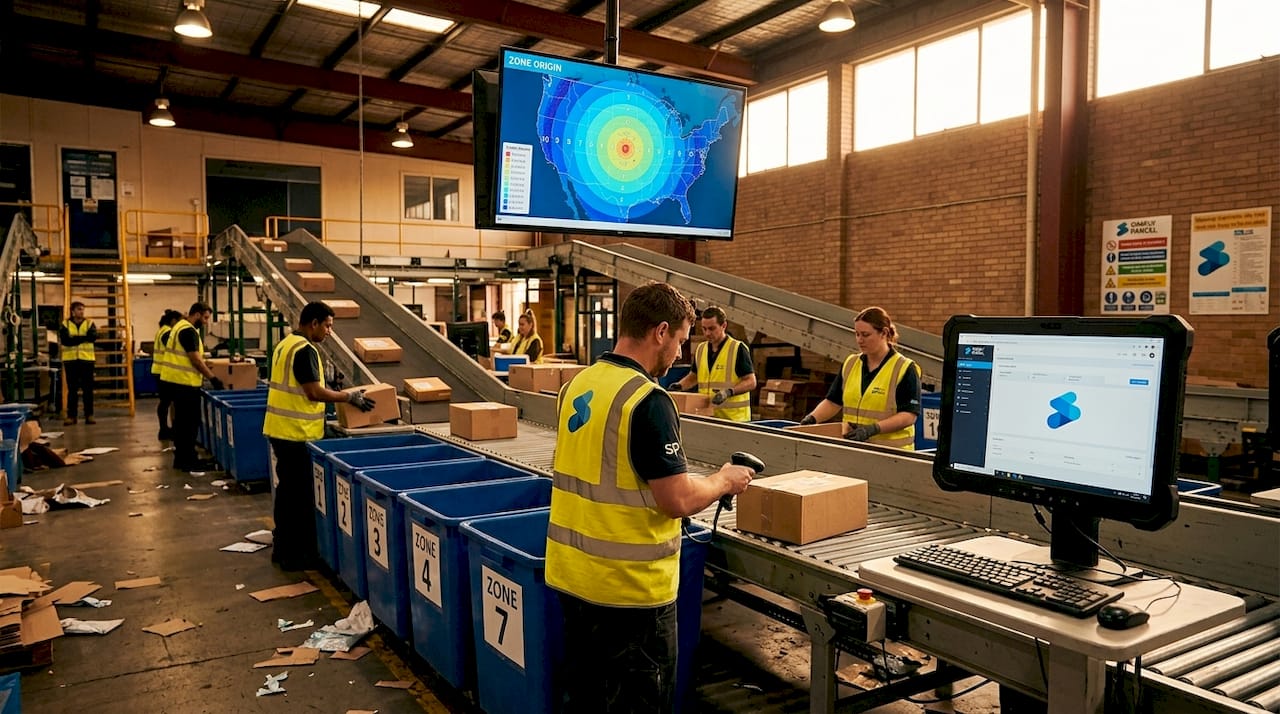
The zone number is not a fixed label attached to a city or region. It changes based on where the package originates. A shipment from New York to Chicago might be Zone 4, but the same Chicago address could be Zone 2 for a shipper based in Indianapolis. This distance-relative logic is what makes zones dynamic and why you cannot assume a destination always falls in the same zone.
Carriers use zone-based pricing because the cost of moving a parcel rises with distance. More fuel, more handling at sortation facilities, and more transit time all add up. Shipping farther zones raises operational costs, which carriers pass directly to shippers through higher zone rates.
How shipping zone calculation works
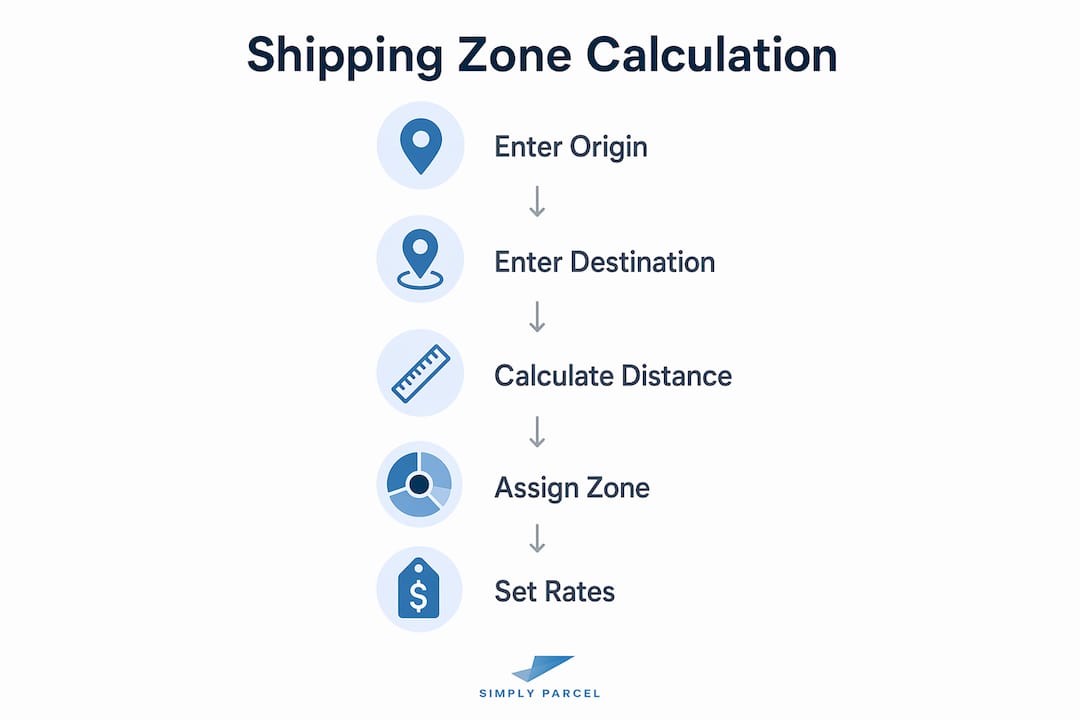
Zone calculation requires two inputs: the origin ZIP code and the destination ZIP code. Carriers feed those two values into their zone charts, which group ZIP codes by distance bands, and return a zone number. USPS, UPS, and FedEx each publish zone calculators on their websites where you can enter both ZIP codes and retrieve the zone instantly.
Zones depend on origin-to-destination distance between ZIP codes, not on state borders or city names. This is a common source of confusion. Two cities in the same state can fall into different zones depending on the shipping origin, and two cities in different states can share the same zone for the same reason.
Here is a reference table for how U.S. domestic zones typically map to distance:
| Zone | Approximate distance from origin | Typical coverage |
|---|---|---|
| Zone 1 | 0 to 50 miles | Local delivery |
| Zone 2 | 51 to 150 miles | Regional delivery |
| Zone 3 | 151 to 300 miles | Extended regional |
| Zone 4 | 301 to 600 miles | Multi-state |
| Zone 5 | 601 to 1,000 miles | Cross-region |
| Zone 6 | 1,001 to 1,400 miles | Long-distance |
| Zone 7 | 1,401 to 1,800 miles | Near cross-country |
| Zone 8 | 1,801+ miles | Full cross-country |
| Zone 9 | N/A | U.S. territories |
Pro Tip: Always run the zone calculation from your actual fulfillment address, not your business headquarters. If you ship from a warehouse in a different city, the zone for every order changes accordingly.
How zones impact shipping costs, transit times, and weight
Higher zone numbers mean higher shipping costs and often longer transit times. This is the core financial reality of zone-based pricing. A Zone 2 shipment might cost $8.00 for a 2-pound parcel, while the same parcel sent to Zone 8 could cost $18.00 or more with the same carrier and service level.
Weight compounds the zone effect significantly. Zone-based rates interact with package weight so that heavier packages in higher zones carry a double penalty. Dimensional weight (DIM weight) adds another layer. Carriers calculate DIM weight by dividing the package volume by a divisor, and if that calculated weight exceeds the actual weight, they charge the higher figure. A lightweight but bulky item shipped cross-country can cost far more than its actual weight suggests.
Factors that affect your zone-based shipping rate include:
- Zone number: The primary driver of cost, determined by origin and destination ZIP codes
- Actual weight: The physical weight of the parcel on a scale
- Dimensional weight: Volume divided by the carrier's DIM divisor, charged when higher than actual weight
- Service level: Priority, express, and economy services each carry different base rates per zone
- Fuel surcharges: Applied as a percentage and scale with the base rate, so higher zones carry higher surcharge amounts
- Residential vs. commercial delivery: Residential surcharges apply on top of zone-based rates
Pro Tip: Repackage bulky items into tighter boxes before shipping to distant zones. Reducing the DIM weight of a parcel going to Zone 7 or Zone 8 can cut your shipping cost more than negotiating a carrier discount.
Carrier zones vs. ecommerce platform shipping zones
Carrier zones and ecommerce shipping zones share the same name but serve different purposes. Carrier zones are distance-based pricing tiers set by USPS, UPS, and FedEx. Ecommerce shipping zones are geographic groupings that store owners create inside platforms like Shopify to assign shipping rates to customers at checkout.
Shopify defines its structure as shipping profile, then zone, then rate. A store owner might create a zone called "Continental US" and assign a flat $5.99 rate to it, regardless of what the carrier actually charges for that specific shipment. This is where the confusion and the financial risk sit side by side.
When ecommerce zones are defined too broadly, the flat rate a customer pays at checkout may not cover the actual carrier cost for a Zone 7 or Zone 8 shipment. A business charging $5.99 flat for all U.S. orders might absorb $12.00 in carrier costs for a cross-country parcel. Over hundreds of orders, that gap destroys margins.
The practical distinction matters for shipping integration with e-commerce businesses because the two zone systems need to align. Your ecommerce platform zones should reflect the real carrier cost differences between customer locations, not just convenient geographic groupings.
Strategies to optimize shipping zones and reduce costs
Zone optimization is the practice of reducing the average zone number across your shipments to lower costs and improve delivery speed. Businesses use several proven strategies to achieve this.
| Strategy | How it works | Cost impact |
|---|---|---|
| Multi-warehouse placement | Stock inventory in multiple locations closer to customer clusters | Reduces average zone by 2 to 4 levels |
| 3PL partnerships | Use third-party logistics providers with distributed fulfillment centers | Lowers zone without owning warehouse space |
| Zone skipping | Aggregate packages via bulk freight to a regional hub, then deliver locally | Avoids high-zone parcel rates for most of the journey |
| Dynamic shipping fees | Charge customers in farther zones more at checkout to protect margins | Passes zone cost to customer transparently |
| Order data analysis | Identify which zones generate the most orders and position inventory accordingly | Targets the highest-volume zones for optimization |
Zone skipping works especially well for high-volume shippers. Instead of sending 200 individual parcels from New York to California at Zone 8 rates, a business consolidates them into a single LTL freight shipment to a Los Angeles distribution point, then delivers locally at Zone 1 or Zone 2 rates. The savings on high-volume routes can be substantial. You can read more about this approach in Simplyparcel's guide on parcel consolidation savings.
Pro Tip: Run a zone distribution report on your last 90 days of orders. If more than 30% of your shipments fall in Zone 6, 7, or 8, you have a strong case for adding a second fulfillment location closer to those customers.
Small businesses that cannot justify multiple warehouses benefit most from dynamic shipping fees and carrier rate shopping. Charging Zone 7 customers a higher shipping fee at checkout, rather than absorbing the cost into a flat rate, keeps margins intact without requiring any infrastructure investment. For more cost-cutting shipping tips, Simplyparcel covers practical approaches tailored to smaller operations.
How to find your shipping zone using carrier tools
Determining your shipping zone takes under two minutes with the right tool. Each major carrier provides a free zone calculator on its website.
- Go to the carrier's zone calculator. USPS offers its Domestic Zone Chart tool at pe.usps.com. UPS provides a Zone Locator at ups.com. FedEx offers a Zone Locator at fedex.com under its shipping tools section.
- Enter your origin ZIP code. Use the ZIP code of the location where the package will be picked up or dropped off, not your billing address.
- Enter the destination ZIP code. Use the recipient's full ZIP code for the most accurate result.
- Read the zone result. The calculator returns a zone number between 1 and 9. Note this number alongside the service level you plan to use, since some services have different zone structures.
- Cross-reference with the rate card. Take the zone number to the carrier's rate table for your chosen service (Ground, Priority Mail, 2-Day, etc.) and find the rate for your package weight.
- Compare across carriers. Run the same origin and destination ZIP codes through USPS, UPS, and FedEx calculators. Zone numbers and rates differ between carriers for the same route.
Interpreting the result is straightforward: a lower zone number means lower cost and faster delivery. If you find your most common shipments consistently land in Zone 6 or higher, that is a signal to review your fulfillment strategy. Simplyparcel's instant quote tool applies similar zone-based logic for international shipments, giving you transparent cost estimates before you commit to a booking.
Key takeaways
Shipping zones are the primary variable controlling what you pay to send a parcel, and managing them proactively is the most direct path to lower shipping costs and faster delivery times.
| Point | Details |
|---|---|
| Zone definition | A carrier-assigned number based on origin-to-destination ZIP code distance, not state or city boundaries. |
| Zone range | Zones run from 1 (local) to 8 (cross-country) for U.S. domestic shipments, with Zone 9 for territories. |
| Cost and weight interaction | Higher zones amplify weight-based costs, including DIM weight penalties for bulky packages. |
| Ecommerce zone distinction | Platform zones in Shopify set customer-facing rates; carrier zones set actual shipping costs. Misalignment erodes margins. |
| Optimization strategies | Multi-warehouse placement, zone skipping, and dynamic checkout fees each reduce zone-related cost exposure. |
Simplyparcel's take on mastering shipping zones
From working with shippers across a wide range of industries, one pattern stands out clearly: most businesses underestimate how much their fulfillment location drives their shipping costs. They negotiate carrier discounts, switch service levels, and repackage products, but they never question whether their warehouse is in the right place. Zone optimization through smarter fulfillment placement consistently delivers larger savings than any discount negotiation.
The other overlooked area is the gap between ecommerce platform zones and carrier zones. Many store owners set a flat shipping rate, absorb the losses on distant orders, and never connect those losses to zone-based pricing. Once you map your order data to carrier zones, the problem becomes visible and solvable.
My practical advice: start with a zone audit before making any other shipping decision. Pull your last three months of orders, assign a zone to each one using the carrier's zone calculator, and calculate your average zone number. That single number tells you more about your shipping cost structure than any rate card comparison. From there, the path forward, whether that means adding a fulfillment partner, adjusting checkout pricing, or exploring zone skipping, becomes clear.
— Simply
Ship smarter with Simplyparcel
Simplyparcel gives individuals and businesses in Singapore a direct way to compare courier rates, book international shipments, and get instant cost estimates without navigating complex carrier rate tables. The platform integrates zone-based pricing logic across its courier partners, so you see transparent costs upfront rather than discovering them at the point of payment. Whether you are sending a single parcel or managing regular international freight, Simplyparcel's instant shipment quote tool calculates your options in seconds. You can also book your shipment directly and get real-time tracking across zones from pickup to delivery.
FAQ
What is a shipping zone in simple terms?
A shipping zone is a number assigned by a carrier like USPS, UPS, or FedEx that reflects how far your package travels from the origin ZIP code to the destination ZIP code. Higher zone numbers mean greater distance, higher cost, and typically longer delivery time.
Are shipping zones the same for every carrier?
No. Each carrier calculates zones independently using its own ZIP code groupings and distance bands. A shipment from the same origin to the same destination can fall into different zones depending on whether you use USPS, UPS, or FedEx.
How do I determine my shipping zone?
Enter your origin ZIP code and destination ZIP code into the zone calculator on the carrier's website. USPS, UPS, and FedEx each offer free tools that return a zone number instantly based on those two inputs.
Why do shipping zones matter for e-commerce businesses?
Shipping zones directly affect the cost of every order you fulfill. If your ecommerce platform charges customers a flat rate that does not account for zone-based cost differences, you absorb the gap on every high-zone shipment, which reduces your profit margin over time.
What is zone skipping in shipping?
Zone skipping is a strategy where high-volume shippers consolidate parcels destined for a specific region into a bulk freight shipment, transport it to a regional hub, and then deliver locally at low zone rates. It reduces the cost of cross-country parcel delivery for businesses with sufficient order volume to justify the consolidation.