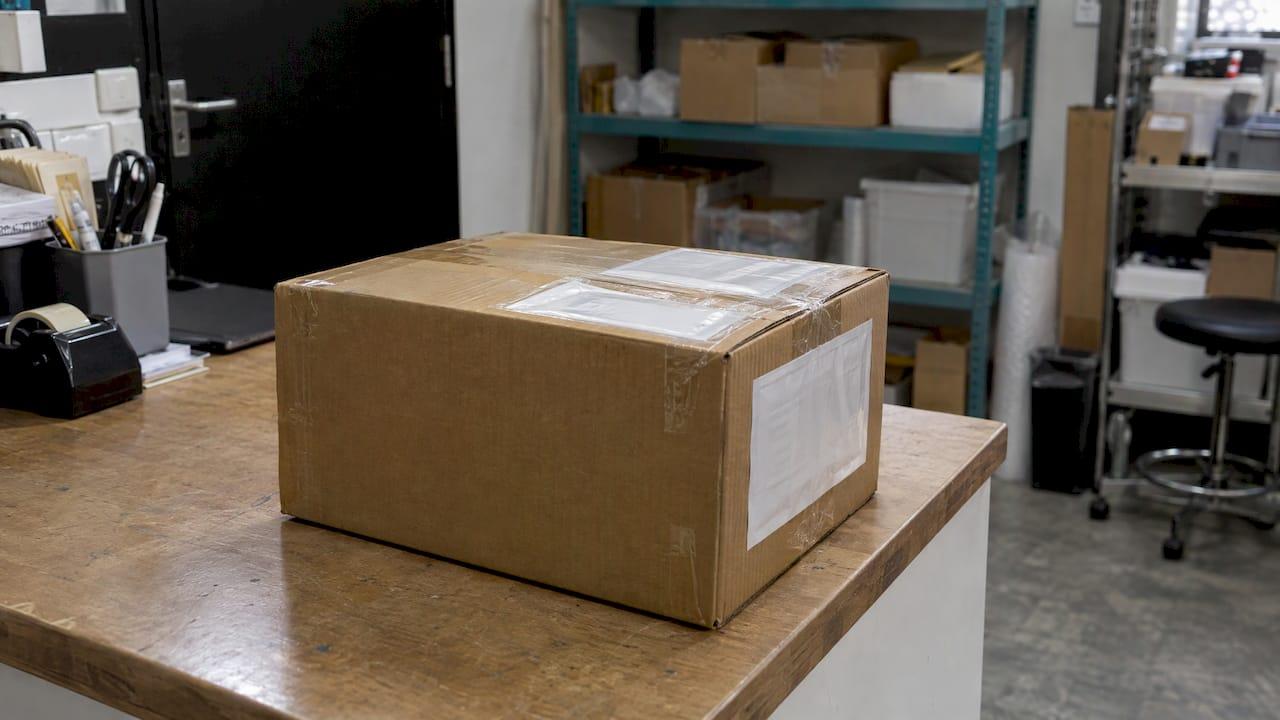
A return to sender fee is a charge for sending an undeliverable parcel back to you, and in almost every postal system the sender pays it, whatever the reason for the return. The fee is rarely a surprise charge from nowhere. It follows a handful of predictable causes: a bad address, missing customs details, a wrong label, an oversized box or a refused delivery. If you ship from Singapore, you can remove most of these causes before the parcel leaves your door. We built Simply Parcel around that idea: free doorstep pickup, automatically generated labels and customs documents, and tracking from booking to delivery.
TL;DR
- The sender is responsible for the return fee, even when the recipient refuses the parcel or the address is wrong.
- The amount depends on the carrier and the country. It can be nothing, a fixed fee, the original postage again, or more, because some operators add handling costs.
- Original postage is generally not refunded when a parcel comes back, so the fee is on top of what you already paid.
- Heavy or bulky parcels cost more to send back, because return fees can follow the greater of actual or volumetric weight.
- Correct addresses, complete customs paperwork and a properly attached label prevent most returns.
Table of Contents
- What a return to sender fee actually is
- Why parcels get returned
- What a return to sender fee costs
- Do you get the original postage back?
- How weight turns into a bigger return fee
- How to prevent a return, step by step
- If a parcel is already coming back
- Book with the details checked for you
- Our view on return fees
- FAQ
- Sources
What a return to sender fee actually is
When a carrier cannot deliver a parcel, it has two options: hold it, dispose of it, or send it back to the person who shipped it. Returning it uses transport again, often across several countries, so the carrier bills for it. That bill is the return to sender fee.
Two points matter for international shippers:
- The sender is the customer. Canada Post's rules state that items which cannot be delivered are returned for a fee payable by the sender, regardless of the reason for the return.
- The foreign operator can add its own charges. For international parcels coming back to the United States, USPS rules say the return postage and any other charges, including those assessed by foreign postal authorities, are collected when the parcel is delivered to the sender.
So the fee you see on a return can be a mix: the cost of the trip back, plus whatever the destination country's operator billed along the way.
Why parcels get returned
Canada Post's published list of return triggers is a useful checklist, because the same problems cause returns everywhere. A parcel can be sent back when:
- the recipient refuses it or never collects it,
- the address is incomplete or does not exist,
- the recipient has moved and left no forwarding address,
- the label is improper,
- the parcel exceeds the size or weight limit,
- the customs information is incomplete or illegible,
- a tracking number was reused, or
- the destination country refuses entry of the goods.
The same operator's customer guide adds one more for business shippers: a missing electronic manifest transmission before pickup is itself a return condition (guide effective October 1, 2026).
Look at that list as a shipper. Five of the eight causes are paperwork or labeling problems that you control. Only refusal and a recipient who has moved depend on the other person, and even those you can reduce by confirming the address and delivery before you ship.
What a return to sender fee costs
There is no single worldwide price. The published rules of different postal operators show how widely the approach varies.
| Operator and rule | How the return is charged |
|---|---|
| Canada Post, Parcel Services (U.S. and international) | Where stamps or a meter impression show the original postage, the return amount equals that postage less any option fee. |
| Canada Post, misaddressed items | Charges can range from no charge, to a fixed or negotiated amount, to the original postage, depending on mail type. |
| Hong Kong Post | Return charges include postage and, in many cases, warehousing and administrative costs, so a return can cost more than the original postage. |
| Royal Mail, overseas items returned as undeliverable | Royal Mail attempts the return without extra postage or a fee (scheme dated March 2025), but surcharges or customs charges may still apply. |
| DHL, international parcels returning to Germany | A German consumer guide reported €20 by air or €10 by surface, plus 19% VAT in some cases (figures from 2023/2024). |
Three things follow from this table.
First, "free return" in one system does not mean free everywhere. A parcel that is returned without a postage fee can still carry surcharges or customs charges, and Royal Mail's scheme warns that unpaid fees can lead to the item being dealt with or disposed of.
Second, the destination matters as much as the carrier. Hong Kong Post explains that an undeliverable parcel is normally sent back after the destination's holding period ends, without prior notice unless the sender asked for something different, such as abandonment. You may learn about the return only when it arrives or when the bill does.
Third, published fees change. Treat any figure here as the published number for its date and check the carrier's current tariff or your booking terms for today's amount.
A worked example
Say you ship a 4 kg gift box from Singapore, and the recipient's address is missing an apartment number. The parcel is held, the holding period ends and it is sent back. Under a rule like Canada Post's, you would pay an amount equal to the original postage. Under a rule like Hong Kong Post's, you could pay the original postage plus handling. Either way you have paid for the outbound trip, you pay again for the way back, and you still do not have the parcel delivered. Fixing the address would have cost nothing.
Do you get the original postage back?
Usually not. Royal Mail's overseas scheme says it will not refund postage or service fees, or pay compensation, for items that are considered undeliverable or delivered and later subject to a return request. The postage paid for a trip that ended in a return is treated as used.
For you as a shipper, plan on this basis: the original shipping cost is spent, and the return fee comes on top. That is why prevention is cheaper than any refund claim.
How weight turns into a bigger return fee
A return is a second shipment, and it is priced like one. Canada Post states that return to sender shipping fees are based on the greater of actual weight or the volumetric equivalent of the actual weight.
Volumetric weight (also called dimensional weight) is the weight a carrier assigns to a box based on its size rather than what it weighs on a scale. A light but large box can be billed as if it were much heavier. If you pack a 6 lb item in an oversized box, you pay the higher figure going out and again coming back. A 3PL's explanation of dimensional weight for small shippers shows how a small item in a big carton gets billed at a much higher weight.
To see how this applies to your own box, use our guides on the 5,000 vs 6,000 volumetric weight calculation and dimensional weight versus actual weight. For a full picture of what a shipment costs before you book, read how to calculate shipping costs.
The practical rule: pack tightly, measure the finished box, and compare the volumetric figure with the scale weight before you pay.

How to prevent a return, step by step
Most return fees come from avoidable errors. Work through these steps before every international shipment.
1. Write the full address, including the details a driver needs
Incomplete or nonexistent addresses are a named return trigger. Include the unit or floor number, the postal code in the destination format and a working phone number and email for the recipient. If the entrance is hard to find, add a line to the address that says so. A German consumer guide recommends address add-on lines such as a back-courtyard entrance to prevent returns caused by hidden entrances.
At booking, we auto-generate the shipping label from the details you enter, so the address you type is the address that prints. Read it once more before you confirm.
2. Complete the customs information
Incomplete or illegible customs information can send a parcel back. Describe each item specifically ("cotton T-shirts, 5 pieces", not "clothes"), state the quantity and value, and give the country of origin where asked. Our platform generates the customs documentation with your booking, which takes away the handwriting and formatting errors that cause illegible forms. For sellers, our guide to creating a shipping label online and clearing customs walks through the fields.
3. Check that the goods are allowed
A destination can refuse entry, and then the parcel comes back at your cost. Check restricted and prohibited goods for the destination country before you pack. We give guidance on restricted goods and customs requirements as part of booking. For medicines specifically, see our page on international prescription medicine shipping.
4. Keep the box within size and weight limits
Excessive dimensions or weight are a return trigger. Measure the packed box, not the product, and keep to the limit for the service and destination you choose.
5. Attach the label so it scans
An improper or unreadable label stops a parcel in transit. Put one flat label on the largest face, with no tape over the barcode and no old labels showing. Our guide on how to attach a shipping label so it scans and arrives covers placement.
6. Confirm the recipient is expecting it
Refusal and non-collection are the two causes you cannot fix with paperwork. Tell the recipient the parcel is coming, share the tracking number and warn them about any import duty or tax they may owe on arrival, so they do not refuse it on surprise. Tracking is available any time through our parcel tracking page.
7. Choose a service that suits the goods
A faster service shortens the time a parcel spends in the system, and a clear transit timeline lets you tell the recipient when to expect it. We offer priority, connect plus and economy speeds; our comparison of FedEx International Priority and Connect Plus explains the difference.
If a parcel is already coming back
If tracking shows a return, act quickly.
- Check the status. Look for an exception such as "address incomplete" or "customs documents missing". That tells you what to fix.
- Contact your booking channel. If you booked with us, quote your tracking number so the cause can be traced.
- Expect to settle charges on arrival. For international parcels returned to the U.S., return postage and foreign charges are collected on delivery to the sender.
- Fix the cause before you reship. Correct the address or paperwork first, or you pay the same return fee again.
If you are the recipient and want to send an item back, the rules differ. A USPS ruling explains that a sender's pledge to pay return postage on a "Return Service Requested" mark only runs until delivery; once the addressee accepts and opens the piece, the addressee must pay new postage to send it back, and some mail such as Registered Mail cannot be returned without new postage even if unopened. Writing "return to sender" on a parcel you have accepted does not create a free return.
For returns you plan on purpose, such as a customer sending goods back to you in Singapore, our guide to the return parcel process from Singapore to the U.S. sets out the steps.
Book with the details checked for you
If you ship abroad from Singapore, the easiest place to avoid a return fee is at booking. We offer free pickup at your door, auto-generated shipping labels and customs documentation, real-time tracking and several carrier partners across priority, connect plus and economy speeds, with optional additional protection coverage. There is no monthly volume commitment, so a single personal parcel and a seller's regular shipments are handled the same way.
Get a rate for your box on our shipment quote page, or see the three service levels on our shipping options page.

If you sell online, the same process applies at volume: consistent labels and customs data on every order mean fewer exceptions and fewer returns to pay for. Our guide on choosing between registered mail and a courier helps when you are deciding how to ship higher-value items.
Our view on return fees
Return fees feel unfair because the sender usually did nothing wrong on purpose. A missing apartment number, a vague customs description or a label placed over a fold is all it takes. We think the right response is to move the effort to the start of the shipment.
That is why our platform is built the way it is. Pickup is free and happens at your doorstep, so you do not need to carry an unchecked box to a counter. Labels and customs documents are generated automatically, so the paperwork is typed once and printed cleanly. Rates are shown before you pay, and tracking follows the parcel, so you and your recipient see the same status.
For individuals, students and expats sending belongings home, we suggest telling the recipient the tracking number on the day you book. For sellers and dropshippers, we suggest treating every returned parcel as a data problem: find the cause, fix the template, and the same error stops repeating. Our booking flow is designed to make that routine simple.
Choose the speed that fits the goods, enter the address in full and let the documents be generated for you.
SP
FAQ
Does it cost money to return a parcel to the sender?
Usually yes, and the sender pays. Canada Post's rules state the fee is the sender's responsibility regardless of the reason. Some operators charge the original postage, some charge a fixed fee, and some add handling costs, so check your carrier's terms for the destination.
Do you get a refund if a parcel is returned to the sender?
Generally not for the postage already paid. Royal Mail's overseas scheme, for example, excludes refunds of postage and service fees for undeliverable items. Preventing the return is the way to save the money.
Who pays if the recipient refuses the parcel?
The sender. A refusal is treated as an undeliverable item, and the return fee falls on the shipper. Let the recipient know what is coming, along with any duty or tax they may need to pay, so a surprise does not lead to a refusal.
Can the return fee be higher than the original shipping cost?
Yes. Hong Kong Post says return charges can include warehousing and administrative costs and may exceed the original postage. Canada Post bases return fees on the greater of actual or volumetric weight, so a bulky box costs more to send back.
How do I stop a parcel from being returned?
Correct the address, complete the customs details, check that the goods are allowed, keep the box within limits and attach the label so it scans. Then share the tracking number with the recipient.
Sources
- Canada Post: Return to Sender, Parcel Services (U.S. and International)
- Canada Post: What happens if an item is addressed incorrectly
- Canada Post: Parcel Services Customer Guide, October 1, 2026
- Hongkong Post: Undeliverable parcels FAQ
- Royal Mail Overseas Post Scheme, March 2025
- USPS Postal Explorer: IMM 770 Undeliverable Mail, April 2025 archive
- USPS Customer Support Ruling PS-177
- Paketda.de: Rücksendeentgelt für unzustellbare Briefe und Pakete
- Envio 3PL: Dimensional weight for small shippers