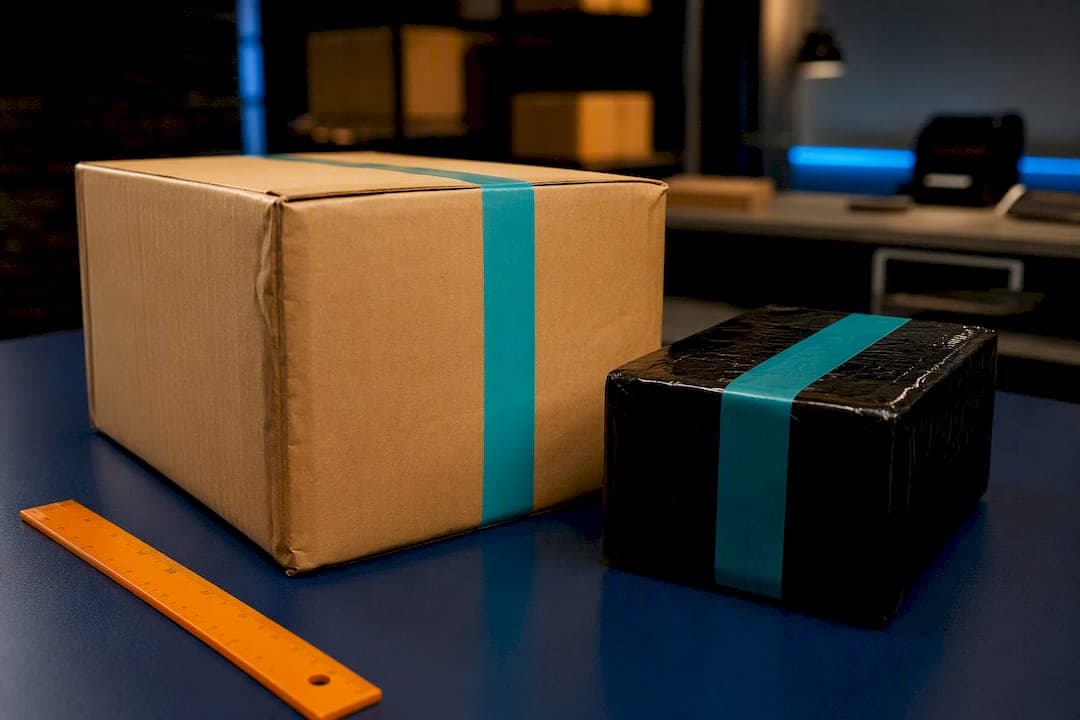
Volumetric weight equals length × width × height in centimeters, divided by a carrier divisor, giving you a weight in kilograms (the same math works in inches, divided by a different divisor, for pounds). Whichever number is higher, actual weight or volumetric weight, is what you pay for. The divisor changes depending on the carrier and shipping mode, which is where most people get their invoice wrong.
TL;DR:
- Proper measurement, including rounding dimensions up and capturing protrusions, ensures your estimate matches the carrier’s invoice and avoids surprises.
- Packaging decisions, like minimizing void space and choosing the right box size, can significantly reduce volumetric weight and shipping costs before booking.
- Automatically calculating volumetric weight with tools like Simplyparcel prevents errors and provides upfront pricing, making comparisons more accurate and efficient.
Table of Contents
- How Volumetric Weight Calculation Works, Step by Step
- Which Divisor Applies: 5,000, 6,000, 139, or 166?
- Worked Examples: From a Single Parcel to an Air Freight Quote
- Practical Ways to Lower Your Chargeable Weight
- How Simplyparcel Automates Your Volumetric Weight Checks
- Cubic Meters vs. Cubic Inches: Picking the Right Unit
- Why Volumetric Weight Changes What You Actually Pay
- Air, Sea, and Road: Same Formula, Different Divisors
- Where Volumetric Weight Rules Have Limits and Exceptions
- Getting Accurate Measurements: From Tape Measures to Dimensioners
- The Standards Behind the Formula: IATA and Beyond
- Ready to Book? Get Your Billable Weight Before You Commit
- What the Divisor Debate Misses
- Sources
How Volumetric Weight Calculation Works, Step by Step
Getting the number right starts with how you measure, not just what formula you use. Carriers measure the longest point on every axis, including any handles, wheels, or packaging that stick out. Skip that detail and your self-calculated weight won't match the invoice.
Here's the process carriers actually follow:
- Measure length, width, and height in centimeters (or inches), capturing the widest point on each side, including protrusions.
- Round each dimension up to the next whole centimeter or inch. A box measuring 30.2 cm becomes 31 cm before you do any math. This is a standard carrier rounding convention, and skipping it is the single most common reason a manual estimate comes in low.
- Multiply the three rounded dimensions to get total volume in cubic centimeters or cubic inches.
- Divide by the carrier's published divisor (5,000, 6,000, 139, or 166, depending on carrier and mode) to get volumetric weight.
- Round the result per that carrier's rule, often to the next 0.5 kg or the next full pound.
- Compare against actual scale weight. Whichever number is larger becomes your billable weight.
Miss step 2 or step 5 and your own math will disagree with the courier's, sometimes by a full kilogram once rounding compounds across three dimensions.
Which Divisor Applies: 5,000, 6,000, 139, or 166?
The divisor is the part of this formula most people never question, and it's also the part that swings your price the most. A lower divisor produces a higher volumetric weight, so the number carriers pick isn't arbitrary. It reflects how much space a shipment eats up relative to how it's typically loaded.
- 5,000 cm³/kg is the standard most parcel express carriers use for standard ground and express services, including the account and retail rates FedEx, UPS, and DHL commonly publish.
- 6,000 cm³/kg is the IATA-standard divisor for air freight, used across most air cargo quotes and freight forwarding.
- 139 in³/lb is the imperial equivalent many carriers apply to negotiated account rates.
- 166 in³/lb shows up on retail counter rates and some USPS pricing, producing a lower volumetric weight than the 139 divisor for the same box.
A 40 cm cube priced under a 5,000 divisor comes out to a higher volumetric weight than when priced under a 6,000 divisor, which matters if you're comparing an air freight quote against a parcel courier's rate. Carriers can also apply service-specific exceptions, and high-volume shippers sometimes negotiate a friendlier divisor directly into their account terms.
Worked Examples: From a Single Parcel to an Air Freight Quote
Numbers make this concrete faster than any formula alone. Here's a single parcel walked all the way through:
- Measure and round. A box comes in at 49.6 × 39.2 × 29.1 cm. Rounded up: 50 × 40 × 30 cm.
- Compute the volume. 50 × 40 × 30 = 60,000 cm³.
- Divide by the divisor. Using 5,000 (standard parcel express): 60,000 ÷ 5,000 = 12 kg volumetric weight.
- Compare to actual weight. If the parcel weighs 8 kg on the scale, the courier bills 12 kg, since that's the higher figure.
Now the same box shipped as air freight, where the 6,000 divisor applies: 60,000 ÷ 6,000 = 10 kg. Still above the 8 kg actual weight, but lower than the parcel-rate calculation, which is exactly why air freight quotes and parcel courier quotes rarely match for identical boxes.
For multi-parcel shipments, most parcel carriers bill each box separately and sum the totals, while freight quotes often bill on shipment-total cubic volume instead. Check which mode applies before you assume your per-box math adds up correctly. The short version: measure, compute, compare, every time.
Practical Ways to Lower Your Chargeable Weight
Most of the savings here happen before you ever get to checkout, in how you pack the box. A few habits make a real difference:
- Right-size the box. Every extra centimeter of empty space gets multiplied into your volumetric weight three times over, once per dimension.
- Cut void space. Use sizable, well-fitted padding rather than a large box stuffed with air and packing peanuts, and compress soft goods where it's safe to do so.
- Consolidate shipments. Combining several small, low-density items into one flatter, denser package usually beats sending them separately, since each separate box gets rounded up on its own.
- Weigh and measure before booking. Confirm both figures against the carrier's own divisor and rounding rules so you're not caught by a rate that jumped overnight.
- Watch for account-level options. If you ship in volume, ask about negotiated divisors or services built for bulky, low-weight cargo. This partner guide on packing breakables carefully is worth a look if you're shipping anything fragile that tempts you to over-pack for safety.
Pro Tip: Before you seal a box, try the math on two or three container sizes. Because rounding happens per dimension, shaving even a centimeter off one side can pull your total into a lower billing bracket. A handful of billable kilograms can disappear this way without changing what's inside the box at all.
Our guide on reducing shipping costs for small businesses goes deeper on consolidation strategy if you're shipping regularly rather than as a one-off.
How Simplyparcel Automates Your Volumetric Weight Checks
Manually calculating volumetric weight is useful for understanding your invoice, but it's not how most shippers should work day to day. Simplyparcel builds the divisor logic directly into the booking flow, so you see billable weight before you commit to a courier.
What that looks like in practice:
- Automatic calculation applies the correct carrier divisor to your entered dimensions, so you never have to look up which number applies to which service.
- Rate comparison across multiple courier partners shows you the actual cost difference between priority, connect-plus, and economy speeds for the same parcel.
- Upfront billable weight appears before checkout, so the number you see is the number you pay, not a surprise adjustment after pickup.
- Real-time tracking and automatic label and customs documentation generation round out the process once your shipment is booked.
If you're comparing shipping costs across formats and services more broadly, our guide on how to calculate shipping costs breaks down the other factors that stack on top of volumetric weight, like fuel surcharges and destination zones.
Cubic Meters vs. Cubic Inches: Picking the Right Unit
The formula never changes, but the units you calculate in depend entirely on which system your carrier publishes rates in. Metric shippers work in cubic centimeters divided by a divisor like 5,000 or 6,000 to land on kilograms. Imperial shippers work in cubic inches divided by 139 or 166 to land on pounds.
Freight forwarders handling larger cargo sometimes switch to cubic meters instead of cubic centimeters, particularly for ocean and road freight quoted by volume rather than by parcel. One cubic meter converts to one million cubic centimeters, so the math scales the same way, just with a divisor calibrated for larger shipments (ocean freight typically applies its own volume-to-weight ratio, distinct from parcel and air divisors).
The practical issue isn't the math, it's mixing units mid-calculation. Measuring in centimeters but plugging the number into an imperial divisor produces a volumetric weight wildly off from what you'll actually be billed. If a carrier's rate card is published in inches and pounds, convert your measurements to inches first, round up, then apply 139 or 166 depending on the service tier. If it's published in centimeters and kilograms, stay in that system the entire way through. Consistency in units matters more than which system you personally prefer.
Why Volumetric Weight Changes What You Actually Pay
Volumetric weight exists because carriers sell space, not just weight capacity. A truck, plane, or cargo ship has a hard cubic limit long before it hits its weight limit, so a lightweight but bulky shipment can cost a carrier more in lost capacity than a dense, heavy one of the same actual weight.
That's why a box of pillows or packing foam can cost more to ship than a box of books at the same actual weight. The pillows take up far more cubic space relative to their scale weight, so volumetric weight, not actual weight, becomes the billing figure. For e-commerce sellers shipping lightweight, bulky products like apparel, homewares, or packaging-heavy items, this single calculation often determines margin more than the courier's base rate does.
This is also why pricing structures increasingly separate "light and bulky" categories from standard rates. Some carriers apply surcharges specifically for shipments that fall well below a minimum density threshold, on top of the standard volumetric charge. If you're pricing shipping into a product's retail cost, running the volumetric calculation before you finalize packaging isn't optional, it's the number that decides whether a shipment is profitable at all.
Air, Sea, and Road: Same Formula, Different Divisors
The core formula never changes across shipping modes, but which divisor applies, and how strictly it's enforced, shifts significantly depending on how your shipment travels.
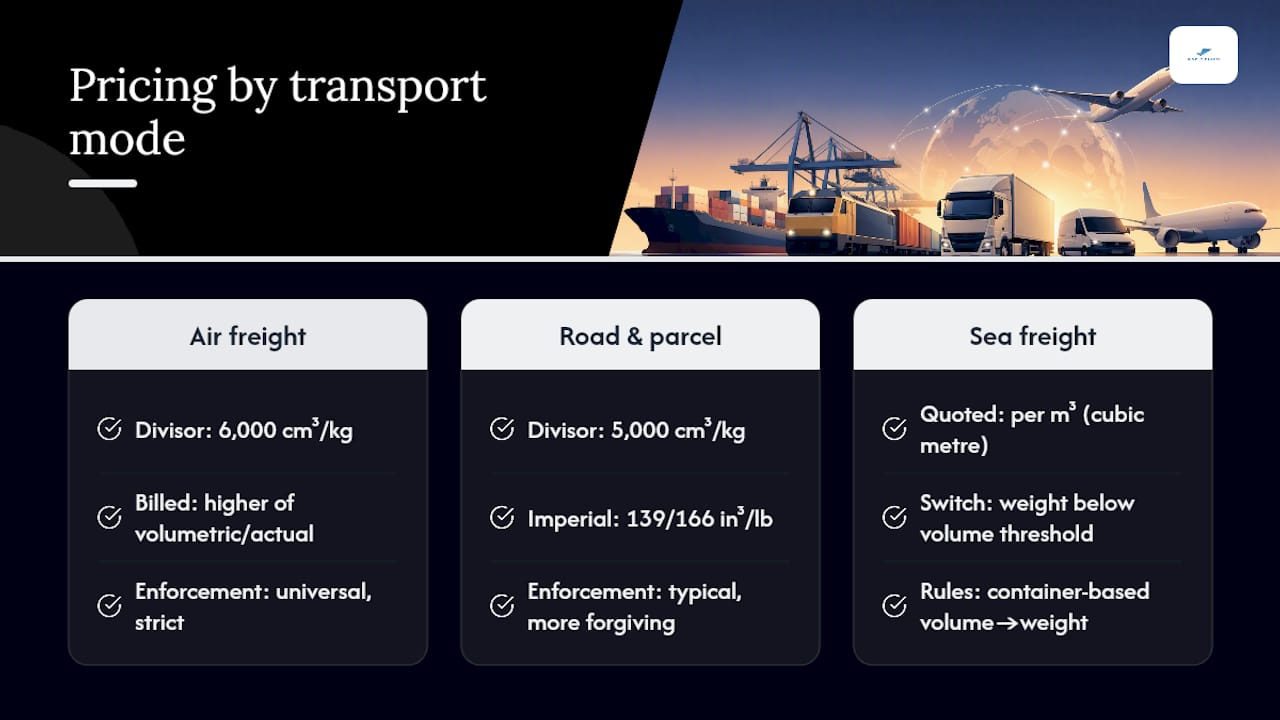
Air freight applies the IATA 6,000 divisor almost universally, since aircraft stowage economics create tighter cubic constraints than ground transport. Air cargo carriers compare volumetric and actual weight on every shipment and bill the higher figure without exception.
Road and parcel express typically use the 5,000 divisor (or 139/166 in imperial), reflecting the somewhat more forgiving space economics of trucks and delivery vans compared to aircraft.
Sea freight works differently altogether. Ocean carriers usually quote by cubic meter directly, using a volume-to-weight ratio built around container capacity rather than a simple divisor formula. Below a certain volume threshold, many ocean freight quotes bill by weight; above it, they switch to cubic meter pricing. This makes ocean freight math the least standardized of the three modes, and it's worth confirming directly with your freight forwarder rather than assuming parcel-style rules apply.
The practical takeaway: never assume the divisor that applied to your last shipment applies to this one, if the mode changed.
Where Volumetric Weight Rules Have Limits and Exceptions
Volumetric weight calculation isn't applied uniformly across every parcel, every carrier, or every size. Several exceptions are worth knowing before you assume the standard formula covers your shipment.
Minimum chargeable weight is the most common trip-up. Many carriers set a floor, a minimum weight they bill regardless of how light or small your actual parcel is, which means the volumetric calculation becomes irrelevant below that threshold. On the other end, USPS applies its dimensional weight rules only above roughly one cubic foot, so small parcels under that volume are billed on actual weight alone, no calculation needed.
Maximum dimension limits create a different kind of exception. Most carriers cap the longest single side, the combined length-plus-girth, or total volume a standard service will accept. Exceed it, and your shipment doesn't just get a higher volumetric weight, it gets rejected from that service tier entirely and rerouted to freight.
Oversized or irregular items, tires, furniture, anything with an awkward shape that doesn't map cleanly to a rectangular box, often get special handling fees layered on top of the standard volumetric calculation. And some services, particularly flat-rate or fixed-box options, skip volumetric weight altogether in favor of a flat price regardless of what you pack inside. Before you run the formula, it's worth checking whether your parcel even falls into a category where the calculation applies.
Getting Accurate Measurements: From Tape Measures to Dimensioners
The formula is only as good as the numbers you feed it, and manual measurement is where most calculation errors start. A tape measure works fine for occasional shippers, provided you're disciplined about measuring the widest point on each axis and rounding up before you calculate anything.
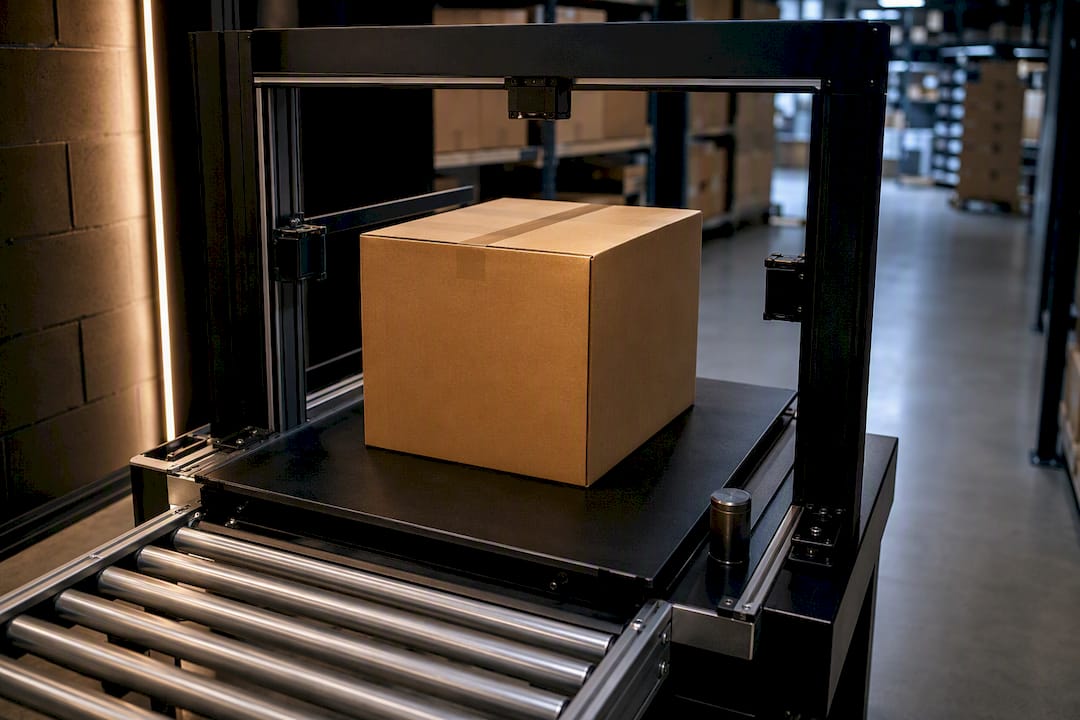
Businesses shipping regularly tend to outgrow tape measures fast. Automated dimensioners, devices that use lasers or cameras to capture length, width, and height in seconds, remove human error from the equation entirely and are standard equipment in most sorting facilities and larger fulfillment operations. They also timestamp and log every measurement, which matters if you ever need to dispute a carrier's billed weight against what you recorded at drop-off.
For smaller operations, software-based tools close much of that gap without the hardware cost. Digital volumetric calculators like DimWeigh apply the correct carrier-specific divisor and rounding convention automatically once you enter your measurements, which removes the guesswork of tracking which divisor belongs to which service. Our own parcel packaging guide walks through measurement habits that pair well with any of these tools, whether you're using a tape measure or a dimensioner on a warehouse floor.
Whichever method you use, the goal is the same: match your number to the carrier's number before you pay for a surprise.
The Standards Behind the Formula: IATA and Beyond
Volumetric weight isn't a courier's invention, it's built on standards that span the freight industry. The International Air Transport Association, or IATA, sets the 6,000 cm³/kg divisor that most air cargo carriers apply worldwide, which is why air freight quotes tend to be more consistent across carriers than parcel express rates are.
Ground and parcel carriers don't answer to a single global standard the same way. FedEx, UPS, DHL, and regional couriers each publish their own divisor and rounding conventions, generally converging around 5,000 cm³/kg or 139 to 166 in³/lb, but with enough variation that comparing quotes across carriers requires checking each one's published rate card rather than assuming a universal number.
For shipments involving hazardous or regulated goods, the International Maritime Dangerous Goods (IMDG) code and IATA's own Dangerous Goods Regulations layer additional packaging and documentation requirements on top of the standard volumetric calculation, though they don't change the underlying formula itself. If you're shipping anything regulated, that documentation requirement matters more to your total cost than a fraction of a kilogram in volumetric weight.
Knowing which standard governs your shipment, IATA for air, carrier-specific tables for parcel and road, cubic meter conventions for ocean, is often more useful than memorizing every divisor. It tells you which rate card to trust when two sources disagree.
Ready to Book? Get Your Billable Weight Before You Commit
Running the volumetric weight formula by hand is a useful skill, but it's not something you should have to redo every time you compare courier options. Simplyparcel's quote tool applies the correct divisor automatically based on the carrier and service you're comparing, so the number you see reflects what you'll actually be charged, not a rough estimate you have to double-check later.
Enter your parcel's dimensions and weight once, and you'll see priority, connect-plus, and economy pricing side by side, with billable weight already factored in. That's the difference between guessing at your shipping cost and knowing it before you commit to a courier.
What the Divisor Debate Misses
Most guides on this topic treat the divisor like a trivia fact, memorize 5,000 for parcels and 6,000 for air, and move on. That framing undersells how much the choice of divisor actually shapes a shipping strategy. The bigger issue isn't which number applies, it's that most shippers never recalculate after their first box design, even as their product line changes.
The conventional advice, "measure and round," is correct but incomplete. Rounding compounds across three dimensions, so a box that's one centimeter too generous on each side can add a full kilogram of billable weight without anyone noticing until the invoice arrives. Few sellers ever test whether a slightly smaller box would drop them into a cheaper bracket, and that's the single highest-leverage fix available before you touch carrier rates at all.
If you take one thing from this, prioritize packaging discipline over carrier shopping. A better box beats a better carrier almost every time, and it's the only variable fully within your control. Simplyparcel's quote tool exists precisely because most people shouldn't have to run this math by hand every single time. Let the calculation happen automatically, and spend your attention on the box instead.
— Simply
Sources
- Dimensional weight — Wikipedia
- Air Cargo Chargeable Weight: A Complete Guide | Maersk
- Volumetric & DIM Weight Calculator — DimWeigh