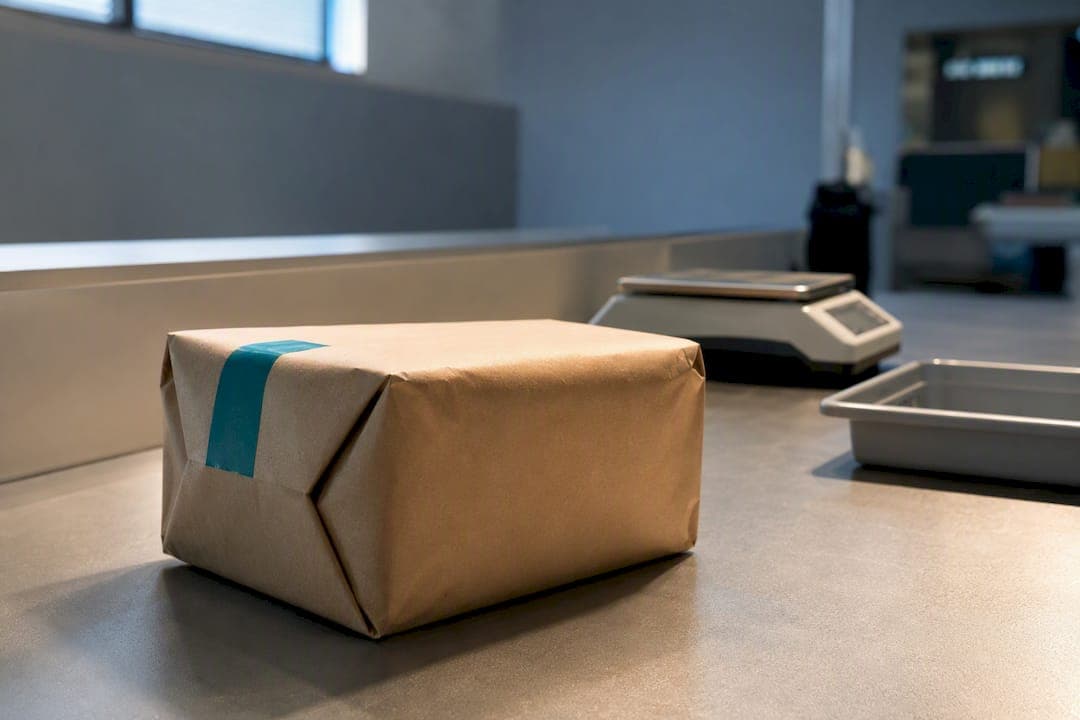
Gifts are not automatically duty-free anywhere in the world. Whether a package sent as a gift clears customs without charges depends on the destination country's value thresholds, the item category, and whether the shipment looks personal or commercial. Alcohol, tobacco, and regulated goods are commonly taxed regardless of intent, and in Singapore, GST import relief and postal or courier handling rules decide the outcome.
TL;DR:
- Most countries set specific thresholds, such as $100 in the US and low euro thresholds in Ireland, below which gifts are duty-free if occasional and personal.
- Sending alcohol, tobacco, regulated medicines, batteries, or hazardous materials as gifts usually disqualifies them from duty exemptions regardless of labeling.
- USPS shipments often face simplified, flat-rate customs processing for low-value gifts, while courier shipments are faster but charge handling fees and brokerage costs.
- Proper labeling with clear "Unsolicited Gift" marks, itemized packing lists, and accurate declaration details reduce delays and misclassification risks.
- Valuation methods like CIF include shipping costs, which can push gifts over duty-free thresholds more easily than intrinsic value assessments.
Table of Contents
- What Legally Counts as a Gift Under Customs Rules?
- What Are the Common Value Thresholds for Gifts?
- How Does Shipping by Post Differ From Courier for Gifts?
- How Should You Label and Declare a Gift Package?
- Which Items Are Never Eligible for Gift Relief?
- How Does Customs Calculate Value: Intrinsic Value vs. CIF?
- Simply Parcel's Checklist for Shipping Gifts With Fewer Surprises
- What Happens If Customs Contacts You About a Gift?
- Why Paperwork Accuracy Matters More Than Luck
- Book a Gift Shipment That Clears Customs Without Guesswork
- Where to Verify These Gift Customs Rules Yourself
- Sources
What Legally Counts as a Gift Under Customs Rules?
Writing "gift" on a box helps, but it doesn't decide anything on its own. Customs officers look past the label to a set of practical indicators that separate a genuine personal gift from a disguised commercial shipment.
A shipment typically qualifies as a gift when it meets these conditions:
- It moves between two individuals, not a business and a customer.
- No payment, exchange, or trade obligation is attached to it.
- It's sent occasionally, not as part of a recurring pattern.
- The item and quantity match what one person would reasonably send another for a birthday, holiday or special occasion.
Red flags that push customs toward a commercial assessment include multiple identical items in one parcel, frequent shipments to the same address, or a sender profile that looks like a business account rather than an individual. According to CBP's gift guidance, marking a parcel "Unsolicited Gift" and listing each item's value supports your claim, but it doesn't guarantee an exemption. Keep a gift receipt or note explaining the occasion. It costs nothing and can resolve a review in minutes.
What Are the Common Value Thresholds for Gifts?
Every country sets its own ceiling for duty-free gifts, and the numbers vary more than most senders expect. Knowing where your destination falls changes how you should package and value a shipment.
- United States: Gifts mailed by private individuals qualify for exemption up to $100 in fair retail value, or a higher amount for gifts from certain territories, under 19 CFR 10.153.
- Ireland/EU: Gift consignments valued below a certain low monetary threshold can be admitted free of import duty under Revenue Ireland's rules, provided the shipment is occasional and non-commercial.
- Canada: Personal gifts sent by individuals commonly fall under a moderate Canadian dollar relief threshold, above which duties and taxes apply to the excess.
- Singapore: GST relief applies to certain postal and air imports under specific CIF value limits, separate from the traveler's duty-free concession.
Singapore's key threshold: Travelers arriving in Singapore who have spent 48 hours or more abroad get GST import relief on goods (including gifts) up to specific value bands set by Singapore Customs, but liquor, tobacco, and goods for commercial purposes are excluded from that relief entirely.
Exceed the relevant threshold and the entire item, not just the excess, can become subject to assessment in some regimes. That's why checking the exact figure for your destination before you pack matters more than guessing.
How Does Shipping by Post Differ From Courier for Gifts?
The carrier you choose changes how a gift gets assessed and who pays what, sometimes by a wide margin.
Postal shipments generally move through a national postal operator's own customs clearance channel, which tends to follow simplified, flat-rate handling for low-value items. Couriers, by contrast, typically act as your customs broker: they pay duties on your behalf at the border, then bill you a brokerage or handling fee on top of any tax owed, often before the parcel is released for delivery.
- Postal clearance usually means slower processing but fewer added fees for low-value gifts.
- Courier clearance is faster and more predictable on timing, but adds a service charge to whatever duty applies, as explained in DHL vs UPS UK: which courier wins for your parcels?.
- Singapore Customs confirms that both postal and courier imports, gifts included, are subject to GST or duty, and GST relief for postal or air imports only applies when the CIF value stays under S$400. That relief excludes liquor and tobacco outright.
If your gift's value sits comfortably under that S$400 CIF mark and doesn't include restricted goods, postal shipping is usually the simpler, cheaper route. Above it, or for time-sensitive gifts, a courier's speed can be worth the added handling cost.
How Should You Label and Declare a Gift Package?
Good labeling and paperwork won't override a country's threshold rules, but they do reduce the odds of an inspection delay or a misclassified parcel.
- Mark the exterior clearly with wording like "Unsolicited Gift" and note the total declared value.
- Attach an itemized packing list describing each item, its quantity, and individual value rather than one lump sum.
- For consolidated packages with multiple recipients, wrap and label each gift individually inside the outer box so customs can assess them separately where national rules allow.
- Fill in the customs declaration and invoice with sender name and address, recipient name and address, item descriptions, values, and the reason for shipment (gift, not sale).
Pro Tip: Keep a copy of your itemized packing list and declaration on your phone or email. If customs contacts you for verification, you can respond within minutes instead of digging through old receipts.
Which Items Are Never Eligible for Gift Relief?
Some categories lose gift status the moment customs sees them, no matter how the package is labeled.
- Alcohol and tobacco are excluded from GST relief and duty-free concessions in Singapore under Singapore Customs' own guidance, and most other countries apply similar carve-outs.
- Regulated medicines and health products often require import permits, with oversight from bodies like Singapore's Health Sciences Authority for tobacco and related items.
- Batteries, especially lithium cells, face separate hazardous goods restrictions tied to transport safety, not just customs value.
- Chemicals and hazardous materials typically need special clearance regardless of intended use as a gift.
Sending any of these without the right permit usually results in duty assessment, seizure, or the parcel being returned to sender.
How Does Customs Calculate Value: Intrinsic Value vs. CIF?
The valuation method a country uses can change how much you owe on the exact same item.
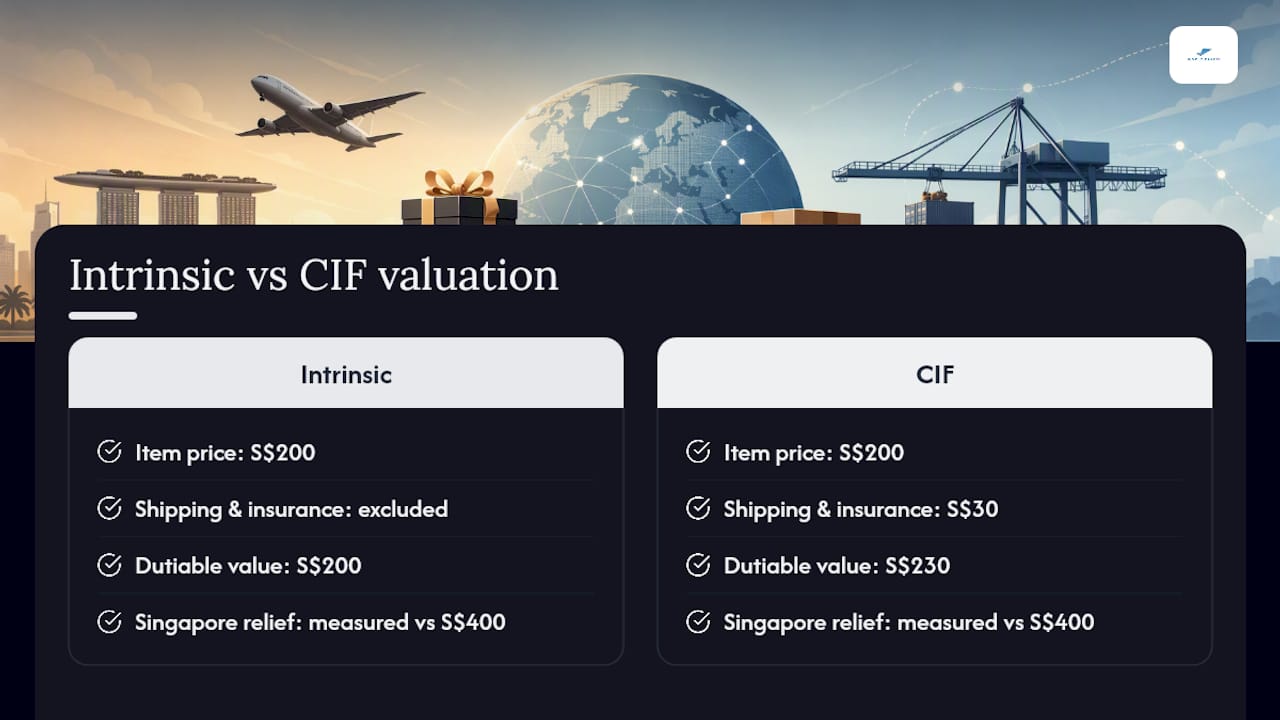
Intrinsic value is the item's own worth, sometimes excluding postage and insurance. CIF (Cost, Insurance, and Freight) adds shipping and insurance costs to the item's price, producing a higher total figure for duty purposes.
Worked example: Say you send a S$200 watch as a gift. Under an intrinsic value method that excludes shipping, customs might assess duty only on the S$200 item cost. Under a CIF method, if shipping and insurance add S$30, the dutiable value becomes S$230, potentially pushing the parcel over a relief threshold it would have cleared under intrinsic value alone. Singapore's postal and courier GST relief is measured against the S$400 CIF limit, so freight costs count toward whether you clear that bar or not, according to Singapore Customs.
Simply Parcel's Checklist for Shipping Gifts With Fewer Surprises
Getting a gift through customs smoothly comes down to a few habits, not luck.
- Skip gift-wrapping the outer parcel. Pack wrapping paper and ribbon inside instead, so an inspector can open the box without destroying the presentation.
- Itemize everything on the declaration, including sender contact details and proof of purchase where you have it.
- Match your shipping mode to the shipment's value. Postal service suits low-value, non-urgent gifts; courier service suits higher-value or time-sensitive ones where predictable delivery windows matter more than saving a few dollars.
- Respond quickly if customs requests documents. Having your packing list and invoice ready, as covered in Simply Parcel's shipment value declaration guide, usually resolves a hold within days rather than weeks.
Pro Tip: Booking through an aggregator platform that auto-generates your customs paperwork removes most of the manual entry errors that trigger delays in the first place.
What Happens If Customs Contacts You About a Gift?
Carriers typically notify recipients by email, text, or a printed slip left at the door, stating the amount owed and how to pay it, usually online or on delivery. If you believe the assessment is wrong, most carriers and customs authorities accept a request for review, which requires your invoice, packing list, and proof of the gift's value. When the parcel's worth doesn't justify the dispute process, returning it to sender is often the simplest path, and most couriers will handle that at a reduced fee.
Why Paperwork Accuracy Matters More Than Luck
Correct declarations are the single biggest lever a sender controls in this entire process. Everything else, the threshold, the item category, the valuation method, is set by the destination country and can't be negotiated. But an accurate, itemized declaration is something you decide, and it's the difference between a parcel that clears in a day and one that sits in a customs queue for a week.
Working with a shipper who understands customs documentation removes most of the administrative error that causes holds in the first place. Simply Parcel's guides walk through the same checklist customs officers actually use, which is the point.
— Simply
Book a Gift Shipment That Clears Customs Without Guesswork
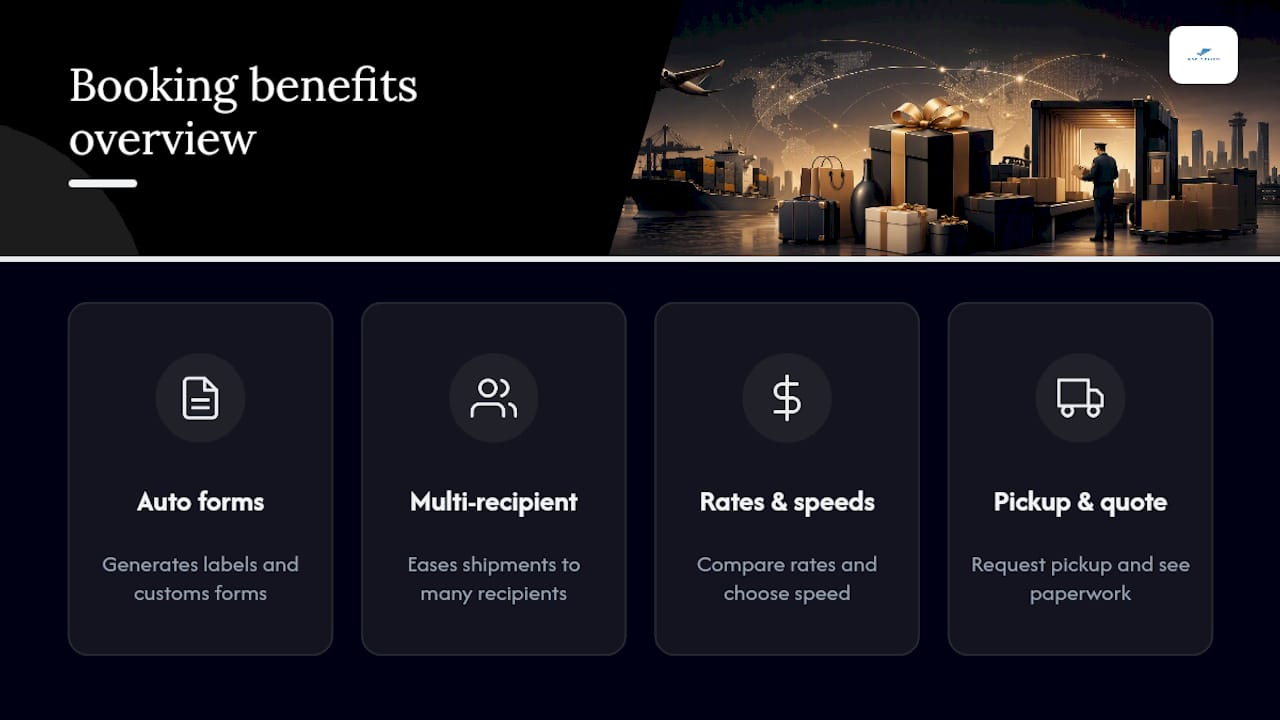
Our platform helps simplify the paperwork burden on senders by generating shipping labels and customs documentation automatically when you book, rather than requiring manual entry. That matters most when you're sending gifts to multiple recipients, shipping a higher-value item, or simply don't want to research every threshold yourself before hitting send. The platform enables rate comparisons and offers a range of shipping speed options, allowing you to select a shipping mode that fits your parcel's value and urgency. Pickup options are available, which may reduce the need to drop off packages yourself. Get a shipping quote for your next gift shipment and see the paperwork handled before you finish packing.
Where to Verify These Gift Customs Rules Yourself
For direct confirmation, check Singapore Customs' duty-free concession and GST relief page, its postal and courier import guidance, CBP's gift rules for U.S.-bound parcels, and the UPU/WCO postal customs guide for international best practice.
Sources
- Duty-Free Concession and GST Import Relief — Singapore Customs
- Gifts — U.S. Customs and Border Protection
- Guide to WCO–UPU Customs–Postal Cooperation (postal customs guidance)