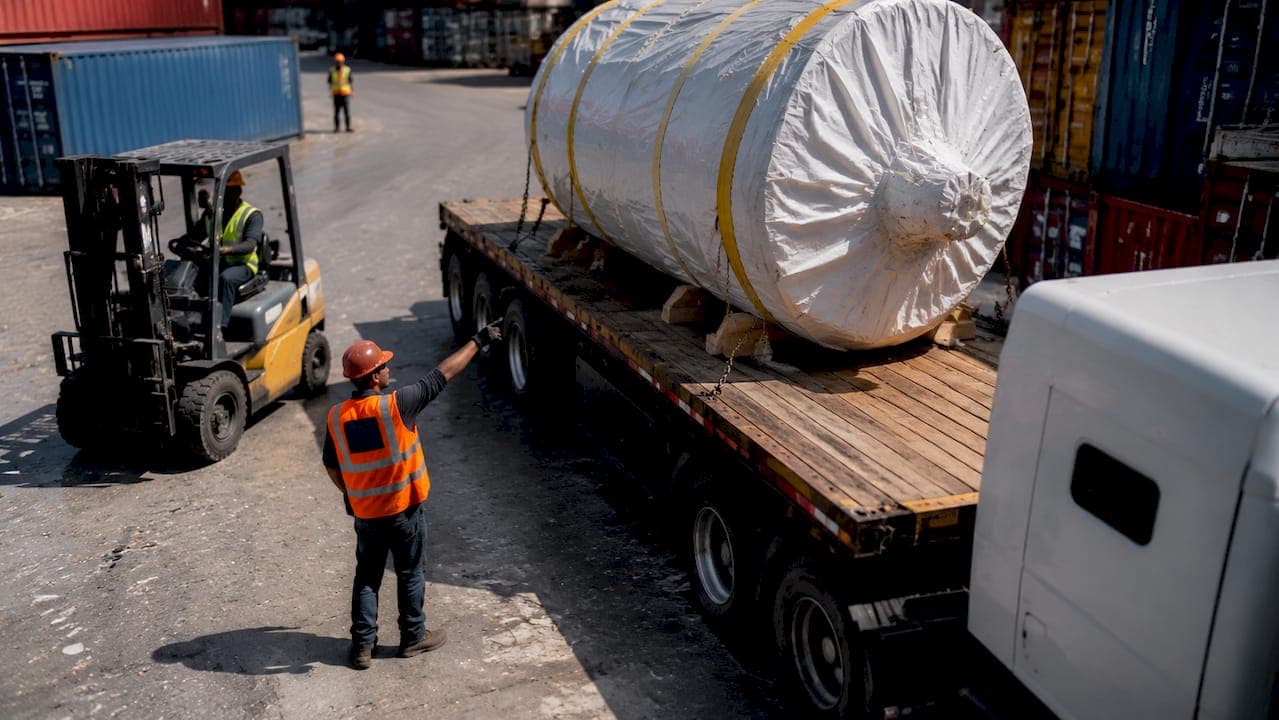
Freight shipping is defined as the transportation of bulk, heavy, or oversized goods that exceed 150 lbs, requiring specialized handling, modes, and documentation beyond standard parcel delivery. This freight shipping guide covers everything you need to move goods confidently, whether you are sending a single pallet across the country or a full container overseas. You will learn the core shipping modes, how to classify and package your cargo correctly, which documents to prepare, and how to avoid the costly mistakes that catch most first-time shippers off guard. The standard industry term for this field is "freight transportation," and understanding it is the first step to shipping smarter.
What are the main freight shipping methods?
Choosing the right freight transportation mode is the single biggest cost decision you will make. The wrong choice can double your bill or delay your shipment by days.

Less-than-truckload vs. full truckload
Less-Than-Truckload (LTL) shipping is the right choice when your shipment weighs between 500 and 10,000 lbs or fills 1–10 pallets. You share trailer space with other shippers, which keeps costs down but adds transit time of 2–7 days. Full-Truckload (FTL) shipping makes more sense once your cargo exceeds 15,000 lbs or 10 pallets. You get the entire trailer, which means faster transit and less handling.
Air freight vs. ocean freight
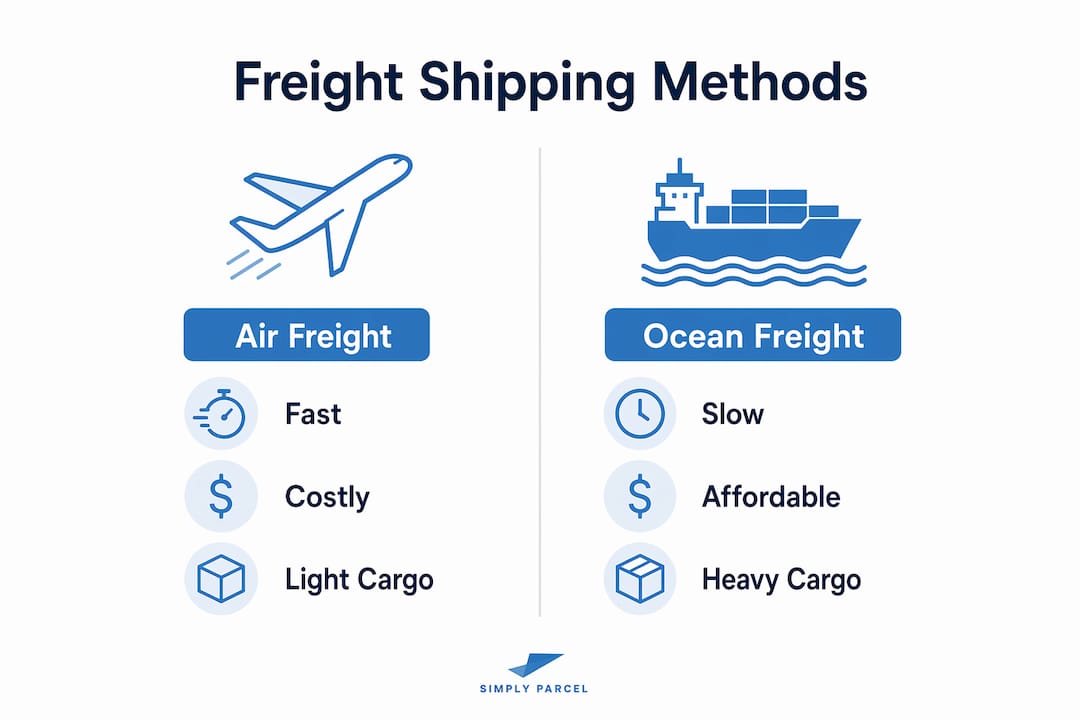
For international shipments, the choice between air and ocean freight comes down to speed versus cost.
| Mode | Typical Cost | Transit Time | Best For |
|---|---|---|---|
| LTL | $1–$3 per lb | 2–7 days | Small to mid-size domestic loads |
| FTL | $1,500–$5,000+ per load | 1–5 days | Large domestic loads |
| Ocean freight | $3,000–$8,000 per container | 2–6 weeks | Heavy or bulky international cargo |
| Air freight | $4.50–$8.00 per kg | 1–5 days | Time-sensitive international goods |
Ocean freight is the most cost-effective option for heavy or bulky international cargo. Air freight costs significantly more but cuts transit time from weeks to days. That price gap matters most when you are shipping perishables, electronics, or goods tied to a product launch deadline.
Pro Tip: If your shipment is under 100 kg and time-sensitive, air freight often beats ocean freight on total cost once you factor in warehousing and inventory holding fees.
The factors that drive mode selection are shipment weight, urgency, cargo type, and budget. A business shipping seasonal inventory six weeks out should choose ocean freight. A company replacing a broken machine part overnight needs air.
How to prepare your freight shipment correctly
Preparation errors cause more freight delays and extra charges than any other factor. Getting packaging, labeling, and classification right before pickup saves you money and time.
Packaging and palletizing
Freight moves through multiple handling points, and cargo that is not secured properly arrives damaged. Follow these packaging best practices:
- Stack boxes evenly on a standard 40" x 48" pallet and keep weight centered
- Shrink wrap the entire pallet from base to top, including the pallet itself, to prevent shifting
- Use corner boards on stacked cartons to distribute strap pressure
- Fill empty space inside boxes with packing material to prevent crushing
- Keep the total pallet height under 72 inches unless your carrier approves taller loads
For fragile items, review protective packaging options to select the right cushioning materials before you palletize.
Pro Tip: Double-wall corrugated boxes rated for at least 200 lbs per square inch (PSI) are the minimum standard for freight pallets. Single-wall boxes collapse under stacking pressure.
Freight classification using NMFC codes
Freight class ranges from 50 to 500 and is assigned based on density, stowability, handling difficulty, and liability. Lower class numbers mean denser, easier-to-ship cargo and lower rates. Higher class numbers mean lighter, bulkier, or more fragile goods and higher rates. Every commodity has a National Motor Freight Classification (NMFC) code that determines its class.
Misclassifying your freight is one of the most expensive mistakes you can make. Carriers audit shipments during transit, and a wrong class triggers a reclassification fee on top of the rate difference. Measure your shipment's length, width, height, and weight precisely before booking. Use the density formula: weight in lbs divided by cubic feet. Then confirm the NMFC code for your specific commodity.
| Freight Class | Density (lbs per cubic ft) | Example Cargo |
|---|---|---|
| 50 | Over 50 | Heavy machinery parts |
| 100 | 15–22.5 | Car parts, wine |
| 200 | 6–8 | Auto sheet metal |
| 400 | 1–2 | Ping pong balls |
Accurate classification is the primary factor in fair pricing. Precise measurement prevents costly disputes with carriers after delivery.
Labeling your freight
Every pallet and package needs a clear, weather-resistant shipping label on at least two sides. The label must include the shipper's name and address, the consignee's name and address, the BOL number, and any special handling instructions such as "fragile" or "this side up." For a detailed walkthrough on completing labels correctly, the shipping labels guide covers every field you need to fill out.
What documents do you need for freight shipping?
Documentation errors are the leading cause of customs holds and delivery delays in international freight. Getting your paperwork right the first time is non-negotiable.
The Bill of Lading (BOL) is the most critical freight document. It functions as a receipt, a contract between shipper and carrier, and a title document for the goods. The BOL must include precise descriptions of the cargo, total weight, dimensions, number of pieces, and any special handling instructions. A vague or inaccurate BOL gives carriers grounds to delay, reclassify, or refuse your shipment.
For international freight, you need additional documents beyond the BOL:
- Commercial Invoice: Lists the buyer, seller, goods description, quantity, unit price, and total value. Customs uses this to assess duties and taxes.
- Packing List: Details every item in the shipment, including weights and dimensions per package. It must match the commercial invoice exactly.
- Customs Declaration Form: Required by the destination country's customs authority. The format varies by country.
- Certificate of Origin: Confirms where the goods were manufactured. Some trade agreements require this to qualify for reduced tariff rates.
- Dangerous Goods Declaration: Required if your cargo contains hazardous materials, following IATA or IMDG standards depending on the mode.
Signing a Bill of Lading without noting visible damage is the single most expensive mistake a freight receiver can make. Carriers treat a clean signature as legal proof that goods arrived in good condition, which eliminates your right to file a damage claim.
For a deeper look at freight documentation requirements and how to prepare each form correctly, Simplyparcel's documentation guide covers both domestic and international scenarios.
How to book, ship, and receive a freight shipment
The freight shipping process follows a clear sequence. Skipping any step creates problems downstream.
- Get accurate quotes. Provide your carrier or freight platform with the exact weight, dimensions, freight class, origin, destination, and any special services needed (liftgate, inside delivery, residential pickup). Compare quotes on total cost, not just base rate.
- Book your shipment and schedule pickup. Confirm the pickup date and time window with your carrier. Have your BOL ready before the driver arrives. The driver will sign it and leave you a copy.
- Prepare your cargo before pickup. Palletize, shrink wrap, and label everything before the driver arrives. Carriers will not wait for you to finish packaging.
- Track your shipment in transit. Most carriers provide a PRO number (Progressive Rotating Order number) at booking. Use it to track your shipment online. LTL transit typically runs 2–7 days domestically; international ocean freight runs 2–6 weeks.
- Inspect delivery carefully. Before the driver leaves, check every pallet and package for visible damage. Mark any damage on the BOL before signing. A clean signature forfeits your claim rights.
Pro Tip: Take timestamped photos of your cargo before pickup and immediately upon delivery. Photos are your strongest evidence if a damage claim goes to dispute.
Understanding the role of freight forwarders is worth your time if you are new to international shipping. Forwarders handle carrier coordination, customs paperwork, and routing, which reduces your risk of costly errors.
Common freight shipping mistakes and how to avoid them
Most freight cost overruns trace back to a small set of preventable errors. Knowing them in advance puts you ahead of the majority of shippers.
- Underreporting weight or dimensions. Carriers use automated scales and dimensioners during transit. Inaccurate reporting triggers re-billing that raises your final cost by 20–50%. Report honest measurements every time.
- Skipping cargo insurance. Carrier liability is limited and rarely covers the full value of your goods. Separate cargo insurance costs roughly 0.3–0.5% of cargo value. For high-value shipments, that small premium is essential protection.
- Ignoring hidden fees. Base freight rates do not include terminal handling charges, fuel surcharges, liftgate fees, residential delivery fees, or customs examination costs. Plan for ancillary charges from the start, especially on international routes.
- Misclassifying freight. Wrong NMFC codes lead to reclassification fees and audit charges. Measure first, then look up your code.
- Poor packaging. Damaged goods that were inadequately packaged often result in denied claims. Carriers inspect packaging when processing claims and will reject them if packaging was insufficient.
The cheapest freight quote is rarely the most cost-effective choice. Hidden fees, limited liability, and poor carrier reliability can turn a low base rate into a high final bill.
For a full breakdown of common shipping mistakes and how to sidestep them, Simplyparcel's 2026 guide covers the most frequent errors shippers make today.
Pro Tip: Ask for an all-in quote that includes fuel surcharges and accessorial fees. A carrier that quotes transparently is almost always cheaper in the end than one that advertises a low base rate.
Key Takeaways
Accurate freight classification, honest weight reporting, and complete documentation are the three factors that determine whether your shipment arrives on time and on budget.
| Point | Details |
|---|---|
| Choose the right mode | Match LTL, FTL, air, or ocean freight to your shipment size, urgency, and budget. |
| Classify freight precisely | Use NMFC codes and density calculations to avoid reclassification fees and audit charges. |
| Complete the BOL accurately | Include exact weights, dimensions, and handling instructions to prevent delays and billing errors. |
| Report honest measurements | Underreporting weight or dimensions triggers automated re-billing that raises costs by 20–50%. |
| Buy cargo insurance | Carrier liability is limited; separate insurance at 0.3–0.5% of cargo value protects high-value shipments. |
What I have learned from watching shippers get freight wrong
After working with shippers across a wide range of industries, one pattern stands out clearly. Most freight problems are not caused by carriers. They are caused by shippers who underestimate how much preparation matters before the truck arrives.
Classification accuracy is where I see the most money lost. Ecommerce growth has increased shipping volumes significantly since 2023, and more businesses are moving into freight for the first time. Many of them treat freight class as a formality. It is not. A single misclassified pallet can cost more in reclassification fees than the original shipping quote.
The other area I feel strongly about is insurance. Shippers consistently overestimate what carrier liability actually covers. When a high-value shipment is damaged and the carrier pays out a fraction of the goods' value, the shock is real. Cargo insurance at 0.3–0.5% of cargo value is one of the cheapest risk management tools available in logistics. Skipping it to save a few dollars is a false economy.
My honest advice: invest 30 minutes in getting your classification, measurements, and documentation right before every shipment. That preparation eliminates the majority of freight problems before they start. For businesses shipping internationally, working with a licensed customs broker is not optional. It is the difference between a smooth clearance and a two-week customs hold.
— Simply
Freight shipping made straightforward with Simplyparcel
Simplyparcel gives you instant access to freight shipping quotes for both domestic and international shipments, with transparent pricing that includes carrier options across multiple speed tiers. The platform handles documentation generation automatically, so your shipping labels and paperwork are ready before pickup. Real-time tracking keeps you informed at every stage of transit, and Simplyparcel's support team is available to help with carrier coordination and customs questions. Whether you are shipping a single pallet or managing regular bulk freight from Singapore, Simplyparcel makes the process clear, fast, and reliable. Visit simplyparcel.sg to compare rates and book your next shipment.
FAQ
What is the minimum weight for freight shipping?
Freight shipping is defined as transportation of goods exceeding 150 lbs. Shipments below that threshold are typically handled as standard parcels.
What is a Bill of Lading and why does it matter?
The Bill of Lading (BOL) is the primary freight document that serves as a receipt, a shipping contract, and a title document for your goods. An inaccurate BOL causes delays, billing disputes, and loss of damage claim rights.
How is freight class determined?
Freight class is assigned using NMFC codes and is based primarily on density, calculated by dividing shipment weight in lbs by its volume in cubic feet. Freight class ranges from 50 to 500, with lower numbers indicating denser, cheaper-to-ship cargo.
Do I need cargo insurance for freight shipments?
Carrier liability is limited and rarely covers the full value of your goods. Separate cargo insurance costs roughly 0.3–0.5% of cargo value and is strongly recommended for any high-value shipment.
What hidden fees should I expect in international freight?
International freight costs include terminal handling charges, fuel surcharges, customs examination fees, and port fees on top of the base rate. Using a licensed customs broker and requesting an all-in quote helps you avoid budget surprises on cross-border shipments.