
Shipping documentation is defined as the set of legal and commercial records that authorize, describe, and govern the movement of goods across international borders. These documents legally connect the buyer, seller, and carrier, and they form the official record of what was shipped, where it was going, and under what terms. Without accurate paperwork, cargo cannot clear customs, carriers cannot release goods, and disputes cannot be resolved. Understanding why shipping documentation matters is the first step to protecting your shipment, your money, and your business reputation.
Why shipping documentation matters for compliance and legal protection
Shipping documents serve as a legal record of agreement between all parties involved in a transaction. Documentation protects all parties legally and operationally in the event of disputes, insurance claims, or shipment issues. That protection is not theoretical. When cargo is damaged, lost, or seized, the paperwork determines who is liable and who gets paid.
Customs authorities in every country require specific documents before releasing cargo. Regulatory bodies like the World Customs Organization set the framework for what information must be declared, and individual countries build their requirements on top of that. If your documents are missing, incomplete, or inconsistent, customs has the legal right to hold your shipment indefinitely. That hold costs money every day it continues.
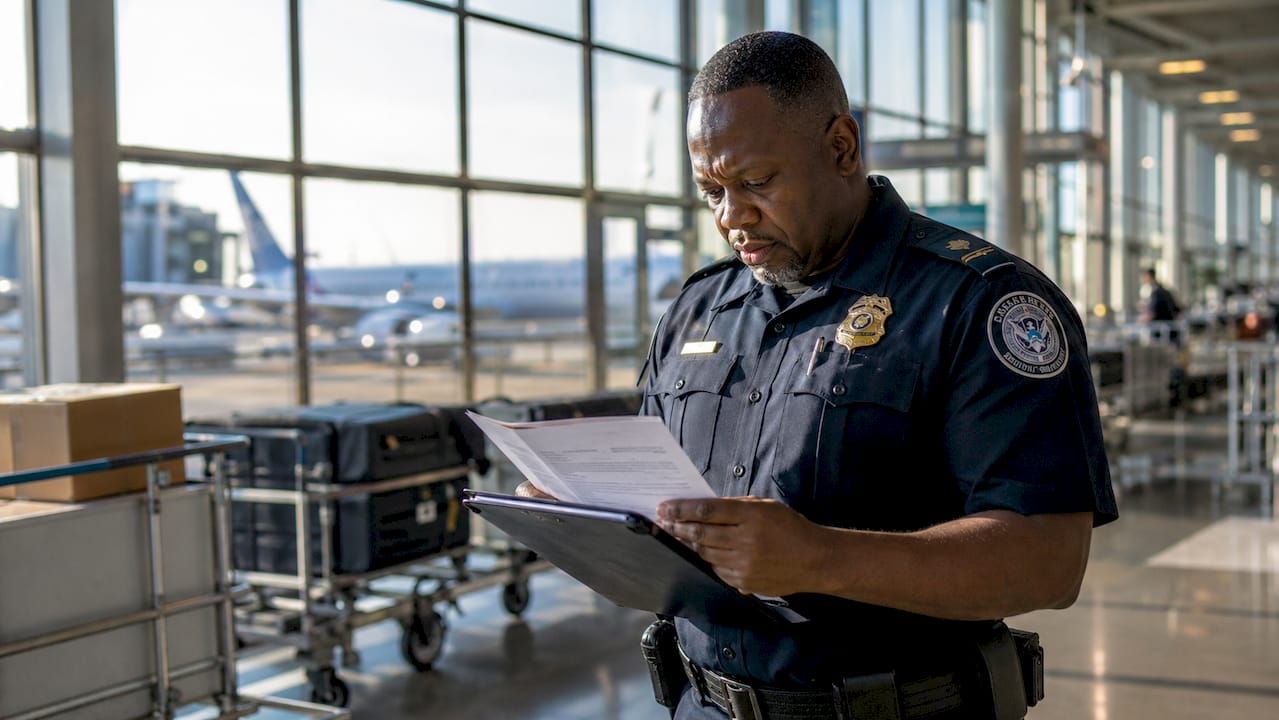
The importance of shipping documentation also extends to financial control. Banks and trade finance institutions use documents like the Commercial Invoice and Bill of Lading to release payment under letters of credit. Without the correct paperwork, payment can be withheld even after goods have been delivered. Proper documentation is not just a logistics requirement. It is a financial safeguard.
What are the key shipping documents and what roles do they serve?
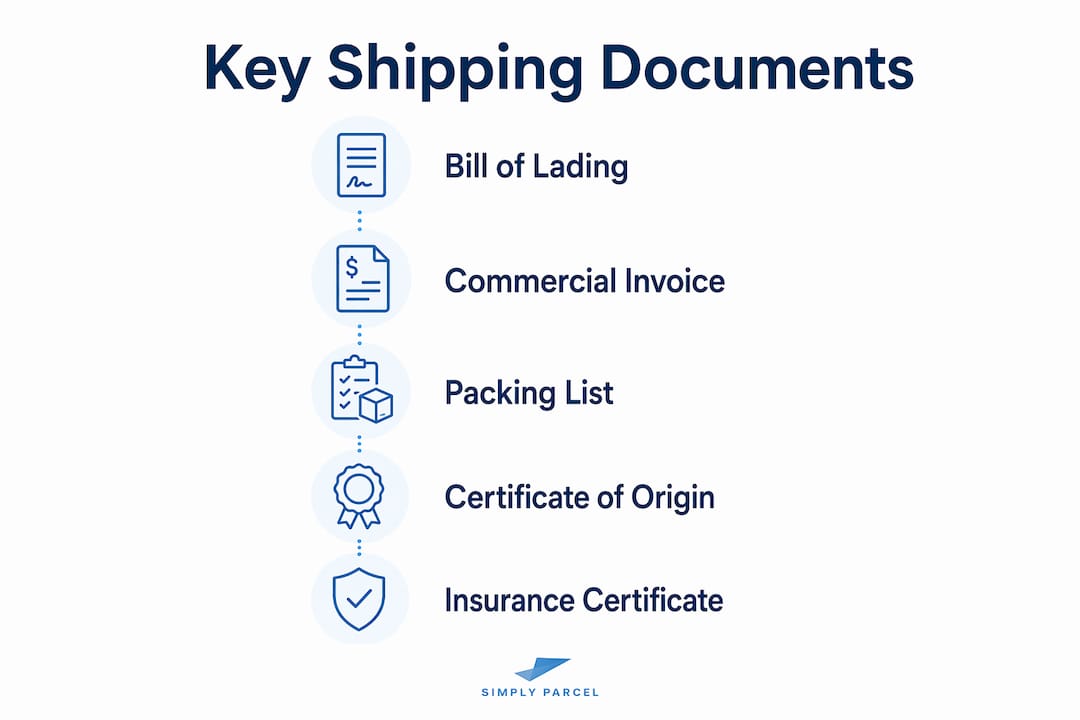
Five core documents form the foundation of international shipping paperwork. Each one serves a distinct legal, operational, or financial function.
- Bill of Lading (B/L): The Bill of Lading acts as a receipt, a contract of carriage, and sometimes a document of title. It includes the shipper, consignee, transport details, package count, and cargo description. Carriers use it to authorize delivery. Without it, the consignee cannot legally claim the goods.
- Commercial Invoice: This document confirms the sale between buyer and seller. It states the product description, quantity, unit price, total value, and trade terms such as Incoterms. Customs authorities use it for valuation and duty calculation.
- Packing List: The Packing List describes the physical contents of each package, including weights, dimensions, and item counts. Customs inspectors use it to verify that what is declared matches what is physically present.
- Certificate of Origin: This document certifies the country where goods were manufactured. It determines whether preferential tariff rates apply under trade agreements like ASEAN Free Trade Area agreements. An incorrect or missing Certificate of Origin can result in higher duties.
- Insurance Certificate: This document proves that the cargo is covered against loss or damage during transit. It is required by many buyers and banks, and it is the document you present when filing a claim.
The table below shows how each document maps to its primary function:
| Document | Primary function |
|---|---|
| Bill of Lading | Contract of carriage and cargo release authorization |
| Commercial Invoice | Customs valuation and payment confirmation |
| Packing List | Physical cargo verification by customs and handlers |
| Certificate of Origin | Tariff rate determination under trade agreements |
| Insurance Certificate | Cargo loss or damage claim support |
Data consistency across all five documents is critical. Names, addresses, weights, values, and country of origin must match exactly across every form. Even a single discrepancy, such as a different spelling of the consignee's name, can trigger a customs hold.
How does accurate shipping documentation reduce operational risks and costs?
Freight documentation errors lead to shipment delays at major ports, and small mistakes can trigger container holds and additional inspections. Those holds generate demurrage charges, which are fees for keeping a container at the port beyond the free storage period. Demurrage accumulates daily and can quickly exceed the value of the goods being shipped.
Common documentation errors that cause costly consequences include:
- Mismatched values between the Commercial Invoice and the Packing List
- Incorrect Harmonized System (HS) codes, which determine duty rates
- Missing or expired Certificates of Origin
- Errors in consignee address or contact details
- Incomplete cargo descriptions that fail to meet customs declaration standards
Each of these errors forces customs officers to pause the clearance process and request corrections or additional documents. That process takes time. In busy ports, a single correction request can add days to your delivery timeline.
Late corrections to shipping documents create more disruption and cost than early review and verification before goods leave the warehouse. This is a critical point that many shippers overlook. Most documentation problems start before the shipment departs. Fixing an error after a container is already on a vessel is far more expensive than catching it during pre-shipment review.
Pro Tip: Conduct a full document review at least 48 hours before your cargo is scheduled to depart. Check that all names, values, weights, and HS codes match across every document. This single step prevents the majority of customs holds.
For a practical guide on avoiding these pitfalls, the article on shipping delays and prevention covers the most common documentation mistakes and how to fix them before they cost you.
How are digital technologies and evolving regulations shaping shipping documentation?
Customs authorities now use digital inspection systems that identify discrepancies in real time, causing faster and more frequent shipment holds due to documentation errors. These systems can flag a spelling error in a consignee's name within seconds of a document being submitted electronically. That speed works against shippers who treat documentation as an afterthought.
The shift to digital customs processing has raised the bar for accuracy in several ways:
- Electronic data interchange (EDI) systems cross-reference submitted documents against trade databases automatically
- Digital customs portals in Singapore, the EU, and the US require pre-arrival document submission, often 24 hours before vessel arrival
- Automated risk scoring systems flag shipments with inconsistent data for physical inspection, which adds days to clearance
Regulatory requirements are also tightening globally. The World Trade Organization and regional customs bodies continue to update compliance standards. Singapore's TradeNet system, for example, requires accurate and complete permit applications before goods can be exported or imported. Errors submitted through TradeNet result in permit rejections that delay cargo movement immediately.
Understanding customs processes in 2026 is now a practical requirement for any business shipping internationally, not just a compliance formality.
Pro Tip: Subscribe to regulatory update alerts from your country's customs authority. Singapore shippers can follow Singapore Customs directly for TradeNet updates and new permit requirements. Staying current prevents compliance gaps before they become shipment problems.
What best practices can individuals and businesses implement for effective documentation?
Treating documentation as part of shipment planning, rather than a post-loading task, is the single most effective change any shipper can make. Timing of documentation preparation is as critical as accuracy. Many customs forms must be prepared and submitted before departure to avoid costly delays. The following steps build a reliable documentation process:
- Start documentation at the booking stage. When you book freight, begin preparing your Commercial Invoice and Packing List at the same time. Do not wait until the cargo is packed and ready to ship.
- Use standardized templates. Create fixed templates for your most common shipment types. Templates reduce the chance of missing required fields and ensure consistency across documents.
- Verify data consistency across all documents. Before finalizing any document, check that the consignee name, address, product description, weight, and value match exactly across the Bill of Lading, Commercial Invoice, and Packing List.
- Coordinate with your customs broker early. Share draft documents with your customs broker before the shipment date. Brokers identify classification errors and missing information that your internal team may overlook.
- Keep digital copies post-shipment. Accessible digital copies of shipping documentation are crucial for audits, insurance claims, and payment dispute resolution weeks or months after dispatch. Store documents in a centralized, searchable system.
- Review after each shipment. Use completed shipments as a learning record. If customs requested a correction, update your templates and checklists to prevent the same error on the next shipment.
For Singapore-based businesses, the guide on documentation for Singapore SMEs provides a country-specific checklist that maps directly to TradeNet requirements.
Pro Tip: Build a pre-shipment documentation checklist that mirrors your customs broker's review process. When your internal check matches theirs, approval is faster and corrections are rare.
Documentation accuracy is increasingly seen as a proxy for company reliability. Customers and stakeholders consider documentation quality a direct indicator of operational integrity. A business that consistently delivers clean paperwork builds trust with carriers, customs authorities, and buyers alike.
Key takeaways
Accurate shipping documentation is the foundation of every successful international shipment, protecting legal rights, enabling customs clearance, and preventing costly delays.
| Point | Details |
|---|---|
| Documentation is a legal record | It binds buyer, seller, and carrier and governs cargo release and dispute resolution. |
| Five core documents drive compliance | Bill of Lading, Commercial Invoice, Packing List, Certificate of Origin, and Insurance Certificate each serve a distinct role. |
| Errors cause real financial losses | Mismatched data triggers customs holds, demurrage charges, and delayed payments. |
| Digital customs systems raise the stakes | Automated tools flag even minor discrepancies instantly, making accuracy non-negotiable. |
| Preparation timing is critical | Documentation must begin at booking, not after loading, to meet pre-departure submission deadlines. |
Documentation quality reflects your business, not just your shipment
After working with international shippers across a wide range of industries, one pattern stands out clearly. The businesses that treat documentation as a strategic process, not a clerical task, are the ones that rarely face customs holds or carrier disputes. They build templates, train their teams, and review every document before it leaves their desk.
The uncomfortable truth is that most shipping problems are documentation problems in disguise. A delayed container is often a misfiled HS code. A rejected payment is often a mismatched invoice value. These are not complex logistics failures. They are preventable paperwork errors that compound into expensive outcomes.
What I have found actually works is building documentation control into the shipment booking process from day one. When your team treats the Commercial Invoice and Packing List with the same urgency as the freight booking itself, the error rate drops significantly. Customs brokers become faster to work with because your documents arrive clean. Carriers release cargo without friction. Buyers receive their goods on time and pay without dispute.
Documentation quality is also a reputation signal. Customers notice when shipments arrive with clean paperwork and no delays. They notice even more when they do not. Over time, that consistency becomes a competitive advantage that no amount of discounted freight rates can replace.
— Simply
Shipping internationally with Simplyparcel
Simplyparcel makes international shipping from Singapore straightforward for both individuals and businesses. The platform automatically generates shipping labels and documentation when you book, reducing the manual work that leads to errors. You can compare courier options, select the speed that fits your timeline, and get your shipment moving with confidence. For businesses that ship regularly, Simplyparcel's transparent pricing and free pickup service remove friction from the process. Get your instant shipping quote and see how Simplyparcel supports compliant, reliable international delivery from Singapore to destinations worldwide.
FAQ
What are shipping documents?
Shipping documents are the official records that authorize and describe the movement of goods in international trade. Core examples include the Bill of Lading, Commercial Invoice, Packing List, Certificate of Origin, and Insurance Certificate.
Why does shipping documentation matter for customs clearance?
Customs authorities require accurate documents to verify cargo value, origin, and contents before releasing goods. Errors or missing paperwork result in holds, additional inspections, and demurrage charges.
What happens if shipping documents contain errors?
Freight documentation errors cause shipment delays, customs holds, and increased costs. Even minor mistakes like a misspelled consignee name can trigger an immediate cargo hold under digital inspection systems.
How long should I keep shipping documents after a shipment?
Digital copies of shipping documents must be retained and accessible post-shipment for audits, insurance claims, and dispute resolution, which can arise weeks or months after the vessel departs.
What is the most common shipping documentation mistake?
Data inconsistency across documents is the most common error. Names, weights, values, and product descriptions must match exactly across the Bill of Lading, Commercial Invoice, and Packing List to prevent customs clearance stalls.