
Proof of delivery is defined as a verified physical or digital record confirming that a shipment reached its intended recipient, capturing the date, time, location, recipient name, and signature or photo confirmation. Known in logistics as a POD, this document does far more than confirm a package arrived. It serves as legal evidence, marks the transfer of ownership and risk, and protects both senders and recipients in disputes. Understanding what is proof of delivery, and how it works, is essential for anyone shipping goods, whether you are sending a single parcel abroad or managing a high-volume supply chain.
What is proof of delivery and what does it include?

A proof of delivery is a verified physical or digital record that confirms shipment delivery, including the date, time, location, recipient, and signature or image confirmation. Think of it as the closing handshake of a shipping transaction. Without it, neither the sender nor the carrier has documented proof that the goods arrived safely.
A complete POD typically captures the following data points:
- Recipient name and signature
- Delivery timestamp and location
- Shipment tracking number
- Purchase order number and ship-to address
- Condition notes or photo evidence of the package at drop-off
- Signed acknowledgment validating the delivery
These details are not just administrative. They validate delivery for disputes and support inventory reconciliation in retail and B2B logistics. A POD without a purchase order number or a signed acknowledgment may be rejected when you try to file a claim or reconcile an invoice.
What are the common types of proof of delivery?
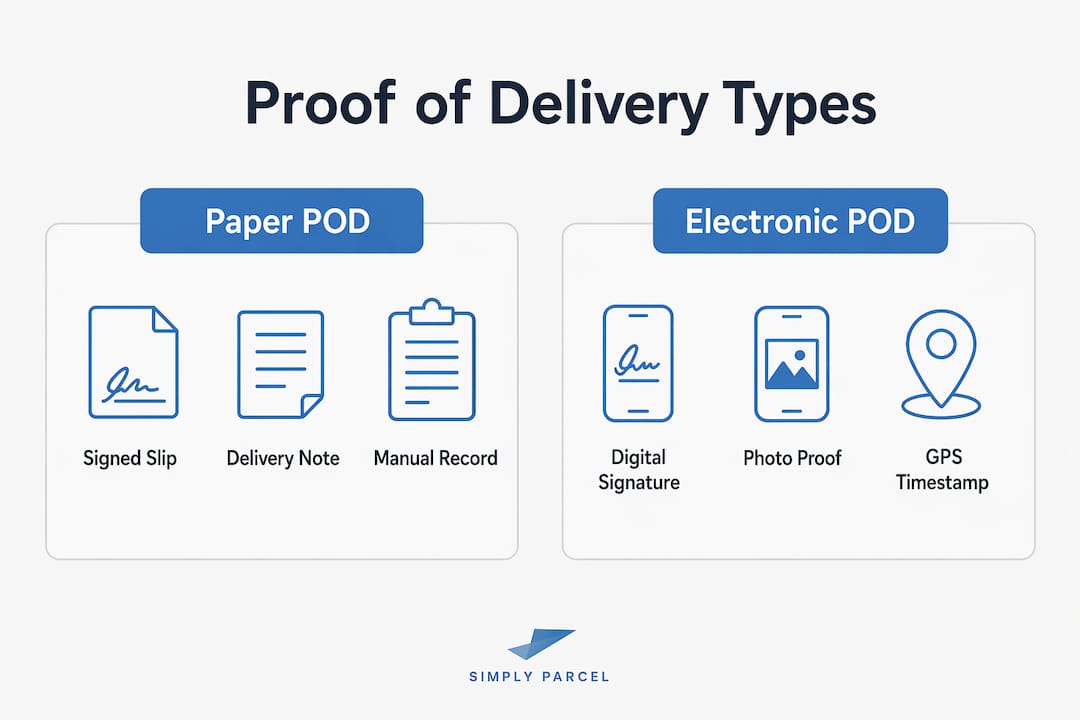
Common POD types include physical signed slips, electronic signatures, photographic proof, and timestamped digital logs from carriers. Each method suits a different shipping context, and many carriers now combine two or more formats for added security.
- Physical signed delivery slips: The traditional paper receipt signed by the recipient at the door. Still common in freight and B2B deliveries where a paper trail is required.
- Electronic signatures: Captured on a mobile device by the delivery driver. The recipient signs a screen, and the data uploads instantly to the carrier's system.
- Photographic proof: A photo of the package at the delivery location, typically used for residential drop-offs when no one is home to sign.
- Timestamped digital logs: Carrier-generated records that confirm delivery time and GPS location, often used alongside photos or signatures.
- Condition notes: Written or photographic documentation of the package's state at delivery, critical for high-value or fragile shipments.
High-value or age-restricted shipments almost always require a formal signature. Residential deliveries, by contrast, often rely on photo confirmation alone. The method used affects your legal standing if a dispute arises later.
Pro Tip: If you are shipping high-value goods internationally, request a signature-required service at booking. Photo-only confirmation may not hold up as legal evidence in a formal dispute.
Why does proof of delivery matter legally and financially?
POD is the closing document that ends the carrier's obligations and transfers risk to the buyer. This is not just a logistics formality. Under the Uniform Commercial Code, the timing of risk transfer depends on the type of shipping contract in place.
- Destination contracts: The seller retains risk until the goods arrive at the named destination. The POD marks the end of seller's liability; once the recipient signs, the buyer assumes ownership and risk of the goods' condition.
- Shipment contracts: Risk transfers to the buyer when the seller delivers goods to the carrier, not when they arrive. The Bill of Lading, not the POD, is the primary transfer document here.
- Prepaid shipments: The supplier remains liable until a valid POD is obtained. If goods are lost or damaged in transit, the supplier bears the financial exposure.
- Collect shipments: Risk shifts to the buyer at carrier pickup. Misunderstanding prepaid vs. collect causes errors in financial reconciliation and can leave one party unexpectedly liable.
- Damage claims: A signed POD without any damage noted makes filing a subsequent claim very difficult. The carrier is effectively released from liability the moment a clean POD is signed.
Signing a proof of delivery without recording visible damage releases the carrier from liability. Inspection before signing is not optional. It is the single most important action a recipient can take to protect their financial interests.
POD also drives financial processes. Invoices in many B2B contracts cannot be issued until a valid POD is received. Delays in obtaining POD translate directly into delayed revenue recognition and slower cash flow. Proper shipping documentation at every stage keeps your finances on track.
How does proof of delivery work in modern logistics?
The transition from paper to electronic PODs has transformed supply chain transparency. Digital PODs integrate into Transportation Management Systems and Warehouse Management Systems, uploading in real time and enabling instant financial reconciliation. That speed reduces days sales outstanding and accelerates invoicing cycles.
Here is how the modern POD process works end to end:
- The delivery driver captures a signature or photo on a mobile device at the point of delivery.
- The data uploads instantly to the carrier's platform and syncs with the shipper's TMS or WMS.
- The shipper receives an automated notification confirming delivery, often with a photo attached.
- The customer receives a delivery confirmation, reducing the volume of "Where Is My Order" support queries.
- The POD record is stored digitally and can be retrieved for audits, disputes, or invoice processing.
Sharing POD details proactively reduces WISMO queries and builds customer trust. Businesses that send automatic delivery confirmations with photo evidence report fewer disputes and higher customer satisfaction scores. You can read more about how parcel tracking connects to this customer experience benefit.
Pro Tip: If your logistics software supports it, configure automatic POD sharing with customers at the moment of delivery. This one step cuts inbound support calls and signals transparency to your buyers.
Maintaining supply chain security alongside digital POD adoption is equally important. Real-time data access creates efficiency, but it also requires secure systems to prevent unauthorized access to delivery records.
Practical tips for using proof of delivery effectively
Getting POD right requires deliberate habits, not just good intentions. These steps apply whether you are an individual receiving a parcel or a business managing hundreds of shipments per week.
- Inspect the package before signing. Check for visible damage, dents, or wet spots. A signed clean POD without noting damage makes filing a claim very difficult afterward.
- Document damage on the delivery record. If you see damage, write it on the POD before signing. Take photos immediately. Both the written note and the photos strengthen your claim.
- Understand your shipping terms. Know whether your shipment is prepaid or collect. This determines who bears liability during transit and when that liability ends.
- Request POD from your carrier. For outbound shipments, confirm that your carrier provides POD as part of the service. Not all economy services include it by default.
- Store PODs systematically. Keep digital copies organized by order number and date. You may need them weeks later for audits, insurance claims, or customer disputes.
- Avoid common documentation errors. Missing purchase order numbers or unsigned acknowledgments can invalidate a POD. Review common shipping mistakes to protect your shipments from the start.
For cross-border shipments, POD requirements can vary by country and carrier. Understanding international shipping challenges helps you prepare the right documentation before your parcel leaves Singapore.
Key Takeaways
Proof of delivery is a legal document, not just a receipt. It governs liability transfer, protects against false claims, and drives financial reconciliation in both consumer and B2B shipping.
| Point | Details |
|---|---|
| POD is a legal document | It marks the transfer of risk and ownership, not just confirmation of arrival. |
| Inspect before signing | Signing a clean POD without noting damage releases the carrier from liability. |
| Know your shipping terms | Prepaid vs. collect determines who bears risk during transit and when it ends. |
| Digital PODs speed up finance | Electronic PODs integrate with TMS and WMS to accelerate invoicing and reduce DSO. |
| Proactive sharing builds trust | Sending POD confirmations to customers reduces support queries and disputes. |
Proof of delivery is more than a receipt
The biggest mistake I see businesses make is treating POD as a formality. They sign without looking, file without reading, and then scramble when a dispute arrives three weeks later. POD is a legal document that dictates who owns the risk at every stage of a shipment's life. That distinction matters enormously when goods arrive damaged or go missing entirely.
What I have found working in international shipping is that the businesses with the fewest disputes are not the ones with the best luck. They are the ones who built POD habits into their operations. They inspect before signing. They store records systematically. They share delivery confirmations with customers automatically. These are not complex processes. They are consistent ones.
The shift to electronic PODs is the single biggest improvement in logistics transparency in the past decade. Real-time upload, instant customer notification, and digital storage remove almost every excuse for poor POD management. If your business is still relying on paper slips and manual filing, you are carrying unnecessary risk. The technology to fix that is already available and widely accessible.
— Simply
Shipping with confidence through Simplyparcel
Simplyparcel gives you access to reliable international courier services with real-time shipment tracking and built-in documentation support. Every booking through Simplyparcel includes automatic label generation and clear transit timelines, so you always know where your parcel stands. Whether you are sending a single item or managing regular exports from Singapore, you can get an instant shipping quote and compare courier options in minutes. Simplyparcel's courier partners provide POD confirmation as part of the delivery process, giving you the documented evidence you need for peace of mind and dispute protection.
FAQ
What is a proof of delivery in shipping?
A proof of delivery is a verified record confirming that a shipment reached its intended recipient, capturing the date, time, location, recipient name, and signature or photo confirmation. It serves as legal evidence that the carrier fulfilled its delivery obligation.
What does a proof of delivery document include?
A standard POD includes the recipient's name and signature, delivery timestamp, tracking number, ship-to address, purchase order number, and any condition notes or photos documenting the package's state at delivery.
How does proof of delivery protect me legally?
Signing a POD transfers risk and ownership from the carrier or seller to the recipient. If you sign without noting visible damage, the carrier is released from liability, making it very difficult to file a successful claim afterward.
What is the difference between electronic and paper proof of delivery?
Paper PODs are physical signed slips collected at delivery. Electronic PODs are captured digitally on mobile devices, uploaded in real time, and integrated with logistics software for instant notifications and faster invoicing.
Do I need proof of delivery for international shipments?
Yes. International shipments carry higher risk of loss or damage, and POD provides the documented evidence needed for customs compliance, insurance claims, and dispute resolution across borders.