
Every time a customer sends a "Where is my order?" message, it costs your business time and money. These inquiries, known as WISMO tickets, can consume up to 50% of customer support tickets across e-commerce and logistics. Without visibility into where a parcel is, both senders and recipients experience anxiety, frustration, and a breakdown in trust. The advantages of parcel tracking go far beyond knowing a package's location. For individuals, it means peace of mind. For small businesses, it means lower costs, fewer disputes, and stronger customer relationships. This article walks you through every major benefit, backed by real data.
Table of Contents
- Key takeaways
- 1. Reducing WISMO inquiries and cutting support costs
- 2. Improving operational efficiency and reducing delivery costs
- 3. Enhancing customer experience with real-time updates
- 4. Reducing disputes and protecting against fraud
- 5. How tracking benefits compare for individuals vs. small businesses
- My perspective on why tracking is no longer optional
- Ship smarter with Simplyparcel's tracking-enabled courier services
- FAQ
Key takeaways
| Point | Details |
|---|---|
| Fewer support tickets | Proactive tracking notifications reduce WISMO inquiries by 50 to 70%, cutting support costs significantly. |
| Better delivery success | Real-time data improves first-time delivery rates and reduces costly failed delivery attempts. |
| Higher customer satisfaction | Transparent, continuous updates increase satisfaction by up to 23% and build long-term loyalty. |
| Dispute protection | Electronic proof of delivery with photos and geotags reduces disputed deliveries by up to 90%. |
| More revenue for businesses | Branded tracking pages drive repeat purchases and create additional conversion opportunities. |
1. Reducing WISMO inquiries and cutting support costs
The most immediate and measurable advantage of parcel tracking for small businesses is the reduction in customer support volume. When customers cannot find out where their order is, they contact support. Each of those calls or messages costs $5 to $10 to resolve. For a mid-size business handling hundreds of shipments monthly, that adds up to $35,000 or more in monthly support costs.
Proactive tracking changes this completely. When automated notifications go out at key milestones, customers no longer need to ask. The most impactful notification types break down as follows:
- "Out for delivery" alerts reduce WISMO call volume by 35%
- "Delivered" confirmations account for an additional 15% reduction
- Exception or delay notices cut another 10% by managing expectations before frustration sets in
Proactive tracking notifications at these milestones can lower total WISMO call volume by 60%, dropping that $35,000 monthly support cost down to around $14,000. That is not a minor efficiency gain. It is a structural change in how your support team spends its time.
Pro Tip: Set up automated notifications for at least three shipment events: dispatch confirmation, out for delivery, and final delivery. These three touchpoints eliminate the majority of inbound "where is my order?" contacts.
Branded tracking pages add another layer of value. Rather than sending customers to a generic carrier portal, you keep them on your own branded page. This reduces WISMO tickets by up to 70% while reinforcing your brand identity at one of the most-visited post-purchase touchpoints.
2. Improving operational efficiency and reducing delivery costs
The benefits of package tracking extend directly into logistics operations. When you know where every vehicle and parcel is in real time, you can make smarter decisions about routes, timing, and resource allocation.
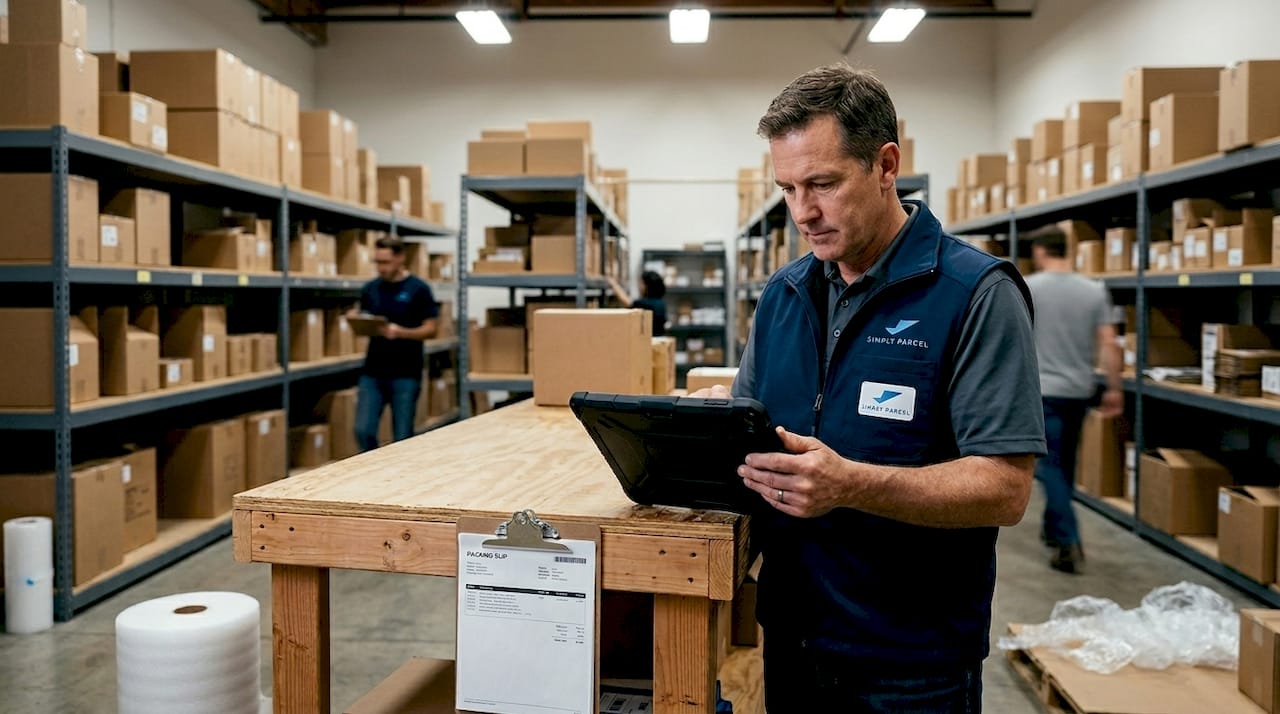
The data on this is clear. Real-time tracking reduces waiting times at loading ramps by 30% and improves first-time delivery success rates by enabling better coordination between drivers and recipients. Failed deliveries are expensive. Each one costs approximately $17.20 to reattempt, factoring in fuel, driver time, and logistics overhead.
Here is how tracking affects key operational metrics:
| Metric | Without tracking | With real-time tracking |
|---|---|---|
| Loading ramp wait time | Baseline | Reduced by up to 30% |
| First-time delivery success | Lower | Improved through recipient alignment |
| Failed delivery cost | $17.20 per attempt | Significantly reduced |
| Driver time saved | Baseline | Up to 45 minutes per day |
| Efficiency gain overall | Baseline | Up to 15% improvement |
In-flight tracking takes this further. When customers can see their driver is nearby and align their own availability accordingly, drivers save up to 45 minutes per day and first-time success rates climb. For a small business managing deliveries across multiple zones, that time savings compounds into real cost reductions every week.
Pro Tip: If you use a multi-carrier shipping platform, look for one that integrates tracking data across all your carriers in a single dashboard. Fragmented tracking views create gaps that lead to missed exceptions and higher operational costs.
AI-powered systems push these gains even further. Traditional tracking gave you day-level delivery windows. AI-powered ETA accuracy now delivers 30-minute to 2-hour windows by combining real-time driver telemetry with historical route performance data. That precision reduces missed deliveries and the reattempt costs that follow.
3. Enhancing customer experience with real-time updates
Customer expectations around shipping transparency have shifted significantly. As of 2026, 96% of customers expect accurate updates throughout their delivery. That is not a preference. It is a baseline expectation. Businesses that fall short of it risk losing customers to competitors who meet it.
Real-time parcel tracking closes the gap between what customers expect and what they actually receive. The advantages of real-time parcel tracking for customer experience include:
- Reduced delivery anxiety. When customers can check status at any time, uncertainty disappears. They know when to be home, when to ask a neighbor to watch for a package, and when to follow up on a delay.
- Flexible delivery control. Modern tracking systems let customers redirect deliveries, change time slots, or request secure drop-off locations. This flexibility directly reduces failed delivery attempts.
- Personalized notifications. Customers can choose their preferred communication channel, whether that is SMS, email, or app notification, and receive updates in the format that works best for them.
- Higher satisfaction scores. Real-time tracking increases customer satisfaction by up to 23%, which feeds directly into repeat purchase rates and positive reviews.
There is also a revenue angle that many small businesses overlook. Branded tracking pages, visited multiple times per order by most customers, are prime real estate for product recommendations and upsell offers. Tracking pages with embedded promotions increase repeat purchase rates by 6 to 12%. You are already paying for the shipment. The tracking page costs nothing extra to monetize.
Learn more about how courier tracking transforms results across different shipping scenarios.
4. Reducing disputes and protecting against fraud
One of the less-discussed advantages of shipment tracking is how it protects businesses from false claims and delivery disputes. Without verifiable proof of delivery, any claim that a parcel was not received becomes difficult to contest. That leads to refunds, replacements, and the erosion of profit margins.
Electronic proof of delivery, or E-POD, solves this directly. A complete E-POD includes photos of the delivered parcel, GPS coordinates at the time of delivery, and a timestamp. Together, these three data points reduce disputed deliveries by up to 90% during peak periods when claim volumes typically spike.
Beyond proof of delivery, anomaly detection in advanced tracking systems flags irregularities as they happen:
- Unexpected route deviations that may indicate a delivery exception
- Extended dwell times at a single location that suggest a problem
- Condition monitoring alerts for temperature-sensitive shipments
- Geofence breaches that signal a parcel has left its expected path
"Transparency during delays matters more than perfect on-time delivery. Customers who receive honest, proactive communication during a shipment exception are more likely to remain loyal than customers who are left to discover the delay themselves."
For small businesses with higher-value shipments or customers in markets with elevated dispute rates, these features shift the risk balance considerably. Tracking does not just tell you where a parcel is. It creates a defensible record of the entire delivery process.
5. How tracking benefits compare for individuals vs. small businesses
The importance of tracking shipments applies to both individual senders and small businesses, but the specific advantages differ depending on your situation. This comparison helps you identify which features matter most to you.
| Benefit | Individual senders | Small businesses |
|---|---|---|
| Peace of mind | High importance for personal and gift shipments | Moderate, more focused on operational outcomes |
| WISMO cost reduction | Not applicable | High financial impact, reduces support overhead |
| Delivery success rate | Convenient for schedule alignment | Direct cost savings per failed attempt avoided |
| Dispute resolution | Useful for high-value personal items | Critical for protecting revenue and margins |
| Branded tracking pages | Not applicable | Drives repeat purchases and brand engagement |
| Real-time flexibility | Allows last-minute schedule changes | Reduces redelivery costs and driver downtime |
| Multi-carrier visibility | Useful when using multiple services | Prevents status gaps and maintains trust |
For individuals, the benefits of parcel tracking center on convenience, confidence, and the ability to plan around a delivery. For small businesses, the advantages compound. Every efficiency gain in the list above translates directly into cost savings, better customer retention, or both.
If you are sending parcels internationally from Singapore and want to understand how transparent shipping rates connect to tracking visibility, the cost-benefit case becomes even clearer.
My perspective on why tracking is no longer optional
I've worked with enough businesses handling international shipments to know that the WISMO problem is almost always bigger than they think. When I look at support ticket breakdowns for small businesses that haven't yet adopted proactive tracking, the pattern is consistent: nearly half of every support interaction is someone asking about a shipment that is already on its way and perfectly fine.
What I've learned is that real-time updates don't just reduce support volume. They shift the entire customer relationship. A customer who receives a proactive delay notification before they notice the delay themselves tends to respond with understanding. A customer who discovers the delay on their own and then has to ask about it tends to respond with frustration. The shipment outcome is identical. The customer experience is completely different.
My view is that small businesses in particular underestimate how much competitive leverage tracking provides. The technology is accessible, the cost is low relative to the support savings, and the impact on customer loyalty is measurable. If you are shipping internationally and still relying on customers to chase down their own delivery information, you are absorbing costs and risk that simply do not need to exist. Prioritize tracking integration early. The returns compound over time.
— Simply
Ship smarter with Simplyparcel's tracking-enabled courier services
Simplyparcel is built for individuals and small businesses in Singapore who want full visibility into their international shipments without managing multiple carrier relationships. Every booking through Simplyparcel includes real-time shipment tracking across all integrated courier partners, so you see consolidated status updates in one place rather than logging into separate carrier portals.
The platform removes the fragmentation that causes tracking gaps during carrier handoffs, a common frustration with cross-border shipments. You get accurate ETAs, status updates at every milestone, and documentation generated automatically at the point of booking.
Whether you are sending a personal parcel or managing regular outbound shipments for your business, you can get an instant quote and book a pickup with full tracking coverage from day one. No minimum volume. No complicated setup. Just visibility you can rely on.
FAQ
What are the main advantages of parcel tracking?
The main advantages of parcel tracking include reduced customer support costs, higher first-time delivery success rates, improved customer satisfaction, and protection against disputed deliveries through electronic proof of delivery.
How does parcel tracking help small businesses save money?
Parcel tracking reduces failed delivery attempts, which cost around $17.20 each to reattempt, and cuts customer support costs by lowering WISMO inquiries by up to 60%, saving mid-market businesses $50,000 to $200,000 annually.
Why do customers expect real-time tracking updates?
As of 2026, 96% of customers expect accurate, real-time shipment updates. Continuous tracking reduces delivery anxiety, allows flexible scheduling, and builds the trust that drives repeat purchases.
What is electronic proof of delivery and why does it matter?
Electronic proof of delivery captures photos, GPS coordinates, and timestamps at the point of delivery. It reduces disputed deliveries by up to 90%, protecting businesses from false "not received" claims.
Can parcel tracking increase sales for small businesses?
Yes. Branded tracking pages visited after purchase can include product recommendations and promotions, increasing repeat purchase rates by 6 to 12% at no additional cost per visit.