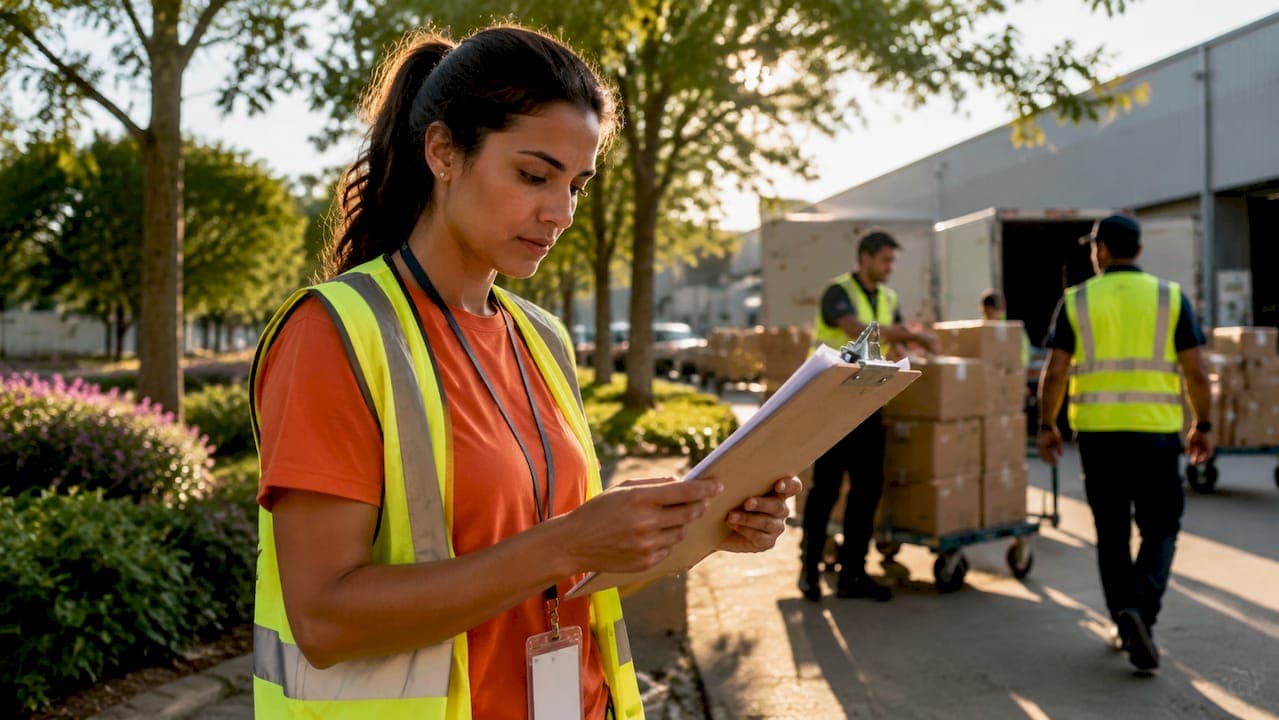
Last mile delivery is defined as the final movement of goods from a distribution hub to the customer's doorstep. It is the most expensive stage of the supply chain, accounting for roughly 53%) of total delivery costs. That figure reflects a hard structural reality: this stage involves many small, dispersed stops rather than bulk freight on a single route. For logistics professionals and business owners, mastering last mile logistics is not optional. It directly shapes customer satisfaction, brand reputation, and your bottom line.
What is last mile delivery and why does it cost so much?
Last mile delivery is expensive because of labor intensity, not distance. Multi-stop routes with low-density drop-offs) mean a driver might spend more time parking, walking, and waiting than actually driving. Each stop requires individual handling, documentation, and often a customer interaction. That complexity adds up fast, especially in suburban or rural areas where stops are spread far apart.
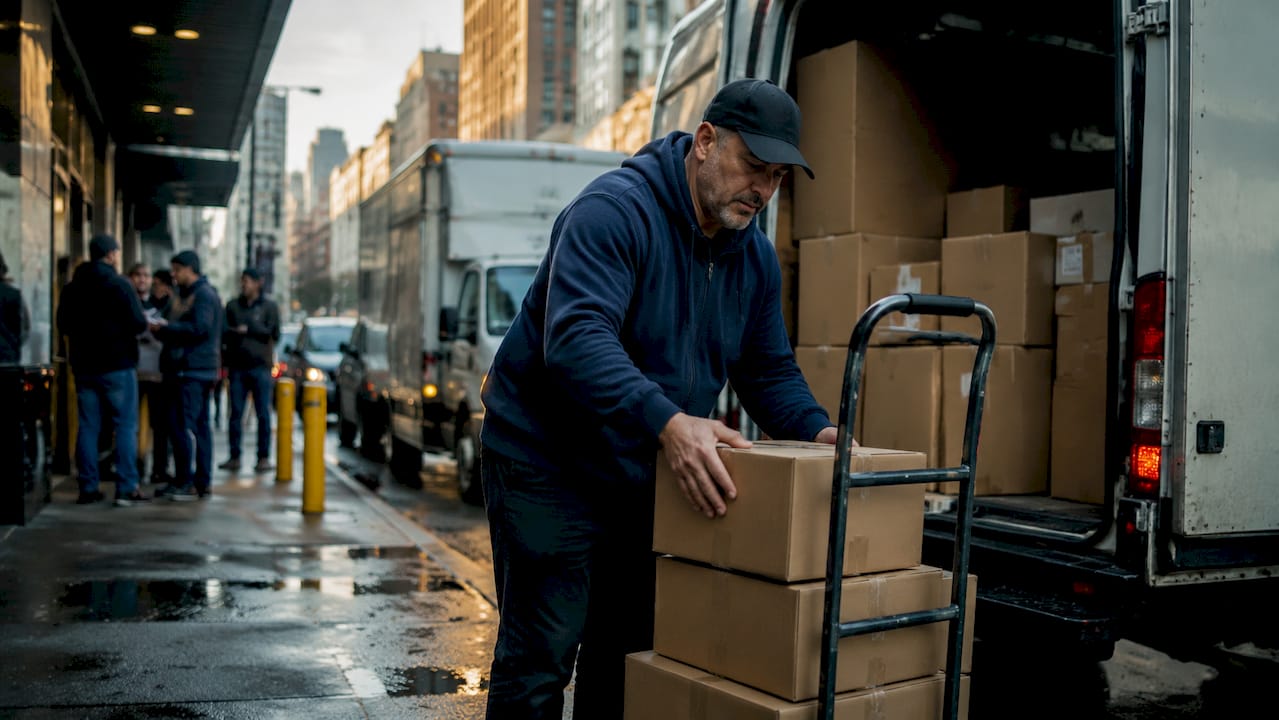
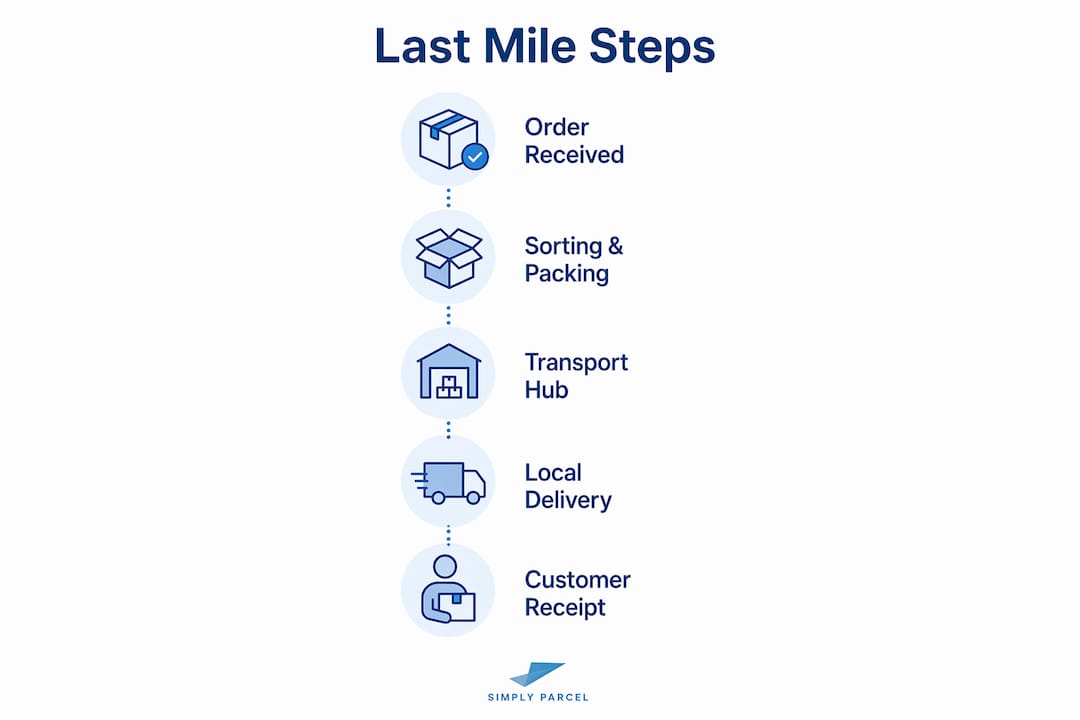
The term "last mile" comes from telecommunications, where it described the final connection from a central network to individual homes. Logistics adopted the phrase to describe the same bottleneck problem: the final leg is the hardest and costliest to execute at scale. In supply chain terms, the last mile delivery process typically begins when a parcel leaves a local sorting facility or fulfillment center and ends when it reaches the recipient.
Consumer expectations have made this stage even harder to manage. Shoppers now expect same-day or next-day delivery, flexible time windows, and real-time updates. Meeting those expectations raises labor and operational costs significantly. A failed delivery attempt compounds the problem, triggering redelivery costs and customer frustration.
What are the main challenges in last mile delivery logistics?
Last mile logistics carries a unique set of pressures that do not exist earlier in the supply chain. Understanding them is the first step to addressing them.
- Speed expectations: Customers now treat same-day and next-day delivery as standard, not premium. Meeting those windows requires flexible scheduling and real-time routing adjustments.
- Labor costs: Drivers, dispatchers, and customer service staff represent the largest cost component. High turnover in gig-economy roles adds training and coordination overhead.
- Route complexity: Delivering to dozens of addresses in a single shift, across varying building types and access restrictions, creates routing puzzles that manual planning cannot solve efficiently.
- Low-density areas: Rural and suburban deliveries stretch routes without proportionally increasing revenue per stop. The cost per delivery rises sharply) when stops are spread out.
- Real-time visibility gaps: Customers expect live tracking. Without it, inbound calls to customer service spike, adding cost and reducing satisfaction.
- Reverse logistics: Returns handling is often treated as an afterthought. Integrating returns into last mile planning reduces friction and protects repeat business.
Pro Tip: Map your failed delivery rate by zip code or postal zone. High failure clusters usually point to a routing or scheduling problem, not a driver problem. Fix the system, not the symptom.
The interaction between these challenges is what makes last mile delivery so difficult to optimize. Solving one problem, like cutting labor costs by reducing driver hours, often creates another, like missed delivery windows. Effective last mile logistics requires managing all these variables together, not in isolation.
How do technology solutions improve last mile delivery efficiency?
Technology is the primary lever for reducing last mile costs without sacrificing service quality. The gains come from four specific areas.
- Route optimization algorithms: Software calculates the most efficient sequence of stops, accounting for traffic, time windows, vehicle capacity, and access restrictions. Manual routing cannot match this at scale.
- Machine learning for demand forecasting: Predictive models analyze historical order data to anticipate volume spikes. That allows carriers to pre-position drivers and vehicles before demand peaks, not after.
- Real-time tracking and delivery apps: Shipment tracking tools give customers live visibility into their parcel's location. This reduces inbound service calls and increases first-time delivery success rates.
- Proof of delivery systems: Digital signatures, photo confirmation, and GPS timestamps eliminate disputes and speed up billing cycles.
- Fleet management platforms: These tools monitor driver performance, fuel consumption, and vehicle utilization in real time, giving dispatchers the data to intervene before a delay becomes a failure.
Route optimization, machine learning, and diversified delivery networks are the primary strategies for building sustainable, resilient last-mile delivery systems. Technology does not just cut costs. It creates the operational visibility that allows continuous improvement. Flexible partnerships and data-driven tools together determine whether a last mile operation scales or stalls.
The compounding effect of these tools is significant. A carrier that combines route optimization with real-time tracking and demand forecasting can reduce failed deliveries, lower fuel costs, and improve customer satisfaction at the same time. Each technology layer reinforces the others.
Pro Tip: Before investing in new technology, audit your current first-attempt delivery rate. If it is below 90%, route optimization and customer notification tools will deliver the fastest return on investment.
What strategies help logistics companies optimize last mile delivery networks?
No single delivery model works for every market or demand pattern. The most effective last mile operations blend multiple approaches.
Mixing gig-economy drivers, local couriers, and in-house fleets gives carriers the flexibility to scale up during peak periods without carrying excess fixed costs year-round. Local courier partnerships extend geographic coverage at lower cost than building owned infrastructure in every zone. In-house fleets provide reliability and brand control for high-value or time-sensitive deliveries.
Sustainability is no longer a secondary concern. Urban access restrictions, low-emission zones, and customer pressure are pushing carriers toward electric vehicles, cargo bikes, and consolidated delivery points. Eco-friendly delivery options also reduce fuel costs, which is a direct operational benefit alongside the environmental one.
| Delivery model | Best use case | Key trade-off |
|---|---|---|
| In-house fleet | High-value, time-sensitive deliveries | High fixed cost, limited scalability |
| Gig-economy drivers | Peak demand periods, flexible coverage | Variable quality, higher coordination overhead |
| Local courier partners | Extended geographic reach | Less brand control, dependency on partner performance |
| Consolidated delivery points | High-density urban areas | Requires customer willingness to collect |
Reverse logistics planning belongs in this conversation. Handling returns as part of delivery planning rather than as a separate process reduces vehicle trips, cuts costs, and improves the customer experience. Drivers who collect returns on outbound routes use capacity that would otherwise go empty.
The carriers that perform best combine all three fleet types, integrate returns into their routing, and use data to decide which model fits each delivery zone. That requires investment in planning tools, but the cost savings justify it quickly.
How does last mile delivery impact customer satisfaction and business success?
Last mile delivery is the most visible customer logistics touchpoint in the entire supply chain. Every other stage happens behind the scenes. This one happens at the customer's front door.
The connection between delivery experience and brand loyalty is direct. A late delivery, a missed window, or a damaged parcel creates a negative impression that no marketing budget can easily undo. Conversely, a smooth, on-time delivery with proactive notifications builds trust and drives repeat purchases. Courier tracking tools that keep customers informed throughout the process are one of the most cost-effective ways to improve satisfaction scores.
Key metrics that logistics professionals use to measure last mile performance include:
- On-time delivery rate: The percentage of deliveries completed within the promised window.
- First-attempt success rate: How often a delivery succeeds without a redelivery attempt.
- Customer satisfaction score (CSAT): Post-delivery surveys that capture the customer's direct experience.
- Cost per delivery: Total last mile cost divided by number of successful deliveries.
- Return rate: The percentage of deliveries that generate a return request, which often signals a delivery quality issue.
Tracking these metrics together reveals the real health of a last mile operation. A high on-time rate paired with a low first-attempt success rate, for example, signals a notification or access problem rather than a routing one. Precision in diagnosis leads to precision in fixing.
Key Takeaways
Last mile delivery accounts for roughly 53% of total transport costs, making it the single most important stage to optimize for both cost control and customer satisfaction.
| Point | Details |
|---|---|
| Cost concentration | Last mile delivery represents approximately 53% of total delivery costs, driven by labor and route complexity. |
| Technology as the primary lever | Route optimization, machine learning, and real-time tracking reduce failed deliveries and lower cost per stop. |
| Fleet diversification | Blending in-house, gig-economy, and local courier models improves flexibility without inflating fixed costs. |
| Customer experience is the outcome | On-time rate, first-attempt success, and CSAT scores measure whether last mile operations actually serve customers well. |
| Returns belong in the plan | Integrating reverse logistics into delivery routing cuts costs and strengthens customer retention. |
The uncomfortable truth about last mile delivery priorities
Working closely with logistics operations across international shipping, one pattern stands out clearly: most businesses treat last mile delivery as a cost problem when it is actually a data problem.
Carriers spend significant resources trying to reduce driver hours or renegotiate fuel contracts. Those are real costs, but they are downstream effects. The root cause is almost always poor visibility. When you do not know where your parcels are, when customers will be home, or which routes are consistently failing, every decision is reactive. Reactive decisions are expensive.
The shift that actually moves the needle is committing to real-time parcel tracking as an operational tool, not just a customer-facing feature. When dispatchers can see live delivery status, they intervene before a failure happens. When customers receive accurate ETAs, they are home to receive their parcels. First-attempt success rates climb. Redelivery costs fall. Customer satisfaction follows.
Sustainability is the next pressure point that many operations are not yet taking seriously enough. Urban low-emission zones and express delivery regulations are tightening in major cities. Carriers that have not started planning for electric vehicles or cargo bikes will face access restrictions that no routing algorithm can solve. The time to build that flexibility into your network is before the regulation forces your hand.
The businesses that will lead in last mile logistics over the next five years are not necessarily the ones with the largest fleets. They are the ones with the best data, the most flexible networks, and the discipline to act on what the numbers tell them.
— Simply
Simplyparcel's approach to reliable last mile delivery
Simplyparcel connects businesses and individuals in Singapore to a network of trusted courier partners, giving you the flexibility to match each shipment to the right service level and budget. Whether you need priority delivery for time-sensitive parcels or economy options for cost-conscious shipping, Simplyparcel provides transparent pricing, free pickup, and real-time tracking from booking to delivery. The platform handles shipping labels and documentation automatically, reducing the administrative burden that slows down high-volume operations. Get an instant quote and book your next shipment through Simplyparcel to put reliable last mile delivery to work for your business.
FAQ
What is last mile delivery in simple terms?
Last mile delivery is the final stage of the shipping process, moving a parcel from a local distribution hub to the customer's address. It is the most costly and complex part of the supply chain.
Why does last mile delivery cost so much?
Last mile delivery costs roughly 53%) of total transport expenses because it involves many individual stops, high labor requirements, and low-density routes that are inefficient to service.
How does real-time tracking improve last mile delivery?
Real-time tracking gives customers live visibility into their parcel's location and reduces failed delivery attempts by allowing recipients to prepare for arrival. It also gives dispatchers the data to intervene before delays become failures.
What is the difference between last mile delivery and standard freight?
Standard freight moves large volumes between fixed points on predictable routes. Last mile delivery handles many small shipments to dispersed addresses, which makes it far more labor-intensive and harder to optimize.
How can businesses reduce last mile delivery costs?
Businesses reduce costs by combining route optimization software, mixed fleet models, and integrated returns handling. Avoiding common shipping mistakes and improving first-attempt delivery rates also cut redelivery expenses directly.