
Most people assume that checking their tracking number gives them a live feed of their parcel's location. In reality, what most consumers see is very different from true real-time shipment tracking. The confusion between checkpoint scanning and continuous location monitoring is widespread, and it causes genuine frustration when a package sits in "in transit" status for two days without a single update. This guide explains exactly how real-time tracking works, what technology powers it, and how both individuals and businesses can use it to get genuine visibility over their shipments.
Table of Contents
- Key takeaways
- What is real-time shipment tracking and how does it work?
- Benefits of shipment tracking in real time
- Real-world examples of shipment monitoring
- Choosing the right shipment tracking solution
- My honest take on real-time tracking
- See it in action with Simplyparcel
- FAQ
Key takeaways
| Point | Details |
|---|---|
| Real-time vs. checkpoint tracking | Most consumer parcels use checkpoint scans, not continuous GPS feeds, explaining long update gaps. |
| Technology behind tracking | Modern tracking combines GPS, RFID, barcode scans, and IoT sensors measuring humidity, shock, and tilt. |
| Customer expectations are high | 86% of customers expect real-time delivery updates, making visibility a competitive differentiator. |
| Business value is proactive | Live data allows businesses to reroute shipments and prevent delays before they affect customers. |
| Platform choice matters | Independent aggregators give broader multi-carrier visibility than carrier-native systems alone. |
What is real-time shipment tracking and how does it work?
Real-time shipment tracking is the continuous or near-continuous monitoring of a parcel or freight shipment's location and condition as it moves through the supply chain. Unlike traditional tracking, which only records a shipment's status at fixed scan points such as a warehouse arrival or customs clearance, real-time tracking delivers live or frequently refreshed location data that you can view at any moment.
The distinction matters more than most people realize. Traditional checkpoint-based tracking is the standard method for consumer parcels. Your package gets scanned when it enters a facility, again when it leaves, and maybe once more at a local delivery hub. Between those scans, there is no data. That silence explains why you can watch a parcel sit at "departed origin facility" for 36 hours with no further movement on the tracking page.
True real-time delivery tracking relies on a combination of technologies working together:
- GPS (Global Positioning System): Transmits the physical location of a vehicle or device at regular intervals, sometimes every few seconds.
- RFID (Radio Frequency Identification): Tags attached to shipments are read by scanners at checkpoints without requiring manual scanning, speeding up data capture significantly.
- Barcode scanning: Still widely used at sortation facilities and delivery hubs to confirm arrival and departure at key points.
- IoT condition sensors: Modern cargo tracking devices now incorporate sensors monitoring humidity, tilt, shock, and light exposure, giving businesses visibility into whether a shipment was handled correctly in addition to where it is.
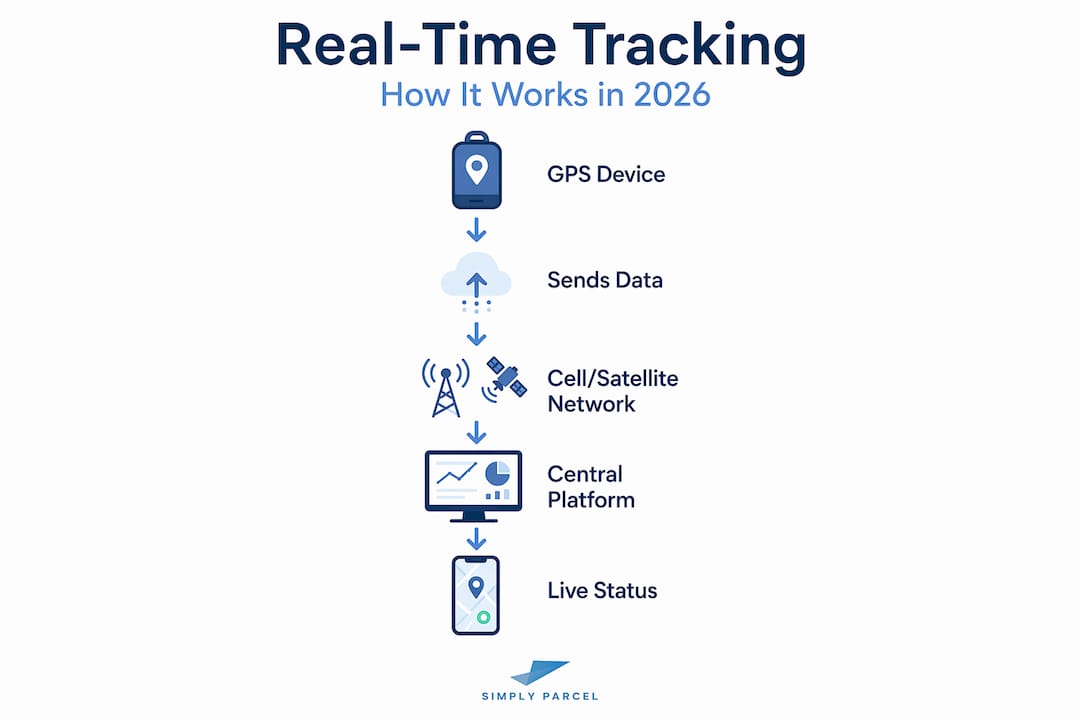
When a GPS-enabled device transmits location data, that data travels through a cellular or satellite network to a central platform. The platform aggregates the coordinates, applies mapping data, and calculates the shipment's current status. One of the most useful features of this setup is dynamic ETA calculation, which adjusts the expected delivery time based on real traffic conditions and route changes rather than relying on a fixed estimate made at the time of booking.
Pro Tip: If your carrier's tracking page shows long gaps between updates, you are likely looking at a checkpoint-based system. For high-value or time-sensitive shipments, ask specifically whether the carrier uses GPS-continuous tracking or scan-based status updates.
Benefits of shipment tracking in real time
The practical advantages of real-time tracking spread across two groups: the customers waiting for their parcels, and the businesses managing the logistics behind those parcels. Both groups experience meaningful improvements when live data is available.
From a customer's perspective, visibility reduces anxiety and builds confidence in the shipper. 86% of customers expect real-time updates on deliveries, and when those updates are absent, the first instinct is to contact customer support. That adds cost to both sides of the transaction. When you can see your parcel moving toward you in real time, you plan your day around it more accurately, reduce missed deliveries, and feel better about the brand that sent it to you.
For businesses, the benefits go deeper than customer satisfaction:
- Last-mile efficiency: Knowing a driver's current position lets dispatchers reassign routes when a delivery falls behind, reducing wasted trips and fuel.
- Proactive delay prevention: Live tracking data allows businesses to reroute shipments before a delay becomes a failure, turning what used to be reactive firefighting into planned intervention.
- Performance benchmarking: When you can see exactly how each carrier performs across routes and timeframes, you have objective data to negotiate contracts or switch providers.
- Condition monitoring for sensitive goods: Pharmaceutical shipments, electronics, and perishables all benefit from sensor data that flags a temperature excursion or rough handling event before the parcel arrives damaged.
Real-time tracking's greatest business value is not telling customers where their package is. It is giving operations teams enough lead time to act before a problem reaches the customer at all.
For international shipments in particular, this proactive capability is critical. A parcel leaving Singapore for Europe passes through multiple carrier handoffs and customs checkpoints. Without live shipment visibility, a delay at one leg can cascade invisibly until it becomes a missed delivery date.
Real-world examples of shipment monitoring
Understanding real-time shipment monitoring is clearer when you see how it plays out in practice across different contexts.
Consumer parcel tracking
When you ship a personal parcel internationally, the tracking experience you get is usually checkpoint-based. You see statuses like "collected," "arrived at origin hub," "cleared customs," and "out for delivery." Each status represents a physical scan event. Between events, the system has no new data to show you. This is a completely normal behavior for standard courier services, not a sign that anything is wrong.
B2B and freight tracking
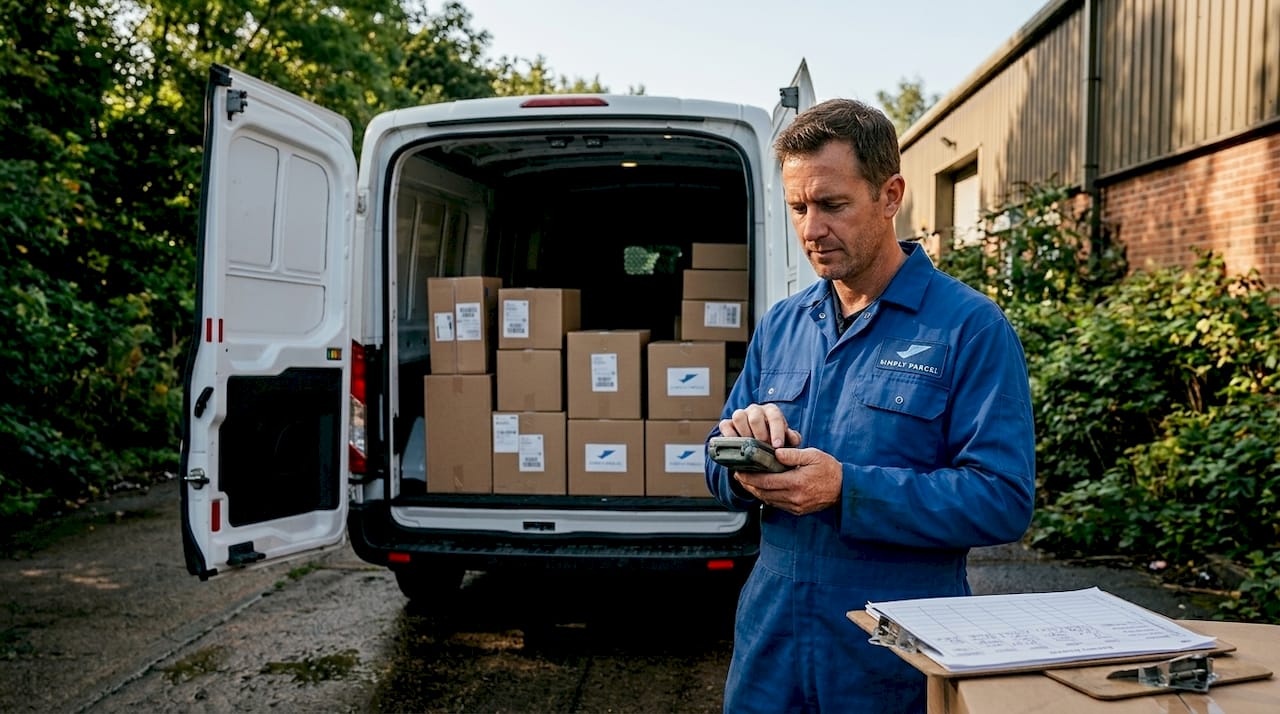
Large-scale freight operations use a more granular approach. Consider how The Home Depot uses driver handheld GPS devices to give contractors receiving bulky materials a precise delivery window updated minute by minute. A contractor waiting for a pallet of flooring does not want a four-hour window. They want to know the driver is 12 minutes away. That level of accuracy requires continuous GPS, not checkpoint scans.
How businesses integrate tracking today
If you run an ecommerce business or manage outbound logistics, here is a practical sequence for implementing real-time tracking order management:
- Identify your tracking gaps. Map the shipment journey and note where updates stop or become infrequent. This tells you which legs of the journey need better visibility.
- Evaluate carrier-native vs. independent platforms. Carrier-native tracking tools work well if you ship exclusively with one carrier. Independent aggregator platforms consolidate data across multiple carriers, giving you a single view of all shipments regardless of who is handling them.
- Integrate tracking data into your customer-facing tools. Most platforms offer APIs that plug directly into your ecommerce store or order management system, so customers see updates without leaving your site.
- Account for IoT device returns. If you use physical GPS or sensor devices on shipments, plan the reverse logistics from the start. Solutions like e-ink return labels on IoT devices simplify recovery and reduce operational waste.
- Set privacy parameters. Live tracking links should have expiring URLs and disabled live maps for sensitive or residential deliveries to protect recipient privacy.
Pro Tip: When comparing tracking solutions, ask whether the platform normalizes data from all your carriers into a single status format. Inconsistent status labels from different carriers make automated customer notifications unreliable.
Choosing the right shipment tracking solution
The right solution depends on your shipping volume, the type of goods you move, and how much custom integration you need. The table below breaks down the key differences between common options.
| Option | Best for | Data source | Integration effort |
|---|---|---|---|
| Carrier-native tracking portal | Individuals and low-volume shippers | Single carrier data | None required |
| Shipping aggregator platform | Small businesses using multiple carriers | Multi-carrier normalized data | Low to medium |
| Independent visibility platform | Mid to large businesses, global freight | Multi-carrier, multi-modal | Medium to high |
| IoT device-based tracking | High-value goods, condition-sensitive freight | GPS and sensor hardware | High, plus hardware management |
For most individuals shipping internationally, a shipping aggregator that displays live status across all carrier partners is the most practical choice. You get consolidated updates without needing to log into five different carrier websites for five different shipments.
For businesses, the decision hinges on whether your primary need is customer communication or internal logistics optimization. Customer-facing notifications need speed and reliability above all else. Internal operations teams need granular data, delay alerts, and performance reporting. Some platforms serve both needs. Others specialize in one.
Companies with global supply chains often find that carrier-native platforms fall short when they need end-to-end visibility across carriers in different countries. Independent aggregators normalize the data formats so that a status from a carrier in Germany reads the same way as one from a carrier in Singapore, enabling consistent reporting and automation. If you want a broader look at how courier tracking impacts your results, that context is worth reading before you commit to a platform.
A note on hardware-based tracking: GPS tracking and telematics solutions designed for fleet management add a layer of real-time vehicle monitoring that goes beyond package status. For businesses managing their own delivery fleets, this is a separate but complementary capability. For those handling container delivery scheduling, live location data from shipments feeds directly into more accurate arrival windows and dock planning.
My honest take on real-time tracking
After working in international logistics and watching how businesses approach shipment visibility, one pattern stands out clearly. Most businesses adopt real-time tracking thinking the main payoff is better customer communication. That is a real benefit. But the teams that extract the most value are the ones that use live data to change operational decisions, not just send better notification emails.
I've seen companies spend significant resources building beautiful customer-facing tracking portals while their operations team was still manually calling carriers to get ETAs. The tracking data that could have automated that process sat unused. The lesson I'd share: before you invest in a tracking solution, define what you want to do with the data, not just what you want to show customers.
The other thing I've noticed is that "real-time" means different things to different people in this industry. A carrier that sends checkpoint updates every four hours will call that real-time. A logistics manager running a cold-chain operation would disagree immediately. When you evaluate any platform or carrier, ask specifically how often location data refreshes and whether that frequency applies across all legs of the shipment or only the final mile.
Privacy is also an underappreciated consideration. Most businesses do not think about tracking data security until something goes wrong. Expiring tracking URLs and disabling live maps for home deliveries are small but meaningful design choices that protect recipients. They are worth checking for when you assess any platform.
Real-time tracking is not a feature anymore. It is a baseline expectation. The question is how deeply you integrate and act on that data.
— Simply
See it in action with Simplyparcel
Simplyparcel integrates real-time tracking directly into every international shipment booked through the platform. Whether you are an individual sending a parcel abroad or a business managing regular outbound shipments, you get live status updates across all major courier partners from a single dashboard. No switching between carrier portals.
The platform connects with major international carriers and normalizes tracking data into consistent status updates so you always know where your shipment is and what happens next. You can get an instant shipping quote and book with real-time tracking included. For businesses, Simplyparcel's multi-carrier setup also means you can compare carrier performance over time and choose the right service level. Visit Simplyparcel to explore courier options and tracking features built for both personal and commercial shipping from Singapore.
FAQ
What is the difference between real-time and checkpoint tracking?
Checkpoint tracking records a parcel's status only when it is physically scanned at key locations. Real-time tracking uses GPS or IoT devices to transmit location data continuously or at frequent intervals, giving you live updates between those fixed scan points.
Why does my parcel show no updates for hours?
Most consumer parcels use checkpoint-based systems, which means no new data appears until the parcel reaches the next scan point. This is expected behavior and does not indicate a problem with your shipment.
Can real-time tracking monitor conditions like temperature or damage?
Yes. Modern tracking devices incorporate condition sensors that monitor humidity, tilt, shock, and light exposure in addition to location, making them useful for sensitive or high-value cargo.
Is real-time order tracking the same for individuals and businesses?
The core technology is the same, but businesses typically need more granular data, multi-carrier consolidation, and API integration. Individuals generally access tracking through a carrier portal or shipping platform like Simplyparcel with less configuration required.
How do I track international shipments effectively?
Use a shipping aggregator that consolidates updates from all carriers involved in your shipment's journey. For international parcels from Singapore, Simplyparcel provides consolidated shipment tracking across all partner carriers in one place.