
Most people think of shipment tracking as a simple tool for answering one question: "Where is my package?" That assumption undersells what modern tracking actually does. For individuals and small businesses shipping internationally from Singapore, advanced tracking is a direct lever on cost control, delivery accuracy, and customer trust. RFID technology alone reduces misloads by nearly 70%, a figure that changes how seriously you should evaluate any courier's tracking capabilities. This guide walks you through how tracking works, what to look for, and how to use it to your advantage.
Table of Contents
- Why tracking matters for courier services
- How courier tracking works: Key technologies explained
- Choosing a courier with robust tracking: What to check
- Practical benefits of advanced tracking for Singapore shippers
- The real reason tracking is the backbone of modern courier services
- Ship smarter with Simply Parcel's tracking solutions
- Frequently asked questions
Key Takeaways
| Point | Details |
|---|---|
| Reduces parcel errors | Modern tracking technology like RFID can reduce courier misloads by up to 70%. |
| Boosts efficiency | Real-time tracking enables proactive problem solving and smoother deliveries. |
| Saves money | Cutting lost shipments and delays translates to lower overall shipping costs. |
| Empowers small businesses | Advanced tracking helps Singapore SMEs compete in global shipping markets. |
Why tracking matters for courier services
With an understanding of tracking's rising importance, it's vital to see its impact in everyday courier operations. Tracking is not a background feature. It is an active operational tool that shapes every step of your shipment's journey.
Here is how robust tracking directly benefits you:
- Fewer delivery mistakes. A misload happens when a parcel is scanned onto the wrong vehicle or routed to the wrong facility. Advanced RFID tracking reduces misloads by nearly 70%, which means far fewer parcels end up in the wrong city or country.
- Lower costs. Every lost or delayed shipment costs money. You may need to reship, issue a refund, or compensate a customer. Accurate tracking prevents these incidents before they escalate.
- Real-time problem solving. When you can see exactly where a parcel is, you can act the moment something goes wrong. You do not have to wait for a missed delivery notification to find out there was a problem three days ago.
- Peace of mind for your customers. Whether you are an individual sending a gift overseas or a small business fulfilling an order, your recipient wants to know when to expect their parcel. Live updates reduce customer anxiety and support inquiries.
Singapore sits at the center of one of the world's busiest trade corridors. The city-state handles enormous volumes of international freight every day, and even small delays in that environment can have cascading effects. We know from working with Singapore shippers that tackling logistics challenges becomes much easier when you have visibility at every stage of a shipment.
Statistic to know: Couriers using advanced tracking technologies report delivery accuracy improvements that translate directly into reduced operational costs and stronger client retention rates.
Pro Tip: Before you book any courier service, ask specifically whether they offer real-time tracking or only periodic batch updates. The difference can mean hours of delay in identifying and resolving a problem.
We take this seriously. You can read more about our commitment to tracking and how it shapes every service we offer.
How courier tracking works: Key technologies explained
Now that we have established why tracking is critical, let's see what is happening behind the scenes. Most shippers interact with a tracking number and a status page, but the technology making that possible has evolved significantly over the past decade.
The core technologies in use today:
-
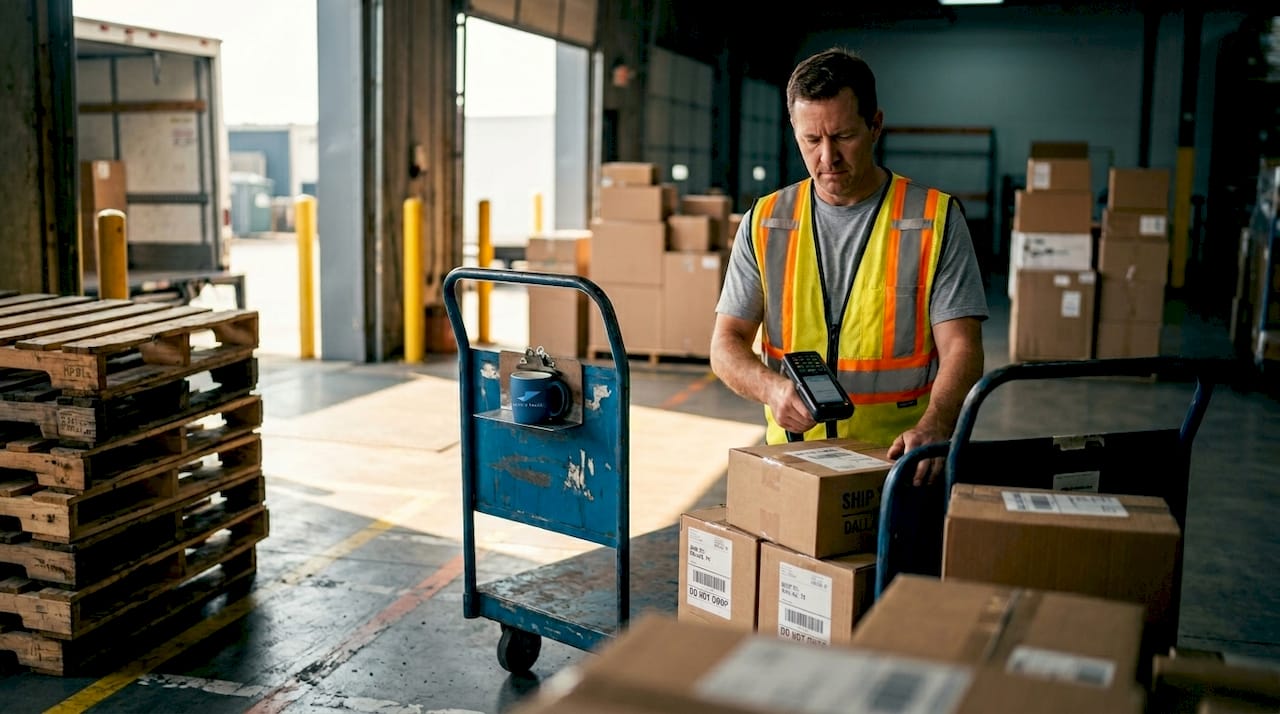
Barcodes. The traditional standard. A barcode is printed on your shipping label and scanned at each checkpoint. Each scan updates the shipment's status in a central database. It works, but it requires a human to manually scan every parcel at every touchpoint. Missing a scan means a gap in your tracking history.
-
RFID (Radio Frequency Identification). RFID tags communicate wirelessly with readers, often without requiring a direct line of sight or manual handling. Multiple parcels can be read simultaneously as they pass through a gateway. This is the technology behind UPS RFID technology that has demonstrated a 70% reduction in misloads. RFID is becoming increasingly important in Singapore's logistics environment because of the speed and accuracy it delivers at scale.
-
Online tracking dashboards. The interface you see as a shipper. A good dashboard shows not just the current location but the full history of scans, expected delivery windows, and any exceptions (delays, customs holds, failed delivery attempts).
-
Automated notifications. Email or SMS alerts triggered by status changes. You do not have to log in to check. The system tells you when something changes.
Real-time tracking vs. batch tracking:
This distinction matters more than most shippers realize. Batch tracking updates your shipment status at set intervals, sometimes every few hours. Real-time tracking updates the moment a scan or RFID read occurs. For integrating tracking with shipping systems, real-time data is essential because your own systems need accurate, current information to operate efficiently.
| Feature | Traditional (barcode/batch) | Modern (RFID/real-time) |
|---|---|---|
| Update frequency | Every few hours | Instant on scan/read |
| Manual scanning required | Yes | Mostly automated |
| Misload reduction | Limited | Up to 70% |
| Multi-parcel simultaneous reads | No | Yes |
| Exception alerts | Delayed | Immediate |
| Integration capability | Basic | Advanced API support |
If you are new to the terminology around international shipping, a useful starting point is this shipping terminology guide, which explains common terms in plain language.
Pro Tip: When comparing couriers, ask whether their tracking system uses event-driven updates (triggered by each scan) or time-driven updates (pushed at set intervals). Event-driven is always more reliable for resolving issues quickly.
Choosing a courier with robust tracking: What to check
Understanding the technology is the first step. Now, let's put it into practice by choosing the right courier. Not all couriers are equal when it comes to tracking, and price alone should never be your deciding factor.
Your tracking evaluation checklist:
- Accuracy. Does the courier's tracking history show consistent scan points throughout the journey, not just origin and destination?
- Update speed. How quickly does the system reflect a status change after a physical event occurs?
- Integration. Can the tracking data connect to your own order management or e-commerce platform via API?
- User-friendliness. Is the tracking portal easy to use on mobile? Can you view multiple shipments in one dashboard?
- Proactive notifications. Does the system alert you to exceptions automatically, or do you have to log in to find out there is a problem?
- Customer-facing tracking. Can your recipients track their own parcels without needing to contact you?
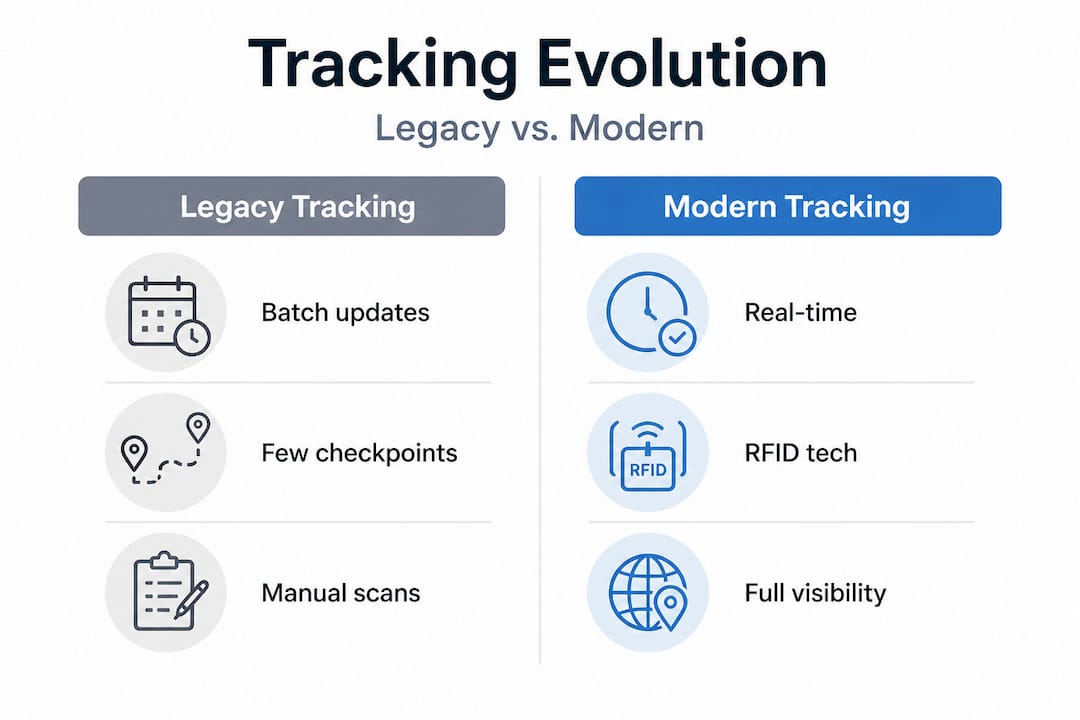
Here is a clear comparison of what legacy and modern tracking systems typically offer:
| Capability | Legacy tracking | Modern tracking (RFID + portal) |
|---|---|---|
| Visibility checkpoints | 3 to 5 key points | 10 or more throughout journey |
| Exception handling | Manual, reactive | Automated, proactive |
| Customer self-service | Limited | Full tracking portal |
| Misload reduction | Standard rates | Up to 70% improvement |
| API integration | Rare or costly | Standard feature |
| Mobile access | Basic or none | Optimized mobile interface |
The gap between legacy and modern systems is significant. Advanced tracking technology cuts misloads by nearly 70%, which means a modern tracking system is not just more convenient. It is measurably more reliable.
A common mistake Singapore shippers make is focusing entirely on the per-shipment cost without factoring in the cost of errors. One lost shipment can easily wipe out the savings from choosing a cheaper courier with weaker tracking. You can compare options and use advanced tracking with Simply Parcel to see the difference in real use.
For a broader view of courier options available from Singapore, the guide on best Singapore courier services offers a detailed comparison across key criteria.
Pro Tip: Run a test shipment before committing to a courier for regular use. Use their tracking system actively during that test shipment and note how quickly status updates appear, whether exceptions are flagged, and how easy the portal is to navigate.
Practical benefits of advanced tracking for Singapore shippers
Once you know what tracking to look for, here is exactly what it can do for you day-to-day. The advantages are concrete and measurable, not just theoretical.
Faster problem resolution: When a parcel is delayed or misrouted, every hour matters. Real-time tracking lets you identify the issue while there is still time to reroute or escalate. With batch tracking, you might not discover the problem until the delivery window has already passed. Real-time vs. batch tracking enables proactive resolutions that are vital in a high-volume environment like Singapore's trade network.
Lower total shipping costs: Fewer misloads mean fewer reshipments. Fewer delays mean fewer refund requests. When you choose a courier with modern tracking, you are effectively reducing the hidden costs that erode your shipping budget over time. Understanding transparent shipping rates helps you see the full picture of what you are actually paying, including the cost of errors.
Enhanced customer trust: For small businesses, your reputation depends on reliable delivery. When customers can track their own orders accurately and receive timely notifications, they trust your brand more. That trust translates to repeat purchases and referrals. A customer who had a smooth, visible delivery experience is far more likely to order again.
Singapore-specific impact: Singapore processed over 600 million metric tons of cargo in maritime transport making it one of the world's most active trade hubs. In an environment with that level of volume, errors are inevitable without robust systems in place. Advanced tracking is what keeps individual shipments from becoming invisible in that sea of freight.
- Businesses can monitor multiple outbound shipments simultaneously.
- You can provide customers with tracking numbers that actually reflect current status.
- Customs holds and documentation issues are flagged faster, reducing border delays.
- Your team spends less time manually chasing shipment updates.
Making sure your key shipping documents are in order works hand-in-hand with strong tracking. Documentation errors are one of the most common causes of customs delays, and good tracking will flag these issues quickly.
"Tracking visibility is not just a convenience. It is the mechanism that turns a potential shipping crisis into a manageable exception."
The real reason tracking is the backbone of modern courier services
Let's pull back and consider why tracking has become so foundational in global shipping. There is a widely held view that tracking is a feature you check at the end, after you have already decided on price and speed. We think that view is wrong, and here is why.
Tracking is not a feature. It is infrastructure. Without it, every other promise a courier makes becomes harder to keep. A courier can promise two-day delivery, but without real-time tracking, neither you nor they can actually verify that promise is being honored until it is too late to fix it.
Think about what happens when a shipment goes silent. No updates for 48 hours. You contact customer service. They escalate to the courier. The courier checks their system. If that system relies on manual barcode scans and batch updates, the answer you get back is often "it was last scanned at [facility] two days ago." That is not visibility. That is a gap in a system that was never built for accountability.
Modern tracking, particularly RFID-based systems, changes this dynamic entirely. Real-time visibility enables proactive resolution before problems become crises. When a parcel is misloaded, the system catches it at the next read point, often within minutes, not days.
For Singapore SMEs specifically, this matters enormously. Large enterprises have account managers, dedicated logistics teams, and leverage with couriers. Small businesses typically do not. The right tracking system levels that playing field. When you can see your shipment's full journey and receive instant alerts, you have the same operational intelligence that large companies pay significant resources to access. You are overcoming shipping hurdles that previously only well-resourced businesses could manage efficiently.
The uncomfortable truth is that many businesses accept poor tracking because they assume all couriers are roughly the same. They are not. The gap between a courier with modern RFID-based tracking and one relying on manual barcodes at three checkpoints is the difference between confident, efficient shipping and a constant cycle of uncertainty and reactive problem-solving. Choose your courier based on tracking capability first, then evaluate price within that shortlist.
Ship smarter with Simply Parcel's tracking solutions
Advanced tracking is just one part of what makes international shipping from Singapore work smoothly. Simply Parcel is built around the tools and courier partnerships that Singapore shippers actually need, including real-time visibility, clear pricing, and a straightforward booking process. When you use Simply Parcel's courier services, you get access to multiple courier options with strong tracking capabilities, all in one platform. You can get a shipping quote instantly and compare your options before committing. Once your shipment is on its way, use the real-time tracking module to monitor every stage of the journey. Fewer surprises. More control. Better results.
Frequently asked questions
What is real-time courier tracking?
Real-time tracking lets you monitor your shipment's location and status the moment a scan or read event occurs, unlike batch tracking which only updates at set intervals. This means you can intervene proactively the moment an issue arises instead of discovering it hours later.
How does advanced tracking reduce shipping costs?
Technologies like RFID cut misloads by nearly 70%, which directly reduces the number of reshipments, refunds, and customer service escalations that add up to significant hidden costs over time.
Why is tracking so important for international shipping from Singapore?
Singapore's role as a global trade hub means shipments move through high-volume, fast-paced networks where errors are hard to catch without strong systems. Real-time tracking enables proactive resolutions that keep your shipments on track even in that demanding environment.
What features should I look for in a courier's tracking system?
Look for real-time status updates triggered by scan events, a user-friendly dashboard accessible on mobile, automated exception alerts, and API integration capability so tracking data can connect with your own business systems.