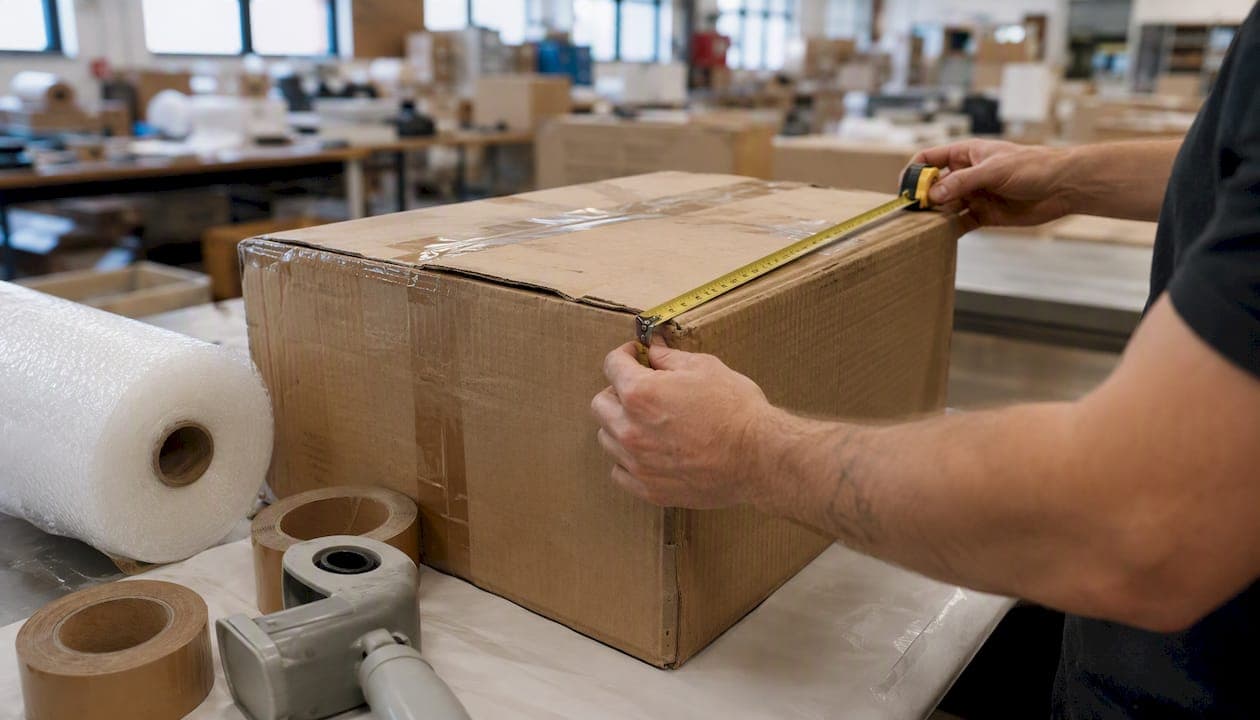
Yes, you can send large parcels through most courier networks and freight services, but size and weight limits vary by carrier, and the price hinges on details many shippers miss until the quote arrives. Before you book anything, spend ten minutes on the basics: measure every side of the parcel, weigh it, photograph it from all angles, and check whether its longest side or total dimensions exceed common drop-off thresholds. Once you have those numbers, you're ready to compare rates instead of guessing.
Here's what to do right now, in order:
- Measure length, width, and height in centimeters, then add them together (L+W+H).
- Weigh the parcel on a scale that handles at least 30 kg.
- Photograph the item on all sides before you pack it, in case you need to file a damage claim later.
- Calculate volumetric weight so you know whether you'll be billed on size or actual weight.
- Compare quotes across carriers and services rather than booking the first price you see. A platform like Simply Parcel pulls multiple international courier rates into one view, which saves you the trouble of requesting quotes one by one.
Key Takeaways
Chargeable weight, not actual weight, determines most large-parcel shipping costs, so calculating volumetric weight before requesting quotes prevents pricing surprises.
| Point | Details |
|---|---|
| Measure before you quote | Record length, width, and height in centimeters, plus actual weight, after the parcel is fully packed. |
| Calculate chargeable weight | Compare volumetric weight (L × W × H ÷ divisor) against actual weight; carriers bill whichever is higher. |
| Match the transport mode to the parcel | Use van or lorry service for bulky domestic items, air for urgent international shipments, and sea freight for large, non-urgent cargo. |
| Watch for surcharges | Oversize, non-conveyable, palletizing, and remote area fees commonly inflate quotes beyond the base rate. |
| Prepare customs documentation early | International shipments need a commercial invoice, HS code, and packing list ready before booking to avoid delays. |
| Compare quotes through an aggregator | Simply Parcel shows multiple carrier rates together and automates label and customs document generation for large or international parcels. |
Table of Contents
- What Counts as a Large Parcel?
- Which Delivery Method Fits Your Parcel?
- How Pricing Works for Large Parcels
- Packing a Large Parcel the Right Way
- Customs, Restrictions, and Paperwork for International Shipments
- Getting a Quote and Booking a Large Parcel
- How to Choose the Right Courier
- Why Use an Aggregator for Large or International Parcels
- How Simply Parcel Can Help
- Sources
What Counts as a Large Parcel?
There's no single global definition, but most Singapore-based platforms and third-party logistics providers use similar breakpoints. Shopee's seller guidance, for instance, classifies a large parcel as one measuring up to 300 cm in combined length, width, and height, with no single side exceeding 150 cm. Drop-off weight limits at supported service points typically cap at the maximum weight allowed, and anything heavier or bulkier usually needs a self-lodge warehouse or a bulky pickup request instead of a standard counter drop-off.
Weight alone doesn't tell the full story. Carriers bill on whichever is higher: actual weight or volumetric weight (also called dimensional weight). Volumetric weight approximates how much space a parcel takes up on a truck or plane, which matters because a large box of pillows weighs little but eats up cargo space that could hold something heavier.
The standard formula most couriers use is:
(Length × Width × Height in cm) ÷ Divisor = Volumetric Weight in kg
Divisors commonly range from 5,000 (air freight) to 6,000, depending on the carrier. Take a parcel measuring 80 cm x 60 cm x 50 cm. That's 240,000 cubic centimeters. Divide by 5,000 and you get 48 kg of volumetric weight, even if the parcel only weighs 12 kg on a scale. You'd be billed for 48 kg, not 12.
Provider limits differ sharply. A convenience-store locker network rejects anything oversized outright, while a van service or freight forwarder handles furniture, machinery, or pallets without blinking. Knowing which category your parcel falls into before you book saves you from a rejected drop-off on shipping day.
Which Delivery Method Fits Your Parcel?
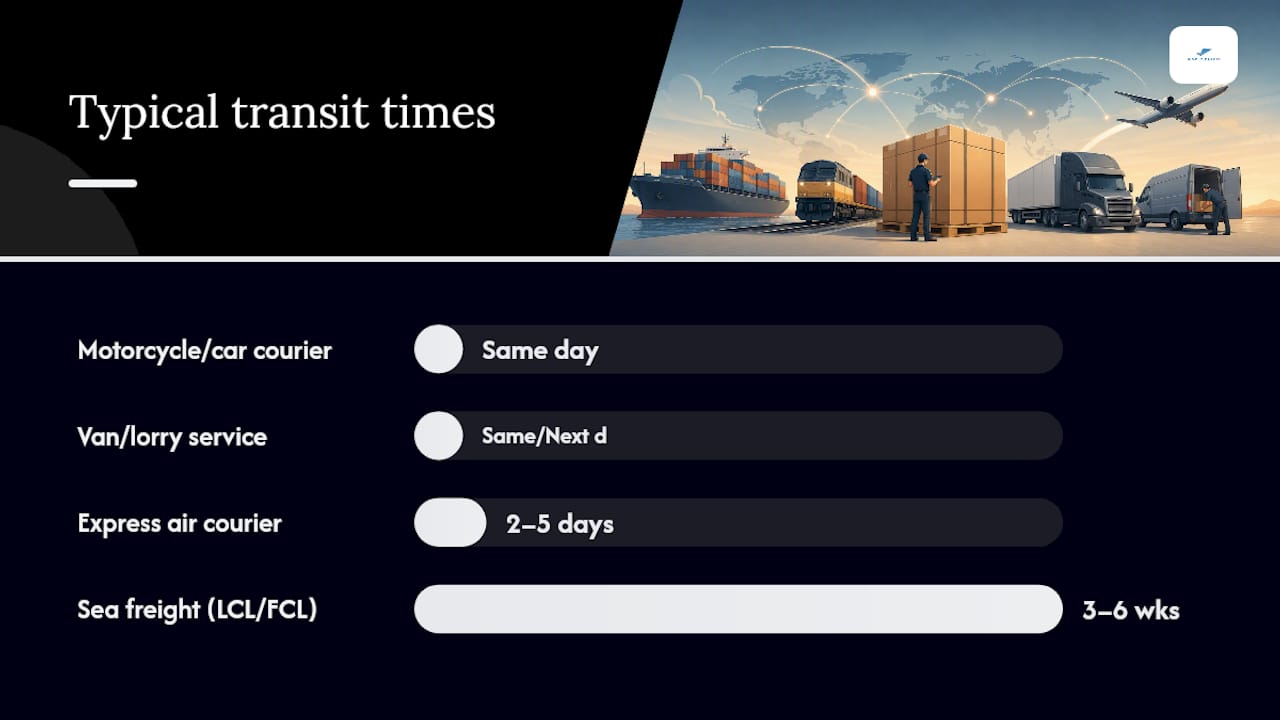
Matching the right transport mode to your parcel's size, weight, and urgency keeps costs down and avoids the frustration of a courier turning your item away at the counter. Singapore shippers generally choose among five categories: last-mile point-to-point delivery, motorcycle or car couriers for small items, van or lorry services for bulky domestic loads, express air courier for urgent international shipments, and sea freight for large, non-urgent international cargo.
A comparative cost guide covering Singapore courier services makes a point worth repeating: there's no universally cheapest option. The right choice depends on your parcel's profile, not on picking whichever brand has the lowest advertised rate.
| Service Type | Best For | Typical Transit Time | Cost Position |
|---|---|---|---|
| Motorcycle/car courier | Small, urgent domestic items | Same day | Low cost, limited capacity |
| Van/lorry service | Bulky domestic furniture, appliances | Same day to next day | Moderate, scales with vehicle size |
| Express air courier | Urgent international parcels | 2 to 5 days | Highest per-kilogram cost |
| Sea freight (LCL/FCL) | Large, non-urgent international cargo | 3 to 6 weeks | Lowest per-kilogram cost for bulk |
Air freight moves fast but costs more per kilogram than sea freight, and that gap widens as parcel size grows. Market analysis of Singapore shipping lanes confirms this pattern: sea freight lowers the unit cost of large, non-urgent shipments substantially, while air remains the better fit for urgent or high-value goods where speed outweighs price. If you're shipping a pallet of inventory that doesn't need to land next week, sea freight usually wins on landed cost. If a client is waiting on a time-sensitive shipment, express air courier is worth the premium.
For domestic bulky items, most senders in Singapore default to van or lorry pickup rather than trying to squeeze a large parcel through a locker network built for small packages. Home pickup avoids the hassle of transporting an oversized item to a drop-off counter that may not even accept it.
How Pricing Works for Large Parcels
Every large-parcel quote is built from a base rate plus a set of variables that can shift the final price considerably. Understanding the mechanics before you request quotes helps you spot a fair price from an inflated one.
Carriers calculate chargeable weight by comparing actual weight against volumetric weight and billing whichever number is higher. Revisit the earlier example: a parcel weighing 12 kg but calculating to 48 kg volumetric weight gets billed as a 48 kg shipment. That single calculation error, skipped because a shipper assumed the scale reading was final, is the most common reason a quote comes back higher than expected.
Pro Tip: Measure your parcel's outer dimensions after packing, not before. Padding, crating, or a protective outer box can add several centimeters per side, which pushes a borderline parcel into a higher volumetric weight bracket.
Beyond the base chargeable weight, watch for these common add-ons:
- Oversize or non-conveyable surcharges, applied when a parcel's shape or length prevents it from moving through automated sorting systems.
- Palletizing fees, charged when freight forwarders need to build a pallet around loose or irregular items.
- Residential delivery surcharges, common when a courier delivers to a home address rather than a commercial dock with loading access.
- Remote area fees, applied when pickup or delivery falls outside a carrier's standard service zone.
- Waiting time charges, billed when a driver waits beyond a grace period for the parcel to be ready.
Surcharge structures published by major carriers show that non-conveyable handling fees are one of the most frequent causes of a quote jumping well above the headline rate, precisely because automated sortation can't process odd shapes or unusually long items.
As for indicative pricing, a consumer finance comparison of Singapore courier fees cites examples of next-day large-parcel domestic services priced around $22, though rates shift by provider, weight bracket, and service level. International shipments vary far more widely. Short-haul express air couriers into neighboring countries generally cost more per kilogram than LCL sea freight into the same region, a gap that widens as parcel weight increases. Treat any published figure as a starting point, not a guarantee, and confirm current rates directly with the carrier or through a freight solutions comparison before committing.
Packing a Large Parcel the Right Way
Damage claims on large parcels almost always trace back to the same handful of packing mistakes: insufficient internal cushioning, an outer box that flexes under weight, or straps that loosen in transit. A methodical packing routine fixes most of that before the parcel ever leaves your hands.
- Choose a box or crate rated for the weight inside it. A standard cardboard box sags under 25 kg of contents; a double-walled or wooden crate holds its shape.
- Add internal cushioning on all six sides. Foam, bubble wrap, or air pillows should fill gaps so contents can't shift during handling.
- Secure irregular shapes with shrinkwrap. Anything that doesn't fit neatly into a box, like furniture legs or a long rolled item, needs shrinkwrap or a protective sleeve to prevent snagging on sorting equipment.
- Strap and palletize when the item is heavy or oversized. Freight forwarders often require palletizing for anything over roughly 100 kg; strapping keeps the load stable for forklift handling.
- Label all sides clearly, including "this side up" and "fragile" markers where relevant, so handlers at every stage see the same instructions.
- Photograph the packed parcel from every angle before pickup. This single step does more to speed up a damage claim than anything else on this list.
Palletizing deserves its own note: a properly built pallet distributes weight evenly and keeps the load square, which reduces the risk of a carrier rejecting the shipment for instability. Packaging guidance on palletizing loads for distribution center delivery covers load stability principles that apply just as well to a single large parcel as to a full pallet of retail goods.
Pro Tip: Keep your pre-pickup photos and weight receipt in the same folder as your booking confirmation. If a claim ever comes up, having timestamped evidence ready cuts the back-and-forth with a claims team by days.
For a deeper packing walkthrough covering specific materials and box grades, the parcel packaging best practices guide breaks down cushioning options by item type.
Customs, Restrictions, and Paperwork for International Shipments
Large parcels crossing borders carry more paperwork risk than small ones, mostly because higher declared values and bulkier categories (furniture, machinery, commercial goods) draw more customs scrutiny. Before booking an international shipment, confirm your item isn't on a restricted or prohibited list. Common restricted categories include batteries shipped without proper packaging, liquids over certain volumes, and commercial quantities of goods that require an import permit at the destination.
For documentation, you'll typically need a commercial invoice, an HS (Harmonized System) code that classifies your goods, and a packing list detailing contents and declared value. Singapore Customs publishes the full procedures that shippers must follow for cross-border consignments, and it's worth reading before you finalize a booking rather than after a shipment gets held at the border.
One distinction that trips up first-time international shippers: DDP (Delivered Duty Paid) means the seller covers duties and taxes upfront, folding them into the quoted price. DDU (Delivered Duty Unpaid) leaves the recipient to pay duties on arrival. For large parcels, where declared value and duty amounts scale up quickly, choosing the wrong option can mean a customer receiving a surprise bill, or a shipment sitting in customs until fees are paid.
Singapore Customs guidance makes clear that shippers need to prepare export documentation and follow prescribed procedures before goods leave the country, a step that catches out first-time exporters more often than any other part of the shipping process.
If a question comes up that isn't covered in the standard procedures, the Singapore Customs FAQ answers many of the practical, day-to-day questions shippers run into when preparing paperwork.
Getting a Quote and Booking a Large Parcel
Once your parcel is measured, packed, and documented, booking comes down to four steps.
- Measure and weigh the finished parcel. Record length, width, and height in centimeters and weight in kilograms, using the packed and sealed parcel, not the empty box.
- Calculate chargeable weight. Run the volumetric weight formula (L × W × H ÷ divisor) and compare it against actual weight. Whichever is higher is what you'll be billed on.
- Collect quotes from multiple carriers or an aggregator. Rates for the same parcel can vary meaningfully between providers, especially for international lanes where air and sea options carry very different price points.
- Book pickup and confirm documentation. Schedule a collection window, upload any required customs paperwork, and keep your booking confirmation and photos together.
Capturing measurements and photos at step one matters more than it seems. If a dispute arises over declared weight or condition on arrival, having a timestamped photo and measurement record from before pickup speeds up resolution considerably.
This is where an aggregator earns its place in the process. Rather than requesting quotes from three or four carriers separately, a platform like Simply Parcel pulls multiple international rates together, generates the customs paperwork automatically, and books the pickup in the same flow. For a large parcel headed overseas, that consolidation saves real time.
How to Choose the Right Courier
A good decision checklist starts before you request a single quote. Confirm your parcel's exact dimensions and weight, note the pickup location's access (ground floor versus a walk-up apartment, for instance), check the delivery address for similar access constraints, and decide how much declared value protection you need.
When you talk to a carrier or platform, ask directly:
- Is my item classified as non-conveyable, and does that trigger a surcharge?
- Does this shipment require palletizing, and who handles that if so?
- Are your transit times guaranteed, or are they estimates?
- What's your process for filing a damage claim, and what evidence do you need?
- Does the quote include residential delivery and remote area fees, or are those added later?
Watch for a few red flags in any quote you receive. A rate with no clear breakdown of surcharges usually means hidden fees show up after booking. No proof of tracking capability is a sign the carrier can't confirm handoffs between legs of the journey. And a vague or nonexistent damage claims process means you're on your own if something arrives broken. The checklist for choosing an international courier covers these questions in more depth if you're comparing several providers side by side.
Why Use an Aggregator for Large or International Parcels
Booking a large parcel through a single carrier's website means accepting whatever rate, service tier, and paperwork process that one company offers. An aggregator changes that by putting several options in front of you at once.
The core features worth looking for in a platform:
- Instant quotes across multiple carrier partners for the same parcel
- Automatic generation of shipping labels and customs documentation
- Online pickup booking without a separate phone call or counter visit
- Real-time tracking once the parcel is in transit
These features matter most in two scenarios. First, a small seller shipping an occasional bulky item, someone who doesn't ship often enough to have a negotiated rate with any single carrier, benefits from seeing several quotes side by side rather than guessing which provider is fair. Second, anyone sending a large item internationally for the first time, where customs paperwork feels unfamiliar, benefits from a platform that generates the commercial invoice and HS code documentation automatically instead of researching the requirements from scratch.
Pro Tip: If you ship large parcels internationally more than once or twice a year, save your parcel's dimensions and weight in a note on your phone. Reusing that data for your next quote request cuts the booking process down to a few minutes.
A Shipper's Perspective on Sending Large Parcels
Frequent shippers develop habits that first-timers usually learn the hard way. Measure twice, not once, because a tape measure held at an angle adds or subtracts centimeters that change your volumetric weight bracket entirely. Decide between a van service and an express courier based on one number: if your longest side exceeds roughly 150 cm, skip the counter drop-off entirely and go straight to a pickup service, since most locker and service-point networks won't take it anyway.
Photograph everything, every side, before the parcel leaves your hands. Not because carriers are careless, but because claims move faster with evidence than without it. If something does go wrong in transit, a claim moves fastest when you can submit clear photos, your original weight and dimension record, and your booking confirmation within the first few days of noticing the damage. Waiting weeks to file, or relying on memory instead of documentation, is the single biggest reason claims stall.

How Simply Parcel Can Help
Comparing carrier websites one by one for a single large parcel wastes time you probably don't have, especially when volumetric weight rules and surcharge structures differ between every provider you check. Simply Parcel solves that by pulling multiple international courier rates into one comparison, so you see priority, connect-plus, and economy options side by side instead of guessing which carrier's page to trust.
The platform generates shipping labels and customs documentation automatically once you book, handles pickup scheduling without a separate phone call, and gives you real-time tracking from collection through delivery. For a large parcel headed overseas, where a single mistake in HS code or declared value can delay the shipment at customs, that automation removes a real point of friction.
If your parcel is measured, weighed, and packed, the next step is straightforward: get an instant quote and compare your options before you commit to a single carrier's price.
Sources
Before finalizing any large-parcel shipment, a few official references are worth bookmarking. Singapore Customs' import and export procedures page lays out the documentation requirements for cross-border shipments in full, and the Singapore Customs FAQ answers narrower, practical questions that come up during booking.
For size and weight specifics at the seller level, Shopee's guidance on large parcel drop-off remains one of the clearest breakdowns of service point limitations available in Singapore. If your shipment involves a pallet or non-standard consignment, checking your chosen carrier's own rate guide directly is worth the extra five minutes, since surcharge structures and weight breakpoints shift between providers more often than shippers expect.
- Parcel Drop-off Guide for Service Points & 3PL Warehouses | Shopee SG Seller Education Hub
- Cost guide to courier services in Singapore (DollarsAndSense)
- Shipping cost and transit time overview for Singapore (ShipCalcWize)