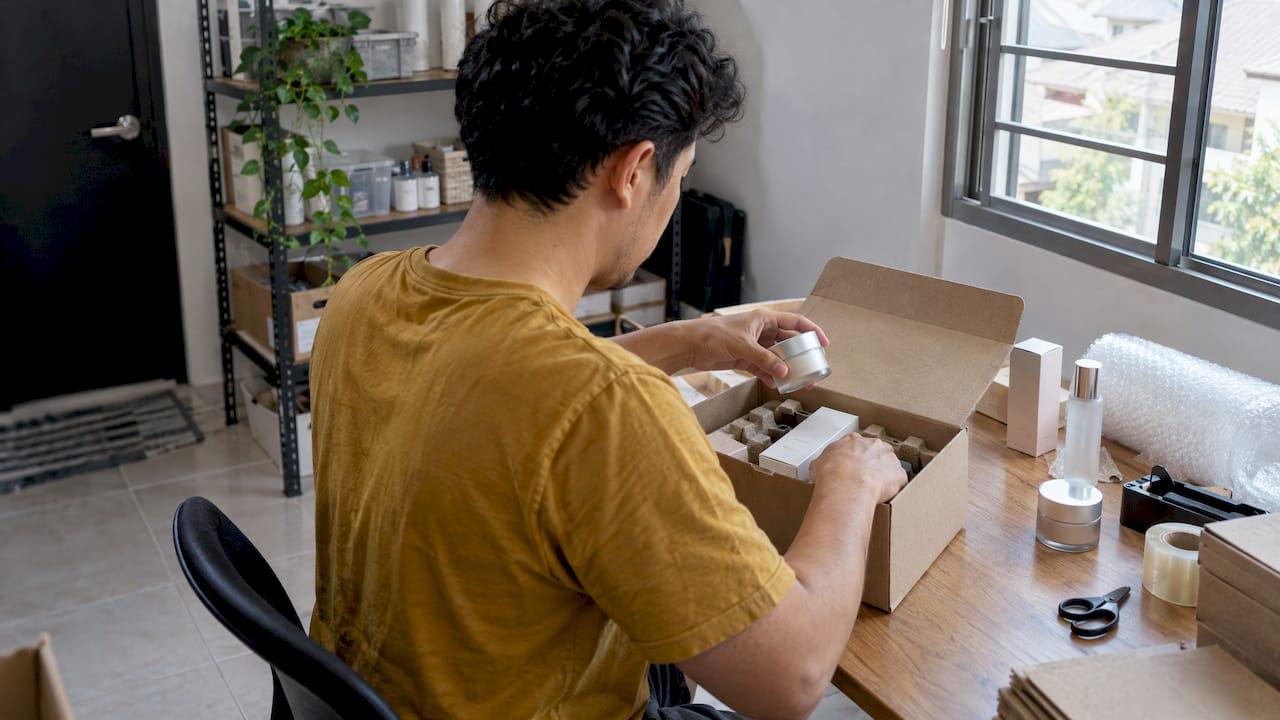
You can ship most cosmetics overseas, but not all of them travel the same way. Creams, powders, serums and lipsticks usually go as ordinary parcels. Perfume, nail polish and anything in a spray can is treated as dangerous goods by air carriers and often needs special handling or is refused outright. The safest routine is to sort your products by type, check the destination's rules, pack against leaks, describe the contents accurately, and book with a platform that shows you carrier options side by side. Simply Parcel lets you compare and book international shipping from Singapore online, with free pickup at your door and shipping documents generated for you.
TL;DR
- Most skincare and makeup (creams, powders, balms, lipsticks) ship as normal parcels. Perfume, nail polish and aerosols are the main exceptions.
- Alcohol-based and flammable products are classed as dangerous goods for air transport, so check them before you book, not at the counter.
- Pack every liquid against leaks, and describe the contents on the label and customs form in plain, accurate words.
- The destination country sets its own import rules, duties and taxes. Check them for each route.
- Choose the speed (priority, connect-plus or economy) that fits the parcel's value and urgency, then book with free pickup.
Table of Contents
- What counts as a cosmetic for shipping purposes
- Why perfume, nail polish and aerosols are different
- Step 1: Check each product and the destination
- Step 2: Pack so nothing leaks or breaks
- Step 3: Label and describe the contents correctly
- Step 4: Know what duties and taxes may apply
- Step 5: Choose the speed and book
- Special cases: students, expats and sellers
- Common mistakes to avoid
- Our view on shipping cosmetics
- Ready to book your cosmetics shipment
- FAQ
- Sources
What counts as a cosmetic for shipping purposes
Carriers do not care whether a product is sold as beauty, skincare or personal care. They care about what is physically inside: liquid or solid, flammable or not, pressurized or not, how much, and in what container.
That gives you three practical groups:
- Low-risk products. Solid and cream-based items such as foundation compacts, powders, lipstick, balms, moisturizers, sheet masks and most serums. These normally ship as standard parcels.
- Liquids that can leak. Toners, lotions, shampoos and oils. Not dangerous in themselves, but they spill, and a spill can damage everything else in the box.
- Flammable or pressurized products. Alcohol-based perfume and body mist, nail polish, nail polish remover, hair sprays, dry shampoo and deodorant cans. These are the ones that get parcels stopped.
Sort what you are sending into these groups before you do anything else. It decides the speed, the packing and whether the shipment can go by air at all.
Why perfume, nail polish and aerosols are different
Air transport rules are written around fire risk. A parcel can sit in an aircraft hold for hours, so carriers apply the international dangerous goods standards set by the air transport industry.
According to one trade documentation guide on perfume, aerosols and nail polish, alcohol-based perfume ships as UN1266 (a Class 3 flammable liquid), spray cans ship as UN1950 (aerosols), and these goods can usually move by an approved express courier in limited quantities with the right packing, marks and declaration, but not through international mail. The same guide notes that the air rules apply by edition year, so the version in force at the time of your shipment is the one that counts.
A consumer guide from Japan makes the same point from the sender's side: it lists perfume, nail polish and nail polish remover as flammable liquids and aerosol sprays as compressed gases, and says they cannot be sent by air through the national post or by many courier services. You can read that in this overview of items you cannot ship from Japan. Rules differ by country and carrier, but the logic is the same everywhere.
What this means for you:
- Do not hide perfume or nail polish inside a parcel described as "gift" or "cosmetics". Undeclared dangerous goods can lead to the parcel being held, returned or destroyed, and can put the aircraft at risk.
- Check each item against the carrier's acceptance rules before you book.
- For perfume specifically, read our guides on shipping perfumes overseas and shipping perfumes. For the wider picture of which products are allowed, see allowable and non-allowable cosmetics for international air shipping.
Step 1: Check each product and the destination
This is the step that prevents most problems, and it has two parts.
Check the product
Look at the ingredient list and the can or bottle. Ask:
- Is it a spray with a propellant? Treat it as an aerosol.
- Does it list alcohol or ethanol high on the ingredient list, or carry a flame symbol? Treat it as flammable.
- Is it a nail product with solvents? Treat it as flammable.
- Does the manufacturer provide a safety data sheet? Section 14 of that sheet covers transport classification and is what carriers look at.
If a product is in any of the risky groups, check our page on shipping restricted and dangerous goods before you book, so you know whether it can go at all.
Check the destination
Every country sets its own rules for imported cosmetics. Some require product registration or notification, some check labels, and some limit quantities for personal imports. Rules also change. For example, China's customs authority has published Decree No. 284 on imported and exported cosmetics, which takes effect on 1 December 2026. It requires registration for special cosmetics or recordation for ordinary cosmetics, moves to destination-based inspection, and provides for unsafe products to be destroyed or returned. If you ship to China, review the current rule before you send commercial quantities.
A simple habit helps: before every new route, search the destination customs authority's website for "cosmetics import" and read the official page. Do this for each country, even if you shipped there last year.

Step 2: Pack so nothing leaks or breaks
Cosmetics fail in transit in two ways: bottles break, and lids loosen. Both are preventable.
- Seal the closures. Tighten caps, then wrap the neck of each bottle with tape or plastic film. Pressure changes in flight can push liquid past a loose cap.
- Bag each liquid separately. Put every bottle in its own sealable plastic bag with a little absorbent material. One failure then stays in one bag.
- Wrap glass and pumps individually. Use bubble wrap or foam. Pumps and droppers are the parts that crack first.
- Use a sturdy outer box. Leave cushioning space on all sides. A box that bends when you press it is too weak.
- Fill every gap. Items should not move when you shake the closed box.
- Keep heat in mind. Lipsticks, balms and some creams soften in hot conditions, so avoid sending them with long delays in warm climates where you can.
Our packing guides go into more depth: how to package fragile items for international shipping, a cushioning and drop-test method and parcel packaging best practices for 2026.
Worked example: a 5-item skincare parcel
Say you are sending a moisturizer jar, a glass serum bottle, a tube of sunscreen, a powder compact and a lipstick to a friend abroad.
- The jar, tube, compact and lipstick are low-risk. Wrap each in a layer of bubble wrap.
- The serum bottle is a leak risk. Tape the cap, bag it, then wrap it in foam.
- Place the heaviest item at the center of the box, with at least a few centimeters of cushioning around every item.
- Nothing here is flammable or pressurized, so a standard parcel service applies.
If you add a bottle of perfume to that same box, the whole shipment changes category. Ship the perfume separately, following the perfume rules above.
Step 3: Label and describe the contents correctly
The description on your shipping label and customs form is how customs officers and carriers decide what your parcel is. Vague wording slows it down, and false wording can cause it to be seized.
Good descriptions are specific and honest:
| Weak description | Better description |
|---|---|
| Cosmetics | Skincare: face cream, 50 ml, 2 pcs |
| Gift | Makeup: lipstick and powder compact, 3 pcs |
| Beauty items | Hair care: shampoo, 250 ml, 1 pc |
| Personal items | Sheet face masks, 10 pcs, cosmetic |
Include the product type, the quantity and the volume or weight. Declare the real value too: customs authorities in the destination use it to calculate duties and taxes, and a value that is obviously too low invites questions.
For wording examples, see our guide to writing shipping label descriptions for cosmetics products.
If you sell cosmetics, the product itself also has to carry the right retail labeling for the market you sell into. Labeling rules vary: the EU expects details such as a Responsible Person's address and a full ingredient list, while US labels need the product identity and net quantity in both metric and US customary units. Check the official regulator for the market before you ship stock.
Step 4: Know what duties and taxes may apply
Sending cosmetics abroad can trigger import duty and a sales tax or VAT in the destination country. Who pays depends on how the shipment is booked and on the destination's rules. Three things matter:
- Gifts versus goods. Many countries have a low-value threshold below which small personal shipments are not taxed, but thresholds differ by country and are not the same for commercial goods. Check the destination's customs page.
- Commercial shipments. If you sell the products, expect the destination to treat them as commercial imports, which can mean registration, product notification and a higher level of scrutiny.
- Samples. Marking something as a sample does not exempt it. It still needs an accurate description and value.
The practical rule: decide before you ship who will pay import charges, and tell the recipient. A surprise bill is the most common reason a recipient refuses a parcel.
Step 5: Choose the speed and book
Once you know what is in the box and where it is going, choose the service level. Simply Parcel offers three speed options from Singapore, each resold from major courier partners:
- Priority: the fastest, suited to urgent gifts, high-value products and time-sensitive stock.
- Connect Plus: a middle option between speed and cost. Our comparison of Priority versus Connect Plus explains the difference.
- Economy: the lowest-cost option, suited to non-urgent parcels and heavier shipments.
For cosmetics, speed matters more than it might for books or clothing. Shorter transit means less time exposed to heat and handling, and fresher stock for sellers. Slower economy shipping suits sturdy, low-risk items that you have packed well.
Booking steps
- Enter the destination, weight and dimensions to get an instant quote and compare the service levels.
- Add the shipment details, including an accurate description of each cosmetic product.
- Choose optional protection coverage if the contents are valuable or fragile.
- Pay online and let the platform generate your shipping label and customs documents.
- Print the label, attach it to the box and hand over the parcel at the free doorstep pickup.
- Track it in real time until delivery.
Platforms like ours remove several manual jobs: comparing carrier rates, filling in customs paperwork and arranging collection. You also do not need to commit to a monthly volume, which helps if you only ship cosmetics occasionally.
Special cases: students, expats and sellers
International students and expats. If you are moving or sending belongings home, personal-use quantities are what customs expect. Keep the amounts realistic: one or two of each item, in original packaging. A parcel with 30 identical creams looks like commercial stock and will be treated that way.
Small online sellers and dropshippers. You need three things: a consistent product description, stable packing, and a clear view of the destination's cosmetics rules. A service that integrates with your e-commerce workflow and creates documents automatically saves time on every order. Build one packing standard per product type and reuse it.

Bulk shipments. Larger volumes of cosmetics need an accurate packing list, product-by-product descriptions and a decision on who pays import charges. Request a quote for the full weight and dimensions rather than shipping piece by piece.
Common mistakes to avoid
- Sending perfume or nail polish as a standard cosmetics parcel.
- Writing "cosmetics" or "gift" as the whole description.
- Putting several liquids in one box with no bags.
- Using an old box that has lost its strength.
- Not telling the recipient about possible import charges.
- Assuming a rule that applied last year still applies. Import rules for cosmetics change, so review the official page before each new route.
Our view on shipping cosmetics
Most problems with cosmetics parcels are decided before the box is sealed. The sender did not check the product type, did not know the destination's rule, or wrote a vague description. None of that is hard to fix, but it has to happen early.
We built Simply Parcel around that idea. You compare carrier options for your route in one place, book online, get your label and customs documents generated automatically, and have your parcel collected free from your door. Our pages on restricted goods and customs requirements exist so you can check a product before you pay for a booking.
For cosmetics, we recommend choosing the service level by the product: a faster option for fragile, valuable or heat-sensitive items, and economy for sturdy, low-risk products you have packed well. With no monthly volume commitment, the same process works for a single gift or a regular seller's orders.
SP
Ready to book your cosmetics shipment
When your products are sorted, packed and described, compare Priority, Connect Plus and Economy for your destination and book in a few minutes. Simply Parcel offers free pickup, automatically generated shipping documents and real-time tracking, with optional protection coverage for valuable parcels. Compare shipping options on Simply Parcel.

To get a figure for a specific parcel, request a quote with your destination, weight and box size.
FAQ
Can you ship skincare overseas?
Yes. Creams, serums, toners, masks and sunscreens are normally accepted as standard parcels when packed against leaks. Check that the product does not contain a pressurized propellant or a high alcohol content, and confirm the destination country's import rules for cosmetics.
Can perfume be shipped internationally?
Often yes, but not as an ordinary parcel. Perfume is treated as a flammable liquid for air transport, so it needs specific packing, marking and a carrier that accepts it. Read the perfume shipping guide before booking.
What cosmetics cannot be shipped by air?
Aerosol sprays, nail polish, nail polish remover and alcohol-heavy products are the usual problem items, and many carriers or postal services refuse them. Rules vary by carrier and country, so check each product on our allowable and non-allowable cosmetics page first.
What should I write on the customs form for cosmetics?
Write the specific product type, quantity, volume or weight and the true value, for example "face cream, 50 ml, 2 pcs". Avoid single words such as "cosmetics" or "gift". Accurate descriptions reduce delays at customs.
Will the recipient pay duties on cosmetics?
Possibly. Duties and taxes depend on the destination country, the value and whether the shipment is personal or commercial. Check the destination's customs page and tell the recipient before the parcel ships.
Sources
- Shipping Perfume, Aerosols and Nail Polish: UN1266 and UN1950 Rules
- What You Can't Ship Back Home: A Quick Guide to Japan's Parcel Rules
- Decree No. 284 of the General Administration of Customs of China