
Sending a package overseas from Singapore can feel overwhelming before you even print a label. Rules change by destination, costs vary wildly between couriers, and one missing document can hold your parcel in customs for days. The good news is that with a clear process and the right preparation, most individuals and small businesses can ship internationally without confusion or surprise fees. This guide walks you through every stage, from checking requirements to confirming delivery, so you can send with confidence every time.
Table of Contents
- What are the key requirements for sending parcels from Singapore?
- Step-by-step process for sending packages overseas
- How to avoid common mistakes and shipping delays
- Verifying successful delivery and tracking your shipment
- Why a strategic approach is crucial for affordable, reliable overseas shipping
- Send your next overseas package with ease
- Frequently asked questions
Key Takeaways
| Point | Details |
|---|---|
| Understand permit rules | Singapore export rules make most small parcels exempt from permits if they meet value and item criteria. |
| Prepare proper documents | A commercial invoice and proper item descriptions are critical for customs clearance. |
| Avoid shipping delays | Check for prohibited items, pack carefully, and keep digital copies of your documents. |
| Track your shipment | Use your courier’s tracking system to verify timely delivery and troubleshoot issues early. |
| Compare courier options | Evaluating couriers by speed, cost, and reliability leads to better outcomes for each shipment. |
What are the key requirements for sending parcels from Singapore?
Now that you know there's a clear path, let's break down exactly what you need before you prepare your parcel.
The first thing most senders ask is whether they need an export permit. According to Singapore Customs, most parcels are permit-exempt if the goods are non-dutiable, non-controlled, and fall below specific value thresholds. This covers the vast majority of personal gifts, sample products, and everyday items that individuals and small businesses ship abroad.
Here is a quick reference table to help you understand the basic exemption thresholds:
| Parcel type | Value threshold | Permit required? |
|---|---|---|
| Gifts and samples | Under S$400 | No |
| Air cargo (commercial) | Under S$1,000 | No |
| Controlled or dutiable goods | Any value | Yes |
| Prohibited items (drugs, weapons) | Any value | Not permitted |
For items that fall outside these categories, you will need to apply for the relevant permit through TradeNet before shipping. This applies to goods like certain chemicals, electronics with encryption, or regulated food products.
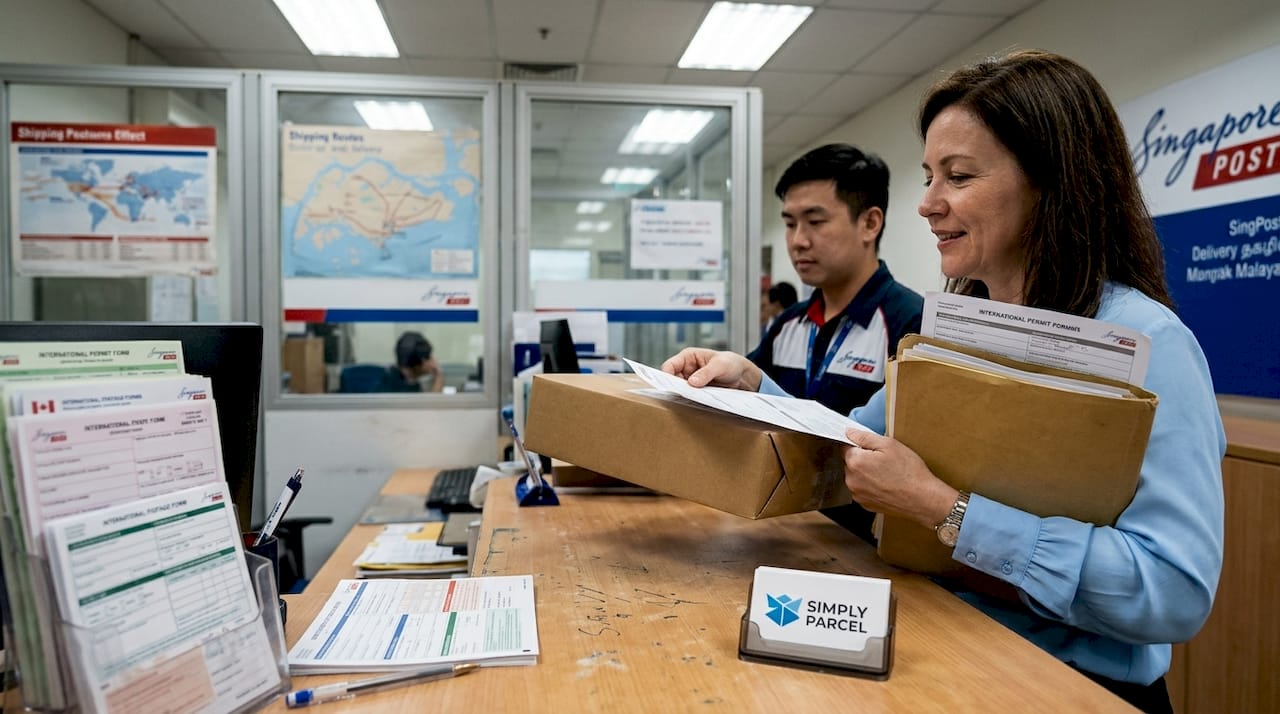
Beyond permits, every international shipment needs accurate item declarations. Customs officers at the destination country rely on what you write on your parcel's documentation to determine taxes, duties, and clearance eligibility. Undervaluing goods or using vague descriptions like "gift items" can trigger holds, fines, or outright rejection.
Key requirements checklist before you pack:
- Confirm whether your items are on Singapore's restricted or prohibited list
- Verify the destination country's import restrictions for your specific goods
- Prepare a complete commercial invoice with accurate item descriptions, quantities, and declared values
- Gather supporting required shipping documents such as a packing list, certificates of origin if needed, and any product-specific certificates
- Confirm whether your courier provides customs clearance support or whether you need to arrange it separately
Pro Tip: Build a simple requirements checklist in a shared folder or notes app. Before each shipment, run through it in five minutes. This single habit prevents 90% of documentation errors.
Understanding these requirements is not just about following rules. It protects your recipient from unexpected import duties or refused deliveries, which reflects directly on your reliability as a sender or business.
Step-by-step process for sending packages overseas
With your requirements checklist in hand, here's a practical walkthrough of the shipping process from start to finish.
Each step below is designed to be sequential. Skipping ahead, especially past documentation, is the most common reason parcels get delayed or returned at customs.
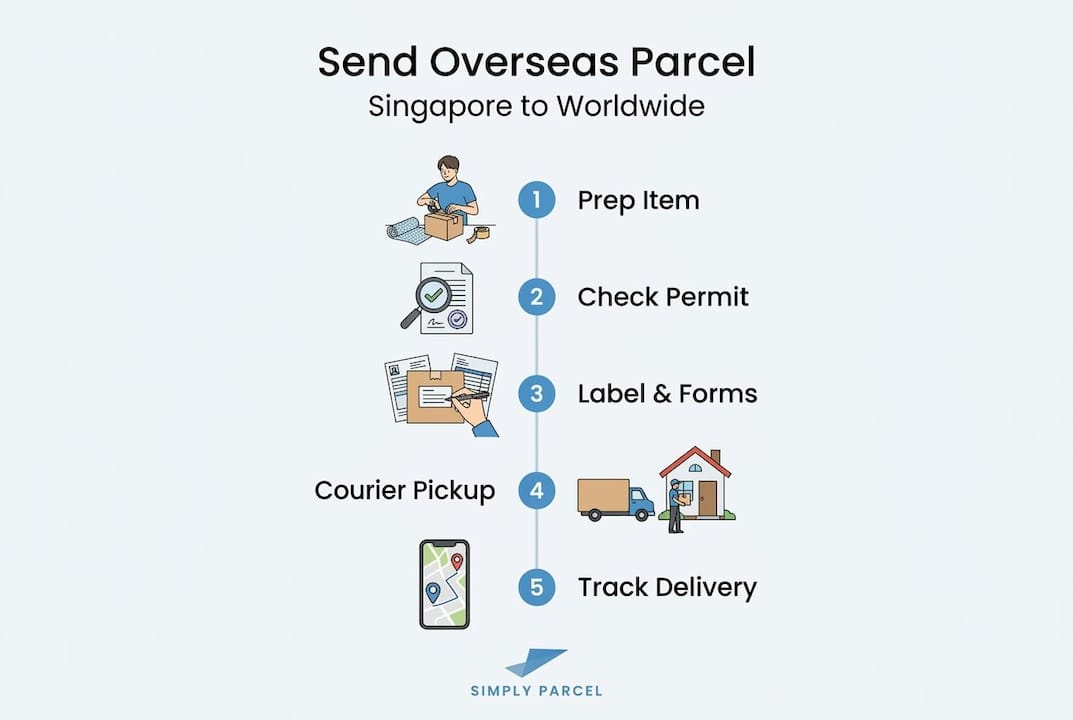
-
Check regulations and restrictions. Before you pack anything, confirm that your items are permitted in the destination country. Restrictions vary widely. Japan, for instance, has strict rules on cosmetics and food products. Australia has tight biosecurity controls. The complete international shipping guide is a useful reference for country-specific requirements.
-
Choose suitable packaging. Use a sturdy outer box that accommodates your item with at least 5 cm of cushioning on all sides. Fragile items should be wrapped individually in bubble wrap and surrounded by packing peanuts or crumpled paper. Seal all seams with strong packing tape. Avoid reusing old boxes with previous labels, as this can confuse automated sorting systems.
-
Prepare your documentation. A commercial invoice is required for customs clearance in virtually every destination country, even for personal gifts. The invoice should include the sender's and recipient's full name and address, a clear description of each item, quantity, unit price, total declared value, and the reason for export (sale, gift, sample, etc.). Familiarize yourself with common shipping documentation for SMEs to make sure nothing is missing.
-
Select your courier and service level. This step significantly affects both cost and delivery speed. Use a shipping aggregator to compare rates from multiple couriers at once rather than visiting each carrier's website separately. Consider whether your shipment needs priority express delivery or whether economy shipping with a longer transit window suits your timeline and budget.
-
Book pickup and dispatch your parcel. Once you've selected your courier and service, book an online pickup. Many platforms offer free pickup from your door, saving you a trip to a drop-off point. Print your shipping label and attach it securely to the outer box, making sure no previous labels are visible.
Here is a comparison of common shipping service types available in Singapore for international parcels:
| Service type | Typical transit time | Best for | Cost level |
|---|---|---|---|
| Priority / Express | 1 to 3 business days | Urgent documents, time-sensitive goods | High |
| Connect-Plus | 3 to 7 business days | Reliable mid-range commercial goods | Medium |
| Economy | 7 to 21 business days | Non-urgent personal items, bulky goods | Low |
| Freight | Variable | Heavy commercial shipments | Varies by weight |
Understanding shipping terminology explained helps you read courier quotes accurately and avoid unexpected surcharges like fuel levies, remote area fees, or dimensional weight charges.
Pro Tip: Always keep digital copies of your commercial invoice, packing list, and booking confirmation in a single folder labeled by tracking number. If a customs query arises, you can respond in minutes instead of searching through email threads.
How to avoid common mistakes and shipping delays
Even if you follow every step, mistakes are common. Here's how to avoid them.
Most delays are not caused by courier errors. They are caused by sender errors that are completely preventable with a few minutes of extra care before dispatch.
Top mistakes that cause delays or extra costs:
- Writing vague item descriptions like "personal goods" or "household items" instead of specific descriptions
- Declaring incorrect values, either too low to save on duties or inconsistent with accompanying invoices
- Forgetting to check prohibited or restricted items before packing, for example, items like drugs or weapons can never be sent regardless of value or destination
- Using insufficient packaging that leads to damage claims or rejected deliveries
- Choosing a courier without verifying it covers the specific destination or provides customs clearance
- Missing recipient contact details, which customs authorities need to reach someone if there is a query
- Not accounting for public holidays in the destination country, which can extend transit times significantly
Important customs warning: Customs authorities in most countries have the right to open, inspect, and hold any international parcel indefinitely if documentation is incomplete or items appear suspicious. A missing commercial invoice alone can result in a hold of several weeks and import duties charged to your recipient. Always double-check before you seal the box.
Customs delays also happen when the declared value of a shipment suddenly triggers an import duty threshold in the destination country that your recipient was not prepared for. If you are shipping goods for a small business, communicate clearly with your recipient about potential import costs so there are no surprises on their end.
For more practical guidance on keeping your shipping costs in check while avoiding delays, the article on affordable shipping tips covers several strategies that work well for both individuals and small businesses.
Verifying successful delivery and tracking your shipment
Once your parcel is on its way, here's how to stay in control until it reaches its destination.
Tracking is not just a convenience. It is your main tool for catching issues early and responding before they become serious problems. Most modern couriers provide real-time updates, but knowing how to interpret those updates makes a real difference.
-
Locate your tracking number. Your tracking number is issued at the time of booking or when the courier collects your parcel. It is printed on your shipping label and included in your booking confirmation email. Store it somewhere you can find instantly.
-
Use the courier's online tracking dashboard. Enter your tracking number on the courier's website or within your shipping platform's dashboard. You should see status updates at each scan point, including departure from Singapore, arrival at the transit hub, customs clearance status, and out-for-delivery confirmation.
-
Monitor customs clearance status closely. This is the stage where most delays occur. If your parcel is marked "held at customs," check your email immediately for a notification requesting additional documents. Some couriers handle this on your behalf; others require you to respond directly.
-
Confirm delivery with your recipient. Once the tracking shows "delivered," contact your recipient to confirm. For high-value parcels, request a delivery photo or signature confirmation, which many couriers offer as an add-on service.
-
Follow up if delivery is not confirmed. If the tracking shows delivered but your recipient has not received the parcel, contact the courier within 24 to 48 hours. Most reputable international couriers have a formal investigation process for missing deliveries. The sooner you report, the faster the resolution.
For time-sensitive deliveries, explore quick international shipping options that include guaranteed transit times and proactive delivery notifications.
Pro Tip: Enable SMS or email shipment notifications if your courier or platform offers them. You will receive automatic alerts at each major transit point without having to log in and check manually, which saves time and reduces unnecessary worry.
Note that parcel tracking accuracy can occasionally lag by a few hours, especially during high-volume periods like holidays or major sales events. This is normal. If tracking has not updated in more than 48 hours and your parcel is still in transit, that is the right time to contact your courier for a status check.
Why a strategic approach is crucial for affordable, reliable overseas shipping
Most people think about international shipping as a one-time task: pack the box, pick a courier, pay the fee. But if you send parcels regularly, whether for personal reasons or for a growing small business, this transactional mindset costs you more than you realize.
The senders who consistently save money and avoid delays are the ones who approach shipping strategically. They compare couriers before they have an urgent parcel to send, not when they are already pressed for time. They build documentation templates so each shipment takes ten minutes to prepare instead of an hour. They track patterns: which courier performs well to certain destinations, which service level fits their typical parcel size, and which packaging methods reduce damage rates.
There is a common assumption that economy shipping is "risky" and express is "safe." That is rarely true. A well-packed, well-documented parcel sent via economy international shipping almost always arrives intact and on schedule. What causes failures is not the service tier but the preparation quality.
We also see many small businesses in Singapore overpaying for express services on shipments that are not actually time-sensitive. The recipient is happy to wait seven to ten business days. The sender is paying two to three times more out of habit or uncertainty. Mapping out your typical shipping needs and matching them deliberately to the right service type can generate meaningful savings over a year.
The most important mindset shift is this: international shipping is not a single decision. It is a system. The senders who build that system, even a simple one, send with less stress, fewer errors, and lower costs every single time.
Send your next overseas package with ease
Ready to put this guide into practice? Simply Parcel makes international shipping from Singapore straightforward, with instant comparison across major courier partners, automated label and document generation, and real-time tracking from a single dashboard. Whether you need to send a personal gift or fulfill a business order, you can get an instant shipping quote in minutes and book a free pickup without leaving your home or office. Already have a parcel on the way? Track your shipment anytime for live status updates. Simply Parcel brings together everything covered in this guide into one reliable, transparent platform built for Singapore senders.
Frequently asked questions
Do I need an export permit for small parcels from Singapore?
Most personal or small business parcels are permit-exempt if they are non-dutiable, non-controlled, and valued under S$400 for gifts and samples or under S$1,000 for air cargo shipments.
What documents are needed for international shipping from Singapore?
A commercial invoice is required for customs clearance, along with an accurate item declaration that includes descriptions, quantities, and declared values for each item in the parcel.
Are there items I cannot send overseas from Singapore?
Yes. You cannot send prohibited or restricted items such as drugs or weapons, and you should review Singapore Customs' full restricted goods list before preparing your shipment.
How can I make sure my parcel arrives safely and on time?
Use sturdy packaging with adequate cushioning, complete all customs documentation accurately, choose a courier with tracking capabilities, and confirm delivery directly with your recipient once the parcel is marked as delivered.