
Balancing cost and speed is one of the most common challenges for anyone sending parcels internationally from Singapore. Economy shipping often gets dismissed as the "slow option," but that characterization misses a lot of its practical value. For non-urgent shipments, whether you're a consumer sending gifts abroad or a small business replenishing overseas inventory, economy shipping can deliver significant cost savings without meaningful sacrifice. This article breaks down how economy shipping works, how it compares to standard and express services, and how to make smarter decisions when choosing the right option for your parcel.
Table of Contents
- Why economy shipping matters for Singapore
- How economy shipping works: Options & process
- Economy vs. standard vs. express: What your money buys
- Situational recommendations: When economy shipping is best
- What most guides miss: Beyond price, smart shipping decisions
- Explore cost-effective shipping solutions with Simply Parcel
- Frequently asked questions
Key Takeaways
| Point | Details |
|---|---|
| Significant cost savings | Economy shipping offers the lowest rates for non-urgent international parcels from Singapore. |
| Flexible delivery timelines | You can accept longer shipping times in exchange for reduced costs—ideal for gifts and business restocks. |
| Best for non-urgent items | Economy shipping is suited for parcels where speed is not crucial and affordability is top priority. |
| Trade-offs require planning | Careful selection and tracking can help manage risks like delivery delays and customs issues. |
Why economy shipping matters for Singapore
Singapore sits at the heart of global trade routes, and its residents and businesses ship internationally at a high volume. From personal gifts sent to family overseas, to small businesses exporting products to markets in Europe, North America, and Southeast Asia, the demand for affordable cross-border delivery is substantial. Economy shipping has emerged as a practical answer to that demand.
Economy shipping prioritizes affordability over speed, making it ideal for non-urgent international parcels, with delivery times typically ranging from 5 to 21 days depending on the carrier and destination. That range sounds wide, but it reflects the genuine variety of routes and service levels available under the economy category. For many shippers, that window is entirely acceptable.
The core appeal of economy shipping is straightforward: lower cost per shipment. For consumers sending non-time-sensitive personal items, paying a premium for two-day delivery makes little sense. For small businesses managing tight margins, economy shipping can meaningfully reduce logistics costs over time, especially when shipping in volume.
Here are the most common situations where economy shipping makes practical sense:
- Non-urgent personal parcels: Birthday gifts, care packages, or personal items sent to family or friends abroad
- Business inventory restocks: Stock replenishment orders where lead time allows for slower delivery
- Bulk or heavy shipments: Larger parcels where express rates become prohibitively expensive
- Sample shipments: Product samples sent to overseas buyers or partners without a strict deadline
- Low-value goods: Items where the cost of express shipping would outweigh the value of the parcel itself
"Economy shipping is not a compromise for those who plan ahead. It's a deliberate, cost-efficient strategy for shippers who understand their timelines."
The trade-off, of course, is speed. Standard shipping typically delivers within 2 to 8 days, while express options can reach destinations in 1 to 3 days. Economy shipping's 5 to 21-day window requires planning. If you're shipping a product that a customer needs urgently, or a document with a deadline, economy is not the right tool. But for the majority of non-urgent international shipments, it represents strong value.
Pro Tip: Check the shipping tips for Singapore on the Simply Parcel blog before booking. Seasonal demand, public holidays, and destination-specific customs processing times can all affect economy shipping timelines, and knowing these in advance helps you plan better.
How economy shipping works: Options & process
Understanding the mechanics of economy shipping helps you avoid surprises. The process is more structured than many shippers expect, and choosing the right service provider from the start makes a significant difference.
Here's a step-by-step overview of how economy shipping typically works for Singapore-based shippers:
- Choose your carrier or platform. Options include traditional carriers like SingPost and UPS, forwarding services like Buy&Ship, and aggregator platforms like Simply Parcel, which lets you compare rates across multiple carriers in one place.
- Enter parcel details. Provide the destination country, parcel dimensions, and weight. Accurate measurements matter because carriers calculate rates based on actual or volumetric weight, whichever is greater.
- Select economy service tier. Most carriers offer multiple tiers. Economy is the lowest-cost option, with longer delivery windows. Some platforms label it differently, such as "connect-plus" or "standard economy."
- Book and generate documentation. Once you confirm your booking, shipping labels and customs documentation are generated automatically. For international shipments, a commercial invoice or customs declaration form is required.
- Drop off or schedule pickup. Many services, including Simply Parcel, offer free parcel pickup from your address, removing the need to visit a post office or courier branch.
- Track your shipment. Use parcel tracking options to monitor progress. Economy shipments may have fewer tracking updates than express services, but most carriers provide at least origin scan, departure, and delivery confirmation.
Economy shipping excels in cost savings for non-urgent parcels via forwarding services like Buy&Ship or direct carriers like UPS and SingPost. However, trade-offs include longer delivery times of 5 to 21 days, potential tracking gaps between transit points, and edge cases where regulatory changes, such as US customs policy updates, may require shippers to upgrade to express.
One important consideration is customs. Every international parcel passes through customs in the destination country. Economy shipments are not prioritized in customs queues, which means delays are more likely during peak periods or when documentation is incomplete. Always ensure your customs declaration is accurate and complete before handing over your parcel.

Pro Tip: When using the shipping process on Simply Parcel, double-check that your declared parcel value matches your invoice. Discrepancies between declared and actual values are one of the most common causes of customs holds and unexpected duties.
Economy vs. standard vs. express: What your money buys
Choosing between economy, standard, and express shipping comes down to three variables: cost, time, and reliability. Understanding where each service stands on those dimensions helps you make the right call for each shipment.
| Service type | Delivery time | Relative cost | Tracking reliability | Best for |
|---|---|---|---|---|
| Economy | 5 to 21 days | Lowest | Basic to moderate | Non-urgent personal and business parcels |
| Standard | 2 to 8 days | Mid-range | Good | Time-sensitive but not urgent shipments |
| Express | 1 to 3 days | Highest | Excellent | Urgent, high-value, or time-critical parcels |
Economy shipping takes 1 to 4 weeks, while standard shipping typically delivers in 2 to 8 days. For reference, USPS economy options for small packages start at around $14.85, illustrating how significantly economy rates can undercut premium services for comparable parcel sizes.
The cost gap between economy and express can be substantial. For a 2 kg parcel shipped from Singapore to the United Kingdom, express services can cost two to three times more than economy. Over a month of regular shipments, that difference compounds quickly for small businesses.
Here's a practical breakdown of when to choose each tier:
- ✅ Choose economy when: Your parcel is non-urgent, the recipient can wait 2 to 3 weeks, and cost savings are a priority
- ✅ Choose standard when: You need delivery within a week but don't require same-day or next-day service
- ✅ Choose express when: The parcel is time-critical, high in value, or requires detailed tracking at every transit point
- ❌ Avoid economy when: The destination has complex customs requirements, the item is perishable, or the recipient has a firm deadline
Tracking reliability is a meaningful differentiator. Express services typically offer real-time, scan-by-scan tracking from pickup to delivery. Standard services provide good coverage with regular updates. Economy services often show fewer intermediate scans, particularly during international transit. This doesn't mean your parcel is lost. It simply means visibility is reduced during certain legs of the journey.
You can get international shipping quotes across all service tiers on Simply Parcel, which makes it easy to compare the actual price difference for your specific parcel before committing to a service level.
One more consideration: regulatory edge cases. Certain destination countries, particularly the United States, periodically update customs thresholds and import regulations. When those changes occur, economy shipments may face additional scrutiny or delays. In those situations, upgrading to express or standard may be worth the added cost. Review the shipping details for your destination before finalizing your booking.
Situational recommendations: When economy shipping is best
Knowing that economy shipping is affordable is useful. Knowing exactly when to use it is where the real value lies. The following scenarios illustrate the most practical applications for consumers and small businesses in Singapore.
Personal use cases:
- Sending gifts to family overseas during non-holiday periods when there's no fixed delivery date
- Shipping personal belongings when relocating abroad gradually, parcel by parcel
- Returning purchased items to overseas retailers where the return window is generous
Small business use cases:
- Restocking inventory at overseas warehouses or fulfillment centers with sufficient lead time
- Shipping product samples to potential buyers or distributors in new markets
- Sending marketing materials, branded merchandise, or promotional items to overseas partners
Bulk and consolidated shipments:
- Combining multiple small parcels into a single consolidated shipment to reduce per-unit cost
- Using forwarding services to batch orders from multiple suppliers before shipping in one go
"The most effective use of economy shipping is not about saving money on a single parcel. It's about building a logistics rhythm that keeps costs predictable over time."
Here's a quick reference table for matching your shipment type to the right service:
| Shipment scenario | Recommended service | Reason |
|---|---|---|
| Non-urgent personal gift | Economy | No deadline, cost savings priority |
| Business inventory restock (3 weeks lead time) | Economy | Sufficient buffer, high volume savings |
| Urgent product sample for client meeting | Express | Deadline-driven, reliability critical |
| Standard e-commerce order (5-day window) | Standard | Balances cost and customer expectations |
| Bulk marketing materials (no event date) | Economy | Large volume, no time pressure |
Economy shipping prioritizes affordability over speed, making it ideal for non-urgent international parcels. The key is matching the service to the actual urgency of the shipment, not defaulting to express out of habit or caution.
To maximize savings, consider these practical strategies:
- Consolidate shipments: Combine multiple items into one parcel rather than sending several smaller ones separately
- Plan around peak seasons: Avoid booking economy shipments just before major holidays when customs processing slows down
- Use a shipping aggregator: Platforms that compare multiple carriers help you find the best economy rate for your specific route and parcel size
- Weigh accurately: Incorrect weight declarations lead to surcharges that can eliminate the cost advantage of economy shipping
For more guidance on optimizing your approach, the economy shipping strategies section on Simply Parcel covers route-specific advice and carrier recommendations.
What most guides miss: Beyond price, smart shipping decisions
Most articles on economy shipping stop at the price comparison. That's useful, but it misses a more important point: the real cost of a shipping decision includes not just the rate, but the risk of delays, customs complications, and tracking gaps that can affect your customer relationships or personal plans.
Economy shipping excels in cost savings for non-urgent parcels, but trade-offs include longer times of 5 to 21 days, potential tracking gaps, and edge cases like US customs policy changes that may require upgrading to express. Experienced shippers know to factor these variables in before booking, not after a parcel is already in transit.
The most common mistake we see is shippers choosing economy based on price alone, without accounting for the destination country's customs processing speed or the carrier's actual track record on that specific route. A carrier offering a low rate to a particular country may have a poor on-time delivery history for that destination. Checking carrier performance data for your route matters as much as checking the rate.
For small businesses, the smarter approach is to build a tiered shipping policy. Use economy for inventory restocks and non-urgent B2B shipments. Use standard for regular e-commerce orders. Reserve express for urgent or high-value parcels. This structure keeps costs manageable while ensuring the right level of service reaches the right shipment.
The shipping advice available through Simply Parcel's resource hub can help you build that kind of structured approach, with practical guidance tailored to Singapore's international shipping landscape.
Explore cost-effective shipping solutions with Simply Parcel
Economy shipping works best when you have the right tools to compare, book, and track your shipments efficiently. Simply Parcel is built specifically for Singapore consumers and small businesses looking to manage international shipping without overpaying.
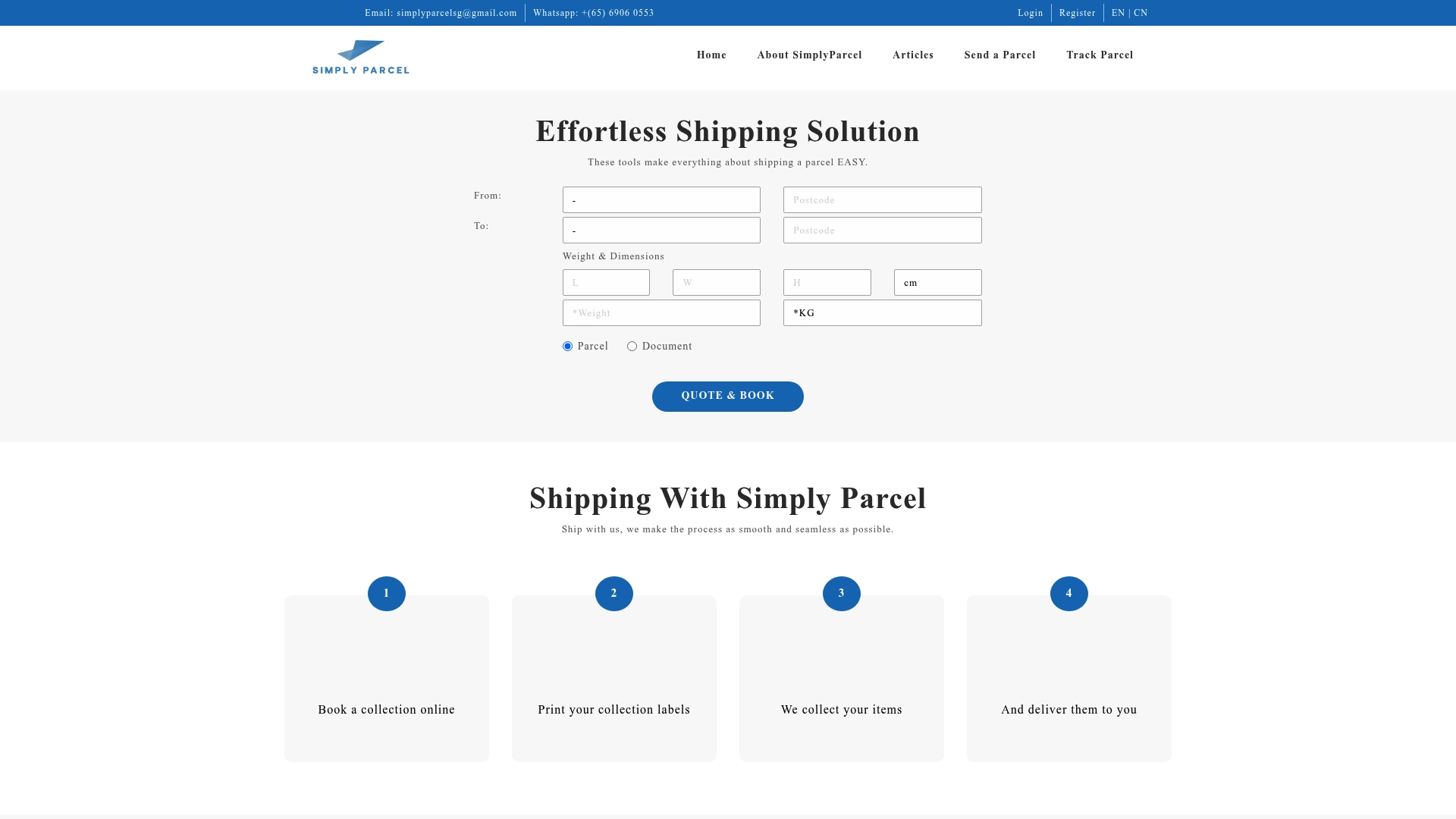
You can request a shipment quote instantly across multiple carriers, compare economy, standard, and express rates side by side, and book your preferred service in minutes. Free parcel pickup is available, and shipping labels and documentation are generated automatically. If you want to get instant shipping quotes and see exactly what economy shipping costs for your next parcel, Simply Parcel makes the process straightforward and transparent, with no hidden fees and clear transit timelines.
Frequently asked questions
What is economy shipping and how long does it take from Singapore?
Economy shipping is a cost-focused international option for non-urgent parcels, typically requiring 5 to 21 days for delivery depending on the carrier and destination country.
What types of parcels are best suited for economy shipping?
Economy shipping is best for parcels that are non-urgent, such as gifts, bulk business orders, or inventory restocks where delivery speed is not a priority.
Can I track my economy shipping parcel?
Tracking is often available for economy shipments, but it may provide fewer intermediate updates or have gaps during transit compared to express services.
Are there risks with economy shipping for international parcels?
Risks include possible tracking gaps, longer delivery times, and customs delays, particularly for destinations with complex import regulations or frequent policy changes.
How can I maximize savings using economy shipping?
To maximize savings, ship non-urgent items in consolidated parcels, plan around peak customs periods, and use a platform that compares carrier rates across multiple economy options for your specific route.