
Managing international shipments across multiple courier services is one of the most frustrating parts of running a small business in Singapore. You're juggling tracking numbers, copying addresses manually, and chasing updates that should arrive automatically. These inefficiencies cost real money and real time. Courier integration solves this by connecting your order systems directly to courier networks, automating the entire process from label creation to delivery confirmation. This guide breaks down exactly what courier integration is, how it works in practice, and why it may be the most practical step your business can take to simplify logistics and reduce costs.
Table of Contents
- What is courier integration?
- How courier integration works in practice
- The benefits of courier integration for small businesses
- Courier integration options: A practical comparison
- How to get started with courier integration
- Our take: Integration is the secret weapon for growth
- Ready to streamline your shipping?
- Frequently asked questions
Key Takeaways
| Point | Details |
|---|---|
| Automate shipping tasks | Courier integration eliminates manual shipping work, saving time and cutting errors. |
| Boost efficiency and tracking | Automated systems streamline parcel management and provide real-time tracking updates. |
| Fits most business sizes | Flexible options suit both small and growing businesses shipping internationally. |
| Easy to implement | Modern solutions are quick to set up and integrate with popular sales channels. |
What is courier integration?
Now that you know why courier confusion is a major hurdle, let's break down exactly what courier integration means and how it works.
Courier integration automates the transfer of order and shipment information between ecommerce platforms and courier services. Instead of manually entering customer addresses, printing labels separately, and updating tracking numbers one by one, the system handles all of that for you. Your sales platform and your courier's system talk to each other directly.
At its core, courier integration is a data bridge. When an order is placed, the relevant details, including the recipient's address, parcel weight, and delivery preference, flow automatically to the courier's system. Labels are generated, pickups are scheduled, and tracking updates are sent back to your platform without anyone lifting a finger.
For small businesses in Singapore, this is especially valuable. Whether you run an online store, a retail operation with regular export orders, or a service business shipping samples abroad, courier integration removes the repetitive admin that slows your team down.
Key features you should expect from any courier integration solution include:
- Automatic label generation based on order data
- Address syncing between your store and the courier system
- Real-time tracking updates pushed to your platform and your customers
- Multi-carrier support so you can compare and choose couriers per shipment
- Documentation handling for customs and cross-border shipping
Platforms like Simply Parcel are built specifically to handle these functions for Singapore-based businesses shipping internationally, offering a straightforward way to connect your operations with major courier networks.
Pro Tip: Choose a courier integration solution that already supports the couriers you use most often. Switching later is possible, but it adds unnecessary setup time and staff retraining.
How courier integration works in practice
With a solid definition in place, see how courier integration plays out from order creation to delivery.
The workflow is more straightforward than most business owners expect. Here is a typical step-by-step process:
- Customer places an order on your ecommerce store or sales platform.
- Order data is automatically sent to the integrated courier system, including the delivery address, parcel dimensions, and any special handling requirements.
- A shipping label is generated instantly, without manual input from your team.
- The courier is notified for pickup at your location or warehouse.
- Tracking information is created and synced back to your platform.
- Automated notifications are sent to both you and the buyer, confirming dispatch and providing live tracking updates.
- Delivery is confirmed and the status is updated across all connected systems.
This end-to-end automation is where the real savings come from. Automated systems reduce administrative shipping costs by up to 43%, according to McKinsey research on logistics automation. That is not a marginal improvement. For a business processing dozens of shipments a week, those savings add up fast.
For cross-border shipments, integration also handles the documentation side. Customs declarations, commercial invoices, and country-of-origin details can be pre-populated from your product catalog, reducing the risk of errors that cause delays at customs. You can use the tracking module to monitor shipments in real time, giving you and your customers full visibility at every stage.

For more guidance on setting up efficient workflows, the Simply Parcel blog covers practical shipment integration tips relevant to Singapore-based businesses.
The benefits of courier integration for small businesses
Having walked through the workflow, it's clear why businesses can't afford to manage couriers manually. But what exactly are the unique payoffs?
The most immediate benefit is time. Manual shipping processes require someone to enter addresses, generate labels, check courier portals, and respond to customer tracking inquiries. Courier integration handles all of that automatically. Businesses can cut shipping processing time by up to 30% with integrated solutions, freeing your team to focus on sales, customer service, and growth.
Beyond time, there is a direct cost benefit. Fewer manual errors mean fewer failed deliveries, reshipments, and refund requests. Integration also makes it easier to compare rates across couriers for each shipment, so you are always choosing the most cost-effective option rather than defaulting to a single provider out of habit.
For your customers, the impact is equally significant. Real-time tracking and automated notifications create a professional post-purchase experience that builds trust. When buyers know exactly where their parcel is, they contact you less and leave better reviews.
"Integrated shipping lets us offer reliable, on-time deliveries that set us apart."
Here is a summary of the core benefits:
- ✅ Faster processing: Orders move from placement to dispatch without manual intervention
- ✅ Lower costs: Fewer errors, better rate comparisons, and reduced admin overhead
- ✅ Better tracking: Real-time visibility for you and your customers
- ✅ Scalable growth: Handle more shipments without adding headcount
- ✅ Professionalism: Consistent, automated communication with buyers
You can get instant shipping quotes to see how competitive rates compare across couriers before committing to any integration setup. For businesses new to international shipping, understanding the rate landscape first helps you make a smarter integration decision.
Courier integration options: A practical comparison
Before making a decision, it's crucial to compare different integration options and understand which fits your business best.
Cloud-based integrations are typically easier and cheaper for SMEs to adopt than custom-built software, according to TechRepublic's analysis of shipping software solutions. That said, the right choice depends on your shipment volume, technical capacity, and budget.
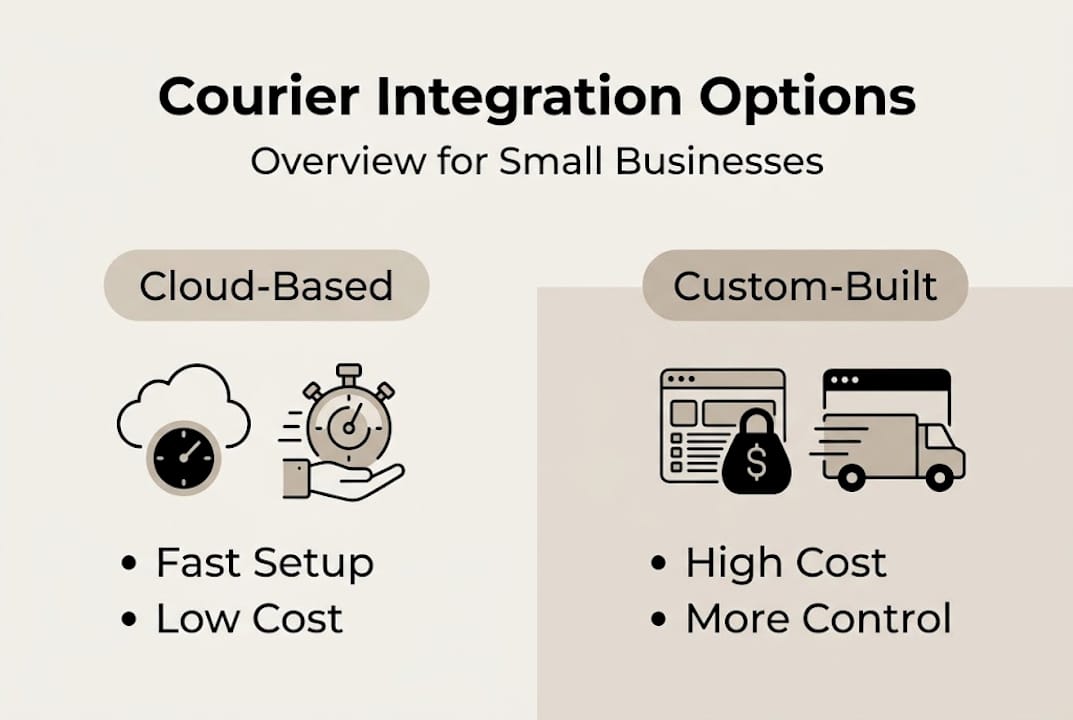
Here is a comparison of the three main types of courier integration:
| Integration type | Setup time | Cost | Carrier coverage | Ease of use | Scalability |
|---|---|---|---|---|---|
| Pre-built shipping platform | Hours | Low to medium | Multiple carriers | High | Medium to high |
| Direct courier API | Days to weeks | Low (dev time) | Single carrier | Low (technical) | High |
| Custom integration | Weeks to months | High | Flexible | Varies | Very high |
Pre-built platforms are the best starting point for most small businesses. They require no coding knowledge, connect to multiple couriers, and can be operational within a day. Direct courier APIs suit businesses with in-house developers who want deep control over a single carrier relationship. Custom integrations make sense only for high-volume operations with very specific workflow requirements.
When evaluating any option, check for compatibility with your existing sales platform, whether it supports the couriers you already use, and what ongoing support looks like.
Pro Tip: If you ship fewer than 100 parcels a month, start with a pre-built platform. The setup is fast, the cost is manageable, and you can always migrate to a more advanced solution as your volume grows. Review the integration setup guide to understand what Simply Parcel supports before committing.
How to get started with courier integration
Ready to integrate courier services into your workflow? Here is a straightforward process to ensure you avoid unnecessary setbacks.
Integration can be accomplished in a few hours for most platforms, but proper testing is critical before going live. Rushing this step is one of the most common mistakes small businesses make.
Follow these steps to implement courier integration effectively:
- Assess your needs. List the couriers you currently use, the countries you ship to, and your average monthly shipment volume. This shapes every decision that follows.
- Shortlist solutions. Based on your volume and budget, identify two or three platforms that support your required couriers and sales channels.
- Check courier coverage. Confirm that the integration supports all the carriers and destinations you need, including any cross-border documentation requirements for your target markets.
- Integrate and configure. Connect the platform to your store, set up your default shipping preferences, and import your product catalog if documentation automation is available.
- Test thoroughly. Create test shipments, verify that labels generate correctly, and confirm that tracking updates flow back to your platform and to customers.
- Train your team. Even simple platforms require some onboarding. Make sure staff understand the new workflow before going live.
Watch out for hidden fees, particularly per-label charges or carrier surcharges that are not visible in the headline pricing. Compatibility issues between your ecommerce platform and the integration tool can also cause delays, so confirm technical requirements upfront.
For detailed guidance tailored to Singapore-based businesses, check the Simply Parcel blog for tips on integrating couriers efficiently without disrupting your existing operations.
Our take: Integration is the secret weapon for growth
Beyond the how-to, here is why we believe courier integration is a game-changer for ambitious small businesses.
Most business owners treat courier integration as a back-office efficiency fix. That framing undersells it significantly. When your logistics run automatically and reliably, you gain the operational confidence to expand into new markets, take on more orders, and compete with larger players who have dedicated logistics teams.
For small businesses in Singapore, the opportunity is real. The region's ecommerce growth means international buyers expect fast, trackable, professional delivery experiences. A business that can deliver that, consistently and at scale, wins repeat customers. One that cannot loses them to competitors who have already automated.
Integration is also one of the most affordable growth investments available. Unlike hiring additional staff or investing in warehouse infrastructure, a well-chosen integration platform costs a fraction of those options and delivers immediate, measurable returns.
Those who delay adoption are not just missing efficiency gains. They are actively falling behind. The cost of inaction compounds every month in wasted admin hours and missed delivery expectations. Learn more about how Simply Parcel supports Singapore businesses in making this transition practically and affordably.
Ready to streamline your shipping?
If you're ready to move from theory to action, here's how Simply Parcel simplifies courier integration for businesses like yours.
Simply Parcel is built for small businesses in Singapore that need affordable, reliable international shipping without the complexity. From automated label generation to real-time tracking and multi-carrier rate comparisons, the platform handles the logistics so you can focus on running your business.
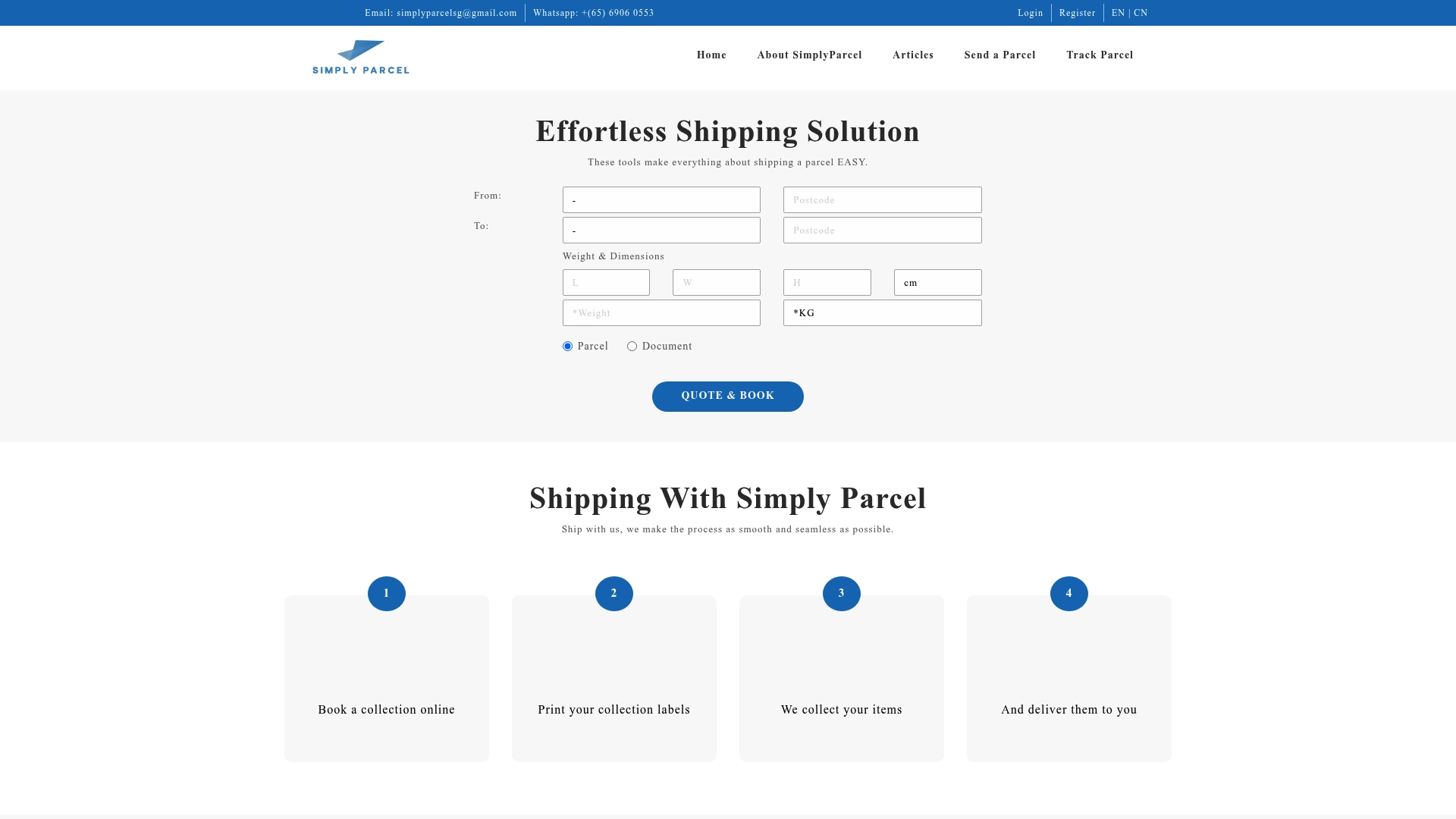
Start by getting a shipment quote to see competitive rates across major couriers. When you're ready to set up, the shipment detail page walks you through integration options step by step. Simply Parcel's team provides reliable support for Singapore-based SMEs, with transparent pricing and no hidden fees. Visit Simply Parcel to get started today.
Frequently asked questions
Do I need courier integration if I only ship a few parcels a week?
Even low-volume shippers benefit from automation through reduced errors and time savings, making integration worthwhile even at small scales.
How long does courier integration take to set up?
Most cloud-based solutions are operational within hours, but budget extra time for testing and training your team before going fully live.
What features should I look for in a courier integration solution?
Prioritize label generation, real-time tracking, multi-carrier support, and compatibility with your sales platform, as these features directly affect daily efficiency and scalability.
Is courier integration secure for sensitive customer data?
Reputable providers use encrypted connections for data transfer, but always review the platform's data privacy policy and verify compliance standards before signing up.
Can courier integration help with international shipping documentation?
Yes. Most platforms automate customs documentation and provide shipment tracking, reducing the manual effort required for cross-border shipments.
Recommended
- Best Courier Service & International Shipping | SIMPLYPARCEL
- Best Courier Service & International Shipping | SIMPLYPARCEL
- Simply Parcel Blog SG | Shipping Tips, Updates and Sharing...
- Simply Parcel Blog SG | Shipping Tips, Updates and Sharing...
- International Shipping Tips: Streamline Your Global Deliveries - ORNER