
Shipping internationally from Singapore puts you at a crossroads every time. Do you pay more for speed, or wait longer to save money? Do you handle customs yourself, or let someone else manage the paperwork? For individuals sending personal items and small businesses exporting goods, these questions have real financial consequences. The good news is that there are concrete, well-tested freight solutions designed for exactly your situation. This article breaks down the main options, compares them side by side, and gives you a clear framework to choose with confidence.
Table of Contents
- How to choose the right freight solution
- Air freight: Speed for small and urgent shipments
- Consolidated ocean freight: Cost-effective for non-urgent shipments
- FCL vs LCL: Comparing containerized freight options
- Delivered Duty Paid (DDP): Simplifying customs and landed costs%3A-simplifying-customs-and-landed-costs)
- A smarter approach to Singapore freight solutions
- Connect with Singapore's trusted freight solution experts
- Frequently asked questions
Key Takeaways
| Point | Details |
|---|---|
| Match speed and budget | Choose air for urgent items; ocean freight for cost savings with slower transit. |
| Understand volume pricing | LCL is priced by cubic meter while FCL is per container—pick based on shipment size. |
| Simplify with DDP | Delivered Duty Paid can bundle all costs and responsibilities, making shipping easier for buyers. |
| Request detailed quotes | Ask for comprehensive breakdowns to avoid hidden fees and optimize your shipping decisions. |
| Personalized solutions help | Expert advice ensures the right match between your shipment needs and available freight options. |
How to choose the right freight solution
Before we dive into exact solutions, let's set the framework for choosing what works best for you.
International freight is not one-size-fits-all. The right choice depends on a combination of factors specific to your shipment. Understanding the core terminology first will make every decision easier.
Here are the main freight types you'll encounter:
- Air freight: Goods transported by plane. Fast but generally more expensive, especially for bulky items.
- Ocean freight: Goods transported by sea. Slower but significantly cheaper for larger or heavier shipments.
- LCL (Less-than-Container Load): You share container space with other shippers. Best for smaller volumes.
- FCL (Full Container Load): You rent an entire container. Best for large shipment volumes.
- DDP (Delivered Duty Paid): An Incoterm (a standardized trade term) where the seller or freight forwarder handles all costs including customs duties and final delivery.
Two pricing concepts affect nearly every quote you receive. Chargeable weight is used in air freight and means the greater of actual weight or volumetric weight (length x width x height divided by a standard divisor). CBM (cubic meter) is the volume measurement used in ocean freight, specifically for LCL shipments. Both directly influence what you pay.
Key factors to evaluate when selecting a freight solution:
- Speed: How urgently does the shipment need to arrive?
- Cost: What is your budget, including any duties and destination charges?
- Reliability: Does the service offer consistent transit times and tracking?
- Ease of customs: Does the solution include customs coordination or will you handle it separately?
- Volume: How much cargo are you shipping, measured by weight and dimensions?
For small-volume shipments from Singapore, choosing between air and ocean comes down to speed versus cost, with pricing driven by chargeable weight or volumetric factors. Understanding Incoterms for Singapore is also essential before signing any shipping agreement. You can also explore affordable shipping strategies to minimize your overall landed cost.
Pro Tip: For non-urgent shipments, consolidated ocean freight almost always delivers a lower total cost than air freight, even after factoring in destination handling charges.
Air freight: Speed for small and urgent shipments
Knowing how urgency affects your choice, let's look at the fastest solution: air freight.
Air freight is the go-to option when time is critical. If you are shipping spare parts to a manufacturing client overseas, sending documents with a tight deadline, or exporting high-value electronics, air freight is usually the right call. Transit times typically range from 1 to 5 business days depending on the destination.
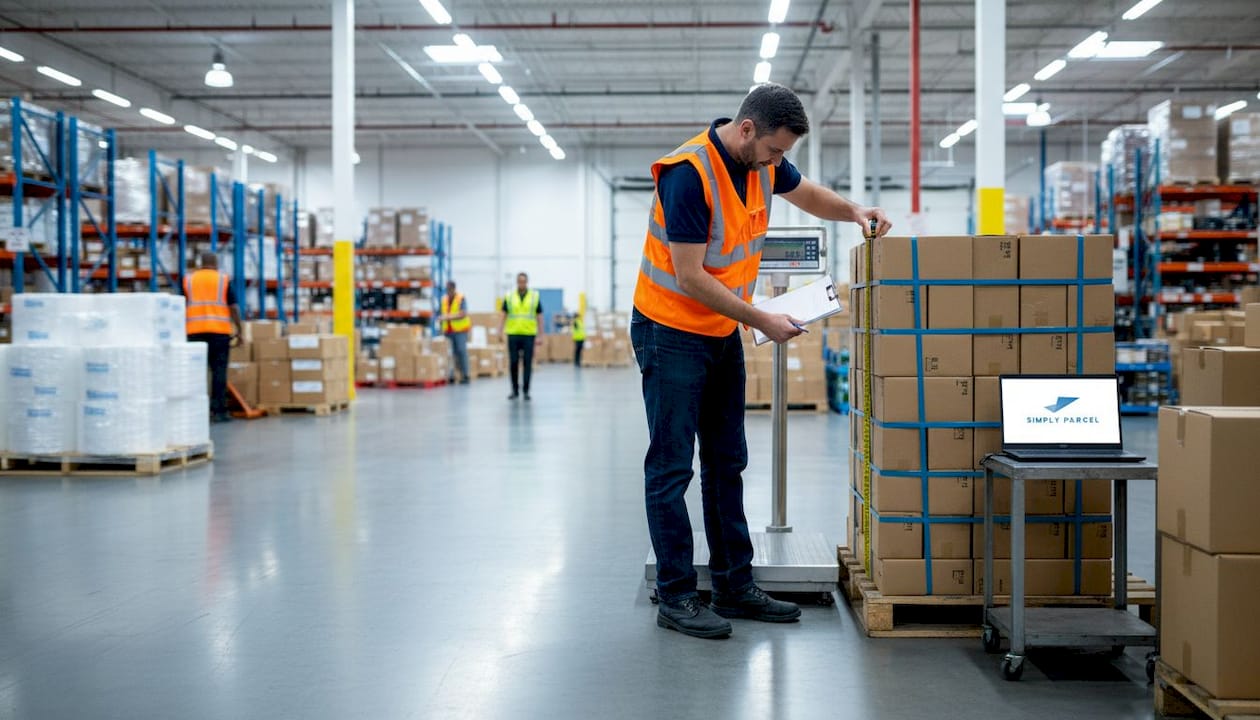
However, the pricing model for air freight requires careful attention. Air freight pricing is based on chargeable weight, which means a large but light carton can cost significantly more than its actual weight suggests. For example, a box measuring 60cm x 60cm x 60cm weighing only 5kg could have a volumetric weight of 18kg or more, and you would be charged for the higher figure.
Pros and cons of air freight:
| Factor | Details |
|---|---|
| Speed | 1 to 5 business days in most cases |
| Reliability | Fixed airline schedules mean consistent transit |
| Cost | Higher per kg/CBM compared to ocean freight |
| Best for | Urgent, high-value, or time-sensitive goods |
| Limitation | Expensive for bulky or lightweight cargo |
Pros:
- Fast, predictable delivery windows
- Reduced risk of damage due to shorter transit and less handling
- Real-time tracking is standard with most carriers
- Suitable for valuable or fragile goods
Cons:
- Higher cost per kilogram or cubic meter
- Bulky but light items incur disproportionately high charges
- Some hazardous or oversized goods are restricted
For individuals sending a few personal boxes or small business owners shipping product samples, air freight offers unmatched speed. You can review quick delivery options and compare top courier services to find the best rates for your route.
Pro Tip: Always confirm the exact dimensions and weight of your parcel before booking air freight. A small discrepancy in measurement can meaningfully increase your final invoice.
Consolidated ocean freight: Cost-effective for non-urgent shipments
Speed isn't always the priority. For affordable rates, many choose consolidated ocean freight.
LCL ocean freight is the most practical solution for individuals and small businesses shipping moderate volumes of goods without a pressing deadline. Instead of paying for an entire container, you share space with other shippers moving cargo to the same destination port. You pay only for the space your cargo occupies, measured in CBM.
"LCL is charged per CBM (cubic meter), including consolidation and destination charges, with transit times typically ranging from 6 to 10 weeks depending on origin and route." CM Relocation
This transit range is important to plan around. If your customer expects delivery in two weeks, consolidated ocean freight is not the right fit. But if you are restocking inventory or shipping household goods, the cost savings are significant.
Pros and cons of consolidated ocean freight (LCL):
Pros:
- Substantially lower cost per CBM compared to air freight
- Ideal for bulky items that would be prohibitively expensive by air
- Flexible minimum volume, often as low as 0.5 CBM
- Suitable for non-urgent export orders and personal moves
Cons:
- Longer transit times, typically 6 to 10 weeks for LCL
- Cargo undergoes multiple handling stages at consolidation hubs
- Consolidation schedules mean you may wait for the next sailing
- Higher risk of minor damage compared to FCL due to shared handling
For small businesses looking to reduce costs, economy parcel shipping offers helpful comparisons. You should also check whether free pickup options are available for your route, since this can further reduce your total outlay.
FCL vs LCL: Comparing containerized freight options
To make an informed decision, you'll need to understand when to choose LCL or FCL.
Once your shipment grows beyond a certain volume, FCL becomes more economical than LCL. FCL means you book and fill an entire container, which is typically a 20-foot or 40-foot unit. You pay a flat rate regardless of how much space you use inside it. LCL, on the other hand, is priced by volume in CBM and suits smaller loads where sharing container space is practical.
Comparison table: LCL vs FCL
| Feature | LCL | FCL |
|---|---|---|
| Pricing basis | Per CBM | Per container (flat rate) |
| Minimum volume | As low as 0.5 CBM | Entire container (20ft or 40ft) |
| Typical transit time | 6 to 10 weeks | 4 to 6 weeks |
| Cargo handling | Multiple handling stages | Single load and unload |
| Best for | Small to medium volumes | Large or full shipments |
| Security | Shared container, more touchpoints | Exclusive container, fewer touchpoints |
| Cost efficiency | Better for small volumes | Better above 10 to 15 CBM |
Steps to decide between LCL and FCL:
- Estimate your total volume in CBM. Measure each carton (length x width x height in meters) and add them together. Most freight forwarders offer a simple CBM calculator.
- Get quotes for both options. Request an LCL rate per CBM and an FCL flat rate for your destination. Compare the total costs for your actual volume.
- Factor in your timeline. FCL usually has faster transit than LCL because it skips consolidation delays. If speed matters even a little, FCL may justify a slightly higher cost.
- Assess how important cargo security is. FCL reduces the number of times your goods are handled, which lowers the risk of damage or loss.
The general industry guideline is that when your cargo exceeds 10 to 15 CBM, FCL often becomes cheaper per unit of volume than LCL. Review transparent shipping rates to understand how Singapore-based providers structure their pricing for both options.
Delivered Duty Paid (DDP): Simplifying customs and landed costs
For buyers seeking maximum convenience and fewer handoffs, DDP offers a bundled approach.
DDP is an Incoterm that places maximum responsibility on the seller or freight forwarder. Under DDP, every cost associated with getting the shipment from origin to the buyer's door is included upfront. That means you know the full landed cost before the shipment even leaves Singapore. There are no surprise customs bills when the package arrives at the destination.
DDP covers all cost components, including factory or warehouse pickup, export handling, main carriage (air or ocean), customs coordination, duty and tax arrangements at destination, and final delivery to the recipient's address.
Pros and cons of DDP:
Pros:
- Complete cost transparency from day one
- No customs paperwork burden on the buyer or recipient
- Fewer handoffs reduce the chance of delays or miscommunication
- Ideal for exporters who want to offer a premium, hassle-free experience to overseas clients
Cons:
- Generally higher total price than other Incoterms
- Less buyer control over carrier selection and routing
- The forwarder's duty estimates may not always be perfectly accurate
Typical DDP quote components:
| Cost element | Description |
|---|---|
| Pickup | Collection from your Singapore warehouse or address |
| Export handling | Documentation, packing, and port fees at origin |
| Main carriage | Air or ocean freight charges |
| Customs coordination | Filing and processing at destination country |
| Duty and tax | Import duties and taxes paid on buyer's behalf |
| Final delivery | Last-mile delivery to the recipient's address |
DDP is especially useful when you are exporting to a country with complex import regulations, or when your buyer simply does not want to deal with customs. It is also a strong choice for personal shipments where the recipient may not know how to handle customs clearance. Learn more about the international shipping benefits that structured Incoterms like DDP can bring to Singapore exporters.
A smarter approach to Singapore freight solutions
Most shipping guides present freight options as a straightforward menu: pick air for speed, pick ocean for savings. The reality for Singapore shippers is more nuanced, and ignoring that nuance often leads to unnecessary costs or frustrating delays.
The real challenge is not choosing between air and ocean in the abstract. It is matching your shipment's specific profile, including its dimensions, value, urgency, destination customs environment, and your buyer's expectations, to the right solution at the right moment. A business shipping product samples to a new client in Europe should almost never use slow LCL on a first impression shipment, even if it saves money. Conversely, a regular furniture exporter sending to Southeast Asia every month has no business paying air freight rates when LCL works perfectly well.
We also see shippers consistently underestimate three things:
- Customs complexity at the destination. Many countries have unpredictable import procedures. Paying for DDP or a managed customs service upfront is often cheaper than the delays and storage fees that result from a customs hold.
- Volumetric charges for air freight. Shippers frequently receive a quote shock when a light but bulky shipment is recalculated by chargeable weight. Always request a volumetric calculation before confirming an air booking.
- The value of slightly faster, coordinated delivery. Paying 15% more for a slightly faster or better-coordinated service can prevent a week-long customs delay that costs far more in lost sales or penalties.
Pro Tip: Always ask your freight provider for a full cost breakdown, and request scenario quotes for both air and ocean on the same shipment. Seeing two concrete numbers side by side removes guesswork and helps you decide clearly.
True cost efficiency in Singapore freight is about control, not just the lowest rate. When you understand your options and ask the right questions, you make decisions that protect your margins and your client relationships. Read about overcoming shipping challenges for more practical guidance on navigating common pain points.
Connect with Singapore's trusted freight solution experts
Ready to move forward? Simply Parcel makes it straightforward to compare and book the right international shipping solution for your specific needs. Whether you are sending a few personal boxes by air, moving export inventory via consolidated ocean freight, or arranging a full DDP shipment for an overseas client, Simply Parcel gives you access to transparent rates and reliable courier partners all in one place. Visit Simply Parcel to explore your options, get a shipment quote tailored to your cargo, or review the full range of shipping options including priority, connect-plus, and economy tiers. Clear pricing, free pickup, and real-time tracking are built in.
Frequently asked questions
What is the difference between LCL and FCL shipping?
LCL (Less-than-Container Load) means sharing container space with other shippers and is priced per CBM, while FCL (Full Container Load) means renting an entire container at a flat rate, which is more cost-effective for larger volumes.
When should I use air freight instead of ocean freight?
Air freight is the right choice for urgent or high-value goods, but for non-urgent shipments, consolidated ocean freight is more cost-effective since air pricing is based on chargeable weight, which can make bulky items very expensive.
How does Delivered Duty Paid (DDP) benefit buyers?
DDP bundles all freight, customs, and delivery costs into one upfront price, with the all-in cost covering factory pickup, export handling, customs coordination, duties, taxes, and final delivery, so there are no surprise charges at the destination.
What if my shipment is only a few boxes?
For a small number of boxes, air freight offers the fastest transit but at a higher price, while consolidated ocean freight is the more affordable choice if your timeline allows for a longer transit period.
Are there any hidden costs in international freight solutions?
Yes, some solutions include extra charges such as consolidation fees, destination handling, port surcharges, and customs administration costs. Always request a full itemized breakdown before confirming your booking to avoid surprises on arrival.