
Transparent shipping rates are defined as the upfront, itemized disclosure of every cost involved in moving a parcel from origin to destination, with no fees hidden until checkout or delivery. This pricing model is the single most effective way to build customer trust and protect business margins in international logistics. Hidden shipping costs cause 48% of shoppers to abandon their carts, and that number represents real, recoverable revenue. Understanding why transparent shipping rates matter gives both consumers and businesses a clear advantage when choosing how to ship.
Why transparent shipping rates matter more than ever
Shipping rate transparency is the practice of showing every fee, including base freight, fuel surcharges, handling charges, customs duties, and destination surcharges, before a customer commits to a purchase or a business signs a carrier contract. The industry term for the full cost of getting goods to a buyer's door is landed cost. Landed cost includes every charge between the seller's warehouse and the buyer's hands. When a quote shows only the base freight rate, the landed cost is hidden, and that gap causes problems for everyone involved.
Many quotes mislead by showing headline rates without disclosing surcharges until the shipment is already in transit. That timing disrupts cash flow and erodes trust between shippers and their customers. For businesses, a surprise invoice after delivery is not just inconvenient. It throws off budget forecasts and damages client relationships that took months to build.

What makes a shipping rate truly transparent?
A transparent shipping quote breaks down every cost line by line. The key components are:
- Base freight rate: The core charge for moving the parcel by weight, volume, or both
- Fuel surcharge: A variable fee tied to current fuel prices, updated regularly by carriers
- Handling fees: Charges for pickup, packaging assessment, or special item treatment
- Customs duties and taxes: Import fees levied by the destination country's government
- Destination surcharges: Extra fees for remote areas, residential delivery, or specific ports
The difference between a headline quote and a full landed cost can be significant, especially on international shipments. Surprise import fees cause 28% of cross-border shoppers to abandon their carts. That figure shows the direct commercial cost of opaque pricing on international routes.
Delivered Duty Paid (DDP) shipping is one method that addresses this directly. Under DDP terms, the seller pays all import duties and taxes upfront, so the buyer receives the parcel with no unexpected charges at the door. This model reduces international return rates by 10–15% and increases repeat purchase likelihood significantly.
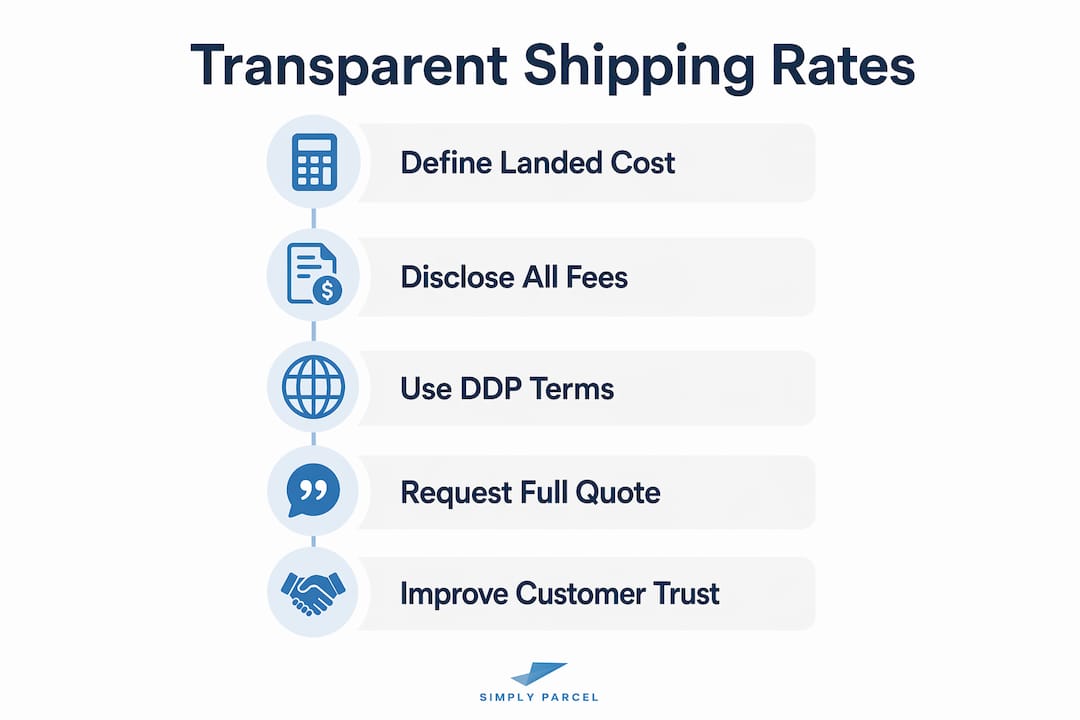
Pro Tip: Before accepting any carrier quote, ask for a full landed cost breakdown in writing. Request that fuel surcharges, remote area fees, and any destination-specific charges be listed separately. Compare this itemized quote against at least two other carriers to spot inconsistencies.
How does shipping pricing transparency affect sales and conversions?
Clear shipping costs at the point of purchase directly reduce cart abandonment and increase completed orders. The psychology is straightforward: customers who see the full cost early make an informed decision to buy. Customers who discover extra fees at checkout feel misled, and most of them leave.
- Show costs on the product page. Displaying shipping fees before the cart stage removes the biggest friction point in the checkout flow. Buyers who see the full price early are pre-qualified and more likely to complete the purchase.
- Use free shipping thresholds strategically. Setting free shipping thresholds 20–30% above your current average order value boosts order size by 15–20%. Customers respond more positively to "free shipping" than to an equivalent monetary discount.
- Communicate DDP terms on international product pages. Telling international buyers that all duties are included removes the fear of a surprise bill at delivery. This single change reduces post-purchase complaints and return requests.
- Audit your checkout flow for hidden fee reveals. Walk through your own checkout as a customer. If any fee appears for the first time on the final confirmation screen, move it earlier.
Showing full shipping costs early pre-qualifies buyers and improves customer lifetime value. This is the opposite of the common misconception that high shipping costs always hurt conversions. A buyer who completes a purchase knowing the full cost is far more satisfied than one who feels surprised at the end.
Mid-size online stores can recover over $18,000 monthly by fixing shipping transparency issues alone. That figure makes the business case for clear pricing more concrete than any abstract argument about trust.
What operational benefits do transparent shipping rates offer businesses?
Clear shipping costs do more than satisfy customers. They give businesses a structural advantage in planning, negotiating, and managing logistics operations.
- Budget accuracy: When you know every fee in advance, your cost-per-shipment figures are reliable. Reliable figures feed accurate cash flow forecasts, which matter especially for small businesses managing tight margins.
- Carrier negotiation power: Detailed freight cost breakdowns empower businesses to negotiate with carriers and identify inconsistencies across shipping lanes. A business that can show a carrier exactly where its quotes diverge from market benchmarks is in a far stronger negotiating position.
- Fewer invoice disputes: When agreed fees are itemized upfront, there is no room for a carrier to add undisclosed charges later. This reduces the time your team spends auditing invoices and chasing credits.
- Reduced customs delays: Transparent pricing enables better landed cost management, which helps avoid customs holds and refused shipments. Incomplete or inaccurate cost declarations are a leading cause of cross-border delays.
Transparent rates protect small business cash flow and client relationships. This is not just a customer preference. It is a core business strategy that directly affects profitability and operational stability.
Pro Tip: Build a simple shipping cost register that tracks every fee component for each carrier and lane you use. Review it quarterly. When a carrier's fuel surcharge or handling fee increases without notice, your register gives you the data to push back or switch providers.
What are the best practices for implementing transparent shipping rates?
Adopting clear pricing does not require rebuilding your entire logistics operation. These four steps give businesses a practical path to full transparency.
-
Adopt a hybrid pricing model. Hybrid shipping pricing models blend flat table rates for predictable shipments with real-time optional upgrades. This approach gives customers a clear base price while allowing flexibility for express or specialty services. The result is transparency without sacrificing conversion.
-
Set free shipping thresholds above your average order value. Calculate your current average order value and set your free shipping threshold 20–30% higher. Communicate this threshold clearly on every product page and in your cart. Customers will actively add items to reach it.
-
Display all fees at the cart stage, not the confirmation stage. Every surcharge, tax estimate, and handling fee must appear before the customer clicks "pay." Use a line-item breakdown rather than a single "shipping and handling" total. Specificity builds confidence.
-
Check regional disclosure regulations. Several markets, including the European Union and Australia, have consumer protection rules that require upfront disclosure of all fees before purchase. Compliance with these standards is not optional. Knowing the rules in your destination markets protects your business from fines and chargebacks.
For businesses shipping internationally from Singapore, understanding how to calculate shipping costs accurately is the foundation of any transparent pricing model. Getting the numbers right before quoting customers prevents the downstream problems that opaque pricing creates.
Logistics providers that operate in the UK market face similar expectations. Port logistics companies in the UK emphasize clear fee disclosures as a baseline requirement for building long-term client relationships. The standard is consistent across markets: show every cost, show it early, and show it in writing.
Key takeaways
Transparent shipping rates are the single most effective tool for reducing cart abandonment, protecting business margins, and building long-term customer loyalty in both domestic and international logistics.
| Point | Details |
|---|---|
| Define landed cost upfront | Show base freight, fuel surcharges, duties, and handling fees before the customer pays. |
| Cart abandonment is measurable | 48% of shoppers abandon carts over unexpected fees; fixing this recovers significant revenue. |
| Free shipping thresholds work | Set thresholds 20–30% above average order value to increase order size by 15–20%. |
| Transparency aids negotiation | Itemized cost data gives businesses leverage to negotiate better carrier contracts. |
| DDP reduces international returns | Delivered Duty Paid shipping cuts return rates by 10–15% on cross-border orders. |
Simplyparcel's take on why pricing clarity changes everything
After working with shippers across Singapore and international routes, one pattern stands out clearly. The businesses that grow consistently are not always the ones with the lowest rates. They are the ones whose customers never feel surprised.
Hidden fees create a specific kind of damage that is hard to repair. A customer who pays an unexpected customs charge at their door does not just return the item. They tell others. They leave a review. They do not come back. The operational cost of that single bad experience far exceeds whatever margin the undisclosed fee was meant to protect.
What I have seen work, time and again, is showing the full cost early and letting the customer decide. Some will not buy. But the ones who do are committed. They complete the purchase, they accept the delivery, and they come back. That is how you build a customer base rather than a transaction log.
The businesses that treat shipping rate transparency as a core policy, not an afterthought, also spend less time on disputes, refunds, and carrier audits. Clarity at the start prevents chaos at the end. That is not a theory. It is what the numbers show, and it is what we see in practice every week.
— Simply
Simplyparcel makes transparent international shipping straightforward
Simplyparcel is built on the principle that you should know exactly what you are paying before you book. Every quote on the platform shows an itemized breakdown of freight, surcharges, and applicable fees upfront, so there are no surprises at delivery. Whether you are an individual sending a parcel abroad or a small business managing regular international shipments, Simplyparcel gives you the cost clarity you need to ship with confidence. Get an instant shipping quote and see every fee before you commit. You can also compare international shipping options across carriers to find the rate and service level that fits your needs.
FAQ
What are transparent shipping rates?
Transparent shipping rates are upfront, itemized quotes that show every cost involved in a shipment, including base freight, fuel surcharges, handling fees, and customs duties, before the customer pays.
Why do hidden shipping fees cause cart abandonment?
48% of shoppers abandon carts when unexpected fees appear late in checkout. Revealing all costs early removes this friction and increases completed purchases.
What is a landed cost in shipping?
Landed cost is the total price of getting a product to the buyer's door, covering freight, insurance, customs duties, and all applicable surcharges. It is the true cost of an international shipment.
How does DDP shipping improve customer experience?
Delivered Duty Paid (DDP) shipping means the seller covers all import duties upfront. This eliminates surprise charges at delivery and reduces return rates by 10–15% on international orders.
How can small businesses benefit from shipping cost transparency?
Clear, itemized shipping costs improve cash flow forecasting, reduce invoice disputes, and give small businesses the data they need to negotiate better rates with carriers over time.