
Shipping transparency is defined as the practice of openly sharing accurate, real-time information about shipment status, costs, delivery timelines, and logistics operations with all stakeholders involved. In logistics, the industry term for this practice is supply chain transparency, and it covers everything from upfront pricing to ethical sourcing disclosures. Unlike basic tracking, true transparency means every party, from the sender to the end customer, has access to the same reliable data at the same time. Platforms like Windward Maritime AI and research from Gartner consistently show that businesses with strong transparency practices outperform those operating with opaque logistics systems.
What is shipping transparency and what are its core pillars?
Industry standards for shipping transparency identify four core pillars: accurate pricing, real-time tracking, delivery window forecasting, and clear returns policies. Each pillar addresses a specific point where information gaps cause friction, cost, or broken trust.
Accurate pricing means customers see the full cost before they commit. Hidden fees for fuel surcharges, remote area delivery, or customs handling destroy confidence and inflate dispute rates. Real-time tracking gives both senders and recipients live updates on shipment location and status. Delivery window forecasting sets realistic expectations rather than vague estimates. Clear returns policies tell customers exactly what happens if something goes wrong.

The table below shows how each pillar looks in practice:
| Pillar | Poor practice | Good practice |
|---|---|---|
| Accurate pricing | Fees added at checkout or on invoice | All charges displayed before booking |
| Real-time tracking | "Your order is on its way" with no updates | GPS-linked status updates every few hours |
| Delivery forecasting | "5–10 business days" with no further detail | Specific delivery window with live adjustments |
| Returns policy | Buried in fine print, no process outlined | Clear steps, timelines, and refund terms upfront |
Businesses that meet all four pillars give customers and partners a complete picture of the shipping process. Those that skip even one pillar create blind spots that generate complaints, chargebacks, and lost repeat business.
How does shipping transparency differ from shipping visibility?
Visibility and transparency are not the same thing. Shipping visibility is an internal capability. It means your logistics team can track where a shipment is at any given moment. Transparency goes further. It means sharing that data openly with external stakeholders, including customers, suppliers, and regulatory bodies.
A company can have full internal visibility and still operate as a black box to everyone outside its walls. Black box shipping without transparency creates operational risks and undermines trust among supply chain partners. Partners are left guessing, customers feel ignored, and problems escalate before anyone can intervene.
The distinction matters for three practical reasons:
- Trust: Customers who receive proactive updates trust the shipper more, even when delays occur.
- Accountability: Sharing data with partners creates mutual accountability across the supply chain.
- Risk reduction: External stakeholders who can see disruptions early can adjust their own operations faster.
Pro Tip: If your logistics team can track a shipment but your customer cannot, you have visibility. You do not yet have transparency. Close that gap by connecting your internal tracking data to a customer-facing portal or notification system.
What are the key benefits of shipping transparency?
The benefits of transparent shipping are measurable and significant. Effective transparency practices reduce "where is my order" customer support tickets by 50% or more. That reduction directly lowers support costs and frees your team to handle more complex issues.
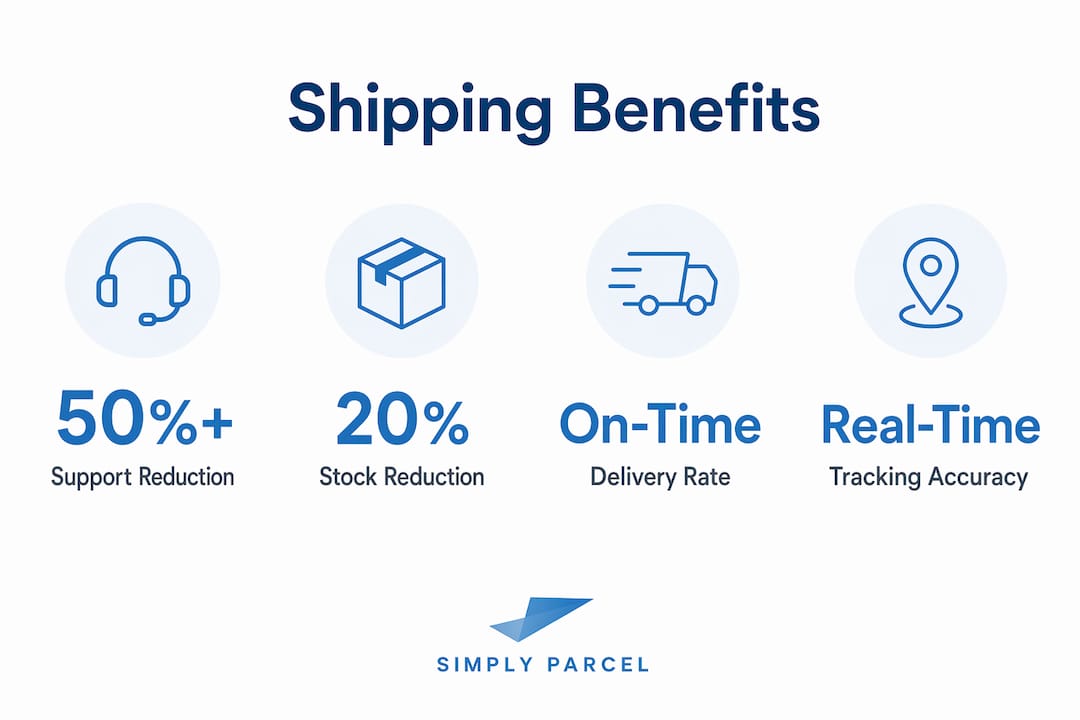
Supply chain efficiency also improves. Companies investing in real-time transportation visibility achieve up to a 20% reduction in safety stock. Lower safety stock means less capital tied up in inventory, which improves cash flow and warehouse utilization.
The financial and strategic benefits extend further:
- Cost control: Upfront pricing and live tracking help businesses budget accurately and avoid surprise invoices.
- Risk mitigation: Early disruption warnings let teams reroute shipments or notify customers before problems escalate.
- Customer loyalty: Buyers who receive accurate, timely information are more likely to return and recommend the service.
- Market intelligence: Data-driven transparency enables benchmarking, informed procurement decisions, and better contract negotiations.
- Market stability: Transparency stabilizes freight markets by helping shippers avoid overpaying during soft markets and under-contracting in tighter ones.
Pro Tip: Use your transparency data as a selling point. Publish average delivery times, on-time rates, and tracking accuracy on your website. Buyers increasingly choose suppliers based on operational reliability, not just price.
What challenges do companies face in achieving true shipping transparency?
Achieving full shipping transparency is harder than it sounds. Most businesses face several overlapping barriers that limit how much information they can share reliably.
-
Data fragmentation: Shipment data sits in separate systems across carriers, freight forwarders, customs brokers, and warehouses. Lack of data standardization and informational silos are the most common barriers to transparency. Without a unified data layer, information is incomplete or contradictory.
-
Technology incompatibilities: Legacy systems used by many carriers and ports do not communicate with modern logistics platforms. Integrating these systems requires significant technical investment.
-
Hidden costs: Transparency enables proactive management of hidden charges like demurrage and detention fees. Without it, these costs appear only after the fact, making budgeting unreliable.
-
Security and compliance risks: Transparency also functions as a security tool, helping detect illicit activities like AIS signal manipulation and suspicious vessel behavior. Companies that lack transparent systems are more exposed to compliance failures.
-
Partner resistance: Some carriers and forwarders resist sharing data because they view it as a competitive disadvantage or a liability.
Pro Tip: Start with the data you already control. Map every internal data source related to shipments, then identify which ones your customers and partners need most. Fix the internal gaps before trying to build external-facing transparency tools.
How can you improve shipping transparency in your supply chain?
Improving shipping process visibility requires a combination of technology, process design, and partner selection. The following steps give you a practical starting point.
-
Implement real-time tracking: Connect your shipments to freight tracking systems that provide live GPS and IoT-based updates. Real-time IoT and GPS integrations have moved from optional features to operational necessities for competitive logistics providers.
-
Adopt upfront pricing: Display all fees, including surcharges and customs estimates, before the customer confirms a booking. Review your transparent shipping rates structure to identify where hidden costs currently appear.
-
Build a control tower: Centralized control tower systems integrate data across departments and partners to eliminate informational silos. A control tower gives every stakeholder a single source of truth.
-
Choose transparent partners: Work with freight forwarders and carriers who share data proactively. Transparency strengthens trust by allowing freight forwarders to act as dedicated advisors rather than just service providers.
-
Use AI and analytics: Predictive analytics tools flag disruptions before they become delays. AI-powered platforms can analyze port congestion, weather patterns, and carrier performance to give you advance warning.
-
Standardize your data formats: Agree on common data standards with your key partners. Standardized formats reduce integration friction and make shared reporting far more reliable.
For a deeper look at tracking technology, the guide on real-time shipment tracking covers the tools and methods in detail. If you are working through broader logistics obstacles, the resource on international shipping challenges addresses the most common barriers businesses face.
Key takeaways
Shipping transparency is the single most effective way to reduce support costs, build customer trust, and improve supply chain efficiency across international logistics operations.
| Point | Details |
|---|---|
| Four core pillars | Accurate pricing, real-time tracking, delivery forecasting, and clear returns policies define effective transparency. |
| Visibility vs. transparency | Visibility is internal tracking; transparency means sharing that data openly with customers and partners. |
| Measurable benefits | Transparent shipping cuts support tickets by 50% or more and reduces safety stock by up to 20%. |
| Main barriers | Data silos, technology gaps, and hidden costs are the top obstacles to achieving full transparency. |
| Practical first step | Build a centralized control tower to unify shipment data before expanding to customer-facing tools. |
Simplyparcel's perspective: transparency is a competitive advantage, not a courtesy
Most logistics providers treat transparency as a customer service feature. I think that framing undersells it entirely. Transparency is an operational discipline that changes how a business manages risk, controls costs, and earns long-term loyalty.
The businesses I have seen struggle most with shipping are not the ones facing the hardest routes or the most complex customs requirements. They are the ones operating with fragmented data and no clear picture of what is happening to their shipments at any given moment. That fragmentation costs money in hidden fees, lost inventory, and customer churn.
The shift toward AI-driven logistics platforms and IoT-based tracking is accelerating this change. By 2026, customers expect the same level of real-time information from a courier service that they get from a ride-sharing app. Meeting that expectation is no longer a differentiator. It is the baseline.
What does differentiate a business is how far it extends transparency beyond the basics. Sharing proactive delay notifications, publishing performance data, and offering fully itemized pricing before booking signals that you operate with integrity. That signal builds the kind of trust that converts first-time shippers into long-term clients.
— Simply
Ship smarter with Simplyparcel
Simplyparcel is built around the transparency principles covered in this guide. Every booking on the platform shows you the full cost upfront, with no hidden fees added after checkout. You get real-time shipment tracking from pickup to delivery, so you always know where your parcel is. Simplyparcel integrates with major courier partners to give you accurate delivery window estimates before you commit. Whether you are an individual sending a parcel abroad or a business managing regular international shipments, the platform gives you the control and clarity you need. Get a shipping quote and see exactly what transparent shipping looks like in practice.
FAQ
What is shipping transparency in simple terms?
Shipping transparency is the practice of sharing accurate, real-time information about shipment status, costs, and delivery timelines with all parties involved. It covers everything from upfront pricing to live tracking updates and clear returns policies.
Why is shipping transparency important for businesses?
Transparent shipping reduces customer support tickets by 50% or more and lowers safety stock by up to 20%, directly improving cost control and customer satisfaction. It also helps businesses detect hidden charges like demurrage fees before they appear on an invoice.
How does shipping transparency differ from shipping visibility?
Shipping visibility is an internal capability that lets your logistics team track shipments. Transparency means sharing that same data openly with customers, partners, and regulators to build trust and accountability across the supply chain.
What are the biggest barriers to shipping transparency?
Data fragmentation, technology incompatibilities between legacy and modern systems, and partner resistance are the most common barriers. Standardizing data formats and adopting a centralized control tower model are the most effective ways to address them.
How can small businesses improve their shipping transparency?
Small businesses can start by displaying all fees upfront at booking, connecting shipments to a real-time tracking platform, and choosing courier partners who share proactive status updates. These three steps address the most visible transparency gaps without requiring large technology investments.