
Shipment automation is defined as the use of integrated technology systems to handle shipping tasks, from order receipt to delivery confirmation, without manual intervention at each step. The industry term for this practice is "shipping automation," and it covers everything from label generation to carrier selection to real-time tracking. Automation is no longer a luxury for modern logistics operations. It is a foundational requirement for any business that wants to stay competitive, reduce errors, and scale without adding headcount. Simplyparcel builds its international shipping platform around these same principles, giving businesses access to automated quoting, booking, and tracking from a single interface.
What is shipment automation and how does it work end to end?
Shipment automation works by connecting your order management system, inventory data, and carrier networks into one unified workflow. When a customer places an order, the system pulls that order automatically into your shipping software, checks inventory levels, and prepares the shipment record without anyone typing a single field. That connection eliminates the lag that typically occurs between order receipt and fulfillment start.
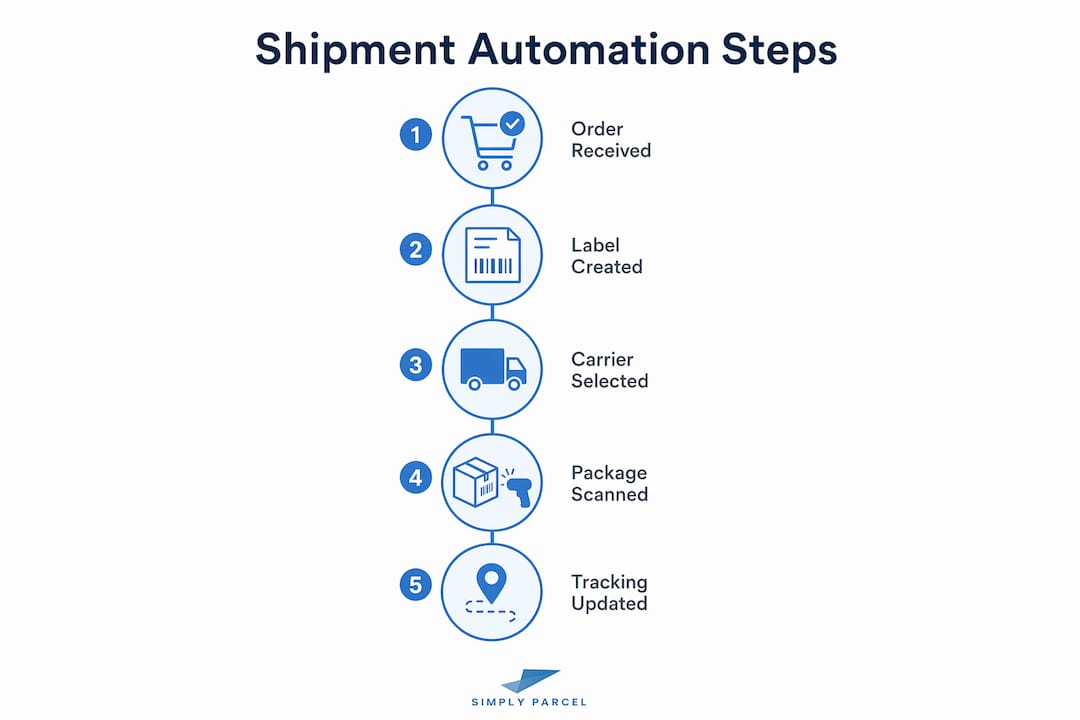
From there, the process follows a clear sequence:
- Order import. Orders flow in from your e-commerce platform or order management system directly into the shipping software. No manual data entry is needed.
- Inventory check. The system confirms stock availability and assigns the correct item to the order, reducing picking errors before a box is packed.
- Label and document generation. Shipping labels and packing slips are created automatically using the order data, cutting out a major source of address and format errors.
- Carrier selection. Rules-based logic evaluates cost, speed, and destination to assign the best carrier for each shipment automatically.
- Auto-tender logic. Advanced freight execution automation uses auto-tender logic to cycle to the next qualified carrier if the preferred one rejects or times out. This keeps freight moving without anyone making a phone call.
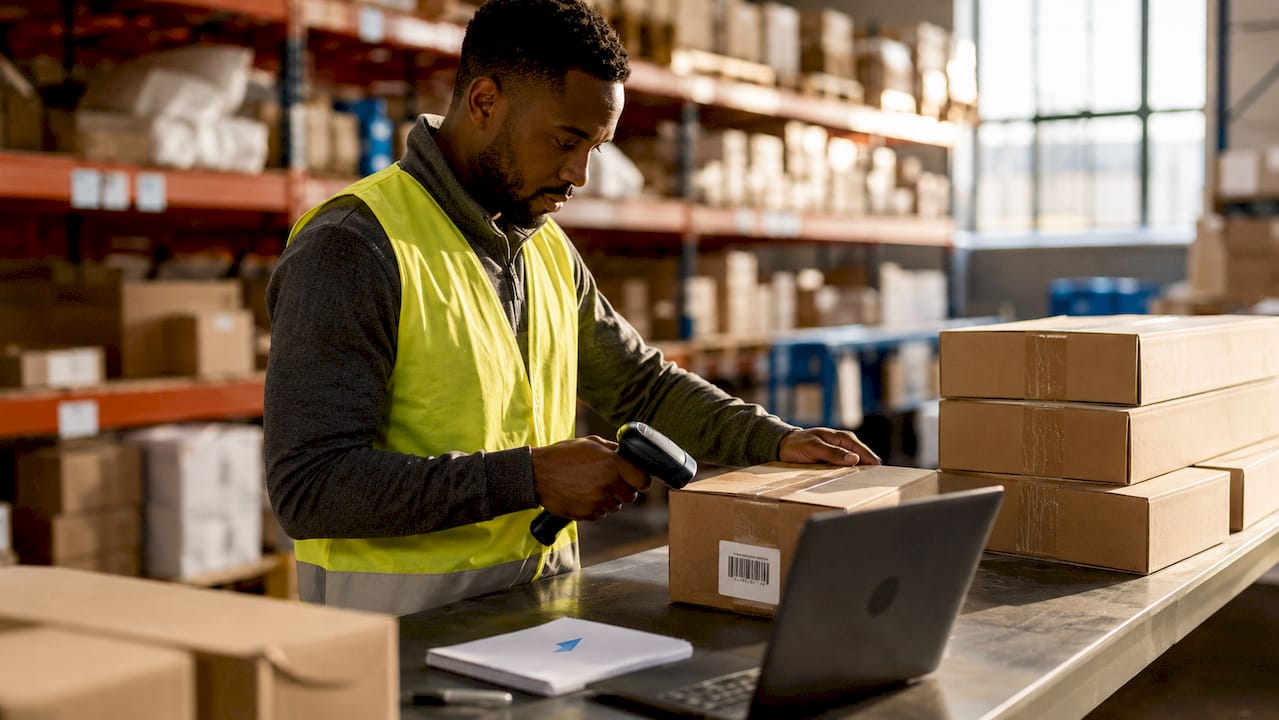
- Dispatch and sorting. Packages move through sorting and dispatch processes, often supported by barcode scanners and automated packaging equipment.
- Real-time tracking. The system pushes live tracking updates to both the business and the customer throughout transit.
Pro Tip: Set up your carrier selection rules to include at least two backup carriers for each shipping lane. Auto-tender logic only works well when you have qualified alternatives already configured in the system.
The full cycle, from order placed to tracking number shared, can complete in minutes with a well-configured automated shipping process. That speed is simply not achievable through manual workflows at any meaningful order volume.
What are the primary benefits of shipment automation for businesses?
The advantages of shipment automation fall into five clear categories, each with a direct impact on your bottom line.
- Error reduction. Automated shipping eliminates manual errors like incorrect address entry and mismatched orders. These mistakes are among the leading causes of customer dissatisfaction and cost overruns in logistics operations.
- Faster processing. Orders move from received to dispatched in a fraction of the time compared to manual workflows. Speed at this stage directly affects customer satisfaction scores and repeat purchase rates.
- Cost control. Connected workflows tie shipment data, carrier actions, rates, and invoices together in one system. That connection lets your team catch cost issues earlier, before they compound into significant overruns.
- Scalability. A manual shipping team hits a ceiling when order volumes spike. An automated system handles volume increases without proportional increases in labor costs or error rates.
- Customer experience. Real-time tracking tools give customers live updates throughout transit. Transparency at this level reduces inbound support inquiries and builds trust in your brand.
The ROI case for automated shipping is strongest when you look at connected workflows rather than individual features. A label printer saves time. A fully connected system that unifies rates, tenders, and invoices catches billing discrepancies, prevents carrier overpayments, and gives managers the data they need to renegotiate contracts. That is where the real financial return lives.
Scalability deserves special attention for growing businesses. A business processing 50 orders per day and one processing 5,000 orders per day face fundamentally different logistics challenges. Shipment automation systems are designed to handle both without requiring you to rebuild your workflow every time you grow.
Which technologies enable effective shipment automation?
Effective shipment automation relies on several technology layers working together. No single tool delivers the full benefit. The power comes from integration.
The core components include:
- Shipping automation platforms. Cloud-based software that connects your sales channels, inventory systems, and carrier accounts into one interface. These platforms handle the logic that decides how each order gets processed and shipped.
- Integration APIs. Application programming interfaces connect your e-commerce store, warehouse management system, and carrier networks. APIs are the pipes that move data between systems in real time.
- Auto-tender and booking functions. Platforms with book-now functionality convert approved rates into instant bookings, cutting execution cycles by removing manual tender follow-up delays. This is one of the highest-value features in freight execution software.
- Label printers and barcode scanners. Physical hardware that works alongside software to process packages accurately at the warehouse level.
- Automated packaging equipment. For higher-volume operations, machines that size, seal, and label packages reduce labor costs and improve consistency.
- Shipment visibility dashboards. Real-time displays that show every active shipment, its current status, and any exceptions that need attention.
Pro Tip: Before selecting a shipping automation platform, map out every system your business currently uses for orders, inventory, and billing. A platform that cannot connect to your existing tools will create more manual work, not less.
Automation reduces manual intervention across rating, tendering, appointments, tracking, document management, and invoice review. That breadth matters because most shipping errors and delays happen at the handoff points between these functions. Connecting them removes those gaps.
The right technology stack depends on your order volume, shipping destinations, and existing infrastructure. A small business exporting goods internationally needs different tools than a large domestic retailer. Start with the integrations that address your highest-friction points first.
How can business owners implement shipment automation?
Implementation works best when you treat it as a phased process rather than a single switch. Rushing the setup creates new problems faster than it solves old ones.
- Audit your current workflow. Map every step from order receipt to delivery confirmation. Identify where delays, errors, and manual handoffs occur most often. These are your highest-priority automation targets.
- Set clear goals. Define what success looks like before you buy any software. Goals might include reducing label errors by a specific count per week, cutting average fulfillment time, or eliminating manual carrier selection for standard shipments.
- Choose a platform with the right integrations. Your parcel booking workflow needs to connect cleanly to your sales channels and carrier accounts. Prioritize platforms that offer pre-built connectors for the systems you already use.
- Configure your carrier rules. Set up rules for carrier selection based on destination, weight, cost thresholds, and delivery speed requirements. Include backup carriers for each lane to support auto-tender logic.
- Train your team. Automation handles routine tasks, but your staff still manages exceptions, carrier disputes, and system alerts. Train them to work with the software, not around it.
- Monitor and adjust. Track your key metrics weekly for the first three months. Look at error rates, fulfillment speed, carrier costs, and customer satisfaction scores. Adjust your rules and configurations based on what the data shows.
A common pitfall is automating a broken process. If your current workflow has fundamental problems, such as inaccurate inventory data or inconsistent product weights, automation will execute those problems faster and at greater scale. Fix the underlying data quality issues before you automate.
Another pitfall is underestimating the importance of avoiding common shipping mistakes during the transition period. The first weeks after go-live carry the highest risk of errors. Plan for extra oversight during that window.
Key Takeaways
Shipment automation is the most direct path for business owners to reduce shipping errors, cut fulfillment costs, and scale operations without adding proportional labor.
| Point | Details |
|---|---|
| Core definition | Shipment automation uses integrated technology to handle shipping tasks from order receipt to delivery without manual steps. |
| Auto-tender logic | Configuring backup carriers in your system prevents shipment delays when a preferred carrier rejects or times out. |
| Connected workflows | Linking rates, tenders, and invoices in one system catches cost issues early and delivers measurable ROI. |
| Implementation order | Audit your workflow first, fix data quality issues, then automate to avoid scaling existing problems. |
| Scalability advantage | Automated shipping systems handle volume spikes without proportional increases in labor costs or error rates. |
Shipment automation is more than label printing
After working in international shipping logistics, the clearest lesson I can share is this: most businesses underestimate what automation actually covers. They think about label printing. They do not think about auto-tender logic, invoice reconciliation, or connected rate management. Those are the functions that separate a business saving a few minutes per order from one that has genuinely transformed its cost structure.
The businesses that get the most from automated shipping are the ones that treat it as a workflow redesign project, not a software purchase. They audit first. They set specific goals. They configure carrier rules with real data. And they monitor outcomes weekly, not quarterly.
The future of logistics is fully connected. Rating, booking, tracking, and invoicing will all feed into one system, with exceptions flagged automatically and approvals handled by rules rather than people. That future is already available to businesses willing to build toward it. The technology exists. The question is whether you are using it.
— Simply
Simplyparcel and automated international shipping
Simplyparcel is built for businesses that need reliable, automated international shipping from Singapore without managing multiple carrier relationships manually. The platform gives you instant access to shipment quotes across multiple courier partners, automatic label and document generation, and real-time tracking from a single interface. You compare rates, book pickups, and monitor deliveries without switching between systems or making manual carrier calls. Simplyparcel supports priority, economy, and connect-plus shipping speeds, so you match each shipment to the right service level automatically. For businesses shipping internationally, that combination of automation and carrier choice is a direct path to lower costs and faster fulfillment.
FAQ
What is shipment automation in simple terms?
Shipment automation is the use of software to handle shipping tasks automatically, including label creation, carrier selection, and tracking updates, without manual input at each step.
How does automated shipping reduce costs?
Automated shipping cuts costs by eliminating manual errors, selecting the most cost-effective carrier for each shipment, and connecting rate data with invoices so billing discrepancies are caught early.
What is auto-tender logic in shipment automation?
Auto-tender logic automatically assigns a shipment to the next qualified carrier when the preferred carrier rejects or times out, keeping freight moving without manual intervention.
Do small businesses benefit from shipment automation?
Small businesses benefit significantly because automation removes the manual workload that limits growth, allowing them to process higher order volumes without hiring additional shipping staff.
What should I automate first in my shipping process?
Start with label generation and carrier selection, as these two functions produce the most errors in manual workflows and deliver immediate time savings once automated.