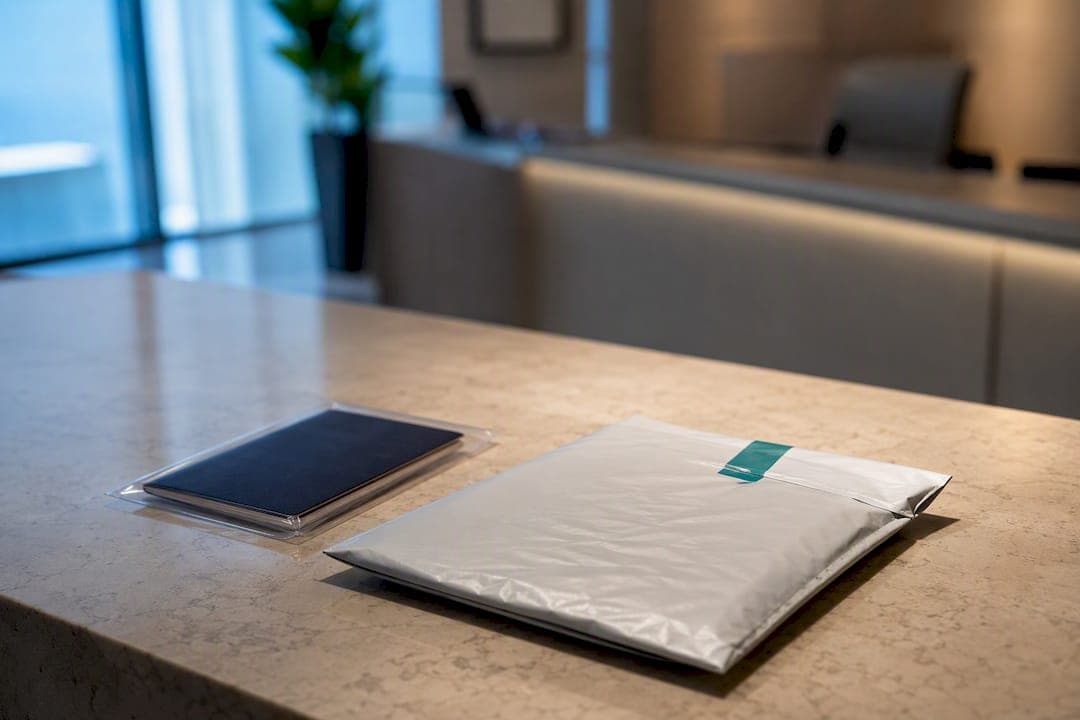
Yes, you can ship a passport internationally, and most passports arrive safely when senders follow carrier rules and destination requirements. The safest default is a tracked express courier service with signature-on-delivery and declared-value cover, sent through a single carrier from pickup to drop-off. Before you book anything, call the receiving embassy or consulate to confirm they accept passports by courier or mail. That one phone call prevents more failed deliveries than any packaging trick.
TL;DR:
- Sending a passport internationally requires confirming destination acceptance and ensuring the shipment is tracked, signed for, and declared with proper value coverage.
- Customs classification varies by country, and some nations restrict or require proof of identity for imported passports, making pre-shipment verification essential.
- Packaging should include a resealable protective sleeve, rigid outer mailer, and tamper-evident sealing to prevent damage, tampering, and customs delays.
- An Air Waybill and, in some cases, a commercial invoice are necessary, with careful attention to accurate recipient details and straightforward descriptions to avoid customs rejection.
- The most reliable courier option involves a single carrier with door-to-door tracking, signature confirmation, and declared value coverage, checked with the embassy or consulate beforehand.
Table of Contents
- How Customs Classifies Passports for International Shipping
- Packaging a Passport for International Shipment
- What Paperwork Do You Need to Ship a Passport?
- Which Shipping Service Should You Choose for a Passport?
- Step-by-Step: How to Ship a Passport Safely
- How Simply Parcel Handles Passport Shipment Logistics
- What to Do If a Passport Is Lost or Delayed in Transit
- Legal Considerations When Shipping a Passport Abroad
- When Should You Ship a Passport vs. Deliver It in Person?
- Ready to Book a Secure Passport Shipment?
- Official Resources to Check Before You Ship
- Sources
- FAQ
How Customs Classifies Passports for International Shipping
Customs authorities sort international shipments into two broad categories: "document" and "non-document." A passport technically holds personal data and travel authority, so some carriers and destination customs offices treat it more like an identity document requiring extra handling than a routine letter. That classification affects which forms you fill out, whether the shipment gets inspected, and how fast it clears customs.
There's no blanket international rule banning passport shipments, but individual countries set their own restrictions. Some nations under sanctions programs won't accept inbound passport parcels at all. Others require the recipient to show proof of identity or a collection appointment before the parcel releases from customs holding.
Before booking, verify two things:
- Ask the destination embassy or consulate directly whether they accept passports sent by courier, and whether they require advance notice or a tracking number.
- Check your carrier's prohibited and restricted destination list, since carrier policy can be stricter than the destination country's own rules.
Skipping this step is the single most common reason a passport shipment gets returned or held indefinitely.
Packaging a Passport for International Shipment
Passports are small, valuable, and easy to damage if packed carelessly. The right materials protect against moisture, bending, and tampering, three things that can get a shipment flagged or rejected on arrival.
Start with the inner layer. Slide the passport into a resealable plastic sleeve or a rigid clear protective sleeve. This keeps out moisture and stops the booklet's pages from creasing during transit.
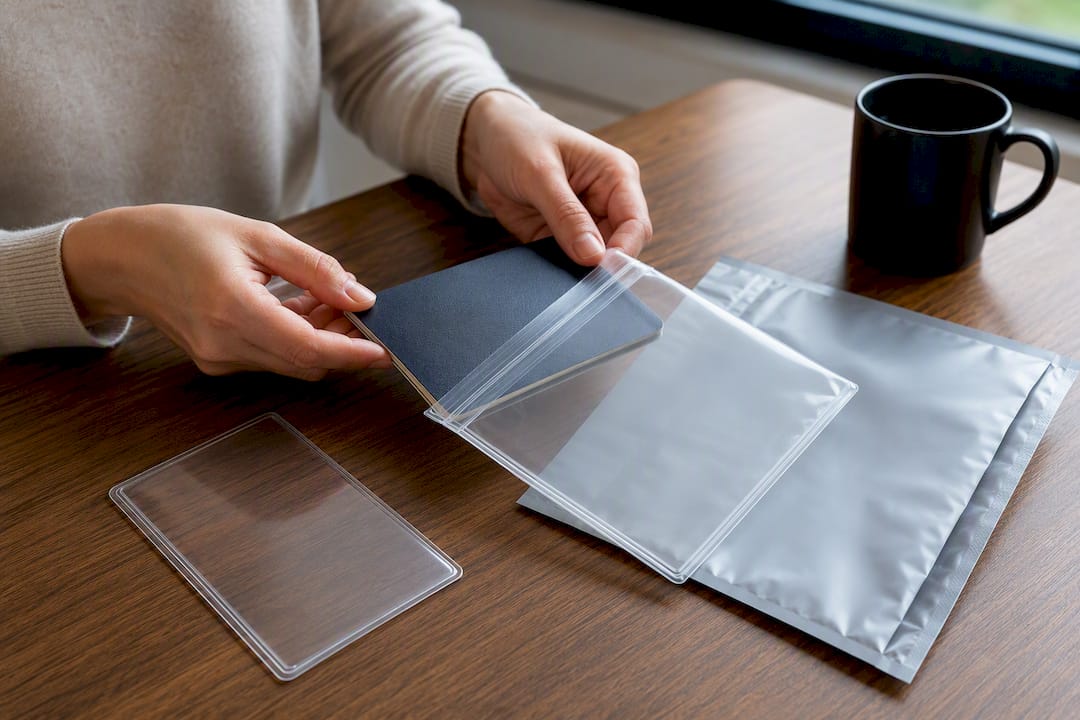
For the outer layer, carrier guidance recommends a rigid mailer or a tamper-evident courier envelope rather than a soft padded bag. Padded mailers are easier to open and reseal without detection, which matters when the contents are a government-issued ID.
Follow this packing order:
- Photograph the passport's photo page and any visa pages before sealing the package.
- Insert it into the plastic sleeve, then into the rigid outer packaging.
- Seal with tamper-evident tape and confirm the seal shows visible damage if disturbed.
- Keep the outward label description simple and accurate for customs, without over-describing the exact contents in ways that invite tampering.
Most carriers also limit shipments to one passport per Air Waybill unless the sender is an authorized visa agency.
Pro Tip: Keep the photos and your tracking number in the same email thread. If anything goes wrong, you'll have everything a carrier or embassy asks for in one place, instead of digging through your phone under pressure.
What Paperwork Do You Need to Ship a Passport?
Every international passport shipment needs an Air Waybill (AWB), the document that records sender, recipient, contents, and delivery instructions. Carriers like FedEx require an AWB and, in many cases, a commercial invoice even for something as small as a travel document.
Get these details right:
- Air Waybill: Double-check the recipient's name, address, and phone number, since errors here cause more delays than almost any other mistake.
- Commercial invoice: Required by some destinations even for non-commercial documents; describe the contents plainly as a "travel document" rather than leaving the field vague, since unclear descriptions can trigger rejection or return.
- Supporting documents: Include a letter of authorization if you're shipping on someone else's behalf, a copy of the passport holder's ID, and a visa-application reference number if the shipment relates to a pending visa.
Singapore-based senders handling this for the first time can walk through the full paperwork checklist in this guide on essential international shipping documentation.
Which Shipping Service Should You Choose for a Passport?
Not every courier option offers the same level of protection, and for a passport, the cheapest option is rarely the right one. National postal services recommend using the fastest trackable express service available rather than standard mail, specifically because express services keep the parcel with a single carrier from pickup to delivery.
That single-carrier routing matters more than people expect. Every handoff between postal networks or sorting facilities is a point where a small parcel can get misrouted or lost. An express courier service typically moves your passport through one company's own network end-to-end, cutting down the number of hands it passes through.
Before you book, require these features:
- Door-to-door tracking with status updates you can check anytime.
- Signature-on-delivery, so the parcel can't be left unattended at the recipient's address.
- Declared-value cover or insurance that matches the practical cost of passport replacement and delay.
- Restricted or careful handling instructions flagged at booking, not requested after the fact.
Confirm with the embassy whether they'll sign for a courier delivery at all, since some consular offices only accept parcels at a service counter. For a broader breakdown of what separates entry-level options from full-service couriers, see this guide on choosing the best international courier from Singapore.
Pro Tip: If the embassy only accepts counter drop-off, ask your courier whether they support that exact delivery type. A signature at the wrong location doesn't count as delivery in the eyes of most insurance policies.
Step-by-Step: How to Ship a Passport Safely
- Confirm acceptance. Call the destination embassy or consulate and ask if they accept courier-delivered passports and what paperwork they expect on arrival.
- Book the right service. Choose a tracked express option with single-carrier handling instead of a multi-carrier economy service.
- Package and document. Use tamper-evident materials, complete the AWB and any required invoice, photograph the contents, and save your receipt.
- Track and confirm. Monitor the shipment until it shows delivered, and keep the proof-of-delivery record. If tracking stalls or shows a delivery you can't verify, contact the carrier immediately and be ready to file a loss claim.
Following this sequence in order, rather than skipping the confirmation call to save time, is what separates a smooth delivery from a week of phone calls to a consulate.
How Simply Parcel Handles Passport Shipment Logistics
The platform provides senders a single place to compare service levels, book a pickup, and generate the paperwork a passport shipment needs. The platform auto-generates the AWB and supporting customs documentation when you book, which removes one of the more error-prone manual steps in the process.
Beyond booking, the platform includes:
- Pickup scheduling options, so you may avoid dropping the parcel at a counter yourself.
- Tracking through delivery, matching the visibility recommended for high-value documents.
- Information on transit timelines across various service tiers, so you can weigh speed against cost before booking.
For SMEs handling recurring international paperwork beyond passports, the documentation guide for Singapore senders covers the broader customs process in more depth.
What to Do If a Passport Is Lost or Delayed in Transit
A delayed passport shipment usually shows up as a tracking status that stops updating or a scan at a facility with no further movement for 48 hours or more. Contact the carrier's claims department immediately once you notice this, and have your AWB number, photos of the contents, and proof of value ready. Most carriers open a trace investigation, which can take several business days depending on the route and the number of customs checkpoints involved.
If the passport is confirmed lost, the situation moves from a shipping issue to a document-replacement issue. Losing a passport in transit carries real consequences: the holder typically needs to report it to the issuing authority so it can be canceled and prevented from misuse, then apply for a replacement, which often takes longer and costs more than a routine renewal.
This is why the photos you take before sealing the package matter so much. They give you and the carrier a clear record of exactly what was shipped, which speeds up both the claims process and the passport-replacement application if it comes to that.
Filing a claim usually requires the declared value on your AWB, so accurate declared value at booking isn't just about compensation. It's what determines how much you can recover if something goes wrong. Keep your tracking number and delivery confirmation until you've heard from the recipient directly, not just when the tracking page shows "delivered."
Legal Considerations When Shipping a Passport Abroad
A passport remains government property in most countries, not the holder's personal possession outright. That distinction matters because sending one internationally can touch rules around identity document handling, not just standard parcel shipping regulations.
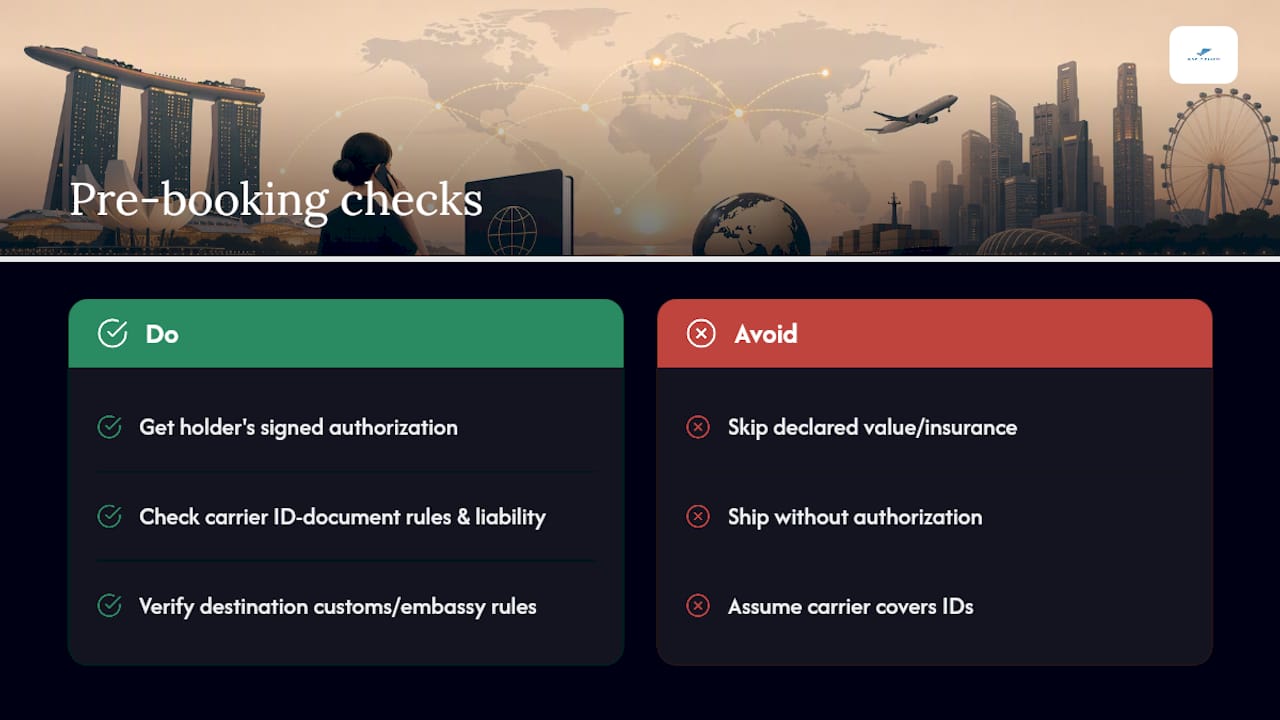
Liability for loss or damage during transit typically sits with the carrier, up to whatever declared value or insurance limit you selected at booking. That's why skipping the declared-value step, even to save a small fee, leaves you with limited recourse if the parcel goes missing. Read the carrier's terms of carriage before shipping, since some explicitly exclude or cap liability for identity documents unless you've purchased additional cover.
Sending someone else's passport, such as an employer handling visa processing for staff, adds another layer. You typically need a signed letter of authorization from the passport holder, and some destination customs authorities will hold or return a shipment that arrives without one. Confirming both carrier rules and destination embassy requirements before booking is the only reliable way to avoid a shipment getting seized or returned mid-transit.
None of this constitutes legal advice for your specific situation. When a shipment involves a minor's passport, a diplomatic document, or a country with unusual entry restrictions, it's worth a direct call to the relevant consulate or a qualified immigration professional before you book anything.
When Should You Ship a Passport vs. Deliver It in Person?
Shipping makes sense for visa processing, embassy returns, and any situation where the timeline gives you a few days of buffer. If you're facing a same-day emergency travel departure, in-person collection at a visa center is usually faster and removes transit risk entirely. Whichever path you choose, keep proof photos, declare an accurate value, require signature-on-delivery, and confirm destination acceptance with the embassy first.
— Simply
Ready to Book a Secure Passport Shipment?
Once you've confirmed the destination will accept a courier-delivered passport, the booking step should be the easy part. The platform lets you compare carrier options, book a pickup online, and get your Air Waybill and customs paperwork generated automatically instead of filling out carrier forms manually. For a document as sensitive as a passport, choose the express tracked service with signature-on-delivery rather than an economy tier, since the small cost difference buys single-carrier handling and delivery confirmation you can actually verify. Get an instant shipping quote and compare your options before your next passport shipment goes out the door.
Official Resources to Check Before You Ship
- Destination embassy or consulate website for passport-acceptance rules.
- Your chosen carrier's prohibited-destination and documentation pages.
- The Harmonized Tariff Schedule for customs classification questions.
Sources
- Can You Mail a Passport Internationally? Rules and Risks - LegalClarity
- Sending passports | NZ Post
- Harmonized Tariff Schedule (reference) - USITC
FAQ
Can I send my passport internationally?
Yes, in most cases. Passports move through courier and postal networks regularly, but some destinations restrict inbound passport shipments, so confirm with the receiving embassy first.
Can you send a passport by FedEx internationally?
Yes, FedEx and similar major carriers ship passports internationally when you complete an Air Waybill and any required commercial invoice, and when the destination allows courier-delivered travel documents.
What is the safest way to send a passport?
The safest approach is a tracked express service with single-carrier handling, signature-on-delivery, and declared-value cover, packed in tamper-evident materials with an inner protective sleeve.
Can you send your passport by mail?
Standard mail is possible in some countries, but it typically lacks the tracking, signature confirmation, and cover that express courier services provide, which makes it a higher-risk option for a document this valuable.