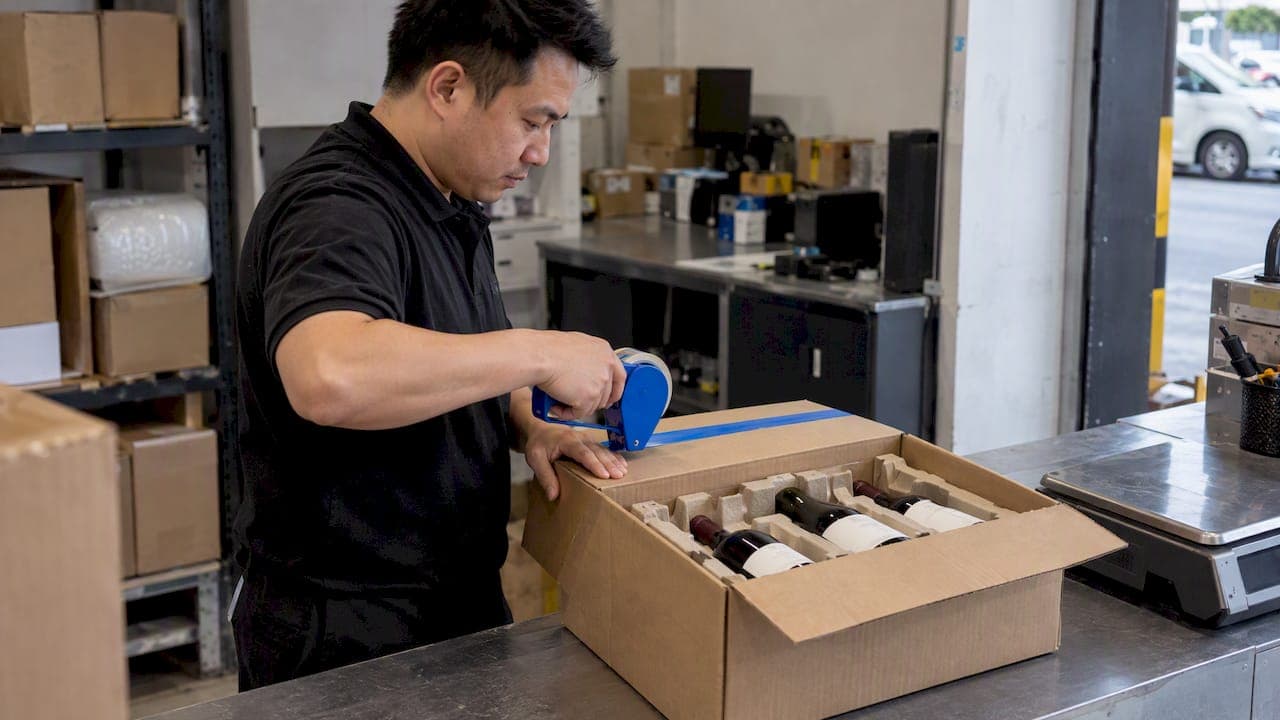
Yes, shipping alcohol from Singapore is allowed, but it is regulated. You need to classify the product correctly, apply for an export permit through TradeNet when the shipment is commercial, follow IATA packaging rules if it travels by air, and present the right export documents. Your first move is simple: confirm the HS code and check that your courier accepts alcohol.
TL;DR:
- Most commercial alcohol exports from Singapore require an export permit via TradeNet, which must be approved before shipment leaves.
- Alcohol strength determines shipping method; beverages at or below 24% ABV are generally accepted for air transport, while higher levels often require sea or road freight.
- Correctly classifying alcohol with an 8-digit HS code and confirming if a Competent Authority approval is needed is crucial to avoid permit rejection.
- Destination country import rules vary and may impose duties, taxes, or quantity limits that affect delivery and cost.
- Confirm with your courier that they accept alcohol at your product's ABV before packing and ensure all documents and permits are ready for smooth clearance.
Table of Contents
- Quick checklist to start your alcohol shipment from Singapore
- Singapore customs and export permit essentials
- Packaging rules that decide whether a courier accepts your shipment
- Classifying alcohol correctly with HS codes and Competent Authorities
- What exporters and senders should budget for
- Booking and handling your shipment through Simply Parcel
- How Singapore regulates alcohol coming into the country
- Restrictions on what and how much alcohol can move through Singapore
- What recipients need to know before accepting a shipment
- What happens if you skip the rules
- Shipping alcohol from Singapore to another country
- What actually trips up first-time alcohol shippers
- Getting your alcohol shipment booked with Simply Parcel
- Sources
- FAQ
Quick checklist to start your alcohol shipment from Singapore
Before you book anything, work through these steps in order. Skipping one is the most common reason shipments get delayed at clearance.
- Register your business with a UEN and activate your Singapore Customs account if you are exporting commercially.
- Decide whether your shipment is personal (hand-carried or a one-off parcel) or commercial, since this changes which permits apply.
- Check the HS code for your product, confirm whether a Competent Authority applies, and determine if an export permit is required.
- Confirm your courier accepts alcohol under IATA rules, choose a shipping speed, then book and generate your labels.
- Gather your documents and keep the permit number on hand for cargo clearance.
Pro Tip: Call or message your courier before you pack anything. Some couriers refuse alcohol outright regardless of ABV, and finding that out after you have sealed a box wastes time.
Singapore customs and export permit essentials
Not every alcohol shipment needs an export permit, but most commercial ones do. You will generally need one if you are exporting dutiable goods, moving stock out of a licensed or zero-GST warehouse, re-exporting alcohol that entered Singapore, or shipping as part of a registered business rather than a one-off personal parcel.
Applications go through TradeNet, the electronic system Singapore Customs uses for permit submissions. If you would rather not manage this yourself, you can appoint a declaring agent to submit on your behalf. Either way, the permit must be approved before the goods leave Singapore, so build in time rather than applying at the last minute.
At cargo lodgement, be ready to present:
- The approved export permit itself.
- A commercial invoice showing value and description.
- A packing list detailing contents and quantities.
- The airway bill or bill of lading, depending on mode of transport.
Permits get rejected for predictable reasons: the wrong HS code, a missing Competent Authority approval, or incomplete supporting documents. Keep your export documentation organized from the start and you avoid most of these problems. For a fuller walkthrough of the permit process, this guide to Singapore export permits covers the HS code checks step by step.
Packaging rules that decide whether a courier accepts your shipment
Alcohol strength determines how it can travel by air, and this single number decides whether a courier will take your parcel at all. Under IATA dangerous goods rules, alcoholic beverages at or below 24% ABV are generally unrestricted for air carriage.
These figures are the baseline. Airlines and individual couriers can and do apply stricter limits than IATA sets, so confirm directly with whoever is carrying your parcel before you commit to a booking.
- Beer and most wine under 24% ABV: generally straightforward for air shipping.
- Spirits and fortified wine between 24% and 70% ABV: retail packaging required, 5 liter cap per receptacle.
- Anything above 70% ABV: not accepted for air transport under IATA rules.
- Larger volumes: sea or road freight, often through a licensed warehouse, is the practical route.
Pro Tip: Wrap each bottle individually, use a rigid secondary container with cushioning, and seal it so leaks cannot spread to other items in the same shipment. Couriers reject damaged alcohol shipments far more often than they reject intact ones.
Classifying alcohol correctly with HS codes and Competent Authorities
Every alcohol shipment needs an accurate 8-digit HS code. This code determines which duties apply, whether a Competent Authority needs to sign off, and whether your permit gets approved without delay. Wine, beer, and spirits each sit under different codes, and getting this wrong is one of the fastest ways to see a permit rejected.
If you are unsure which code applies, Singapore Customs offers an official HS classification ruling for S$75, which removes the guesswork and gives you a documented answer to rely on.
Before submitting your permit, check whether a Competent Authority's requirements apply to your product, since certain controlled goods need separate approval folded into the TradeNet submission.
For export clearance, have these ready:
- Commercial invoice.
- Packing list.
- Airway bill or bill of lading.
- Approved export permit with reference number.
What exporters and senders should budget for
Singapore does not charge GST or export duty on goods leaving the country, according to Singapore Customs guidance on dutiable goods. The costs you need to plan for sit on the other side of the shipment.
Singapore Customs' duty formula for liquors: duty payable equals total quantity in liters multiplied by the combined customs and excise duty rate, multiplied by alcohol strength as a percentage, according to Singapore Customs' duties and dutiable goods overview. This formula matters mainly if you are importing into Singapore rather than exporting out of it, since export shipments themselves are not charged this duty at the Singapore end.
What you do need to plan for is the destination side. Most countries charge their own import duty, VAT or GST equivalent, and sometimes a separate excise tax on alcohol, and these are typically paid by the recipient or buyer unless you have agreed otherwise in your sale terms. If you sell internationally, quote buyers with this in mind, and consider a landed cost calculation so nobody is surprised by charges on arrival.
Booking and handling your shipment through Simply Parcel
Once your permit and packaging are sorted, the booking itself should be the easy part. The platform lets you compare courier options, book a pickup, and generate shipping labels and documentation from one place, with real-time tracking once the parcel is on its way.
Before you confirm a booking, check these:
- Confirm with the chosen courier that they accept alcohol shipments at your product's ABV.
- Have your export permit number ready to attach to the shipment record.
- Choose a shipping speed, such as priority, Connect Plus, or economy, based on how urgent delivery is.
- Pack to IATA receptacle and labeling specs before pickup, not after.
Pro Tip: Print your labels and have your invoice and permit printed or saved on your phone before the courier arrives. A missing document at pickup is the single biggest cause of last-minute rescheduling.
For bulk shipments or movements out of a licensed warehouse, a declaring agent or freight forwarder may be worth appointing, since these moves often involve additional Customs conditions. For most individual and SME shipments, though, booking directly and keeping your documents in order is enough to keep things moving. If you want the fuller procedural picture, this guide to exporting goods from Singapore walks through registration and TradeNet in more detail.
How Singapore regulates alcohol coming into the country
If you are on the receiving end of alcohol shipments, or you handle both inbound and outbound logistics, it helps to understand the import side too. Bringing alcohol into Singapore generally requires an import permit, and certain activities, like wholesale distribution, require the importer to hold the relevant liquor license.
Most individuals receiving a personal parcel of alcohol will not need a license themselves, but commercial importers bringing in stock to sell do. The license holder is responsible for ensuring duties are paid and that the goods meet labeling and safety requirements before they enter general circulation.
This matters for Singapore senders too, since if you are shipping to a business contact or distributor overseas who then re-imports into Singapore, or if you are coordinating a return shipment, the same import permit framework applies on that side of the transaction. Checking with the recipient about their own import permit status before you ship saves both parties a clearance headache.
The practical takeaway: inbound and outbound rules are not identical. Exporting from Singapore focuses on permits, HS codes, and IATA packaging. Importing into Singapore adds the license-holder question on top of those same basics.

Restrictions on what and how much alcohol can move through Singapore
Not all alcohol is treated the same, and quantity matters as much as type. Spirits, wine, and beer are all classified separately under their own HS codes, and each can attract different duty treatment and different Competent Authority checks depending on composition and strength.
Quantity restrictions tend to come from two directions: the carrier's packaging limits under IATA rules, discussed earlier, and any destination country's own import caps on alcohol per shipment or per person. Singapore's own export side does not impose a blanket quantity cap on commercial exports beyond what your permit and HS classification require, but very large volumes are more practically handled through sea freight or a licensed warehouse than through standard courier channels.
If your product sits near these thresholds, confirm the exact ABV on the label before you book, since mislabeling a parcel's contents is one of the fastest ways to have it held at a courier's facility.
What recipients need to know before accepting a shipment
Age verification is a standard expectation when alcohol shipments change hands, even though the exact mechanics depend on the courier and the destination country's own rules rather than a single universal Singapore-wide check. If you are sending alcohol to a recipient, let them know in advance that they or someone present may need to show identification at the point of delivery.
For shipments arriving in Singapore, the general legal drinking age framework under Singapore law applies to anyone purchasing or being supplied alcohol, and this is the same standard that applies whether the alcohol arrives by retail purchase or by parcel. Couriers handling alcohol deliveries commonly build an age check into their delivery process as a condition of carrying these goods at all, since it protects them from liability as much as it enforces the law.
If you are the sender, the practical step is communication: tell your recipient what is coming, when, and that someone of legal drinking age needs to be available to accept it. This avoids failed delivery attempts and repeated pickup fees.
What happens if you skip the rules
Shipping alcohol without the right permit, misdeclaring the contents, or ignoring packaging limits is not a minor paperwork slip. Singapore Customs treats false declarations and unauthorized dutiable goods movements as serious offenses, and penalties can include fines, seizure of the goods, and in more serious cases prosecution, depending on the nature of the violation.
The scenarios that most often trip up otherwise careful senders are declaring alcohol as general cargo to avoid the extra permit step, underreporting quantity or strength on the packing list, or assuming a personal parcel exemption applies when the shipment is actually commercial in nature. None of these save time in practice. A held shipment at a courier facility or a Customs inquiry takes far longer to resolve than applying for the correct permit up front would have.
If you are ever unsure whether your shipment needs a permit, the safer assumption is yes, particularly for anything moving in commercial quantities or on a dutiable goods classification. Checking first with Singapore Customs' export procedures costs you a few minutes. Guessing wrong costs considerably more.

Shipping alcohol from Singapore to another country
The rules covered so far handle the Singapore export side: permits, HS codes, IATA packaging, and documents. But getting your parcel out of Singapore is only half the journey. Every destination country has its own import requirements for alcohol, and these vary widely from one market to the next.
Some countries cap how much alcohol an individual can receive without a commercial import license. Others charge substantial import duty or excise on top of their standard VAT or GST equivalent, which your recipient will likely be responsible for paying on arrival unless you have made other arrangements. A few restrict alcohol imports to licensed importers entirely, making personal shipments effectively impractical regardless of quantity.
Before you ship, it is worth checking the destination country's own customs authority for its specific inbound alcohol rules rather than assuming your Singapore export permit covers you on the other end. The two sides of the shipment are regulated independently, and a permit that satisfies Singapore Customs says nothing about what the destination country will require at its own border.
What actually trips up first-time alcohol shippers
The most common mistake is treating alcohol like any other parcel. Senders skip the HS code check, assume their regular courier will take it, and underpack bottles because nothing ever broke before.
The fix is straightforward: run through the checklist earlier in this guide, confirm carrier acceptance before you pack, and use a platform that generates your labels and documents correctly the first time. If your shipment is large, recurring, or involves a licensed warehouse, reach out to support rather than guessing your way through it.
— Simply
Getting your alcohol shipment booked with Simply Parcel

Most international shipping platforms treat alcohol like any other category, which is exactly how shipments end up stuck at a courier depot with no explanation. The platform provides free doorstep pickup, transparent rates across multiple courier partners, and auto-generated shipping documents to simplify the paperwork side of an alcohol shipment.
To book, here is what to confirm along the way:
- Get a quote and check that your chosen courier accepts alcohol at your product's ABV.
- Attach your export permit reference number to the booking.
- Pick a shipping speed based on your timeline.
- Generate your label and documents, then schedule your pickup.
If your export permit questions go beyond what this guide covers, or you are shipping in bulk, get a shipping quote or reach out to our team through Simply Parcel before you book.
Sources
- Dangerous Goods Regulations (IATA) — alcoholic beverages provisions
- Obtain customs export permit | Singapore Customs
FAQ
Do I need a permit to ship alcohol from Singapore?
Most commercial alcohol exports from Singapore need a Customs export permit, applied for through TradeNet. Personal, non-commercial parcels may face different carrier rules, but it is safer to assume a permit applies and confirm with Singapore Customs before shipping.
How much alcohol can I ship by air from Singapore?
Under IATA rules, beverages at or below 24% ABV are generally unrestricted, while those between 24% and 70% ABV must use retail packaging capped at 5 liters per receptacle and 5 liters total per person.
Does Singapore charge GST on alcohol I export?
No. Goods exported from Singapore, including alcohol, are not charged GST or export duty, according to Singapore Customs' guidance on dutiable goods. Destination-country import duties and taxes are a separate matter and typically fall on the recipient.
What is the HS code and why does it matter for alcohol shipments?
The HS code is an 8-digit classification that determines duty treatment, permit requirements, and whether a Competent Authority needs to approve your shipment. If you are unsure which code fits your product, Singapore Customs offers an official classification ruling for S$75.
Can Simply Parcel help me ship alcohol internationally from Singapore?
Simply Parcel lets you compare courier options, book pickup, and generate shipping labels and documentation for international parcels, including alcohol shipments that meet courier and IATA requirements. You can get a quote through Simply Parcel's booking page and confirm acceptance before you pack.