If you're arriving in Great Britain, you can bring in goods worth up to £390 without paying UK tax or duty, or £270 if you're traveling by private plane or boat. Alcohol and tobacco have their own separate allowances on top of that figure. Go over any limit and you must declare it and pay in full on that category. The rules below cover the exact numbers, where to declare, and what changes are coming for parcels and gifts.
TL;DR:
- Travelers must declare and pay duty on goods exceeding the £390 personal allowance or the £270 allowance for private arrivals, with full-value taxation applied.
- Alcohol and tobacco allowances are separate, with each passenger over 17 having a fixed quota, and allowances cannot be pooled among travelers.
- Goods sent via post for personal use are duty-free under £135, but higher values may incur customs duties and VAT, especially as de minimis thresholds decrease globally.
- Declaring goods online up to 72 hours before travel simplifies border crossing and reduces the risk of seizure and charges on undeclared items.
- Shipping items ahead of travel can avoid allowance limits and customs complexities, but the recipient is still responsible for applicable VAT and duties on arrival.
Table of Contents
- What Is the UK Duty-Free Threshold for Travelers?
- How Do Alcohol and Tobacco Allowances Actually Work?
- Where and When Do You Declare Goods at UK Customs?
- What Happens If You Go Over Your Allowance?
- What Are the Rules for Parcels, Gifts, and Low-Value Imports?
- Practical Tips From a Singapore-Based Shipper
- Shipping Instead of Carrying? Here's a Simpler Option
- Sources
- FAQ
What Is the UK Duty-Free Threshold for Travelers?
The UK duty-free threshold, officially the personal allowance for "other goods," lets most travelers bring in up to £390 worth of goods without paying tax or duty. That figure drops to £270 if you arrive by private plane or private boat rather than a commercial flight or ferry. Alcohol and tobacco sit outside this number entirely, with their own quantity-based limits.
Here's how the main allowances break down for a typical arrival into Great Britain:
| Category | Allowance |
|---|---|
| Other goods (general) | Up to £390 |
| Other goods (private plane or boat) | Up to £270 |
| Still wine | a limited quantity |
| Spirits | a limited quantity |
| Beer | a limited quantity |
| Cigarettes | a limited quantity |
| Cigars | a limited quantity |
| Tobacco (loose) | a limited quantity |
| Gifts sent by post (duty exempt, current rule) | Under £135 |
Gifts sent to someone else follow different value bands than goods you're carrying yourself, and anything brought in for resale counts as a commercial import rather than a personal allowance. That distinction matters more than most travelers realize, since customs treats a £300 painting bought as a gift very differently from the same painting imported for a shop.
How Do Alcohol and Tobacco Allowances Actually Work?
Each allowance is calculated per person, not per family or per group booking. Two adults traveling together can't pool their wine and spirits limits to bring in one large shared allowance. Every traveler over 17 gets their own separate quota for alcohol and tobacco, and anyone under that age gets none at all for either category.
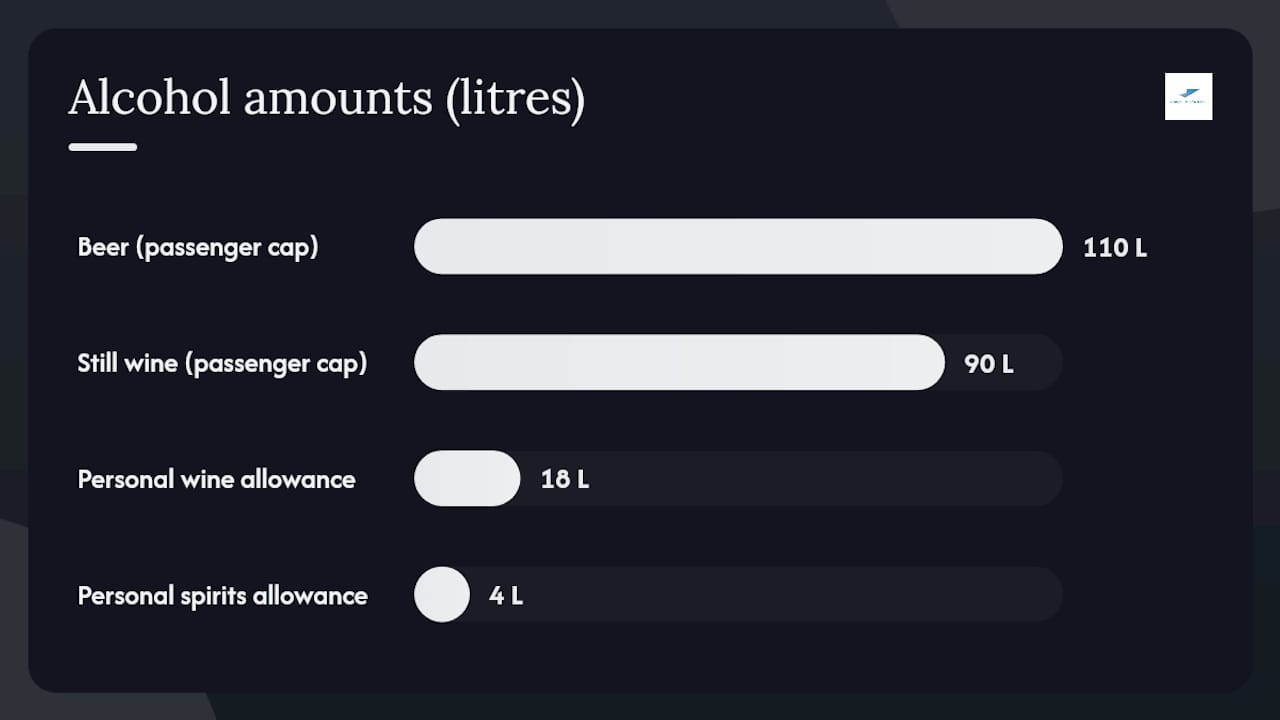
Where people trip up is mixing categories. You don't get the full 18 litres of wine and the full 4 litres of spirits automatically. You can split your allowance proportionally between drink types, so bringing 2 litres of spirits still leaves you room for a partial wine and beer allowance, calculated against the simplified rates HMRC publishes for personal goods.
A few examples make this clearer:
- 4 litres of spirits plus 0 litres of wine and beer uses your full alcohol allowance.
- 2 litres of spirits plus 9 litres of wine splits it roughly in half.
- 200 cigarettes plus 0g of loose tobacco uses your full tobacco allowance without needing to calculate a split.
Statistic to know: HMRC's own tables cap how much you can even declare through the online passenger service, with upper thresholds around 110 litres of beer, 90 litres of still wine, and 10 litres of spirits for personal goods declared through the simplified process. Bring more than that and you're into commercial-quantity territory, which triggers a full customs declaration rather than the passenger service.
Where and When Do You Declare Goods at UK Customs?
You have two windows to declare: online before you travel, or in person at the border. HMRC recommends the online route whenever you know you're over an allowance, because it saves time standing in a queue with a suitcase full of duty-free wine.
Here's the practical sequence:
- Work out whether you're over any allowance using the tables above.
- Go to gov.uk/duty-free-goods and complete the HMRC Online Service for Passengers, available from 72 hours before your arrival.
- Pay the tax and duty owed and save the confirmation email and reference number.
- At the airport or port, use the Green Channel if you've declared and paid, or if you're within every allowance.
- Use the Red Channel, red-point phone, or assisted digital support desk if you haven't declared in advance but need to now.
The Green Channel isn't just for people with nothing to declare. It also covers travelers who pre-declared online and already paid, which is the whole point of the 72-hour window: you walk through without stopping.
Pro Tip: Keep your HMRC confirmation email on your phone and as a screenshot. Airport WiFi and signal are unreliable exactly when you need to prove you already paid.
If you're carrying duty-free liquids bought at another airport and transferring through a UK airport, keep them in the sealed, tamper-evident bag with the receipt visible. Security staff at the transfer point will usually want to see both.
What Happens If You Go Over Your Allowance?
Exceed any allowance and you owe import VAT, customs duty, and any applicable excise duty, calculated on the full value of everything in that category, not just the amount over the limit. Bring back £500 worth of goods against a £390 allowance and you don't pay duty on the £110 difference; you pay on the entire £500.
That full-value rule catches people off guard more than any other part of the system. A traveler who brings back six bottles of spirits instead of the equivalent of four litres doesn't just pay duty on two extra bottles. HMRC calculates the charge across everything in that alcohol category.
- Declare and pay online up to 72 hours in advance, or pay at the border through the Red Channel.
- Check current tariff rates on GOV.UK before you travel if you're unsure what a specific item will cost.
- Undeclared goods over an allowance can be seized in full, not just the portion above the limit.
- Repeated or large-scale non-declaration can lead to further enforcement action beyond seizure.
Paying in advance online tends to be the least stressful option if you already know you're over. It avoids a border conversation entirely and gives you a fixed cost before you even land.
What Are the Rules for Parcels, Gifts, and Low-Value Imports?
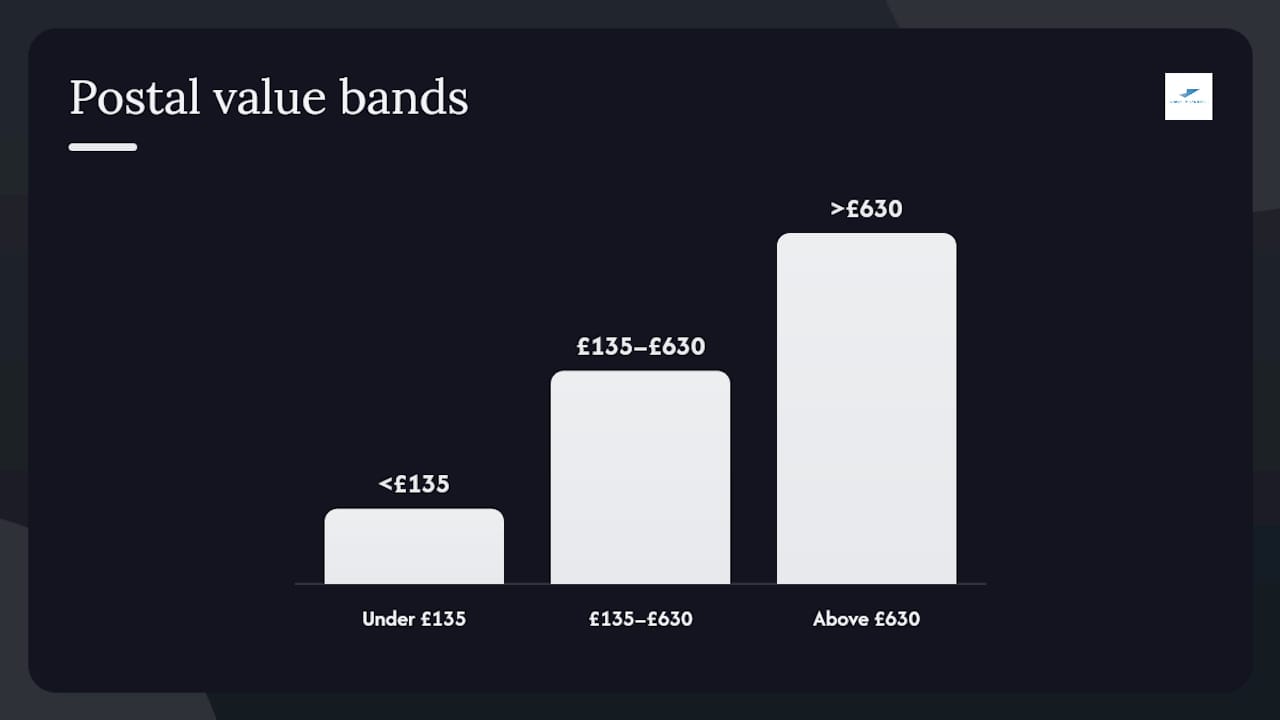
Postal imports and gifts follow value bands rather than the personal allowances that apply to travelers. Historically, parcels valued under £135 have often been treated as exempt from customs duty, though import VAT can still apply depending on the goods and how they're declared. Higher bands, typically £135 to £630 and above £630, carry different duty and VAT treatment depending on the product category.
That £135 exemption isn't fixed in stone. Industry coverage has flagged announced changes to the low-value duty exemption, and logistics commentators expect duties and VAT to apply more often as the UK tightens its de minimis rules in line with a broader global trend. If you're sending or receiving parcels regularly, verify the live status on GOV.UK before you ship, rather than relying on a figure you read somewhere last year.
Where the rule is heading: de minimis thresholds worldwide are shrinking, not growing, and the UK's £135 exemption is part of that pattern rather than an exception to it.
A few practical habits protect senders from surprise charges:
- Label the parcel contents accurately and state the true value, never a lowball figure to dodge duty.
- Distinguish gifts from commercial goods clearly on the customs form, since the thresholds differ significantly between the two.
- Check whether your item's value sits close to a threshold boundary before choosing a shipping speed, since a slower economy option won't change what duty is owed.
Practical Tips From a Singapore-Based Shipper
We see the same two mistakes repeatedly: no photo of the receipt, and a declared value that doesn't match what was actually paid. Both slow down customs clearance and invite closer inspection. Photograph every receipt before you pack, and keep invoice copies with the shipment paperwork.
If you're moving anything heavy, bulky, or close to a duty threshold, shipping it ahead often beats carrying it. You avoid excess baggage fees and skip the allowance math entirely, since the item travels under its own customs declaration rather than your personal one.
— Simply
Shipping Instead of Carrying? Here's a Simpler Option
Carrying goods through customs means tracking your own allowances, paperwork, and receipts every step of the way. If you'd rather send items ahead and skip that hassle, Users can compare courier options, generate shipping labels and customs documentation automatically, and track the parcel in real time, avoiding the need to find a customs form at the last minute.
One thing doesn't change regardless of how the parcel travels: the recipient in the UK is still responsible for any import VAT or customs duty owed on arrival. What Simplyparcel removes is the friction of getting the paperwork right in the first place, whether you choose Priority, Connect Plus, or Economy shipping depending on how fast the parcel needs to land. If you're weighing whether to carry an item or ship it, start with a shipping quote and compare the real cost side by side.
Sources
FAQ
How much can I bring to the UK without declaring?
You can bring goods worth up to £390 (£270 by private plane or boat) plus your separate alcohol and tobacco allowances without declaring anything, as long as you stay within every category.
What happens if you bring 400 cigarettes into the UK?
There is a standard tobacco allowance per person, so bringing more means you must declare the full amount and pay duty and VAT on all the cigarettes, not just the extra amount beyond the limit.
What duty-free can I take to the UK?
You can bring up to 18 litres of still wine, 4 litres of spirits, 200 cigarettes, alongside up to £390 in other goods.
What goods must be declared to UK customs?
Anything over your personal, alcohol, or tobacco allowance must be declared, along with any goods intended for commercial use, restricted items, or cash over the reporting threshold. Simplyparcel handles customs paperwork for shipped parcels, though the recipient still owes any duty or VAT assessed on arrival.