
Packaging in shipping is defined as the system of materials and methods that protects goods from the point of origin to final delivery. The role of packaging in shipping extends far beyond wrapping a product in a box. It determines whether goods arrive intact, how much you pay in freight charges, and whether your shipment clears international regulations like the IMDG Code and IATA standards. Poor packaging causes 10–15% damage rates in international shipping. That figure represents real financial loss and customer trust that is difficult to rebuild.
What is the role of packaging in shipping?
Packaging in shipping performs three core jobs: it protects the product, aids handling throughout the supply chain, and keeps shipments compliant with carrier and regulatory requirements. Every courier, freight forwarder, and customs authority treats packaging as a signal of how seriously you take your shipment. A poorly packed box tells the entire logistics chain that the contents are at risk.
The importance of packaging in logistics becomes clearest when things go wrong. A crushed corner, a moisture-damaged label, or a collapsed pallet can delay a shipment by days and trigger costly claims. Getting packaging right from the start prevents those outcomes. Simplyparcel works with shippers across Singapore and beyond, and the pattern is consistent: shippers who invest in proper packaging spend less on replacements, refunds, and re-shipments.
What are the three functional levels of shipping packaging?
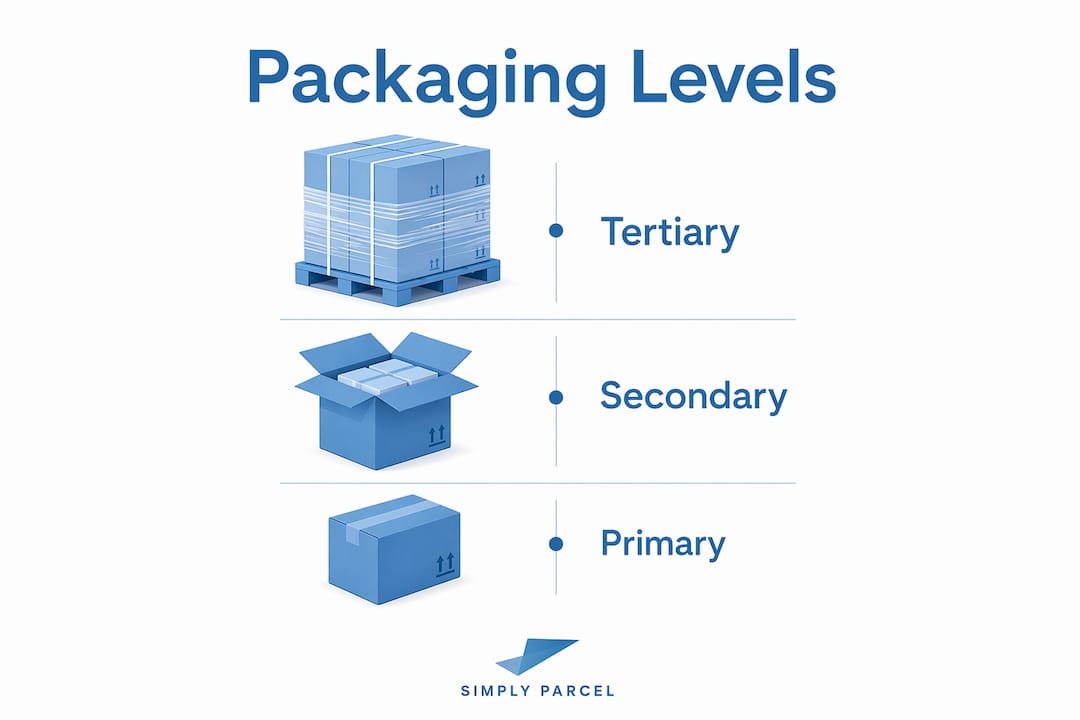
Packaging in shipping is categorized into primary, secondary, and tertiary levels, each serving a distinct function. Understanding all three is the foundation of any effective packaging strategy. Skipping one level creates a weak point that the others cannot compensate for.
Primary packaging
Primary packaging is the material that directly contacts the product. Think of a blister pack around a tablet, a glass bottle around a liquid, or a poly bag around a garment. Its job is to preserve the product's condition and present the brand. For shipping purposes, primary packaging must be sealed well enough to prevent leaks or contamination during transit.
Secondary packaging
Secondary packaging groups primary packages together and adds a layer of structural protection. A corrugated shipper box holding six individually wrapped items is a classic example. This level handles the physical stress of being stacked, sorted, and moved through warehouses. Efficient packaging at this level reduces mis-sorts and stabilizes warehouse flow, especially for mixed-SKU shipments.
Tertiary packaging
Tertiary packaging covers bulk handling, palletization, and long-distance transport. Stretch-wrapped pallets, wooden crates, and reinforced skids all fall into this category. This level is where packaging terminology for movers and businesses becomes especially relevant, since the choices here directly affect freight costs and container utilization.
| Packaging Level | Primary Function | Common Examples |
|---|---|---|
| Primary | Direct product protection and branding | Poly bags, blister packs, bottles |
| Secondary | Grouping and structural protection | Corrugated shipper boxes, cartons |
| Tertiary | Bulk transport and storage | Pallets, wooden crates, stretch wrap |
Using all three levels correctly minimizes logistics friction and reduces dimensional weight charges. Carriers calculate freight based on whichever is greater: actual weight or volumetric weight. Oversized secondary or tertiary packaging inflates that calculation and raises your bill.
How does packaging impact product damage and shipping costs?
The impact of packaging on delivery outcomes is direct and measurable. Without proper protective systems, 10–15% of handling touchpoints in international shipping result in product damage. Each touchpoint, whether a conveyor belt, a forklift, or a cargo hold, applies force to your package. Packaging absorbs that force so the product does not.
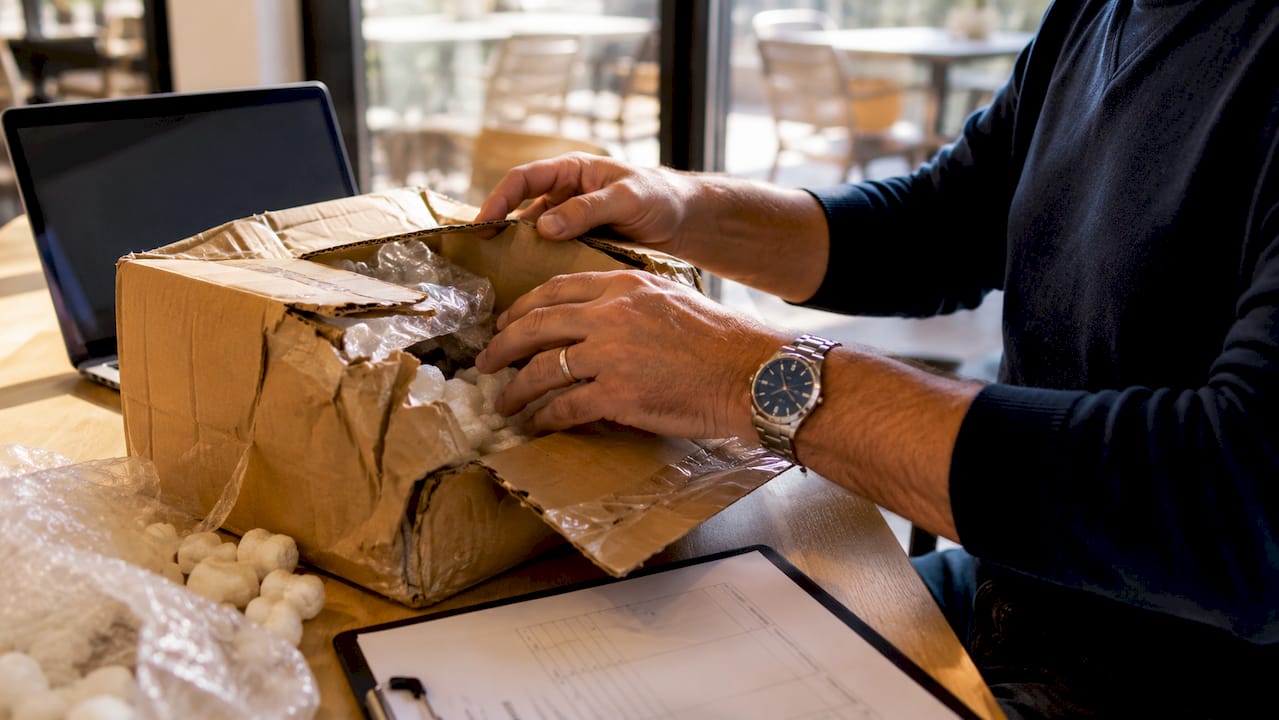
Stacking pressure is one of the most underestimated risks in transit. A box at the bottom of a pallet can bear the weight of dozens of other packages for hours or days. If the box walls are not strong enough, they buckle. That is called "bottom-box crush," and it is a silent failure that often goes undetected until the customer opens the shipment.
Optimized packaging reduces shipping costs by minimizing package volume and handling issues. Carriers charge dimensional weight fees when a package is large relative to its actual weight. A product packed in a box that is two inches too wide on each side can cost significantly more to ship than the same product in a right-sized box. Choosing the correct box dimensions is one of the fastest ways to lower your freight bill.
Pro Tip: Weigh and measure your packaged product before booking a shipment. Compare the actual weight against the dimensional weight formula your carrier uses. If dimensional weight is higher, switch to a smaller box or denser void fill.
Void fill also plays a direct role in cost control. A box with too much empty space allows the product to shift during transit, increasing the chance of damage. Filling that space with the right material keeps the product centered and stable, which protects both the goods and your shipping budget. You can find detailed guidance on this in Simplyparcel's parcel packaging best practices guide.
What packaging solutions and materials optimize shipping efficiency?
Selecting the right packaging materials is not guesswork. Each material has a defined performance rating, and matching that rating to your shipment type is the key to protecting goods without overspending.
Edge Crush Test ratings explained
The Edge Crush Test, or ECT, measures how much stacking pressure a corrugated box can withstand before its walls collapse. A 32 ECT rating suits consumer items, while shipments over 20 lbs or palletized loads require 44 ECT or double-wall construction. Choosing a box with the wrong ECT rating is one of the most common causes of in-transit damage that shippers never trace back to packaging.
Void fill and dunnage options
- Honeycomb cardboard: Creates a rigid, interlocking structure that resists lateral forces and vibration. It is one of the most effective void fillers for heavy or fragile items.
- Air pillows: Lightweight and low-cost, best suited for light consumer goods with minimal shift risk.
- Foam inserts: Custom-cut foam holds products in a fixed position, ideal for electronics or precision instruments.
- Crinkle paper: Eco-friendly and flexible, works well for irregularly shaped items at lower weight thresholds.
Specialized dunnage creates rigid, stable loads that resist the vibrations common in road and air transport. The misconception that more packaging automatically means more safety is wrong. Overpacking with the wrong materials can actually increase movement inside the box.
Moisture and temperature protection
Export shipments require upgraded packaging materials to meet international regulations like IMDG and IATA standards. For shipments crossing climates or traveling by sea, moisture barriers and desiccants are not optional. Ignoring environmental factors like humidity and temperature leads to corrosion, mold, and spoilage. Barrier films and silica gel packets are low-cost additions that prevent expensive losses.
Pro Tip: For international shipments, check whether your destination country requires ISPM 15-compliant wood packaging. Non-compliant wooden pallets or crates can be rejected at customs, causing costly delays.
How can businesses integrate packaging strategy into their shipping operations?
Packaging decisions made in isolation from the rest of the supply chain create avoidable costs. The most effective approach treats packaging as part of logistics planning, not an afterthought. Here is a practical framework for doing that.
-
Audit your current packaging. Measure actual damage rates, return rates, and freight costs by product line. Identify which SKUs generate the most claims. That data tells you where to focus first.
-
Right-size your boxes. Work through your product catalog and match each item to the smallest box that provides adequate protection. This single step reduces dimensional weight charges across your entire shipment volume.
-
Select materials by shipment type. Use ECT ratings to match box strength to product weight and palletization requirements. Choose void fill based on product fragility and transit distance, not habit.
-
Align packaging with regulatory requirements. For international shipments, confirm compliance with IMDG, IATA, and destination-country customs rules before booking. Non-compliant packaging causes delays that cost more than the packaging upgrade would have.
-
Track packaging performance over time. Monitor damage rates, carrier surcharges, and return costs after each packaging change. Packaging strategy effectively lowers fuel consumption and emissions during long-distance shipping, which also supports sustainability reporting goals.
-
Involve logistics and packaging teams together. The people who book freight know what carriers penalize. The people who design packaging know what materials are available. Bringing both groups into the same conversation produces better outcomes than either group working alone.
Reducing package volume and weight also cuts your carbon footprint. Lighter, smaller packages mean fewer trucks, less fuel, and lower emissions per unit shipped. Simplyparcel's eco-friendly shipping options guide covers how packaging choices connect directly to emissions reduction for businesses with sustainability targets.
Key takeaways
Packaging is the single most controllable variable in shipping: it determines damage rates, freight costs, regulatory compliance, and delivery outcomes.
| Point | Details |
|---|---|
| Damage rates are preventable | Poor packaging causes 10–15% damage rates; right-sized boxes and proper void fill eliminate most of that risk. |
| Three levels work together | Primary, secondary, and tertiary packaging each serve a distinct role; skipping one creates a vulnerability. |
| ECT ratings matter | Match box strength to shipment weight: 32 ECT for light consumer goods, 44 ECT or double-wall for heavier loads. |
| Packaging size affects cost | Oversized packaging triggers dimensional weight charges; right-sizing boxes directly lowers your freight bill. |
| Strategy beats instinct | Integrating packaging decisions into supply chain planning reduces damage, cost, and carbon emissions simultaneously. |
What I've learned about packaging as a logistics priority
Packaging is consistently the most underestimated variable in shipping. Shippers spend hours comparing courier rates and almost no time evaluating whether their box will survive the journey. That is a costly imbalance.
The "more is safer" instinct is wrong more often than people realize. I have seen shipments packed with excessive bubble wrap and oversized boxes arrive damaged because the product had too much room to move. The packaging looked substantial. It just was not functional. Proper void fill is crucial to stability, not the volume of material used.
The shippers who get this right treat packaging as a data problem. They track damage rates by product, by route, and by carrier. They test new materials and measure the results. They do not guess. That approach consistently produces lower damage rates and lower freight costs at the same time.
The next shift worth watching is the move toward packaging that is designed for the supply chain from the start, not retrofitted to fit a carrier's requirements. Businesses that build packaging decisions into their product development process will have a structural cost advantage over those that treat it as a last step.
— Simply
Shipping smarter starts with Simplyparcel
Packaging protects your goods. Simplyparcel helps you get them where they need to go at the best available rate. The platform connects shippers in Singapore with major courier partners for international deliveries, with free pickup, automatic label generation, and real-time tracking built in. Whether you are sending a single parcel or managing regular export volumes, you can get an instant shipping quote and compare options across priority, economy, and connect-plus service levels. Simplyparcel takes the complexity out of cross-border logistics so you can focus on packing well and shipping confidently.
FAQ
What is the role of packaging in shipping?
Packaging in shipping protects products from physical damage, moisture, and regulatory non-compliance during transit. It also affects freight costs by influencing dimensional weight calculations.
How does packaging affect shipping costs?
Oversized or poorly designed packaging increases dimensional weight charges, which carriers use to calculate freight fees. Right-sizing boxes and using proper void fill reduces both damage rates and freight costs.
What ECT rating do I need for my shipment?
A 32 ECT box suits most light consumer goods, while shipments over 20 lbs or palletized loads require 44 ECT or double-wall corrugated construction to prevent collapse under stacking pressure.
Do international shipments require special packaging?
Yes. International shipments must meet standards like IMDG and IATA, and some destinations require ISPM 15-compliant wood packaging. Moisture barriers and desiccants are also recommended for sea freight or shipments crossing humid climates.
What is the best void fill for fragile items?
Custom-cut foam inserts hold fragile items in a fixed position and absorb impact most effectively. Honeycomb cardboard is a strong alternative for heavier fragile goods, as it resists lateral forces and vibration during transport.