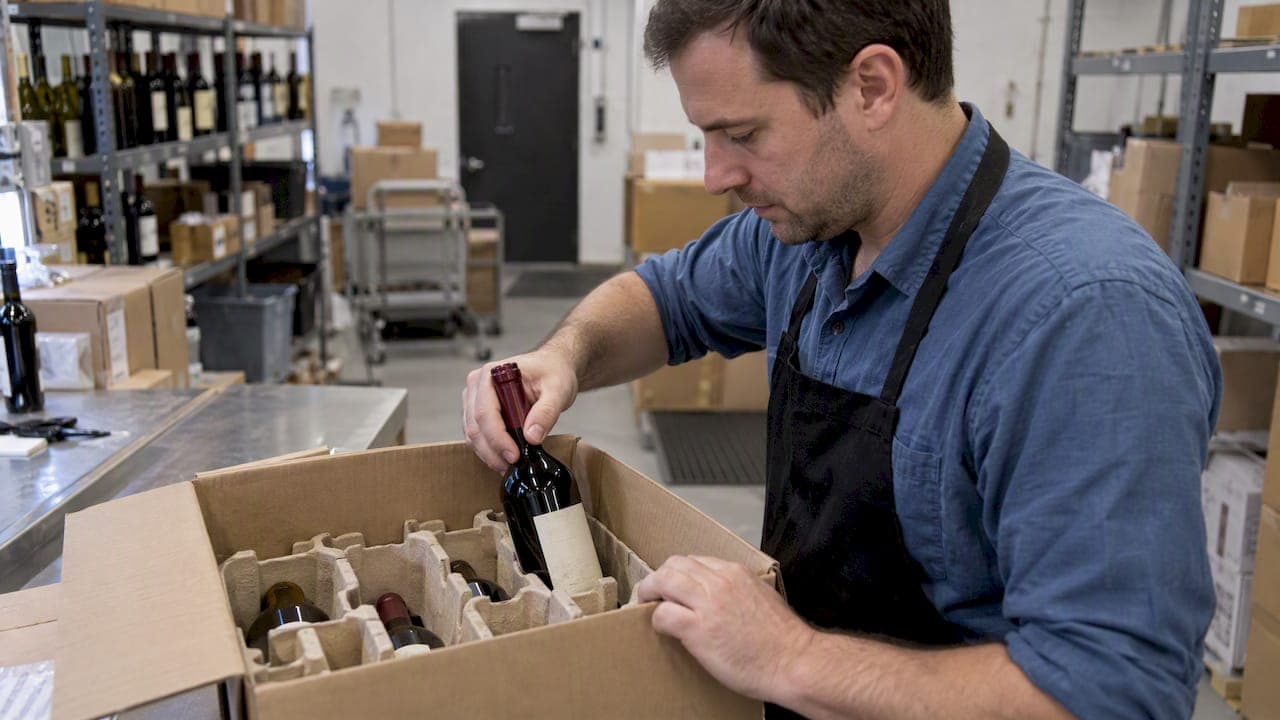
Yes, you can ship wine internationally, but only when the destination's laws permit it, the right carrier accepts alcohol, and your paperwork and packaging are in order. That means confirming import rules before you book, lining up export or import certificates where required, choosing a carrier licensed to move alcohol, and packing bottles to survive temperature swings and rough handling. Budget for duties and taxes too, since they can add significantly to the final cost.
TL;DR:
- Check destination rules for the recipient's location, and verify personal or commercial eligibility, legal age, volume limits, and label requirements before booking.
- Wine entering the European Union generally needs an analysis and origin certificate; US commercial imports require an importer's permit and usually label approval.
- Most postal services, including USPS, prohibit wine shipments except in limited regulated cases, so confirm alcohol permits and route acceptance with a commercial carrier.
- Duties, excise taxes, VAT or GST, and clearance fees can push landed costs above the wine's value, so confirm charges and valuation before dispatch.
- Transit temperatures can reach 44°C in severe conditions, so use cushioned, insulated packaging and consider service that controls temperature for rare wines on hot routes.
Table of Contents
- What to Check First: Destination Restrictions and Eligibility
- Required Documents and Certificates for Export and Import
- Who Can Legally Ship Wine, and Which Carriers Accept It
- Packing, Temperature Control, and Handling Best Practices
- Costs: Duties, Excise, VAT or GST, and Landed Price
- Step-by-Step: Arranging an International Wine Shipment
- How an Online Shipping Platform Simplifies Wine Exports
- When to Upgrade to Specialty Wine Logistics
- Compare Carriers and Generate Your Wine Shipping Documents With Us
- FAQ
- Sources
What to Check First: Destination Restrictions and Eligibility
Before you book anything, confirm that your destination actually allows imported wine for your specific situation. Rules differ sharply depending on whether the wine is going to a private consumer or a commercial importer, and some countries ban personal alcohol imports outright regardless of quantity.
Start with the destination country's customs authority website, since most publish alcohol import thresholds, age requirements, and labeling rules directly. In countries with state or provincial alcohol control, like the United States, you also need to check rules at that level, since direct-to-consumer shipping can be legal in one state and restricted in the next.
Run through these checks before you commit to a shipment:
- Confirm the recipient meets the destination's minimum legal drinking age.
- Check whether the destination caps the volume or number of bottles allowed per shipment.
- Verify whether the wine's label meets the destination's registration or language requirements.
- Determine if the shipment counts as a personal import or a commercial import, since the two paths require different permits.
Skipping this step is the single most common reason international wine shipments get seized or returned.
Required Documents and Certificates for Export and Import
Once you know the destination accepts the shipment, the paperwork becomes the real hurdle. Wine exported to the European Union generally needs a VI-1 document, which confirms the wine's analysis and origin, and some shipments require a full laboratory analysis rather than a simplified form.
For wine leaving the United States, the TTB's export certificate program issues the certificates many destination countries require, and the myTTB electronic system lets exporters generate and submit many of these digitally, though some countries still insist on original signed paperwork rather than an electronic copy.
On the import side into the United States, commercial shipments typically require the importer to hold a Federal Basic Importer's Permit, and the product label itself usually needs a Certificate of Label Approval (COLA) before it can legally enter commerce, according to TTB import guidance.
Combined duties, excise, and taxes on an imported wine shipment can be substantial and may even exceed the value of the wine itself, according to TTB guidance, which is reason enough to confirm paperwork and valuation before you ship rather than after.

Requirements vary by destination, so treat every country as its own checklist rather than assuming one set of documents covers every lane. Our guide to alcohol shipping permits walks through what senders in Singapore typically need to prepare.
Who Can Legally Ship Wine, and Which Carriers Accept It
Not every sender or carrier can legally move wine across a border, and the distinctions matter more than most first-time shippers expect.
- Licensed wineries and exporters generally have the clearest path, since they already hold the permits that let them ship alcohol commercially.
- Freight forwarders and customs brokers can move wine on behalf of a business that lacks its own export license, handling the compliance work for a fee.
- Individual consumers have the narrowest options, since most national postal services, including USPS, prohibit beer, wine, and liquor in the mail except in a small number of regulated circumstances.
Because postal mail is largely off the table, most individual and small-business shippers rely on commercial carriers or licensed wine-shipper programs instead. Before booking with any carrier or forwarder, ask whether they hold the permits for alcohol in your specific lane, whether they handle customs brokerage, and whether they have shipped wine to your destination country before.
Packing, Temperature Control, and Handling Best Practices
Wine is sensitive to heat in ways that are easy to underestimate. A peer-reviewed study tracking commercial shipments found that temperature spikes during transit can reach as high as 44°C in worst-case conditions, and the accumulated heat exposure from a single rough shipment can effectively age a wine by months compared to proper cellar storage.
The OIV's good practices guidance for wine transport reinforces the same principle at a larger scale: minimizing oxidation and temperature variation protects quality, whether you are moving a pallet or a single case.
For bottled shipments, follow these packing fundamentals:
- Use ISTA-tested molded inserts or foam dividers so bottles cannot shift or collide in transit.
- Choose an insulated outer box, adding gel packs for short routes through hot climates.
- Seal every box with tamper-evident tape so damage or opening is obvious on arrival.
- For multi-case or commercial loads, palletize with corner protectors and shrink wrap to prevent crushing.
Pro Tip: Routing through express service windows that avoid long ground holds in hot regions often protects wine quality better than a cheaper, slower option, even without refrigerated transport.
For high-value collections, a specialist wine-moving guide covers crating and climate-controlled handling in more depth than a standard parcel service will.
Costs: Duties, Excise, VAT or GST, and Landed Price
The sticker price of shipping wine rarely reflects what the recipient actually pays once it clears customs. Landed cost typically stacks several charges on top of the shipping fee itself.
- Customs duty, calculated as a percentage of the declared value based on the correct HS code for wine.
- Excise tax, which many countries apply specifically to alcohol regardless of other duties.
- VAT or GST, charged on the combined value of the goods, shipping, and duty in most jurisdictions.
- Carrier clearance fees, charged by the carrier or broker for handling customs paperwork on arrival.
Because these charges compound, a shipment with a low declared value but high excise exposure can end up costing far more at the border than the bottles did at purchase. To avoid surprises, use the correct HS code for wine, declare accurate invoice values, and coordinate with the importer or a customs broker on the destination side before the shipment leaves.
Step-by-Step: Arranging an International Wine Shipment
Once you understand the rules, the actual process follows a consistent sequence.
- Verify destination rules for the recipient's country and, where relevant, state or province.
- Secure the right certificates, whether that is a VI-1, an export certificate, or an importer's permit and COLA.
- Choose a service level and carrier that explicitly accepts alcohol shipments on your route.
- Pack and label correctly, using insulated, cushioned packaging with tamper-evident seals and accurate alcohol-content labeling.
- Track the shipment and manage customs clearance, keeping copies of every certificate ready in case the broker or carrier requests them.
Have your invoice, certificates, and ID ready at pickup, since missing paperwork is the most common cause of delay. For shipments above standard coverage limits or carrying rare vintages, buying additional transit insurance before dispatch is worth the extra line item. Our beginner's guide to international shipping breaks down the booking workflow in more detail.
How an Online Shipping Platform Simplifies Wine Exports
Comparing courier options manually and assembling export paperwork by hand is where most delays creep in. We built our platform to let you compare courier services side by side, then auto-generate shipping labels and customs documentation so fewer details fall through the cracks.
You can schedule a pickup, track the shipment in real time, and access document templates relevant to the alcohol category you are shipping, all from the same booking flow. For a comparison of carrier types and when each makes sense, see our guide to choosing international couriers.
When to Upgrade to Specialty Wine Logistics
Standard courier service with careful packing is enough for most everyday shipments, a few bottles of mid-range wine going to a friend or a small retail order. Specialist wine logistics earns its higher cost when the shipment involves rare or high-value vintages, a long transit through hot climates, or a commercial export that needs insured, temperature-controlled handling from pickup to delivery. If you cannot answer confidently whether your route involves extended heat exposure, treat it as a candidate for the specialist route rather than guessing.
— SP
Compare Carriers and Generate Your Wine Shipping Documents With Us
Arranging an international wine shipment involves more moving parts than most senders expect, from destination eligibility to export certificates to carrier acceptance. We built our platform to handle the comparison and paperwork side of that process so you can focus on getting the shipment right rather than chasing forms.

Through our booking flow, you can:
- Compare courier rates and speeds across different service tiers.
- Generate shipping labels and customs documentation automatically for each booking.
- Schedule a doorstep pickup instead of dropping the shipment off yourself.
- Track the shipment in real time from pickup through delivery.
Get a shipping quote to see rates for your route, or visit our shipping services page to compare service tiers before you book.
FAQ
Can I bring wine from Italy to the US?
Travelers can generally bring wine into the United States for personal use, though federal rules do not set a fixed bottle limit, and state laws may add their own restrictions on quantity. Duties and taxes can still apply beyond a certain value, so declare the wine at customs and check both federal and state rules before you travel.
Which online wine delivery service is the best in the USA?
Direct-to-consumer wine shipping rules vary by state, with some states allowing it freely, others capping volume, and a few prohibiting it entirely, according to the Wine Institute's direct-shipping table. The best option for any shipment depends on the sender's and recipient's states, so check that table for the specific states involved before choosing a service.
Can wine be shipped in the mail?
Most postal services, including USPS, prohibit sending beer, wine, and liquor through the mail except in a small number of regulated circumstances, according to USPS shipping restrictions. Commercial carriers and licensed wine-shipper programs are typically the viable route instead.
How is wine transported internationally?
Wine typically moves by air or ocean freight for commercial volumes and by express courier for smaller parcels, with packaging designed to control temperature and prevent breakage. Commercial bulk transport follows guidance like the OIV's good practices for bulk wine transportation, which covers container materials and handling to protect quality in transit.
Sources
- Good practices guide for bulk wine transportation — OIV
- Effects of heat exposure on wine quality during transport and storage