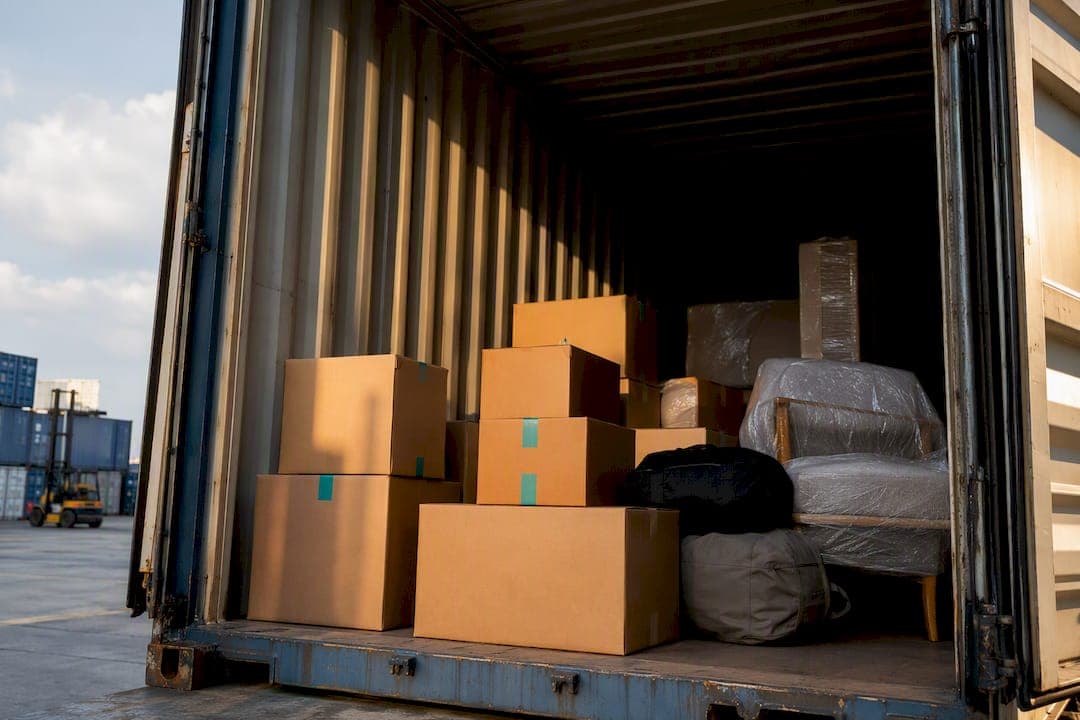
Yes, you can ship personal belongings to Singapore, but the paperwork has to happen in the right order. File your Declaration of Facts (DOF) with Singapore Customs before your unaccompanied goods arrive, and you can claim GST relief. Skip that step, or let your shipment land first, and Customs will reject the relief request and charge you GST on everything. From there, your real decision is method: sea freight, air freight, parcel post, or excess baggage, each with its own cost and timing trade-offs covered below.
TL;DR:
- Filing the Declaration of Facts before your unaccompanied shipment arrives in Singapore is crucial; missing this step will lead to GST charges on all goods.
- Personal effects must be used household items such as furniture, clothing, or electronics, and some items like pets and firearms require separate permits.
- Sea freight is most economical for full households, while air freight offers faster delivery for urgent essentials, and parcel services suit small shipments under a few boxes.
- Costs and transit times vary significantly: sea freight is cheapest but slow, air freight is fastest but expensive, and added charges include handling, insurance, and peak surcharges.
- Choosing experienced movers with clear cost breakdowns and good communication reduces the risk of delays or extra charges during customs inspection and shipping.
Table of Contents
- What Personal Effects Can You Ship to Singapore?
- How Do You File a DOF and Claim GST Relief?
- Which Shipping Method Fits Your Move: Sea, Air, Parcel, or Baggage?
- What Does It Cost and How Long Does Shipping Take?
- How Should You Pack, Insure, and Document Your Shipment?
- How Does Simplyparcel Help You Book and Document Your Move?
- What Does the Full Shipping Process Look Like Start to Finish?
- How Do You Choose a Shipping Company for Personal Belongings?
- What Happens During Customs Inspection on Arrival?
- Can You Ship a Car or Large Appliance as a Personal Effect?
- Where Can You Store Belongings That Arrive Before You Do?
- Publisher Perspective: The Three Mistakes That Cost Movers the Most
- Get an Instant Quote and Book Your Shipment to Singapore
- Sources
- FAQ
What Personal Effects Can You Ship to Singapore?
Personal effects cover used household goods you've owned and used before your move: furniture, clothing, books, kitchenware, and electronics like laptops or TVs you've already unboxed at home. Singapore Customs treats these differently from new commercial goods, which is exactly why the GST relief exists. New items bought specifically to bring into Singapore generally don't qualify the same way, so keep receipts and be honest about what's new versus used.
Some categories need permits or are barred outright. Common restricted or prohibited items include:
- Liquefied petroleum gas (LPG) cylinders and other pressurized containers
- Certain live plants and soil, which require Animal & Plant Health Centre clearance
- Controlled drugs, weapons, and specific chemicals
- Certain food items, particularly meat and produce without the right permits
- Chewing gum (beyond a small personal quantity) and items infringing trademarks
Pets, firearms, and high-value art or jewelry need separate permits or declarations. If you're unsure whether an item qualifies as a personal effect, Simplyparcel's guide to personal effects breaks down the gray areas in more detail.
How Do You File a DOF and Claim GST Relief?
The DOF is the single most important form in your entire move. It's an online declaration to Singapore Customs confirming you're relocating and listing what's coming in unaccompanied, and it must be submitted before your goods physically arrive in Singapore. Submit it late, even by a day, and your GST relief claim gets rejected outright.
Here's the sequence that actually works:
- Gather your documents first. You'll need your passport or NRIC, proof you're moving (an Employment Pass, Dependant's Pass, Student Pass, or an In-Principle Approval letter), and the Airway Bill (AWB) or Bill of Lading (B/L) from your carrier along with a full inventory list.
- Submit the DOF online with Singapore Customs before your shipment departs or, at minimum, before it arrives in Singapore.
- Wait for Customs approval. Once approved, you have 10 working days to apply for the In-Non-Payment (GST Relief) permit via TradeNet.
- For postal shipments specifically, your shipper or appointed agent needs to notify SingPost after Customs approves the DOF, since postal items follow their own tracking rules.
Missing this window is the single most common reason movers lose their GST relief. If your unaccompanied shipment arrives before the DOF is filed, Customs will reject the claim, and there's no appeal that reverses it after the fact. The fix is coordination: tell your freight forwarder your DOF status before they book the vessel or flight, not after. If your agent can't confirm DOF filing, delay the shipment rather than the paperwork. For a full walkthrough of what each customs document needs to say, Simplyparcel's guide to customs declarations is worth reading before you book anything.
Which Shipping Method Fits Your Move: Sea, Air, Parcel, or Baggage?
Your choice comes down to volume, budget, and how fast you need your things.
- Sea freight works best for full households. If you're shipping enough to fill a container, a full container load (FCL) keeps your goods separate and undisturbed. Smaller moves use less-than-container load (LCL), where your boxes share space with other shipments, which lowers cost but adds handling time at both ends.
- Air freight costs more but moves fast, and it's the right call when you need furniture or essentials within days rather than weeks. Door-to-door air freight handles the pickup and delivery logistics for you, while air courier services suit smaller, urgent loads.
- Parcel and Speedpost services make sense for a handful of boxes rather than a whole home. You get straightforward tracking and door delivery without dealing with freight paperwork.
- Excess or unaccompanied baggage through your airline can work if you're bringing a modest amount and want it to land close to when you do, though weight limits and per-kilo fees add up fast on this route.
Larger household moves are where sea freight and consolidated LCL shipments make the most financial sense, while a few suitcases' worth of belongings rarely justify a freight forwarder at all. For a closer look at how sea and air freight pricing actually compares, Simplyparcel's breakdown of freight solutions walks through the math.
What Does It Cost and How Long Does Shipping Take?
Costs vary by method, volume, and how much handling your shipment needs at each end. As a general guide:
- Sea LCL tends to run lower per cubic meter than air, but a full container load carries a flat rate regardless of how full it is, so it only pays off once you're shipping close to a full household.
- Air freight is typically priced per kilogram or per pallet and costs several times more than sea for the same volume, which is the trade you're making for speed.
- Parcel and Speedpost rates scale with weight and dimensions, and stay the most affordable option for anything under a few boxes.
Transit time follows the same pattern: sea freight commonly takes weeks door to door once you include customs processing, air freight measures in days, and parcel services land somewhere in between depending on the destination country's postal handling.
Beyond the method itself, a few variables swing your final price: whether you need door pickup versus dropping goods at a port or depot, whether you add transit insurance, condo lift booking fees if your building requires them, storage charges if your goods arrive early, demurrage if they sit uncleared at port, and peak-season surcharges around major holidays. Booking early during peak relocation windows helps avoid surcharges that last-minute movers often face, according to local moving cost guidance from TopAsiaSelect.
How Should You Pack, Insure, and Document Your Shipment?
Good packing prevents damage claims, and good documentation prevents customs delays. Handle both before your goods leave your current address.
For packing:
- Pack room by room and label each box with its contents and destination room in your new home.
- Keep boxes around 20 kilograms or less. Heavier boxes are harder to handle safely and more likely to get set down roughly.
- Photograph valuables and electronics before they're packed, which gives you evidence if something arrives damaged.
- Set aside an essentials box with documents, chargers, and a few days of clothing so you're not digging through freight for basics.
Pro Tip: Cartons you pack yourself are often excluded from a mover's damage claims, so for anything fragile or genuinely valuable, either use professional packing or document and declare the item clearly before it ships.
On insurance, carrier guidance consistently recommends buying transit protection for shipments carrying anything you can't easily replace, and declaring high-value items individually rather than lumping them into a general inventory count.
Your document checklist before shipping: passport or NRIC, proof of your move (Employment Pass, Dependant's Pass, Student Pass, or IPA letter), the AWB or Bill of Lading, a complete inventory list, and your DOF reference number once approved. Simplyparcel's relocation checklist lays these out in the order you'll actually need them.
How Does Simplyparcel Help You Book and Document Your Move?
Once you know your method and your paperwork is lined up, booking is where most of the remaining friction lives. Simplyparcel exists to remove that friction for people shipping personal items to Singapore.
Here's how the platform maps to the steps above:
- Get an instant quote across multiple courier partners instead of contacting carriers one by one.
- Book your pickup online once you've settled on a method and courier, with scheduling handled through the platform.
- Generate your AWB and shipping documentation automatically, which saves you from recreating the same information across multiple forms.
- Track your shipment in real time from pickup through to arrival in Singapore.
- Choose your shipping speed, whether priority, connect-plus, or economy, based on how urgent your move actually is versus your budget.
The platform aggregates courier partners rather than operating as a single carrier, so users compare multiple options rather than committing to one price. It also helps you generate the documentation your DOF filing and Customs process require, though the DOF submission itself still goes through Singapore Customs directly. Think of the platform as the booking and paperwork layer that sits on top of your customs compliance work, not a replacement for it.
What Does the Full Shipping Process Look Like Start to Finish?
The process runs in a fairly predictable sequence, whether you're moving from three boxes or a full household.
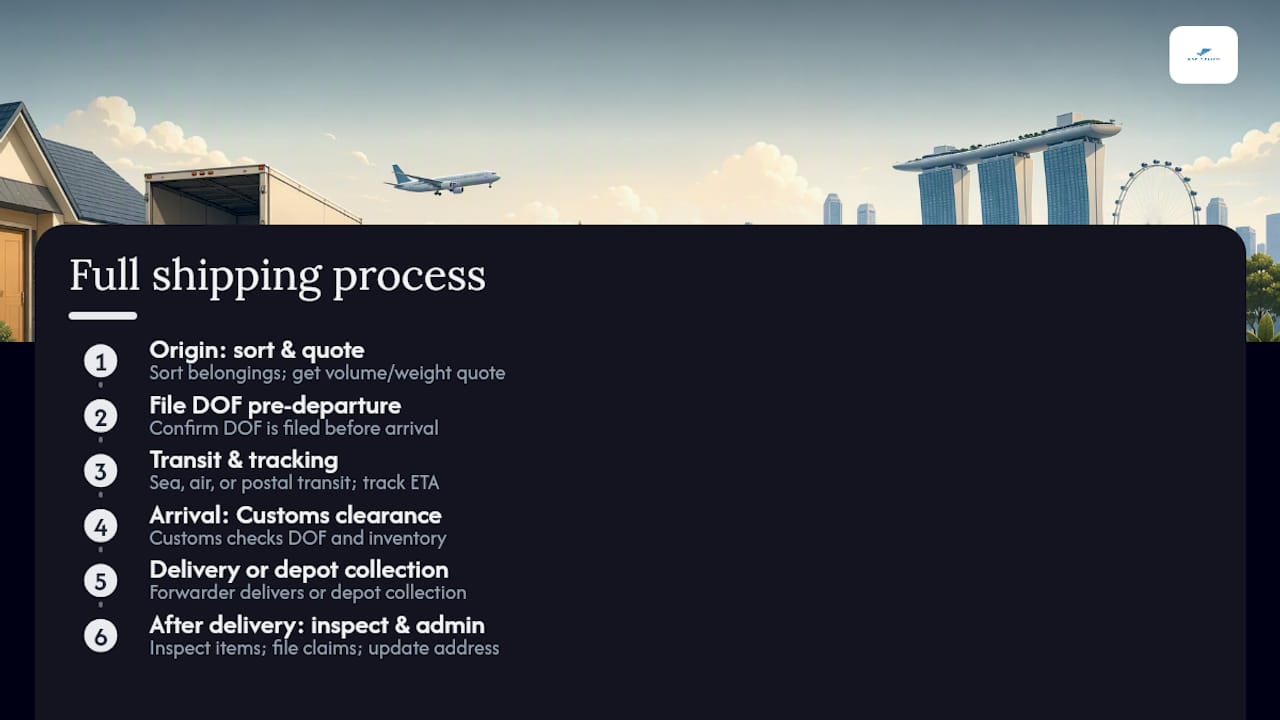
In your origin country, start by sorting what you're bringing and getting quotes based on volume or weight. Before your shipment departs, confirm your DOF is filed with Singapore Customs, since this has to happen before arrival, not after.
During transit, your forwarder or courier handles the movement itself, whether that's a vessel crossing weeks of ocean, a flight taking days, or a parcel moving through postal networks. This is where tracking matters most, since it tells you exactly when to expect arrival and lets you time your DOF and TradeNet permit accordingly.
On arrival in Singapore, your shipment clears through Customs, which checks your DOF approval and inventory against what's actually in the container or parcel. Once cleared, your forwarder or courier arranges final delivery to your address, or you collect from a depot depending on the service level you booked.
After delivery, unpack against your inventory list, check for damage against the photos you took before shipping, and file any insurance claim promptly if something's missing or broken. Administrative tasks like updating your address with government agencies typically take four to eight weeks to fully process, so start those in parallel with your shipping timeline rather than after your boxes arrive.
How Do You Choose a Shipping Company for Personal Belongings?
Not every courier or forwarder handles personal effects the same way, and the wrong pick costs you time even when the price looks right.
Start with experience in personal effects specifically, not just commercial freight. A company that mostly ships pallets of retail goods may not have staff familiar with DOF requirements or the documentation Singapore Customs expects from individual movers. Ask directly whether they've handled household relocations to Singapore recently.
Check whether they help with paperwork or leave it entirely to you. Some forwarders coordinate DOF timing and TradeNet permits as part of their service; others just move boxes and expect you to manage Customs yourself. If you're not confident navigating the DOF process alone, this distinction matters more than the quoted price.
Look at transparency around cost breakdowns. A quote that separates freight, insurance, customs handling, and delivery fees is easier to compare and less likely to surprise you at the end. Vague all-in quotes tend to hide extra charges that surface later as "additional handling."
Finally, weigh tracking and communication. A company that gives you real-time visibility into where your shipment sits, especially during customs clearance, saves you the anxiety of guessing. For readers who want an accredited international mover experienced with cross-border customs work, FIDI's directory lists vetted agents worth checking against local quotes.
What Happens During Customs Inspection on Arrival?
Every unaccompanied shipment gets checked against its declared inventory once it lands in Singapore, though the depth of that check varies. Customs compares your DOF filing, your inventory list, and the physical contents of your shipment. If everything matches and your GST relief permit is in order, clearance tends to move quickly.
Discrepancies slow things down. If your inventory lists items that aren't actually in the shipment, or if there are items present that weren't declared, expect additional questions and possibly a physical inspection of specific boxes. This is one more reason your inventory list needs to be accurate rather than a rough estimate typed up in a hurry.
Restricted or ambiguous items, like plants, certain electronics, or anything resembling a controlled substance, are more likely to trigger a manual check regardless of how clean the rest of your paperwork is. If you've declared these separately with the right permits already in hand, the inspection is usually a formality rather than a delay.
Once cleared, your forwarder or courier arranges final delivery, or notifies you for pickup if you're using a service that requires collection at a depot. Keep your DOF reference number and inventory list accessible during this window. Customs officers or your agent may ask for them again even after initial approval, particularly if your shipment was flagged for any reason during transit.
Can You Ship a Car or Large Appliance as a Personal Effect?
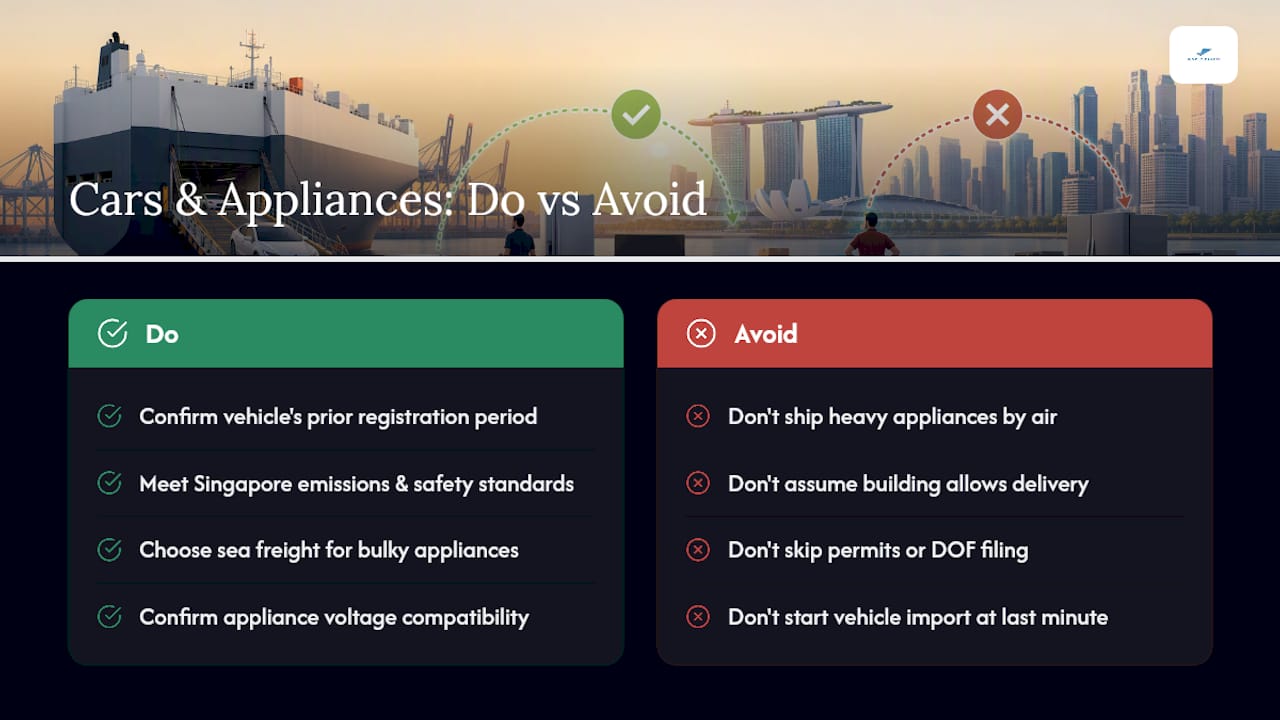
Vehicles and major appliances technically qualify as personal effects, but they come with rules that a suitcase of clothing never triggers. A car generally needs to have been registered and used by you overseas for a minimum period before import, along with compliance checks for Singapore's vehicle standards once it lands, including emissions and safety requirements that differ from many other countries.
Large appliances, think refrigerators, washing machines, or full entertainment systems, ship fine as personal effects but change your logistics math significantly. Their weight and bulk push you toward sea freight almost automatically, since air freight pricing per kilogram makes shipping a washing machine by air rarely worth it. You'll also want to confirm voltage compatibility before you ship, since appliances built for a different electrical standard may need conversion or simply won't work safely in Singapore.
Delivery logistics matter more here too. Heavy items need condo lift bookings arranged in advance if you're moving into a high-rise, and some buildings charge a fee for using service lifts to bring in bulky furniture or appliances. Confirm this with your building management before your shipment arrives, not after it's sitting in a loading bay with nowhere to go.
If you're shipping a vehicle specifically, budget significant lead time. Between DOF filing, vehicle-specific permits, and the physical shipping timeline, this is one category where starting early isn't optional.
Where Can You Store Belongings That Arrive Before You Do?
Timing rarely lines up perfectly. Your shipment might clear customs weeks before your new place is ready, or your move-in date might slip after your goods are already in Singapore.
Most freight forwarders and moving companies offer short-term storage as part of their service, holding your shipment at a warehouse until you're ready for delivery. This tends to be the simplest option since it avoids a second handling step between customs clearance and final delivery.
Independent self-storage facilities across Singapore are another route, particularly if you need longer-term storage or want to store only part of your shipment while the rest goes straight to your new address. These facilities vary in size options and climate control, which matters if you're storing electronics or wooden furniture for an extended period.
Whichever option you choose, ask about storage fees upfront and how they're calculated, since daily or weekly rates can add up faster than expected if your move-in date keeps shifting. Also confirm who handles the final delivery leg from storage to your new address, since some forwarders include this and others charge it separately as a second delivery fee.
Publisher Perspective: The Three Mistakes That Cost Movers the Most
The mistakes that hurt movers most aren't shipping errors. They're timing errors: filing the DOF too late, under-declaring inventory to save a few dollars, and booking freight during peak windows without buffer time.
A workable planning rule: start sea freight arrangements 8 to 12 weeks out, air freight 1 to 3 weeks out, parcel shipments 3 to 7 days out, and begin your DOF process 2 to 4 weeks before your goods are due to arrive; for additional tips on managing your move timeline, see Tips for Stress-Free Moving - AAA Movers.
Pro tip: talk to your forwarder about DOF timing before you book the vessel or flight, not after.
— Simply
Get an Instant Quote and Book Your Shipment to Singapore
Comparing courier rates one by one, then recreating the same shipment details across separate booking forms, is where most relocation shipping loses hours it didn't need to lose. Simplyparcel pulls quotes from multiple courier partners into one place, so you see priority, connect-plus, and economy pricing side by side instead of chasing separate quotes from separate companies.
From there, booking a pickup takes minutes, and the platform generates your shipping labels and documentation automatically rather than leaving you to fill out the same details twice. If you're ready to move forward, get an instant shipment quote, schedule your pickup, and let Simplyparcel handle the paperwork generation while you focus on your DOF filing with Singapore Customs.
Sources
- Do I qualify for GST relief? | Singapore Customs
- Sending unaccompanied items | Singapore Customs
- Changing your address with ICA and agencies Singapore | Skymedia
FAQ
Can You Ship Personal Belongings to Singapore?
Yes. Singapore permits personal effects like furniture, clothing, and electronics, provided you file a Declaration of Facts with Customs before your unaccompanied shipment arrives to qualify for GST relief.
How Much Does It Cost to Ship Belongings to Singapore?
Cost depends heavily on method and volume: sea freight suits large households at a lower per-volume rate, air freight costs more but arrives faster, and parcel services stay cheapest for a handful of boxes. Request quotes based on your actual volume through a platform like Simplyparcel rather than relying on generic estimates.
How Do You Mail Small Items in Singapore?
For a few boxes rather than a full household, SingPost's Speedpost and VPost services handle small parcel shipping domestically and internationally, with rates based on weight and dimensions. Check SingPost directly for current tariffs before you ship.
How Much Does VPost Cost?
VPost pricing varies by weight, package dimensions, and destination country, so there's no single flat rate. Check SingPost's official site for current tariff tables before committing to a shipment.
What Happens if I Miss the DOF Deadline?
If your shipment arrives before your DOF is approved, Customs rejects your GST relief claim and you'll owe GST on the full shipment value. Coordinate DOF filing with your forwarder before your goods depart, not after they've left port.