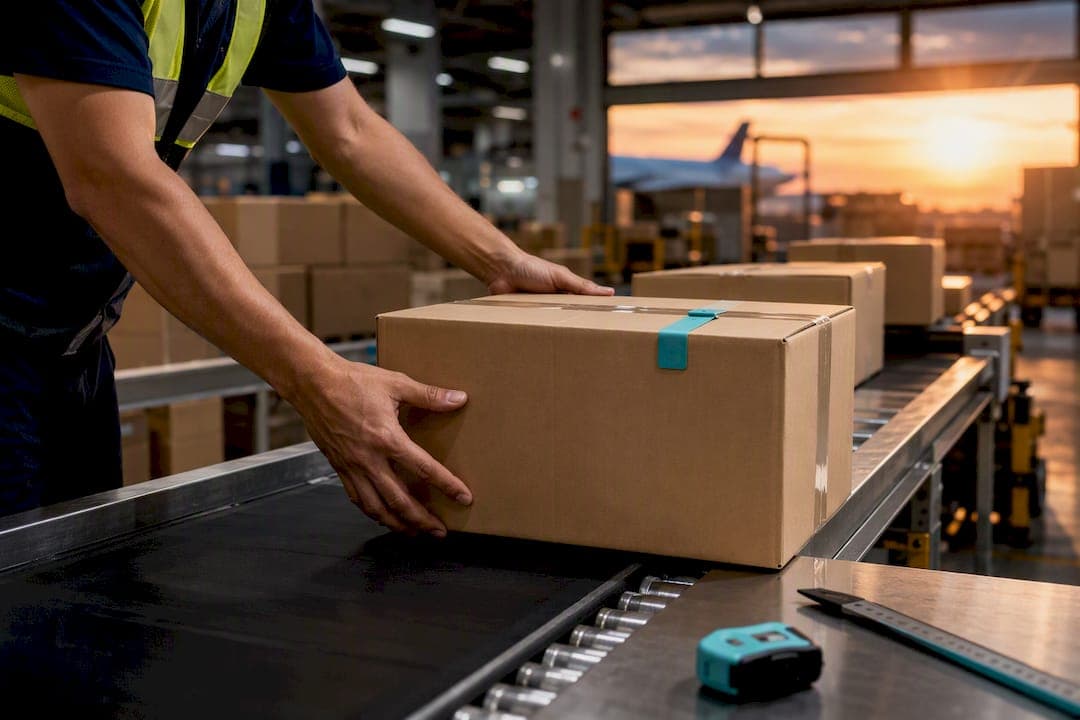
For most senders in Singapore, the fastest way to choose a courier is to use a local shipping aggregator that compares carrier rates, auto-generates customs documentation, and schedules pickup for you. This approach beats calling individual couriers one by one because it puts transit times, total cost, and tracking quality side by side in minutes. Enter your parcel's weight and destination into a platform like Simply Parcel and start comparing quotes before you commit.
TL;DR:
- Comparing courier rates through an aggregator saves time and reveals the true cost, including surcharges and delivery times, for both express and economy services.
- Transit times range from 2 to 5 days for express couriers, 3 to 10 days for aggregator economy options, and 7 to 21 days using postal services, depending on service level and destination.
- Volumetric weight can significantly increase shipping costs for bulky but lightweight parcels, so proper packaging and using built-in calculators help prevent overcharges.
- Accurate customs documentation and HS codes are critical to avoid delays, fines, or seizure, with automated tools reducing the risk of errors.
- For most situations, DDP shipping avoids unexpected import charges for customers, while booking through a single platform simplifies comparison, scheduling, and tracking.
Table of Contents
- How Do You Choose a Courier in Singapore for International Shipping?
- What Do Shipping Costs and Delivery Times Look Like From Singapore?
- How Does Volumetric Weight Affect Your Shipping Cost?
- What Customs Documents and HS Codes Do You Need?
- How Do You Book a Courier and Schedule a Pickup?
- What Courier Should You Choose for Common Singapore Shipping Scenarios?
- Why Aggregators Make Sense for Singapore Shippers
- Compare Rates and Book Your Shipment With Simply Parcel
- Sources
- FAQ
How Do You Choose a Courier in Singapore for International Shipping?
Four factors decide whether a courier is right for your shipment: speed, reliability, total cost, and destination coverage. Weigh them in that order based on what's actually at stake. A time-sensitive contract needs speed above all else; a routine restock order to a regional warehouse can prioritize cost.
Reliability shows up in tracking quality and how a courier handles exceptions, not just its on-time percentage. A platform that gives you live tracking and responsive support when a parcel gets held at customs is worth more than a slightly cheaper option that leaves you guessing. Coverage matters too. Not every courier serves every country well, and some routes get better rates through specific carrier partnerships than others.
When you're reading a quote, check these details before booking:
- Transit days quoted for the specific destination, not a generic regional average
- Whether tracking updates in real time or only at major checkpoints
- Pickup fees, fuel surcharges, and remote area charges added after the base rate
- Insurance options and what they actually cover if a parcel is lost or damaged
Watch for red flags: a courier with no tracking number issued at booking, vague answers about who handles customs clearance, or a quote that doesn't itemize surcharges. These usually mean higher costs or longer delays later. Comparing multiple courier providers on one screen, rather than trusting a single company's pitch, is the most reliable way to select the right international courier from Singapore.
Pro Tip: Ask any courier or aggregator what happens if a parcel is stuck in customs. A vague answer is a bigger warning sign than a slightly higher price.
What Do Shipping Costs and Delivery Times Look Like From Singapore?
Cost and speed move together, and knowing the bands helps you pick a service level instead of overpaying by default. For a standard 1kg parcel from Singapore, express couriers typically run between S$60 and S$90 or more, delivering in 2 to 5 business days. Aggregator-based economy services usually land between S$50 and S$65, with transit taking 3 to 10 business days. SingPost's postal options often cost S$20 to S$35, but transit can stretch from 7 to 21 business days.
In numbers: Express delivery from Singapore averages 2 to 5 business days at S$60 to S$90+ for 1kg. Aggregator economy runs 3 to 10 days at S$50 to S$65. Postal service takes 7 to 21 days at S$20 to S$35.
These figures never tell the full story on their own. A fast shipping option that looks expensive upfront can still beat a "cheap" postal option once you factor in a lost-parcel claim with no tracking.
How Does Volumetric Weight Affect Your Shipping Cost?
Volumetric weight, also called dimensional weight, is how carriers price bulky but light parcels. Instead of charging by the number on your bathroom scale, they calculate a weight based on the parcel's dimensions using a formula like length × width × height (in centimeters) divided by a dimensional factor, commonly 5000 or 6000 depending on the carrier.
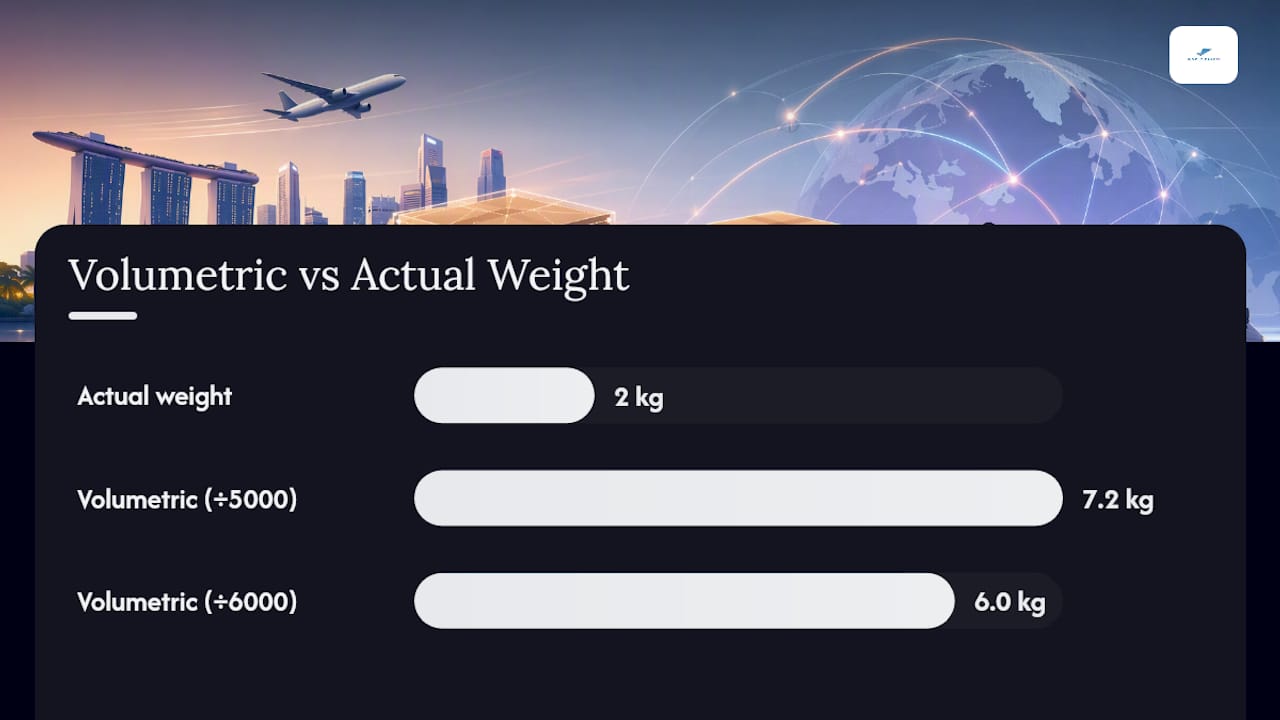
Here's where it bites: a box measuring 40cm x 30cm x 30cm has a volumetric weight of around 7.2kg using a 5000 divisor, even if the actual contents weigh just 2kg. You get charged for 7.2kg. That gap catches a lot of first-time exporters off guard.
Three ways to keep volumetric charges down:
- Use the smallest box that safely fits the item, not the one you happened to have on hand — for practical tips, see packaging and fulfillment intelligence for mid-market e-commerce
- Check the aggregator's built-in volumetric calculator before finalizing your quote
- Choose snug packing materials over bulky padding that inflates the box size
Pro Tip: If your item is light and irregularly shaped, ask the aggregator to run both actual and volumetric weight before you book. The cheaper number isn't always the one you'd expect.
What Customs Documents and HS Codes Do You Need?
Every international shipment from Singapore needs a commercial invoice describing the goods and their value, a packing list, and often a customs declaration form specific to the destination country. Missing or inconsistent paperwork is one of the most common reasons parcels get held at the border.
HS codes (Harmonized System codes) classify what you're shipping for duty and tax purposes. An incorrect HS code can trigger the wrong duty assessment and, in worse cases, lead to fines or seized shipments. Manually looking up codes is tedious and error-prone, which is why automated HS lookup tools on aggregator platforms have become standard for regular shippers, cutting down on clearance errors that come with manual filing.
You'll also need to decide between two payment structures:
- DDP (Delivered Duty Paid): you prepay duties and taxes upfront, so the recipient gets the parcel without surprise charges
- DDU (Delivered Duty Unpaid): the recipient pays duties on arrival, which can cause delays or refused deliveries if they're unwilling or unable to pay
For customer-facing e-commerce shipments, DDP is usually the better call. It avoids the awkward situation where a customer abandons a parcel because they weren't expecting an import bill. For documentation specifics by shipment type, Simply Parcel's guide on essential international shipping documentation for Singapore SMEs breaks down what applies to different goods categories.
How Do You Book a Courier and Schedule a Pickup?
Booking through an aggregator follows the same basic sequence regardless of what you're shipping:
- Gather your parcel details. Weigh it, measure its dimensions, note the HS code for its contents, and confirm its declared value.
- Enter these details into the aggregator. You'll see multiple service levels side by side, each with transit time and total landed cost, not just a base rate.
- Select your service, generate your label and customs paperwork, and schedule pickup. Most platforms let you choose a pickup window or a drop-off point, then track the shipment from the same dashboard until it's delivered.
This process usually takes under ten minutes once you've measured and weighed your parcel. For a deeper walkthrough tailored to different shipment types, see Simply Parcel's guide on how to choose the best international courier from Singapore.
What Courier Should You Choose for Common Singapore Shipping Scenarios?
Real shipments rarely fit a single formula. A few common cases show how the criteria above play out in practice.
- An urgent signed contract to London: choose an express courier. Expect 2 to 5 business days and a cost above S$60 for a light document parcel, justified by the certainty of a tracked, fast delivery.
- Weekly e-commerce parcels to Malaysia or Southeast Asia: an aggregator's economy service usually wins here. Regional transit is short even at the lower service tier, and the S$50 to S$65 band keeps recurring shipping costs manageable.
- A lightweight gift to Japan: a postal option can work if you're not in a hurry, but weigh the lower cost against limited tracking. Anything valuable or time-sensitive still calls for a tracked express or aggregator service.
Why Aggregators Make Sense for Singapore Shippers
Manually comparing couriers one by one wastes time most SMEs don't have, and it raises the odds of a documentation mistake slipping through. Automated label and HS code generation on aggregator platforms cuts that risk substantially for businesses shipping regularly.
What matters just as much is what happens when something goes wrong. Responsive support during a customs hold or transit exception often determines whether a shipment problem gets resolved in a day or drags on for weeks. there are blogs covering deeper, Singapore-specific scenarios if you want to dig into a particular product category or destination before booking.
— Simply
Compare Rates and Book Your Shipment With Simply Parcel
There are platforms giving Singapore senders a place to compare courier rates, generate shipping labels and customs documentation automatically, schedule pickup, and track parcels in real time, instead of juggling separate portals for each carrier. Whether you're an individual sending a personal item, an e-commerce seller shipping weekly orders, or an SME managing bulk freight, there are options to weigh different service levels against your budget and deadline. One dashboard often encompasses the whole process from quote to delivery confirmation.
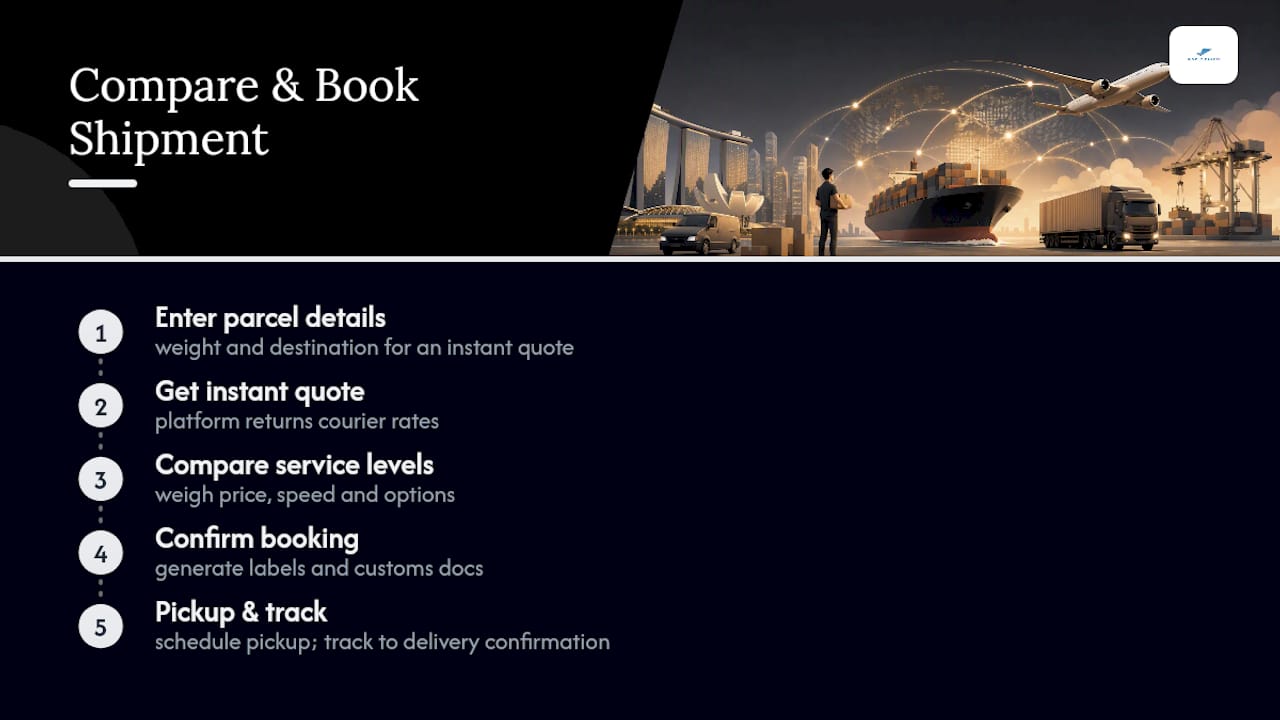
Ready to see what your shipment costs? Get an instant quote by entering your parcel's weight and destination, then compare service levels before you commit to a booking.
FAQ
What's the cheapest way to send a parcel overseas from Singapore?
Postal services through SingPost are usually the cheapest option, running S$20 to S$35 for a 1kg parcel, though transit can take 7 to 21 business days with limited tracking.
How long does international shipping from Singapore usually take?
Express couriers typically deliver in 2 to 5 business days, aggregator economy services take 3 to 10 business days, and postal options take 7 to 21 business days.
Should I choose DDP or DDU for my shipment?
Choose DDP if you're shipping to a customer, since it prepays duties and avoids delivery delays or refusals; DDU works better for shipments where the recipient expects to handle their own customs charges.
Can I compare multiple couriers in one place before booking?
Yes. Platforms like Simply Parcel let you enter your parcel details once and see rates, transit times, and total landed cost across several courier partners side by side.
What happens if my parcel's HS code is wrong?
An incorrect HS code can lead to the wrong duty assessment, customs delays, or in serious cases fines or a seized shipment, which is why automated HS code lookup tools reduce this risk significantly.