
Comparing rates, carrier coverage, and automation features across shipping aggregators often eats valuable setup time for e-commerce and logistics teams. Single-provider platforms can limit carrier choice, lock key features behind high-volume plans, or require manual entry for customs paperwork and notifications. This comparison covers price, automation capabilities, and carrier access so you can select a shipping aggregator that fits your budget and workflow needs.
Table of contents
Simply parcel
At a glance
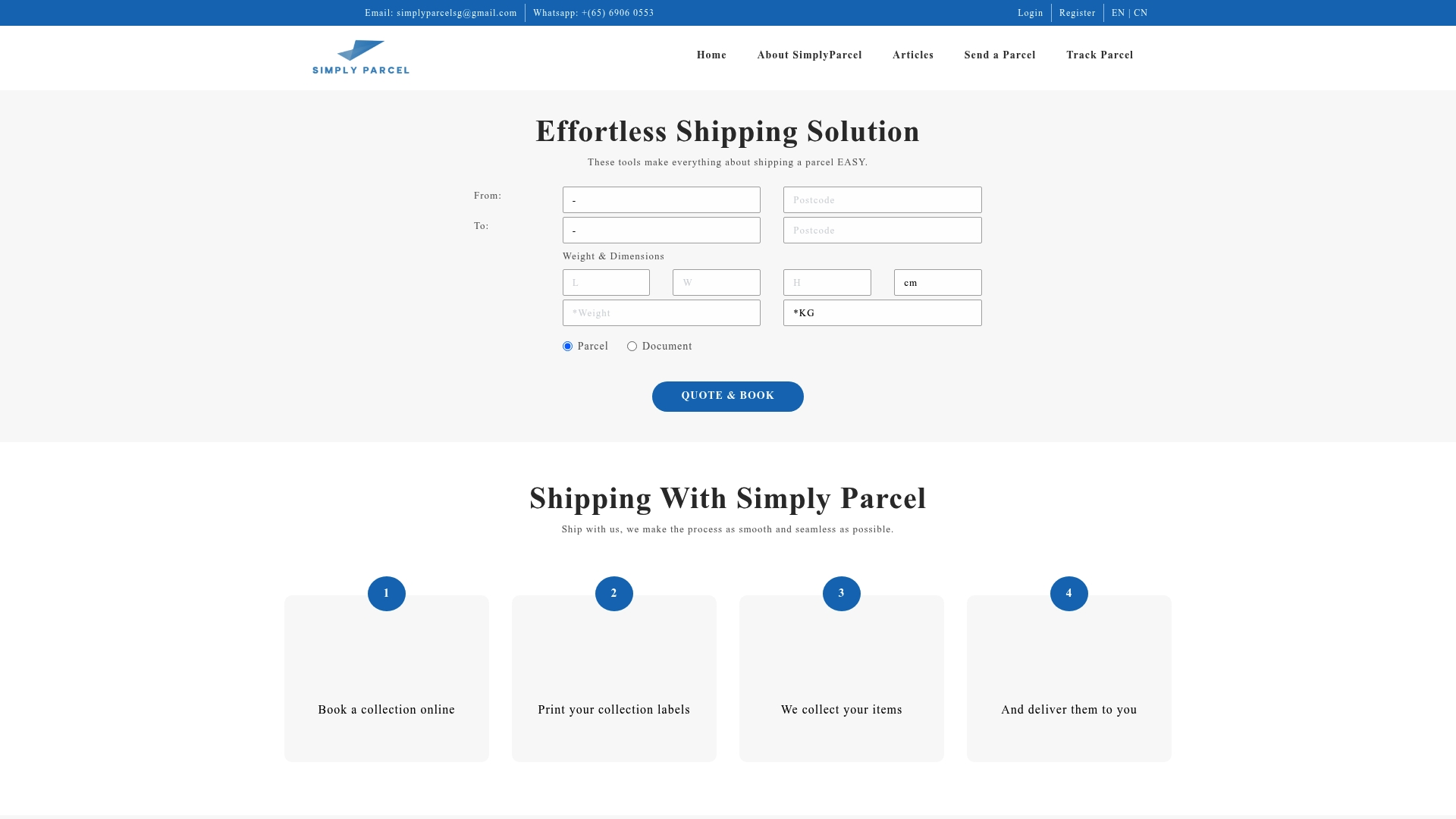
Free pickup at your doorstep is available for customers in Singapore. This saves time when you ship multiple parcels in a day. The service focuses on international parcel comparison, quoting, and booking with carrier options that include FedEx and Aramex.
Core features
Simply Parcel centralizes the steps you normally manage across carrier sites. You can get quotes, schedule pickups, and print shipping labels from one place. The site also offers help articles and regulatory updates to prepare parcels for export.
- Online booking and scheduling for pickup and courier selection.
- Real-time shipment tracking so recipients and merchants can follow progress.
- Auto-generation of airway bills and commercial invoices for customs paperwork.
- Multiple shipping speeds labeled priority, express, and economy for different budgets.
- Partnerships with carriers like FedEx and Aramex to support documents, fragile items, and larger packages.
Key differentiator
Provides a unified platform for choosing, quoting, and booking international shipments with multiple carrier options, all from Singapore. That single workflow removes the need to click between carrier sites to compare rates and transit times. For sellers in Singapore, this can cut booking time and reduce label errors.
Pros
-
Competitive and exclusive shipping rates. The platform advertises rate deals that can lower per-shipment cost for small volumes.
-
Free pickup service. Scheduling a doorstep pickup reduces trips to courier centers and supports daily dispatch routines.
-
No monthly volume commitments and free account setup. You can use the service intermittently without ongoing fees.
-
E-commerce integration for streamlined shipping workflows. Connectors reduce manual order entry and speed fulfillment.
-
Comprehensive resources and shipping guides. The documentation helps you pack fragile goods and meet common export rules.
Cons
- Limited public detail about insurance options and coverage for shipments, so you may need to request insurance specifics before high-value dispatches.
Who it's for
This service fits small to medium e-commerce sellers based in Singapore who ship internationally. It also suits individuals sending occasional parcels abroad and exporters needing predictable pickup and label handling. Larger shippers with complex hazardous goods needs may need specialized carriers.
Unique value proposition
Auto-generation of airway bills and commercial invoices cuts manual paperwork and reduces customs delays. That feature saves staff time when you ship dozens of orders daily. Combined with pickup scheduling, the paperwork automation shortens the time from order to handoff.
Real world use case
A small Singapore online store prints a batch of airway bills, schedules a single pickup, and tracks multiple parcels from one dashboard. The store saves two hours per day on booking and avoids mismatched labels during peak sales.
Website: https://simplyparcel.sg
Easyship
At a glance
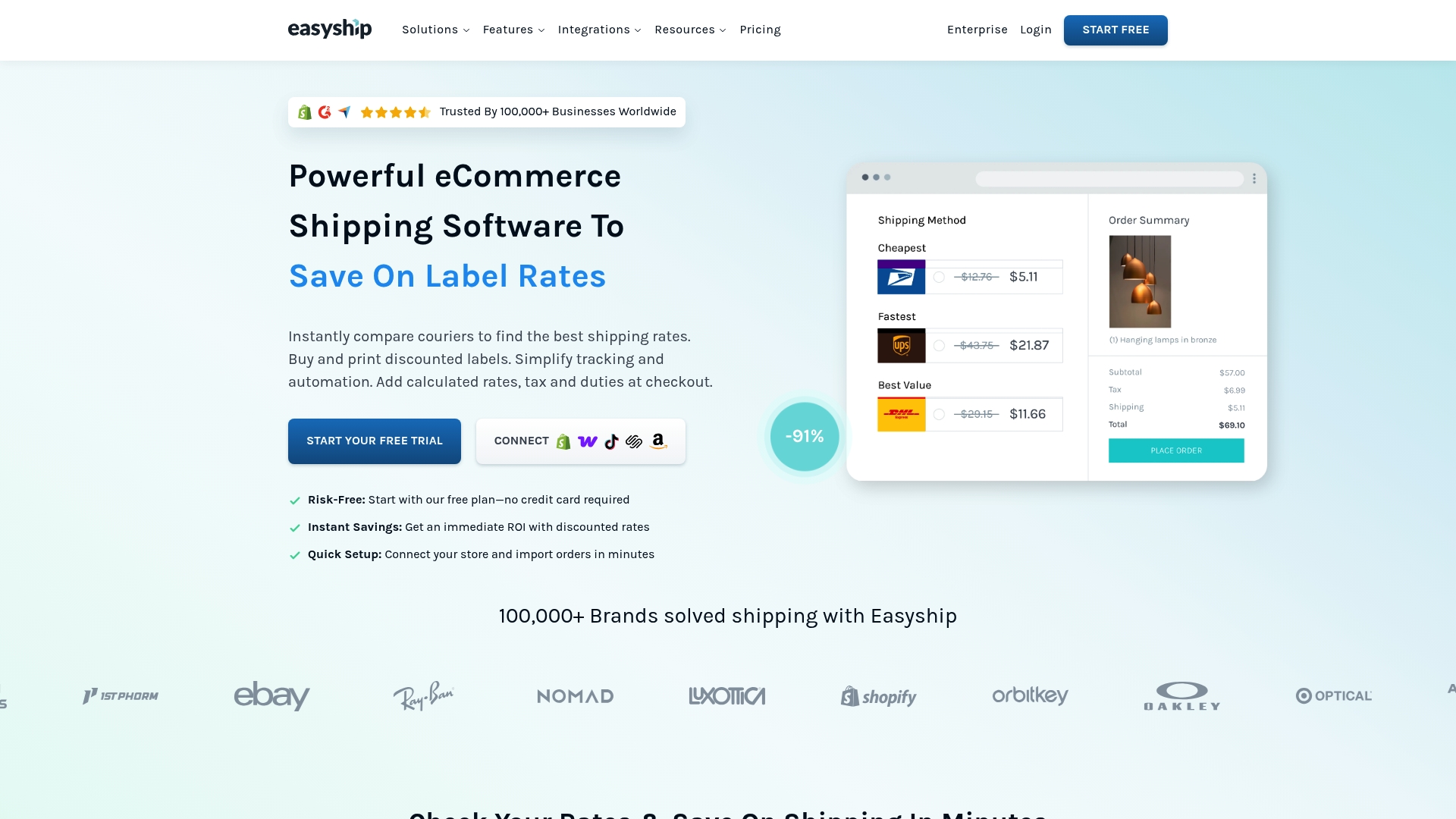
Easyship's marketing materials state access to up to 91% discounts with top couriers. The vendor reports it is trusted by over 100,000 businesses worldwide. The product bundles carrier comparison, label purchasing, and customs calculation into one dashboard for cross border sellers.
Core features
The dashboard offers instant courier rate comparison for over 550 carriers so you can pick the cheapest or fastest option per parcel. You can buy and print discounted shipping labels and schedule pickups from the same interface. The system calculates taxes, duties, and customs at checkout and supports automation rules for label generation. Native connectors and an API let you link major eCommerce platforms and marketplaces.
Key differentiator
Easyship's angle centers on broad carrier access plus workflow automation focused on international shipping. That combination targets retailers who need discounted carrier rates and customs handling across multiple channels. It serves stores that prioritize multi carrier selection and branded tracking over a lightweight local courier tool.
Pros
-
Easy onboarding and order import. The interface lets you connect a store and pull orders in minutes.
-
Access to many carriers and negotiated label rates. This often reduces per shipment cost for international parcels.
-
Branded tracking and customer notifications are available. Those improve post purchase communication and reduce inquiry volume.
-
Global fulfillment network support. You can route orders through fulfillment centers to shorten transit time and lower costs.
Cons
-
Limited customization for complex logistics. Some user reviews report difficulty modeling advanced routing rules and atypical workflows.
-
Integration availability varies by region and platform version. Certain connectors may require API work or specific platform editions.
-
Site reliability issues have appeared. The presence of temporarily unavailable pages suggests documentation or feature pages may be inaccessible at times.
When it may not fit
If you run highly specialized shipping rules or a bespoke logistics stack, Easyship may not provide the deep customization you need. If your operations depend on region specific carrier agreements, some integrations could be restricted. Large enterprises with custom compliance demands may prefer a tailored logistics integrator.
Notable integrations
- Shopify
- WooCommerce
- Amazon
- eBay
- Etsy
- Brightpearl
- Cin7
- BackerKit
Who it's for
Small to medium sized eCommerce businesses that sell internationally and manage orders across multiple sales channels will find value here. Brands that want faster setup, discounted labels, and built in customs handling get the clearest fit. Sellers who need deep workflow customization or exclusively local courier selection may look elsewhere.
Real world use case
A growing online clothing retailer uses Easyship to compare rates across carriers and countries. The store automatically generates international labels and sends branded tracking emails. That setup reduced manual label tasks and sped delivery to several markets.
Pricing
Pricing details are not specified in the vendor data. The platform offers a free plan alongside paid plans, trial periods, and custom enterprise solutions. Contact sales for exact tier pricing and volume discounts.
Website: https://easyship.com
ShipClues
At a glance
ShipClues reports support for over 28,000 pin codes across India. The platform focuses on domestic parcel flows and pairs multiple Indian carriers with a single booking interface. That approach simplifies carrier choice for small sellers while keeping delivery notifications and tracking centralized.
Core features
ShipClues bundles carrier selection, notifications, and channel connections into one offering. According to the company, rates start at ₹19 per 500 gms, and the platform promotes pay as you go billing.
- Partnering with leading Indian carriers for rate comparison and routing.
- Real time order tracking with SMS and email notifications for recipients.
- API access and multi channel integration for order and label automation.
- Mobile app support for Android and iOS to manage pickups and tracking on the go.
Key differentiator
ShipClues centers its product on carrier partnerships inside India to give sellers ready access to negotiated rates and routing choices. The platform combines those carrier relationships with basic shipping management tools like label printing and automated notifications. That mix makes it more of a domestic aggregator than a global freight broker.
Pros
-
Competitive local pricing and multiple carrier options. This helps sellers lower cost per parcel without managing separate contracts.
-
Mobile app and web interface for quick booking and label printing. That reduces manual steps for merchants handling high daily order counts.
-
Multi channel integration and API access. These features let shops push orders from marketplaces and sync tracking updates automatically.
-
Dedicated account support and courier management. Merchants get a point of contact for service issues and exceptions.
-
Real time tracking and customer notifications. Buyers receive SMS and email updates that cut inbound support questions.
Cons
-
The public documentation gives limited detail on API customization. Developers may need direct contact to confirm advanced workflows.
-
The offering appears focused on domestic shipping. There is no clear statement about international routes or global carriers.
-
Third party reviews emphasize the platform scope rather than deep product tests. That makes performance claims harder to verify.
When it may not fit
If you require full international logistics or global courier coverage, this platform may be too India centric. Enterprises needing extensive API customization or bespoke routing logic should expect to validate capabilities with the vendor first. Large shippers that already hold direct carrier contracts may see limited upside from switching.
Who it's for
ShipClues fits eCommerce sellers and small to medium businesses that ship primarily inside India. It serves merchants who want one interface to compare carriers, print labels, and push tracking updates to buyers. Sellers seeking a simple, cost oriented aggregator will find the platform aligned to that need.
Real world use case
An online apparel retailer uses ShipClues to print courier labels, select the lowest cost carrier per pin code, and send SMS delivery updates. That reduces manual entry, cuts per parcel cost, and lowers buyer support inquiries about shipment status.
Website: https://shipclues.com
ShipStation
At a glance
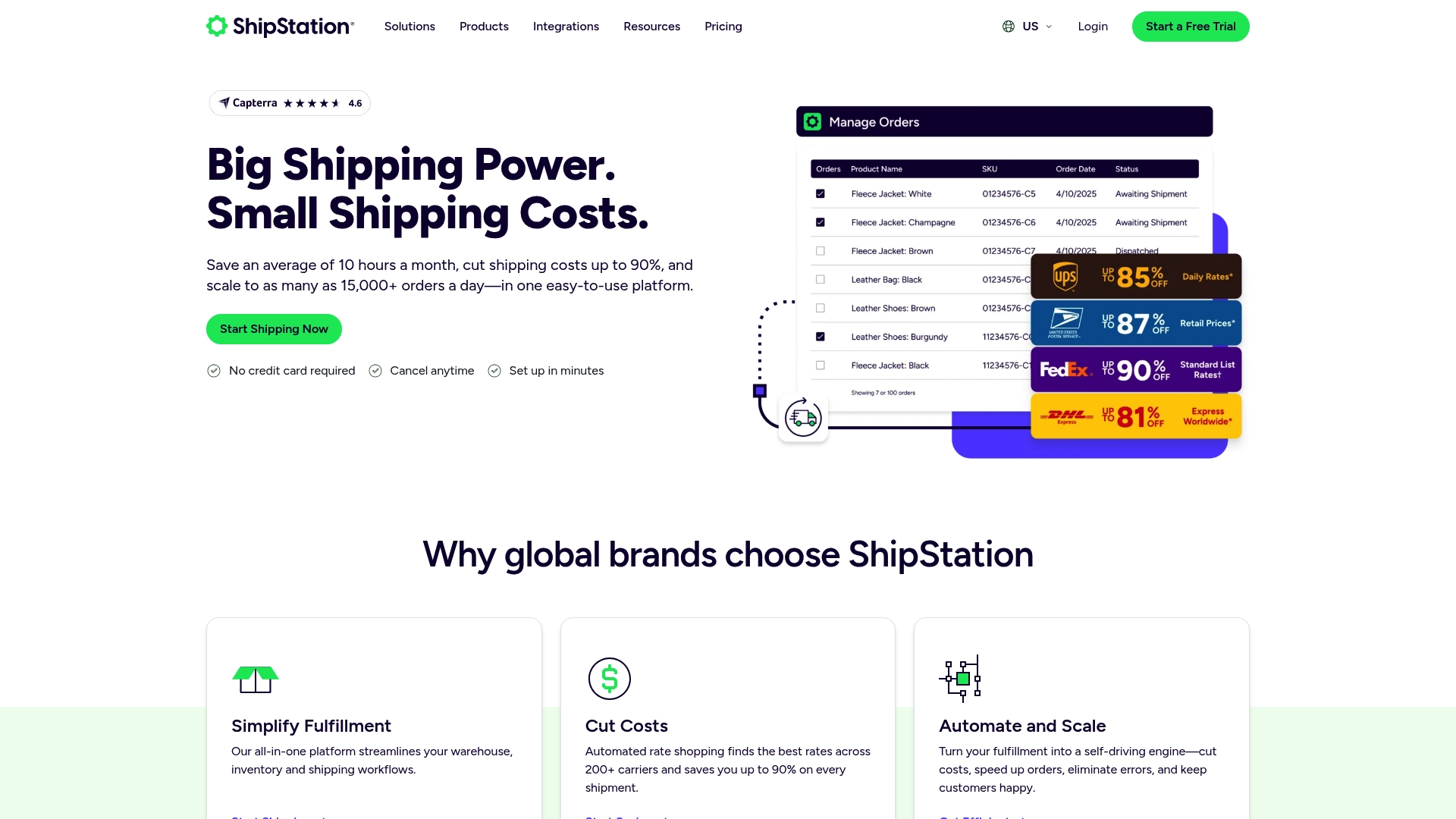
ShipStation's marketing materials state rate comparison across 200+ carriers. That claim highlights the platform's focus on giving shippers many carrier options for domestic and international routes. The product targets sellers who need automation and negotiated carrier pricing.
Core features
- Order management across multiple channels and stores, centralizing orders from marketplaces and webshops.
- Automated label printing with routing rules and batch processing to speed fulfillment tasks.
- Exclusive carrier discounts including USPS, UPS, FedEx, and DHL to lower per shipment costs.
- International shipping with customs, duties, and tracking for cross border orders.
- Returns and exchanges tools, tracking updates, multi location fulfillment, and analytics.
- Public API for building custom workflows and integrating internal systems.
Key differentiator
ShipStation pairs workflow automation with deep carrier access to cut shipping time and cost. The platform excels when you need rules that auto select carriers, print labels, and push tracking updates. Its broad integrations let the automation connect directly to sales channels and fulfillment sites.
Pros
- According to the company, discounts can reduce shipping costs by up to 90%, which helps margin sensitive sellers. This claim comes from vendor materials and should be validated for your volumes.
- The system centralizes multi channel orders so you process sales from webstores and marketplaces in one place. That reduces manual copying and order errors.
- Extensive automation saves staff time by applying shipping rules and auto printing labels for standard order types. You set conditions once and the system applies them.
- Public APIs let developers build custom flows or connect warehouse systems for more complex operations.
- 24 7 support and onboarding help teams move from manual workflows to an automated process faster.
Cons
- The interface and rule engine can feel complex for new users without guided onboarding. New teams often need training time.
- Pricing may be high for extremely low volume shippers or early stage startups that ship only a few parcels monthly.
- Some merchants report occasional bugs or synchronization issues between platforms and stores, which can require manual fixes.
When it may not fit
ShipStation may not fit solo sellers who ship very few parcels each month and want a simple label printer. It also may be overkill for businesses that do not need advanced automation or many carrier choices. If you lack technical staff, the initial setup and rule tuning will take time and attention.
Notable integrations
- Shopify
- WooCommerce
- BigCommerce
- Wix
- Squarespace
- Amazon
- eBay
- Etsy
Who it's for
Small to mid size online retailers and fulfillment businesses that need to scale shipping operations will find ShipStation a close match. Teams that operate multiple sales channels and handle higher package volumes benefit most. Businesses planning to automate rules and use APIs will get the most value.
Real world use case
A mid sized e commerce brand connects its storefronts and marketplaces to ShipStation, then creates routing rules for carriers and label batches. The team automates international documentation and uses the API to sync fulfillment status with its warehouse. Processing time and manual errors fall while carrier spend is consolidated.
Pricing
ShipStation publishes tiered plans on its website for different business sizes and needs. Specific prices are not provided in the product data here. Contact ShipStation sales or view the pricing page for plan details and any volume discounts.
Website: https://shipstation.com
Shippo
At a glance
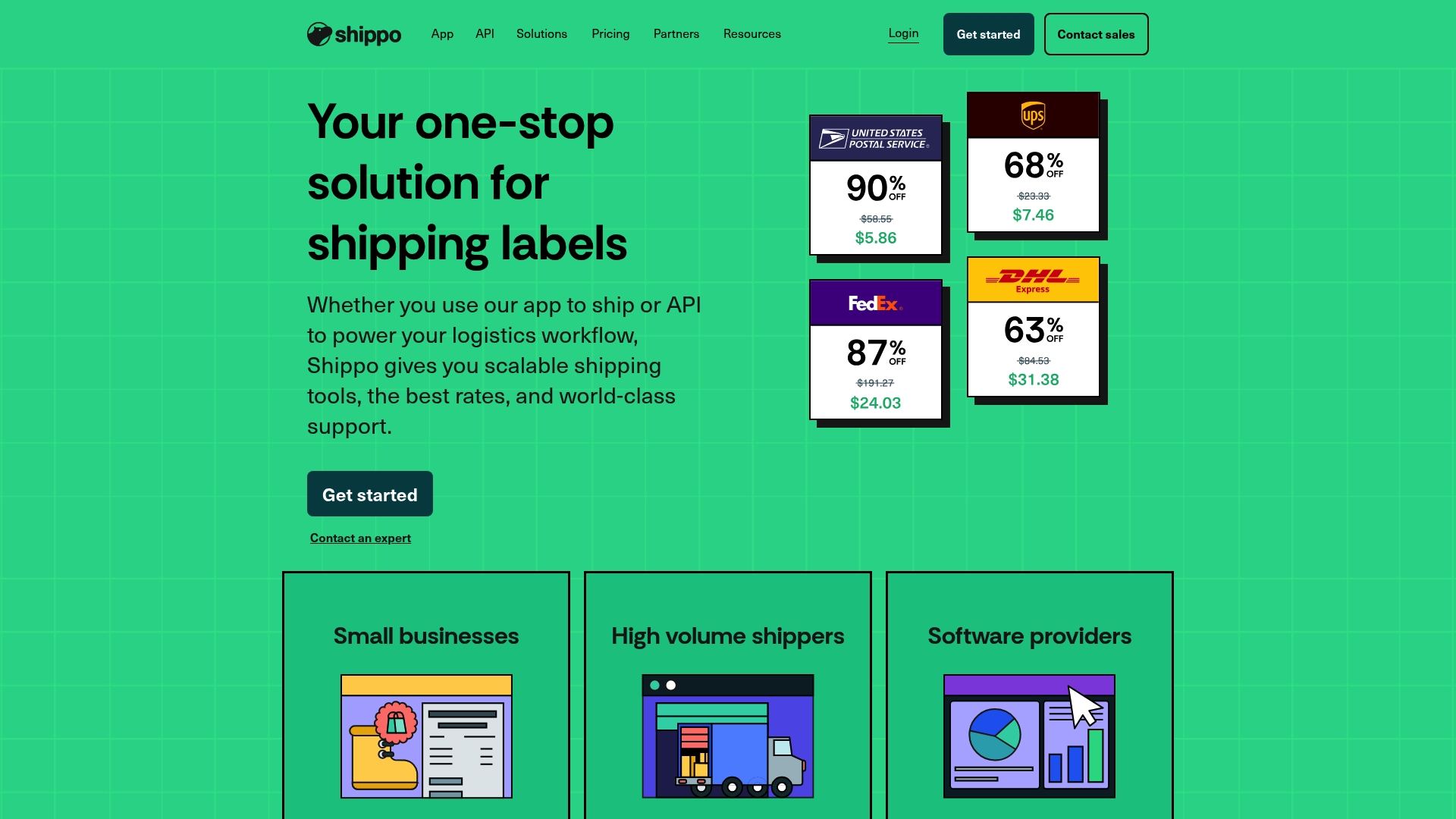
Shippo reports connections to over 40+ carriers, letting you compare prices across many networks from one dashboard. The platform pairs a developer-focused unified API with a visual dashboard for nontechnical teams. Use it when you need broad carrier choice and API access for automation.
Core features
Shippo offers discounted shipping rates from a large carrier network and built in tools for rate comparison and label creation. The platform includes address validation, real time shipment tracking, and a basic returns management workflow. It also provides an API for custom workflow automation and integrations with common e commerce platforms. These features make it suitable for both single store merchants and platforms that need embedded shipping.
Key differentiator
Shippo stands out because its API consolidates connections to many carriers into one endpoint. That carrier figure above gives you direct rate comparisons, label printing, and tracking without building separate integrations. This focus on a single API makes adding new carriers faster for engineering teams and reduces maintenance work.
Pros
- Massive carrier choice lets you test regional services and international options without separate contracts. That can lower costs and improve delivery options.
- Strong API capabilities support automation for bulk label generation and webhook based tracking updates. Developers can build shipping flows into checkout or order management systems.
- Flexible plans scale from starter API use to higher volume tiers. Small sellers can start with minimal cost while larger shippers can access volume pricing.
- Integrations with major e commerce platforms reduce setup time for common storefronts. You can start printing labels and comparing rates quickly.
- Positive customer stories highlight easier carrier selection and measurable shipping cost savings. Those accounts describe faster label throughput and fewer manual steps.
Cons
- Some useful features such as address validation or insurance may add extra fees on certain plans. That increases total cost for full feature sets.
- Nontechnical users report a learning curve during initial setup. Teams without engineering support may need vendor help or third party assistance.
- Lower tier plans can limit API call volume or restrict advanced features. Heavy API consumers will likely need a paid tier to avoid throttling.
When it may not fit
If you have zero developer resources and need a fully managed courier setup, Shippo may not match your needs. The platform assumes some capacity to configure API keys and webhooks for automated flows. Also, if you need every advanced feature without additional fees, lower priced tiers could feel constrained.
Who it's for
Shippo fits online retailers, software providers, and logistics teams that want flexible integration options. Choose it if you plan to embed shipping in your application or need to compare many carriers quickly. It also suits merchants who expect to scale shipping volume over time.
Real world use case
A small online retailer connects orders to Shippo so the system automatically selects the cheapest carrier at checkout. The retailer prints labels in bulk each morning and uses webhooks to send tracking updates to customers. Over time the team reduced manual rate checks and cut shipping errors.
Pricing
Shippo uses scalable API pricing with a free starter API tier and paid tiers that add volume discounts and higher support levels. Additional features such as address validation or insurance may incur separate fees. Contact the vendor for a quote that matches your shipping volume and required services.
Website: https://goshippo.com
Comparison of alternatives
Finding the right shipping platform is vital for businesses aiming to enhance their logistical operations. With options catering to diverse requirements, the choice hinges on finding a solution that aligns with specific business needs and addresses operational constraints efficiently.
International capabilities and suitability
Platforms like SimplyParcel, Easyship, and ShipStation excel in supporting international shipments. SimplyParcel is tailored to the Singaporean market, ensuring a unified workflow targeting international shipping with streamlined processes. In contrast, Easyship offers broader global integration with access to a wide carrier network. Meanwhile, ShipStation's strong rule-based automations are particularly effective for businesses managing larger order volumes and requiring optimized workflows.
Integration and automation strengths
When comparing integration flexibility, Shippo provides extensive API capabilities, empowering businesses with programming resources to create tailored solutions. Conversely, Easyship simplifies the process for non-technical users with prebuilt connectors to popular e-commerce platforms. Furthermore, ShipStation's automation rules streamline label creation and routing for large-scale businesses.
Best fit
- SimplyParcel: For Singapore-based e-commerce businesses targeting international markets with shipping workflows that require free pickups and pre-populated customs documents.
- Easyship: For e-commerce enterprises needing access to a global network of carriers combined with tax and duty calculation at checkout.
- Shippo: For businesses with developer teams aiming to build advanced, custom shipping workflows with its unified API.
- ShipClues: For India-centric shipping operations that prioritize affordable domestic shipping costs coupled with effective carrier rate comparisons.
Our pick
SimplyParcel stands out for its ease of use and focused support for Singapore-based exporters seeking centralized and efficient shipping management. While other options like ShipStation or Easyship cater to broader audiences or highly technical applications, SimplyParcel targets businesses specifically needing an all-encompassing yet straightforward international shipping solution.
When choosing a shipping aggregator, consider each solution's core features, pricing, and specific use cases to find the one best suited to your needs.
| Platform | Core Features | Key Differentiator | Best For | Notable Limitation |
|---|---|---|---|---|
| Simplyparcel | Quote and book international shipments via one tool | Unified workflow for Singapore-based users | Singaporean small to medium businesses | Limited details on insurance coverage |
| Easyship | Instant rate comparison across 550+ carriers | Broad carrier network and customs automation | Multi-channel international sellers | Limited customization for complex logistics |
| ShipClues | Domestic shipping with 28,000+ pin code support | Local Indian carrier partnerships and tools | India-based small to medium businesses | Focused on domestic shipping routes |
| ShipStation | Automated labeling and route selection | Extensive integration and rule automation | High-volume multi-channel international sellers | Complex interface for new users |
| Shippo | Unified API with visual dashboard | Developer-friendly integration to multiple carriers | Retailers scaling shipping volume over time | Extra fees for certain advanced features |
Explore Simplyparcel for reliable Spaceshipapp.com alternatives
If you are searching for trustworthy spaceshipapp.com alternatives to manage your international shipping efficiently, Simplyparcel offers a practical solution tailored for users in Singapore. The platform resolves common challenges such as juggling multiple carrier sites, manual paperwork, and unpredictable pickup times by providing online booking with free doorstep pickup, automatic generation of airway bills and commercial invoices, and real-time shipment tracking.
Take control of your shipping process with Simplyparcel’s easy-to-use service that simplifies comparing rates from carriers like FedEx and Aramex. Don’t let fragmented workflows slow you down—visit Simplyparcel now to book your shipments and print labels in minutes. Streamline your international deliveries while saving time and reducing errors by scheduling your first free pickup today.
FAQ
What is a key feature of Simplyparcel that benefits small e-commerce sellers?
Simplyparcel offers free pickup service at your doorstep, making it convenient for small sellers to ship multiple parcels without needing to visit courier centers. This feature supports daily dispatch routines and improves operational efficiency for users. If you're a small e-commerce seller, you can start benefiting from this feature to streamline your shipping process.
How does Simplyparcel compare to easyship in terms of onboarding?
Easyship provides an easy onboarding process that allows users to connect their store and import orders in minutes. In contrast, Simplyparcel has a unified platform for managing quotes, bookings, and tracking from one place. Depending on your needs, if you prioritize quick onboarding with carrier integrations, Easyship might be suitable, while Simplyparcel excels with its centralized management for frequent usage.
What shipping options does Simplyparcel provide to accommodate different budgets?
Simplyparcel offers multiple shipping speeds categorized as priority, express, and economy, catering to various budget levels. This allows users to choose the best option based on their specific delivery needs. If you’re looking to balance cost and speed, Simplyparcel's tiered pricing can help you find a suitable fit for your shipments.
Does Simplyparcel support complex logistics for larger shippers?
While Simplyparcel is excellent for small to medium e-commerce sellers, larger shippers with complex logistics needs, such as hazardous goods, may require specialized carriers that Simplyparcel may not provide. You should evaluate your shipping requirements accordingly to determine if Simplyparcel meets your operational needs.
How does Simplyparcel facilitate customs paperwork when shipping internationally?
Simplyparcel features auto-generation of airway bills and commercial invoices, streamlining the customs paperwork process for international shipments. This feature reduces delays and saves staff time when managing multiple orders. If you frequently ship internationally, Simplyparcel's automation can significantly enhance your efficiency at customs.