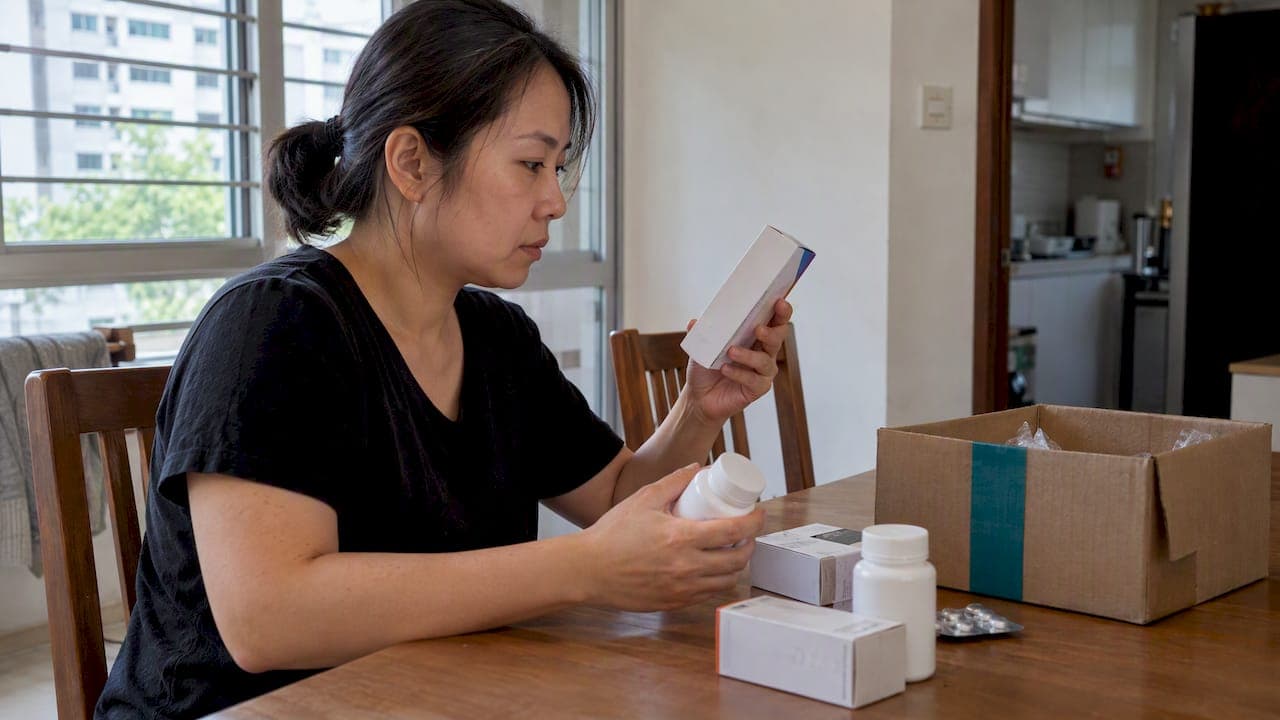
You can sometimes send medication overseas, but only when three things line up: the medicine is legal to export from where you are, it is legal to import at the destination, and the carrier accepts it. Prescription and controlled medicines carry the strictest limits. Over-the-counter products in small personal quantities are usually easier, but still need checking country by country. This guide explains how to check each step before you book, what to put in the box, and when you should not ship at all.
TL;DR
- Legality is decided at the destination. A valid prescription at home does not give you a right to ship the drug abroad.
- Check the destination country's health regulator or embassy first, then confirm with the carrier for your specific medicine and route.
- Pack the medicine in its original pharmacy packaging, and include a legible prescription and a letter or documents that identify the patient.
- Controlled substances, and many ADHD, pain and mental health medicines, are often restricted or banned. Do not ship them without written approval.
- If the medicine can be prescribed locally by a registered provider in the destination country, that is often the safer route.
Table of Contents
- Can you send medicine overseas?
- Prescription drugs, OTC products and controlled substances
- If you are in the US: why the post office will say no
- If you are in Singapore: check HSA before you pack
- Check the destination country first
- Documents customs expects
- How to pack medicine for international shipping
- Courier, registered mail or pharmacy?
- Our perspective: ship only what you have cleared
- Book your shipment with Simply Parcel
- Common mistakes to avoid
- FAQ
- Sources
Can you send medicine overseas?
The honest answer is "it depends on the medicine and the country." Sending medication abroad is not automatically illegal, but it is far more regulated than sending clothes or books. Three separate gatekeepers apply:
- The country you ship from. Export rules and, for postal services, mailing rules.
- The country you ship to. Import rules set by its health regulator and customs authority.
- The carrier. Couriers apply their own dangerous goods and pharmaceutical policies, which can be stricter than the law.
Passing one gate does not pass the others. Health guidance from Northwestern University's global safety team makes the same point: a medicine that is common and legal at home may be tightly controlled or illegal elsewhere, so you should check the destination's rules rather than your own.
Prescription drugs, OTC products and controlled substances
The type of medicine decides how hard the process is.
| Type | Typical situation | What to expect |
|---|---|---|
| Over-the-counter (OTC) | Pain relievers, allergy tablets, vitamins in small personal quantities | Often allowed, but some countries restrict certain active ingredients. Check the destination list. |
| Prescription (non-controlled) | Antibiotics, blood pressure tablets, insulin | Usually needs the original label, a prescription and a personal-use quantity. Some countries need prior approval. |
| Controlled substances | Strong opioids, many ADHD stimulants, benzodiazepines | Frequently needs a permit from both countries, or cannot be shipped at all. |
| Temperature-sensitive | Insulin, biologics, vaccines | Needs cold-chain handling. Many standard services cannot provide it. |
We cover the OTC case for one popular route in our guide to shipping OTC medication to the USA, and the prescription case in our guide to international prescription medicine shipping.
If you are in the US: why the post office will say no
Many people searching this phrase in the US are trying to mail a prescription to a relative abroad. The postal route is the most restricted one. USPS states that controlled substances and prescription drugs are mailable only by registered distributors with the Drug Enforcement Administration, such as pharmacists and medical practitioners. Its Publication 52 section on controlled substances and drugs also puts responsibility on the mailer for complying with federal, state and local law.
In plain terms, an individual mailing their own prescription bottle to a friend overseas is not a normal, permitted use. A licensed pharmacy shipping to a patient is a different matter, and that is the legitimate path in the US. If your situation involves a pharmacy, ask the pharmacy what it can ship and to which countries.

If you are in Singapore: check HSA before you pack
For anyone shipping from Singapore, or living here as an expat or student and receiving medicine from family, the Health Sciences Authority is the starting point. HSA explains that, depending on the active ingredients, you may need approval before bringing medications into Singapore for yourself or immediate family. That page is written for travelers, but it shows how the authority thinks about personal-use medicine: quantity, active ingredient, and proof that the medicine belongs to the person using it.
For businesses, Singapore Customs lists HSA's requirements for health products that need licensing or approval, and says importers must submit import declarations for them. If you plan to ship medicines commercially, for example as a seller, you are in licensed-product territory and not in personal-shipping territory. Speak to HSA before you list or send anything.
Check the destination country first
The destination is where most shipments fail. Work through this order:
- Find the regulator. Search for the destination's health authority or medicines agency, and its page on personal import of medicines.
- Look up the active ingredient, not the brand name. Brand names differ between countries. The ingredient is what customs rules reference.
- Check quantity limits. Regulators often cap personal-use supply. The FDA's personal importation guidance is one example of a regulator spelling out the narrow circumstances in which individuals can bring in or receive drugs. Limits and conditions vary, so confirm the figure with the destination's own authority.
- Ask whether prior approval or a permit is needed. If yes, get it before you book, not after the parcel is stuck.
- Ask the embassy if the page is unclear. An embassy or consulate can tell you what the receiving customs office applies in practice.
The receiver can help too. A recipient who is a patient of a local doctor can ask that doctor or a local pharmacist what is allowed and whether an equivalent is sold there.
Shipping into the United States
The FDA reviews drug shipments at land and seaports, courier hubs and international mail facilities to decide whether they can enter the country. Its approach is risk-based, so a parcel of medicine arriving by courier is a candidate for inspection. Unapproved drugs, and drugs not meant for the person receiving them, are the usual causes of refusal. Plan on the assumption that your parcel will be opened and examined.

Documents customs expects
Documentation is the main point of failure. Medicine placed loose in a box will almost always be a problem. Prepare the following:
- Original pharmacy packaging and label. The label should show the patient's name, the medicine name, the quantity and the prescriber. HSA's guidance for personal medicines emphasizes carrying these details.
- A valid, legible prescription, or a doctor's letter stating the diagnosis, the medicine, the dose and the duration.
- Identification of the patient. Some customs offices ask for a copy of the passport or visa of the person the medicine belongs to.
- An accurate commercial or customs invoice. Describe the contents plainly: the generic name, quantity and "personal use, not for resale." Declare a realistic value.
- Any import permit or approval the destination requires.
If you are relocating and moving household goods at the same time, remember that moves may involve their own customs forms. As an example of how country-specific this paperwork can be, see this Swiss guide to the 18.44 moving form. A relocation form does not replace medicine permits, so treat the two as separate tasks.
Missing papers often lead to detention, return or destruction of the shipment, sometimes without any warning to the sender. Keep copies of every document and the tracking number.
How to pack medicine for international shipping
- Keep the medicine in its original container. Do not decant tablets into unlabeled bags or pill boxes.
- Protect against leaks and crushing. Seal liquids in a second leakproof bag, then use a rigid outer box with padding on all sides.
- Respect temperature needs. If the label says refrigerate, ask the carrier whether it can handle that route and transit time before you book. If it cannot, do not ship.
- Place the paperwork in a sleeve inside the parcel and attach the customs documents outside, as the carrier instructs.
- Do not mix medicine with unrelated goods, which makes inspection and declaration harder.
- Use the shipping label description accurately. Vague wording like "gift" or "samples" can cause serious trouble if the box is opened.
If you are unsure whether something counts as a restricted or dangerous item, our guides to shipping restricted and dangerous goods and what you cannot ship from Singapore explain how carriers classify them.
Courier, registered mail or pharmacy?
| Option | Best for | Limits |
|---|---|---|
| International courier | Permitted, documented, personal-use shipments with tracking | The carrier may still refuse certain medicines or routes. |
| Postal service | Rarely suitable for prescriptions | In the US, prescription drugs are restricted to registered distributors. |
| Licensed pharmacy | Ongoing prescriptions to a patient | Depends on the pharmacy's licenses and the destination's laws. |
| Local treatment at the destination | Long-term conditions | Needs a local registered provider, but avoids cross-border risk. |
If you are weighing postal and courier services for non-medical items, our comparison of registered mail and courier service covers the difference in tracking and liability.
Our perspective: ship only what you have cleared
We handle international parcels from Singapore every day, and medicine is one of the categories where we advise caution first and speed second. Our view is simple: a shipment that is slow but cleared is better than a fast one that is seized.
Here is how we think about it:
- The shipper carries the responsibility. A booking platform can compare carriers and generate your labels and customs documents, but it cannot decide on your behalf that a medicine is legal at the destination. That check belongs to you, before you pay.
- Carrier policy is a separate hurdle from the law. Even when customs would allow a medicine, a courier may decline it for dangerous goods or temperature reasons. Ask the carrier for your exact medicine and destination, then book.
- Documents are half the shipment. We would rather you spend ten extra minutes on the label, prescription copy and invoice than lose a parcel to a missing page.
- Sometimes the right answer is not to ship. Pharmacists advise that they cannot verify storage conditions or the patient's current health once a medicine is abroad. Cancer Research UK says sending medicines abroad depends on the type of medicine and the destination, with both medicine regulations and postal restrictions to follow. For serious or ongoing conditions, ask the treating doctor about local care first.
— SP
Book your shipment with Simply Parcel
Once you have confirmed that your medicine is allowed at the destination and you hold the paperwork, you can compare services on Simply Parcel. We offer Priority, Connect Plus and Economy options, free pickup at the sender's address, automatic label and documentation generation, and real-time tracking. You can also add optional protection coverage. Get a quote for your parcel to see the available services for your destination, or start from our homepage. If a carrier restricts your medicine, check this before paying, and consider asking our team how restricted goods are handled.
Common mistakes to avoid
- Assuming a prescription equals permission. Experts stress that having a prescription does not grant a right to ship the medicine abroad. The legality of the medicine at the destination comes first.
- Shipping for someone else without checking. Regulators can treat medicines sent for other people as a problem, with the risk of seizure and enforcement action.
- Ordering from unofficial overseas sources. The FDA warns about the safety and quality of drugs from unofficial foreign sources. Use authorized local sources where you can.
- Declaring the parcel as something else. Mislabeling is a fast path to seizure and possible legal trouble.
- Waiting until the last day. Permits, carrier confirmations and a cold-chain plan take time. Do them first.
FAQ
Can I ship medicine internationally by courier?
Sometimes. It depends on the medicine, the destination's import rules and the carrier's own policy. Confirm all three before you book, and carry the paperwork that proves the medicine is for personal use.
Can I ship prescription drugs to another country?
Only in limited cases. Many countries restrict personal imports of prescription drugs, and in the US, mailing them is limited to DEA-registered distributors such as pharmacies. Check the destination regulator, and ask a licensed pharmacy if it can ship for you.
Can I send over-the-counter medicine abroad?
Often yes in small personal quantities, but not everywhere. Some countries ban or restrict common active ingredients, such as certain cold and pain relief ingredients. Look up the ingredient on the destination regulator's website.
Can I ship medical supplies such as syringes or devices?
Medical supplies can be regulated as devices, and sharps or batteries may be restricted by carriers. Ask the carrier and check the destination rules for your item. Include an invoice that clearly describes the contents and their use.
What happens if customs stops my medicine?
The shipment may be held, returned, confiscated or destroyed, often when documents are missing. Keep your tracking number and copies of your documents, and contact the carrier promptly so you can respond to any request from customs.
Sources
- Traveling with Medications, Northwestern University
- Travelling with medications to Singapore, Health Sciences Authority
- Health Sciences Authority requirements, Singapore Customs
- Personal Importation, FDA
- Shipment Admissibility, FDA
- Frequently Asked Questions, USPS Postal Explorer
- 453 Controlled Substances and Drugs, USPS Postal Explorer
- Buying medicines in the UK to send abroad, Cancer Research UK